
Reviewed · MUMBAI DHARAVI SLUM TOURS
Dabbawala, Dhobi Ghat & Dharavi slum Tour with Local Train Ride
Mumbai’s working life takes center stage here. You see Dharavi’s home industries, the concrete washing pens of Mahalaxmi Dhobi Ghat, and the dabbawalas who move packed lunches through the city. The tour is less about famous buildings and more about how Mumbai functions hour by hour.
I like the local train ride because it connects the stops in the same way many residents move around the city. I also like the resident-led approach, especially when the guide has a personal link to Dharavi. The main consideration is that this is a walking tour through crowded, working neighborhoods, not a polished sightseeing route.
- Dharavi from a resident’s perspective: See leather work, pottery, soap making, baking, dyeing, recycling, homes, schools, and hospitals.
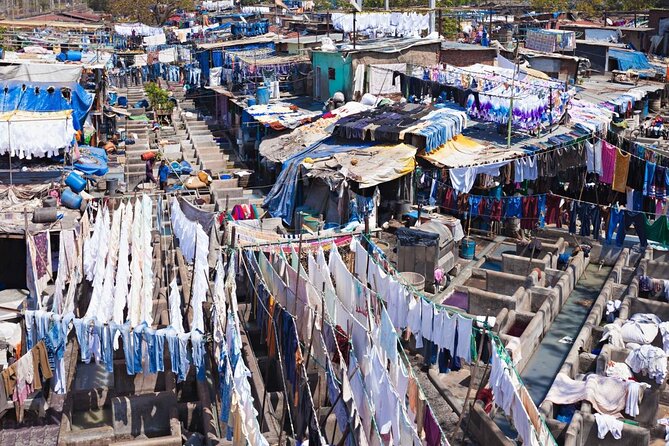
- Mahalaxmi Dhobi Ghat: Look down into Mumbai’s famous open-air laundry and watch the dhobis at work.
- Mumbai’s dabbawalas: Learn how lunch carriers serve office workers across the city.
- Local train included: The train is transport, not a staged attraction, and forms part of the city experience.
- Small group format: A maximum of 15 people gives you a better chance to ask questions.
- Strong value: At $35.79 for about four hours, the tour covers three distinctive subjects and local transport.
Three working worlds in one Mumbai morning
The clever idea behind this tour is its range. In about four hours, you move from the dabbawalas’ lunch delivery system to Dhobi Ghat’s laundry work, then into Dharavi’s tightly packed lanes and workshops.
That sequence gives you more than three separate photo stops. It shows how people, goods, clothes, food, and small businesses move through Mumbai. The local train ties the pieces together, and the short format works well if you have only a day or two in the city.
The experience begins at Maharshi Karve Road near Churchgate. It ends in Dharavi, at Sai Multispeciality Hospital and Research Centre on 90 Feet Road. That one-way plan matters. You finish in Dharavi rather than returning to Churchgate, so plan the rest of your day from the eastern side of the city.
The group can include up to 15 people. That is still large enough to feel social, but much better than a big coach group for narrow lanes and questions. Guides named in the feedback include Rakesh, Abhishek, Sagar, Dinesh, Hardik, and Dinesh. Individual guide assignments can vary, but the repeated praise is clear: friendly explanations, strong English from some guides, and a calm way of handling sensitive subjects.
The dabbawalas: Mumbai’s lunch network
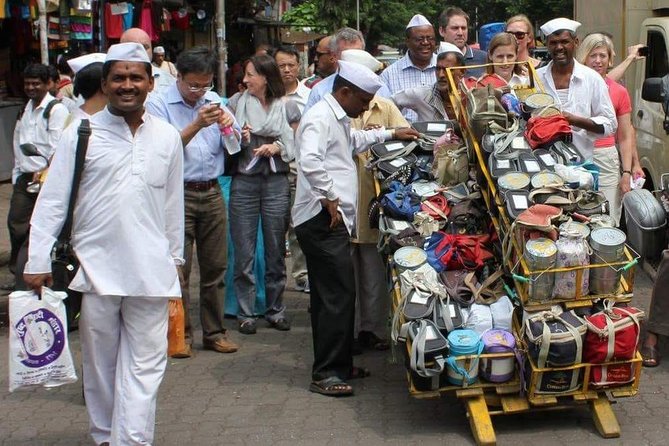
The dabbawala portion introduces you to one of Mumbai’s best-known working systems. Dabbawalas collect and deliver packed lunches around the city, linking homes with offices through a carefully organized chain of transport.
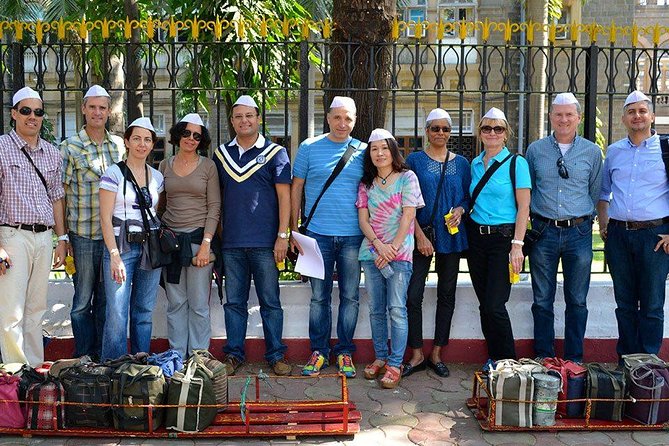
You meet near the start of the tour and learn what the job involves. The dabbawala tribute statue is part of this stop, and you may have a chance to take photographs. The point is not simply to photograph a person carrying a lunch box. It is to understand the daily coordination behind thousands of meals.
This is a good opening because it gives you a practical lens for the rest of the tour. Mumbai can seem chaotic at first glance, yet the dabbawala system depends on timing, handoffs, and repeated routines. Your guide can explain the work in a way that connects it to the city you are seeing around you.
Do not expect a long formal presentation. This is a moving tour, so the explanation may happen beside a station, on a street, or while you are preparing to board the train. Keep your ears open and ask questions. The small group makes that easier.
More dabbawala tours in Mumbai
- Private Combo Tours Sightseeing + Dharavi Slum + Dhobi Ghat & Dabbawalas
★ 5.0 · 245 reviews - Mumbai Gems: 2-Day Private Tour with Elephanta, Slum & Dabbawala
★ 5.0 · 63 reviews - Mumbai Dharavi Slum, Dhobi Ghat & Dabbawala Lunchbox Tour
★ 5.0 · 43 reviews
Riding Mumbai’s local train
The local train is included in the price, and it is an important part of the experience rather than a minor transfer. You use it to move between the dabbawala area, Dhobi Ghat, and Dharavi.
That gives you a closer look at everyday movement in Mumbai. You are not being driven from one sealed attraction to another. You are crossing the city using a transport system that residents depend on, with the guide helping the group stay together.
Train travel can feel busy and quick. Stay close to your guide, keep your belongings secure, and be ready to move when the group does. The tour is not designed as a quiet, slow-paced outing. It asks you to pay attention and keep moving.
Several people especially enjoyed the train ride because it made the route feel connected to normal Mumbai life. That is one of the better reasons to choose this tour over a private car outing. A car is easier, but it removes some of the city’s texture.
Mahalaxmi Dhobi Ghat and the work below
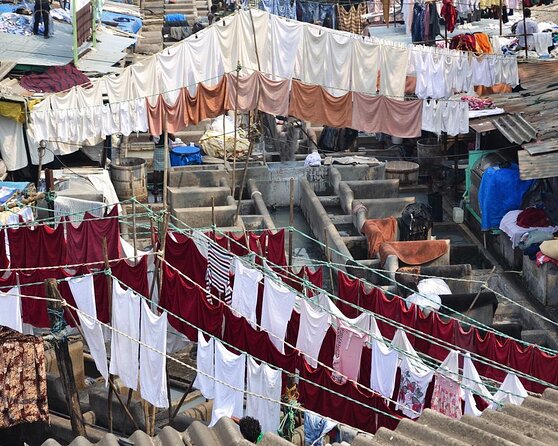
Mahalaxmi Dhobi Ghat is the tour’s most striking visual stop. It is a large open-air laundry where dhobis wash clothes used by people and businesses across Mumbai, including hotel laundry.
From the viewing area, you look down over rows of washing spaces and working areas. The scale is what makes the stop memorable. Laundry is usually hidden inside machines, back rooms, or industrial buildings. Here, the work is visible and organized in a very different way.
Your guide explains who the dhobis are and how the laundry operates. The stop lasts about an hour, which gives you time to take in the scene without rushing straight back to the train.
There is a practical limit here. You view the operation rather than take part in it, and the experience can be more observational than interactive. Still, that distance is appropriate. Dhobi Ghat is a workplace, not a theatrical show arranged for visitors.
Bring water, especially in warm weather. The tour includes walking and public transport, and one person specifically advised carrying extra water. Comfortable shoes will help more than stylish ones.
Entering Dharavi with a resident guide
Dharavi is the longest stop, at about two hours, and the part that requires the most thought. The tour describes it as one of Asia’s largest slum areas, but the guide’s job is to show more than poverty. You see homes, businesses, workshops, schools, hospitals, and narrow lanes where daily life continues at close range.
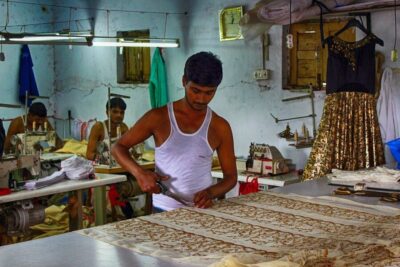
The route can include leather industries, pottery, soap making, a bakery, color dye work, plastic recycling, and other small-scale production. You might also see the kind of cramped alleys and house fronts that are difficult to understand from a passing car.
The value of a resident guide is especially strong here. Sagar, for example, is from Dharavi, and his personal connection helped explain the area with energy and care. Dinesh also guided people through a part of Dharavi where he had lived when he was younger. Rakesh was praised for his local friendships and for making the visit feel comfortable and appropriate.
Those details matter. A neighborhood such as Dharavi should not be reduced to a poverty display. A good guide gives you context about work, family life, and local enterprise, while reminding you that people live and earn here. Follow the guide’s instructions about photographs and avoid treating residents as scenery.
The tour may pass through very small alleys. You need to be comfortable walking close to other people and accepting that the route can feel intense. It is not the right choice if you want a quiet sightseeing walk or a carefully controlled environment.
At its best, the Dharavi section changes the way you think about the word slum. The area is crowded and has serious challenges, but it also contains active businesses and strong local networks. That fuller picture is the tour’s main purpose.
More Dhobi Ghat tours in Mumbai
- Mumbai: Dhobi Ghat Laundry and Dharavi Slum Tour with Local
★ 5.0 · 469 reviews - Mumbai: Dharavi Slum and Dhobi Ghat Laundry Tour
★ 5.0 · 317 reviews - Mumbai: Dharavi Slum Tour with Dhobi Ghat (Open-Air Laundry)
★ 4.8 · 62 reviews - Mumbai City Tour With Laundry And Hotel Transfers (South Mumbai)
★ 5.0 · 41 reviews
What you may see in the lanes

The Dharavi route is built around variety. You may see leather production, pottery, soap, baking, dyeing, plastic recycling, and other work happening in or near residential spaces.
That mix helps explain why Dharavi is economically important. The area is not just a place where people sleep. It is also a place where materials are processed, products are made, and income is earned through small businesses.
The tour also points out schools, hospitals, and homes. These stops give the neighborhood a human frame. You are not looking only at workshops or narrow passages. You are seeing a place where ordinary needs continue alongside commercial activity.
The listing also refers to a Muslim area and includes a stop connected with local community life. The exact route can vary, so you should treat the listed subjects as possible parts of the visit rather than a guarantee that every detail will receive equal time.
Some people have had especially personal experiences with their guide, including a visit to a family home and a homemade meal with Sagar. That should not be treated as a standard inclusion. Food and drink are not included, and any private invitation depends on the guide and circumstances. If it happens, it is an unexpected personal moment, not something you should book the tour expecting.
Why the $35.79 price makes sense
At $35.79 per person, this is a good-value half-day outing if you want substance rather than a long list of monuments. The cost includes the guide and local train transport, and the route covers three very different parts of Mumbai.
The price is especially reasonable for a small group capped at 15. Private tours cost more, but they can offer a slower pace and more control. This tour gives you personal attention without the full cost of hiring a guide just for yourself.
Food and drinks are not included. You should eat beforehand or plan food after the tour, and carry water. The ending in Dharavi also means you should not assume you will finish near Churchgate.
The tour is usually booked about 16 days ahead. That is useful planning information if your Mumbai dates are fixed. Confirmation is provided at booking, and mobile tickets make the meeting details easy to carry on your phone.
Free cancellation is available up to 24 hours before the start time for a full refund. Changes or cancellations inside that 24-hour window are not accepted for a refund.
Who will enjoy this tour most
I would choose this tour if you want to understand how Mumbai works beyond its landmarks. It suits curious first-time visitors, people interested in urban life and small businesses, and anyone who values a local guide’s explanation more than a list of photo stops.
It is also useful for a short stay. Four hours gives you a strong introduction without taking the whole day. The route includes enough walking and train travel to feel active, but it does not require a full-day commitment.
You should think twice if you dislike crowds, public transport, narrow lanes, or visits that involve sensitive social subjects. Dharavi is a residential and working neighborhood, not an attraction built for sightseeing. You need to approach it with respect and patience.
Families and older participants may be able to join, since most people can participate, but the tour is not described as a special accessible program. The pace, trains, and narrow streets are worth considering for anyone with mobility concerns.
Small details that improve the day
Wear comfortable shoes. You will walk through city streets, laundry areas, station surroundings, and Dharavi lanes.
Carry extra water. It is the most useful tip from the available experience details, especially in hot or humid weather.
Keep your group in sight on the train. The guide handles the route, but public transport moves quickly and platforms can be crowded.
Ask before taking close photographs. You are visiting workplaces and homes, and respectful behavior matters more than collecting pictures.
Allow time after the tour to continue from Dharavi. The stated ending is on 90 Feet Road behind Sion Hospital, not back at the Churchgate meeting point.
Should you book the Dharavi and Dhobi Ghat tour?
Book it if you want a direct look at working Mumbai and you can handle a fast, close-up four hours. The strongest parts are the resident-led Dharavi walk, the open-air laundry at Mahalaxmi, and the train rides that connect the stops.
I would not book it for a relaxed luxury outing or a simple sightseeing checklist. The route can be crowded, the subject matter is serious, and the experience asks you to look carefully and behave respectfully.
For $35.79, the combination is hard to beat. Choose it with Rakesh, Abhishek, Sagar, Dinesh, or Hardik if one of those guides is assigned, bring water, wear good shoes, and arrive ready to see Mumbai as a working city rather than a collection of postcard views.
FAQ
How long does the tour last?
The tour lasts approximately four hours.
Where does the tour start?
It starts at Maharshi Karve Road, Churchgate, Mumbai, Maharashtra 400020, India.
Where does the tour end?
It ends at Sai Multispeciality Hospital and Research Centre on 90 Feet Road in Dharavi, behind Sion Hospital.
Is local train transport included?
Yes. Transport by local train is included in the tour.
What places are visited?
The tour visits Dharavi, Mahalaxmi Dhobi Ghat, and the Dabbawala Tribute Statue area.
How many people can join the tour?
The maximum group size is 15 people.
Are food and drinks included?
No. Food and drinks are not included.
Can most people participate?
The activity information says most people can participate and notes that it is near public transportation.
What is the cancellation policy?
You can cancel at least 24 hours before the start time for a full refund. Cancellations or changes made less than 24 hours before the start time are not accepted for a refund.
More local train experiences in Mumbai
- Mumbai: Dharavi Slum and Dhobi Ghat Tour with Train Ride
★ 5.0 · 9 reviews - Primmum Mumbai Sightseeing With Local Train Ride Experience
★ 5.0 · 7 reviews - Mumbai City + Dabbawala aka Lunchbox + Train Ride Tour – The Unfeigned Mumbai.
★ 5.0 · 6 reviews - Mumbai: Dhobi Ghat Tour with Dharavi and Train Ride Options
★ 3.4 · 5 reviews
More Dharavi walking tours in Mumbai
- Dharavi slum tour in Mumbai by Female tour guides of the slum
★ 5.0 · 1,976 reviews - Mumbai: Dharavi Slum, DhobiGhat, and Dabbawallas Tour
★ 4.9 · 689 reviews - Dharavi Slum Tour
★ 5.0 · 625 reviews - Dharavi Slum tour in Mumbai by local resident
★ 5.0 · 572 reviews
Recently added around Mumbai
- Private Walking Tour in Dharavi Slums★ 5.0 · 7 reviews
- Mumbai Sightseeing Tour★ 5.0 · 11 reviews
- Private Mumbai 2-Day Tour Package:City + Slum & Elephanta Island.★ 5.0 · 3 reviews
- Vegetarian Indian Cuisine Virtual Cooking Class Experience from Mumbai★ 5.0 · 4 reviews
- Mumbai by Night Guided Tour★ 5.0 · 6 reviews
- Transfer from Mumbai Airport to Hotel★ 4.0 · 7 reviews
- Full-Day Agra Tour with Taj Mahal From Mumbai By Air★ 5.0 · 8 reviews
- Taj Mahal Day Trip Including Same Day Flights from Mumbai★ 5.0 · 3 reviews
Mumbai Dharavi Slum Tours, compared.
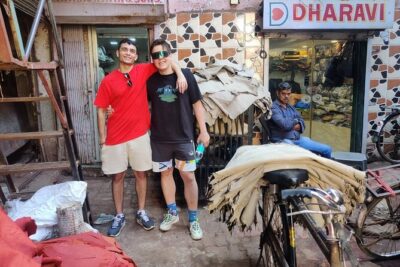
Dharavi slum tour in Mumbai by Female tour guides of the slum
Read our review →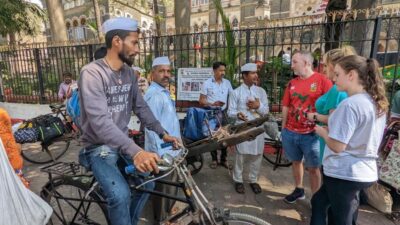
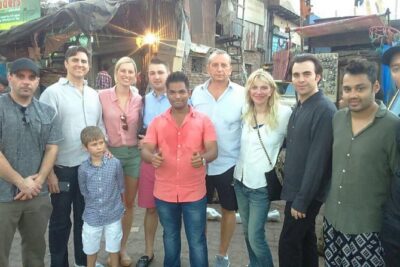
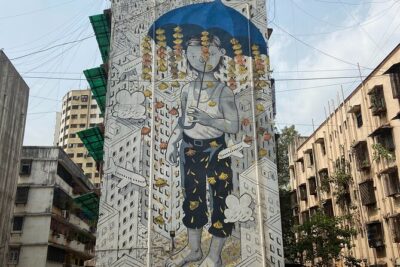
Dharavi Slum Slumdog Millionaire Tour with a Local
Read our review →
Mumbai Slum Tour – Visit Dharavi Slum with Local Guide
Read our review →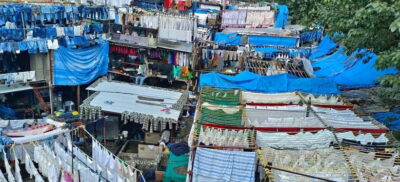
Dhobi Ghat Laundry and Dharavi Slum Tour with Local
Read our review →
Browse the lists this tour appears in