
Reviewed · MUMBAI MARKET AND BAZAAR TOURS
Mumbai Morning Market Tour of Flowers, Fish, and More
Mumbai wakes before most visitors do. At Sassoon Dock, fish sellers are already sorting the morning catch, while flower traders and vegetable vendors prepare for a long day. This is not a polished sightseeing route. It is a close look at how the city feeds, clothes, and supplies itself.
I like two things especially: the chance to ride a local Mumbai train with help from a guide, and the way the tour links several working markets rather than showing you only one. Guides such as Subhan, Jawwad, Jay, Sharon, Abhi, and Chirag have been praised for clear English and careful help in crowded streets. The drawback is simple: you must wake very early, and the fish market can be wet, smelly, and crowded.
Key points
- Fish market at dawn: Watch seafood auctions, cleaning, and preparation at Sassoon Dock.
- Three very different markets: See fish, fruit and vegetables, and Dadar’s flower trade in one morning.
- Local transport included: Travel by taxi, car, bus, or train depending on the route and chosen option.
- Dhobi Ghat visit: Learn how laundry from homes, hotels, and hospitals is washed each day.
- Small-group local help: English-speaking guides assist with crossings, train travel, translation, and market etiquette.
- Strong value at $19: Guide, transport, hotel pickup and drop-off options, and listed visits are included, but food and drinks are extra.
Why Mumbai’s markets are worth the early alarm
This three to three-and-a-half-hour outing shows you a side of Mumbai that is easy to miss from the usual monuments and waterfront viewpoints. The markets are most active in the morning, and some begin to wind down by the time the rest of the city is properly awake.
That timing gives the tour its purpose. You are not simply walking through stalls arranged for sightseers. You are watching vendors work, bargain, sort, cut, carry, and sell. The activity feels practical and direct, which makes it a useful introduction to everyday Mumbai.
I also like the range of sights. The fish market appeals to the senses in a forceful way. The vegetable market brings color and the smell of coriander and chilies. The flower market shifts the mood again, with garlands and loose blossoms prepared for customers. Between these stops, Dhobi Ghat and a train ride add useful context.
The route is best for curious visitors who want daily life, not just famous buildings. It is less suitable if you dislike early starts, strong smells, uneven market conditions, or walking through tight crowds.
More market and bazaar tours in Mumbai
- Mumbai: Street Food and Night Markets Tour
★ 4.9 · 719 reviews - Mumbai Morning Market Tour of Flowers, Fish, and More
★ 5.0 · 82 reviews - Mumbai Street Food Tour with Evening Bazaar Walk
★ 4.9 · 79 reviews
Starting before sunrise at Sassoon Dock
The exact start time depends on the option you book. Some departures begin around 5:00 or 5:30 in the morning, while a later option can begin around 7:00. The earlier departures are useful if you want to catch the markets at their freshest, but the later departure can help you avoid the heaviest fish-market rush.
If you choose pickup, the guide and driver meet you at your hotel. The meeting point for the standard arrangement is Pizza Express Colaba, near the Gateway of India. Confirm the exact time and location before setting your alarm, since the route has several early departures.
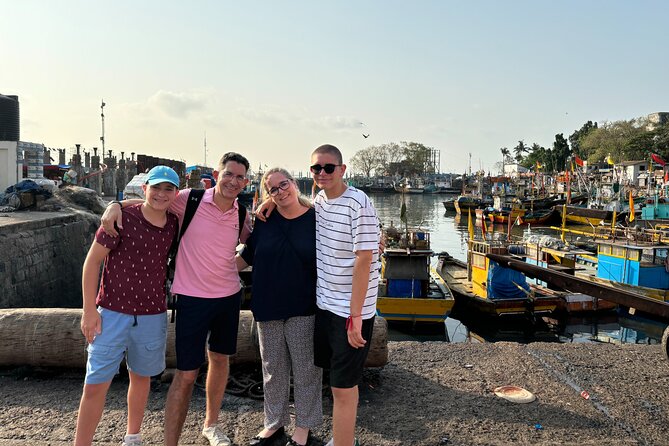
Sassoon Dock is the tour’s strongest opening. Women sell fresh fish while men display the daily catch, and you may see auctions taking place as buyers work out prices and quantities. Prawns, shrimp, and other seafood are cleaned and prepared for the day.
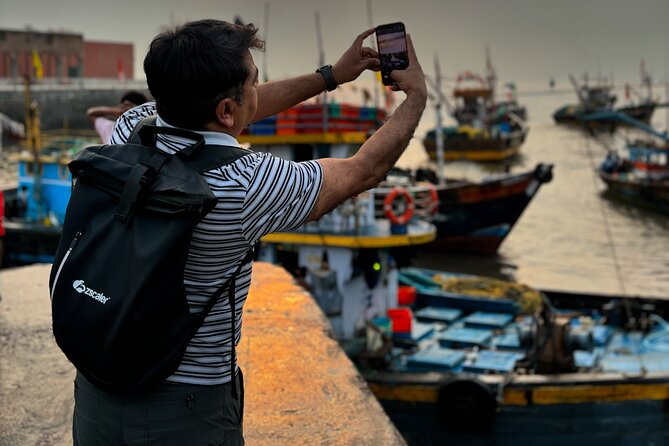
You should wear shoes that can cope with wet ground and clothing you do not mind exposing to fish odors. One useful tip is to keep your phone and camera secure, especially while walking through busy areas. Your guide can explain what is happening and help you move safely without blocking the sellers.
The market is not a quiet photo stop. Vendors are working, so you should follow your guide’s lead and ask before taking close portraits. The value here comes from understanding the trade, not just collecting pictures of fish laid on ice or tables.
Churchgate, CSMT, and Mumbai’s rail rhythm
The route includes a railway stop and a local train ride. The listed schedule refers to Churchgate Railway Station, while the tour information also includes a visit to Chhatrapati Shivaji Maharaj Terminus, commonly called CSMT. The exact station or sequence can vary with the selected option, so confirm the day’s route with your guide.
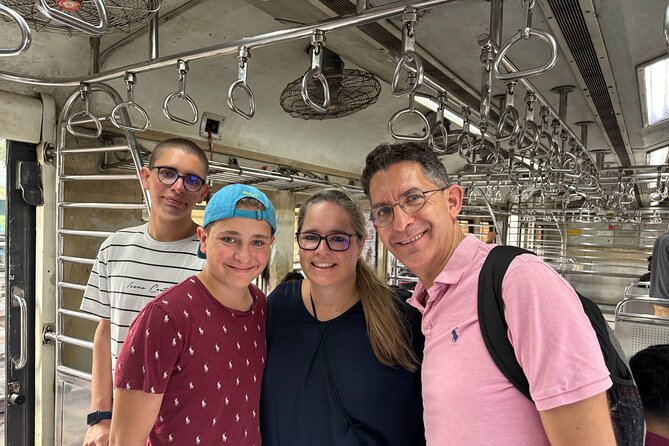
The train ride is a small part of the morning, but it adds a lot. Mumbai’s rail system is central to city life, and using it with a guide helps you understand how to find the platform, board at the right moment, and get off at the correct station. Several guides have also helped visitors continue to the station after the tour ends.
This is not a scenic rail journey in the usual sightseeing sense. Its value is practical. You are using the same transport that workers use to move across the city, rather than watching Mumbai from a private vehicle the entire time.
Crowding varies by time. Some visitors chose an early departure to ride before the trains became too full, while others found the 6:00 or 7:00 option still gave them a good look at the markets. Stay near your guide, especially on platforms and while crossing roads.
Dhobi Ghat and the work behind clean clothes
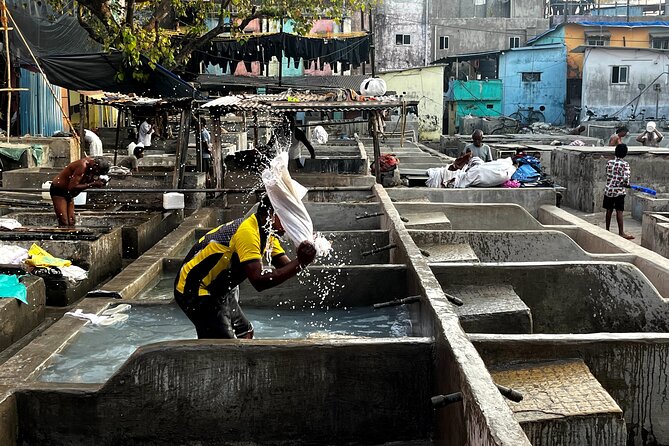
The next major stop is Dhobi Ghat, the famous open-air laundry area. Washers clean more than 2,000 pieces of clothing each day, serving hotels, hospitals, and private homes.
The visit usually lasts about 30 minutes. From the viewing area, you can see the working system and hear how the laundry moves through washing and preparation. This stop gives the morning a useful social and economic layer: clean clothes in Mumbai require a large network of people, transport, sorting, and physical labor.
Your guide’s explanation matters here. Without context, Dhobi Ghat can look like a series of concrete washing spaces. With an explanation of who sends laundry there and how the work is organized, you get a clearer sense of its place in the city.
The stop is described as a visit and photo opportunity, but it is not a long walk through every part of the operation. You will have a short time to look, listen, and take pictures. Keep the visit respectful, since this is a workplace rather than a staged attraction.
More early morning tours in Mumbai
- The Original Mumbai by Dawn – Recommended by Nigella Lawson & Nat Geo Traveller!
★ 5.0 · 610 reviews - Mumbai Private Sunrise/Sunset Sailing 8ppl Boat Tour
★ 4.5 · 86 reviews - Mumbai: Morning Bicycle Tour
★ 5.0 · 40 reviews - The Colourful Early Morning Tour
★ 5.0 · 31 reviews
Dadar’s vegetable market, where the city gets its produce
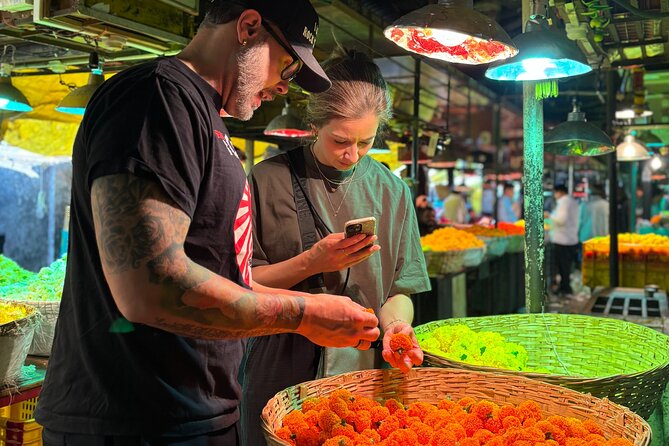
The Dadar fruit and vegetable market changes the pace. Here, the main impression is color and smell: green coriander, bright chilies, piles of produce, and the constant movement of vendors and buyers.
The tour allows about 30 minutes for this market. That is enough to see how goods are displayed and to ask questions about local buying habits, but it is not enough to inspect every lane. Your guide can explain how vendors operate and help translate when you want to ask about a product or price.
This is one place where the guide’s presence adds real value. You might recognize familiar vegetables, but the local context can be harder to read. A guide can point out what is commonly used, how stalls are organized, and what you are seeing in the middle of the morning trade.
Be ready for narrow passages and people carrying loads. Keep your group together and avoid stopping in the middle of the flow. Comfortable shoes matter more here than stylish ones.
The flower market is the colorful finish
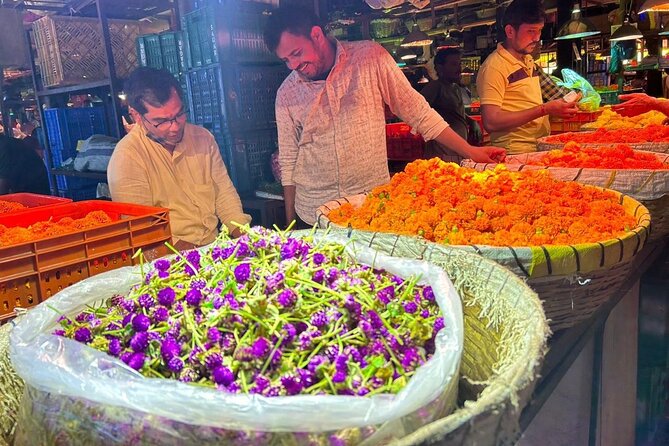
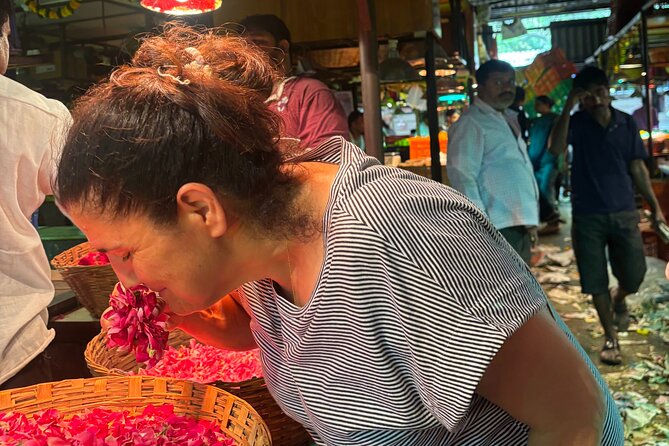
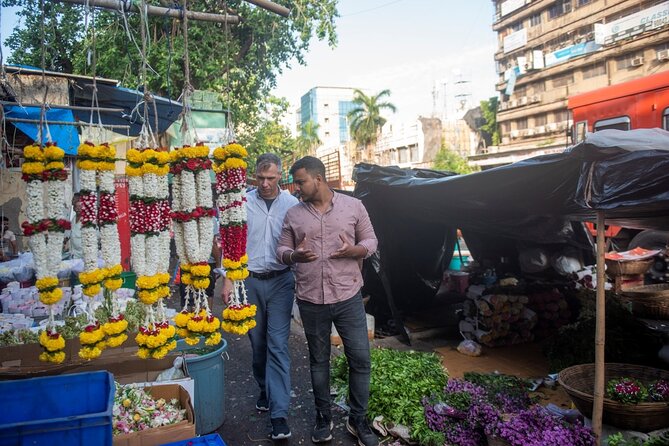
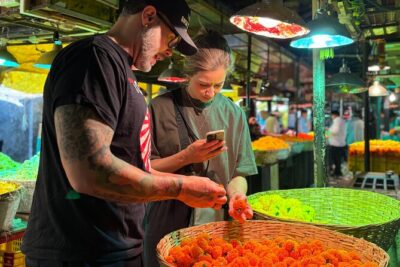
The Dadar flower market is usually the tour’s prettiest stop. Flowers are sold loose and in garlands, with strong scents replacing the fish and produce aromas from earlier in the morning.
The market is scheduled for roughly 30 minutes, including time for pictures. You will see traders handling flowers quickly and preparing them for customers. The contrast with Sassoon Dock is part of the pleasure: one market deals in seafood, another in vegetables, and this one in flowers used for worship, celebrations, and daily commerce.
I would save some camera space for this stop. The colors are appealing, but try to watch the hands and movement as well as the displays. The market works because people are sorting, tying, carrying, and selling at speed.
The usual finish is at or near Flower Market Dadar, although the booking details list two possible drop-off arrangements. If you need to return to a particular hotel, check whether hotel drop-off is included for your selected pickup option.
Chai, snacks, and what your $19 covers
The advertised price is $19 per person. For a three-hour private or small-group style outing with a guide, ground transport, hotel pickup and drop-off options, market visits, Dhobi Ghat, and a local train ride, that is a strong price.
Food and drinks are not included. A small chai stop may be offered, and several versions of the tour include time for a street snack such as a samosa or vada pav. Bring some local currency if you want to buy tea, breakfast, or something from a stall.
The value comes less from entrance tickets, since these markets are working public spaces, and more from access and coordination. A guide helps you move between distant parts of Mumbai, deal with transport, explain local practices, and avoid wasting your short morning figuring out the route.
The hotel pickup option adds convenience, especially if you are staying away from Colaba. If you meet at Pizza Express Colaba instead, plan your own way there and confirm the time carefully. The tour ends after the flower market, so you can continue sightseeing from Dadar or arrange the listed drop-off option.
Free cancellation is available up to 24 hours before the start, and you can reserve now and pay later. Those terms are useful when your Mumbai plans are still changing.
The guides make the busy parts easier
The strongest feature of this experience is the guide service. English-speaking guides including Jawwad, Subhan, Jay, Abhi, Sharon, Chirag, Ayan, and Yash have led different departures.
Their roles go beyond reciting facts. They help with road crossings, explain vendor activity, translate questions, show you how to use the train, and watch that you do not get separated in the crowds. Several guides have also adjusted the pace when someone was unwell or wanted a shorter version.
The driver matters too when hotel pickup is included. Drivers such as Deepak, Pranav, Saddam, Satyam, and Wasim are named in the tour feedback as part of the transport team. A private vehicle helps connect the far-apart stops without making you work out Mumbai traffic on your own.
Guide assignments can change, so you should not book solely to meet one named person. Still, the repeated praise for patient explanations, clear English, and careful handling of crowded streets gives you a good idea of the service level to expect.
Practical advice for a smoother morning
Pack lightly. You will move through markets, stations, vehicles, and narrow streets, so a small bag is easier than a large backpack.
Wear sturdy shoes. The fish market may be wet, and the paths in the vegetable and flower markets can be crowded. Avoid delicate clothing and bring a light layer if you are starting before sunrise.
Keep your schedule open after the tour if possible. The stated duration is three to three and a half hours, but traffic, train timing, and the pace of the group can affect the finish.
Stay close to the guide. One visitor noted that a companion who wandered off found the experience less useful, while those who stayed with the guide received more explanation and help. This is a hands-on city walk, not a route where you should race ahead for photographs.
Ask questions. The guides can explain market customs, local history, architecture, laundry work, and train travel. The more curious you are, the more you will get from the morning.
Who should book this Mumbai market tour?
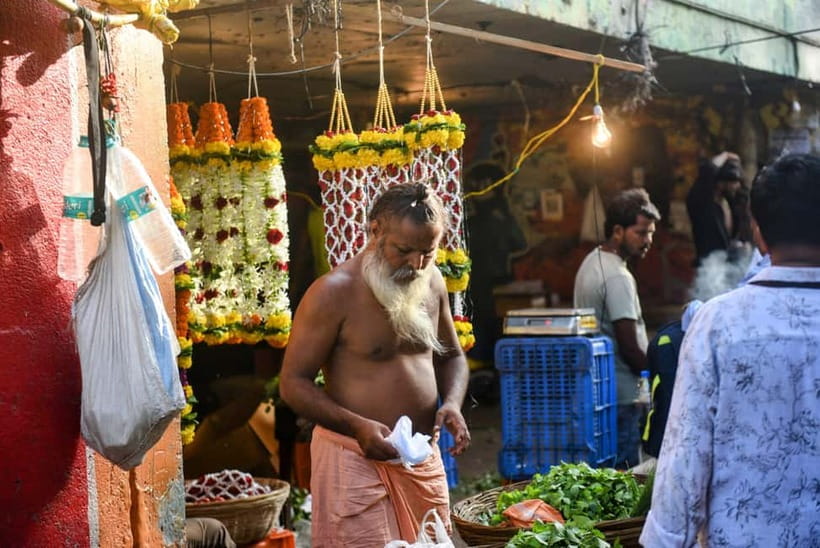
I would choose this for a first visit to Mumbai if I wanted an early introduction to how the city works. It also suits returning visitors who have already seen the Gateway of India, CSMT, and the main monuments but want a more local morning.
Families with older children may enjoy the variety, especially the train ride and flower market. Solo visitors can benefit from the transport and the guide’s help in crowded spaces. Food-focused visitors will appreciate the produce, seafood, chai, and street-snack stops, though meals are not part of the price.
I would hesitate if you need a late start, dislike seafood odors, or want a slow photography tour. The markets are workplaces, and the tour moves through several areas in a short time. You will see a lot, but you will not linger everywhere.
Should you book it?
Book this tour if you want Mumbai before the tourist day begins. The mix of Sassoon Dock, Dhobi Ghat, Dadar’s produce and flower markets, and local train travel gives you a useful picture of the city’s working routines.
At $19, it offers good value because transport and a guide solve the hardest parts of the route. Just prepare for an early alarm, wet shoes, strong smells, and extra spending for chai or breakfast. If those sound like part of the fun, this is one of the better ways to spend a morning in Mumbai.
FAQ
How long does the Mumbai market tour last?
The tour lasts about three to three and a half hours. Starting times vary, with options that can begin as early as around 5:00 or 5:30 in the morning and a later option around 7:00.
Where is the meeting point?
The standard meeting point is Pizza Express Colaba, near the Gateway of India. Hotel pickup is available with selected options, so check the pickup choice when booking.
Which markets does the tour visit?
The route includes Sassoon Dock Fish Market, Dadar Fruit and Vegetable Market, and Dadar Flower Market. It also includes a visit to Dhobi Ghat.
Is a local train ride included?
Yes. A local train ride is included in the tour package. The guide helps you use the railway system during the route.
Are food and drinks included?
No. Food and drinks are not included. The tour may stop for chai or a snack, but you pay for those separately.
Can I cancel the booking?
You can cancel up to 24 hours in advance for a full refund. The reserve now and pay later option is also available.
More markets worth browsing in Mumbai
- Private Market Tour and Vegetarian Cooking Class in Mumbai
★ 4.5 · 15 reviews - Mumbai Market Tour in Private Vehicle
★ 5.0 · 15 reviews - Mumbai Market Tour
★ 4.6 · 12 reviews - Mumbai: Evening Street Food Tasting & Cultural Market Tour
★ 4.7 · 11 reviews
More shopping tours in Mumbai
- Mumbai Street Food & Bazaar Tour with Local Transport
★ 5.0 · 51 reviews - Two Days Mumbai Tour Package : City + Slum + Elephanta + Market
★ 4.5 · 24 reviews - Mumbai 3 days package – Sightseeing, Food, Shopping, Slum, Bollywood & Kanheri
★ 5.0 · 20 reviews - Best of Dharavi Slum with Market Tour
★ 5.0 · 19 reviews
Recently added around Mumbai
- Private Walking Tour in Dharavi Slums★ 5.0 · 7 reviews
- Mumbai Sightseeing Tour★ 5.0 · 11 reviews
- Private Mumbai 2-Day Tour Package:City + Slum & Elephanta Island.★ 5.0 · 3 reviews
- Vegetarian Indian Cuisine Virtual Cooking Class Experience from Mumbai★ 5.0 · 4 reviews
- Mumbai by Night Guided Tour★ 5.0 · 6 reviews
- Transfer from Mumbai Airport to Hotel★ 4.0 · 7 reviews
- Full-Day Agra Tour with Taj Mahal From Mumbai By Air★ 5.0 · 8 reviews
- Taj Mahal Day Trip Including Same Day Flights from Mumbai★ 5.0 · 3 reviews
Mumbai Market and Bazaar Tours, compared.
Mumbai Morning Market Tour of Flowers, Fish, and More
Read our review →
Mumbai Street Food Tour with Evening Bazaar Walk
Read our review →

Mumbai Street Food & Bazaar Tour with Local Transport
Read our review →
Vibrant Markets of Mumbai (2 Hours Guided Walking Tour)
Read our review →
Mumbai Spice Markets and Bazaars Tour with Guide and Transport
Read our review →Browse the lists this tour appears in