
Reviewed · MUMBAI DHARAVI SLUM TOURS
Private City Tour with Dharavi Slum Dhobighat and Dabbawalla
Mumbai reveals itself best through contrasts. On this private tour, you move from the Gateway of India and grand colonial buildings to the hand-worked laundry at Dhobi Ghat and the close-set lanes of Dharavi. Guide Siddhi, also called Sid, leads the route with local context and can adjust the day around places you have already seen.
I like the private format, which keeps the pace in your hands, and I like the mix of famous sights with working parts of the city. You get views from Malabar Hill, a look at Mumbai’s celebrated railway architecture, and time for the two-hour Dharavi visit. The drawback is simple: this is a very full route, so most stops are brief, and traffic can make the day feel long.
Key points to know before booking
- Two hours in Dharavi: The longest stop gives the city tour a human and working focus, not just a checklist of monuments.
- Dhobi Ghat in context: You see Mumbai’s open-air laundry after visiting major civic and cultural landmarks.
- A truly private outing: Only your group takes part, with pickup offered and a listed start at 9:30 a.m.
- A flexible guide: Siddhi, also known as Sid, is described as willing to add or adjust stops when guests have already seen parts of the route.
- A broad South Mumbai sweep: The day includes the Gateway of India, CST, Crawford Market, Marine Drive, Mani Bhavan, Malabar Hill, and more.
- Good value for a long day: At $75.69 per person, the price covers roughly 6 to 7 hours of private guiding, though entry tickets and meals are not listed as included.
A full Mumbai day built around contrasts
This is not a narrow monument tour. It is a city sampler that links Mumbai’s grand public face with places where daily work still happens in plain view.
You begin at Regal Cinema in Colaba at 9:30 a.m., with pickup offered. From there, the route moves through South Mumbai and finishes at Kumbhar Wada in Dharavi. That one-way shape is useful if you want to continue from Dharavi rather than return to Colaba, but you should plan your onward transport carefully because the tour does not end where it starts.
The private setup matters here. Mumbai traffic, heat, crowds, and short sightseeing windows can make a fixed group tour tiring. With only your own party, you can ask Sid to explain a building, spend a little longer at a view, or skip a place you have already visited. The route is still ambitious, so flexibility does not mean unlimited time at every stop.
More dabbawala tours in Mumbai
- Private Combo Tours Sightseeing + Dharavi Slum + Dhobi Ghat & Dabbawalas
★ 5.0 · 245 reviews - Dabbawala, Dhobi Ghat & Dharavi slum Tour with Local Train Ride
★ 5.0 · 102 reviews - Mumbai Gems: 2-Day Private Tour with Elephanta, Slum & Dabbawala
★ 5.0 · 63 reviews
Gateway of India and Mumbai’s ceremonial waterfront
The Gateway of India is a fitting opening. Built in the early 20th century to mark the landing of King-Emperor George V, the arch points to the period when British power shaped Mumbai’s waterfront and public buildings.
You have about 20 minutes here. That is enough for photographs and a short explanation, but not enough for a slow look at every architectural detail. If this is your first morning in Mumbai, the stop helps you get your bearings in the Colaba area. The nearby Taj Mahal Palace is also part of the visual setting, though the supplied route names the Gateway rather than a formal hotel visit.
Gothic Mumbai around the university, High Court, and CST
The next cluster gives you three very different views of institutional Mumbai. The University of Mumbai Library and the Bombay High Court reflect the city’s grand colonial-era building tradition, while Chhatrapati Shivaji Terminus brings railway architecture into the picture.
Each stop is short: about 20 minutes at the university, 10 minutes at the High Court, and 20 minutes at CST. You should expect exterior viewing and guide commentary rather than long indoor visits. CST is the major highlight in this group. It is a UNESCO World Heritage Site, designed by British architectural engineer Frederick William Stevens, and remains one of the city’s most recognizable buildings.
I like this section because it shows how Mumbai’s public identity was built through education, law, and rail travel. The pace is brisk, though. If architecture is your main interest, tell your guide early so you can use the private format well.
Crawford Market and the everyday city
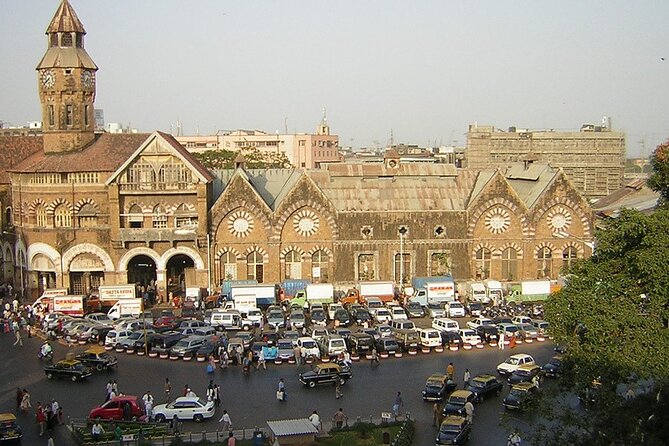
Crawford Market gives the tour a change of rhythm. Completed in 1869 and donated to the city by Cowasji Jehangir, it is one of South Mumbai’s best-known markets.
You have around 20 minutes, so treat this as a compact introduction rather than a shopping expedition. The value is in seeing a working market placed alongside the city’s formal landmarks. You may find the stop lively and crowded, and the short visit means you will need to stay close to the guide and keep an eye on the clock.
One useful detail from the tour’s style is that Sid is not described as pushing purchases. That matters in market areas, where some visitors worry that a guided stop will turn into a sales visit. Here, the emphasis is on seeing the place and understanding its role in the city.
More Dharavi walking tours in Mumbai
- Dharavi slum tour in Mumbai by Female tour guides of the slum
★ 5.0 · 1,976 reviews - Mumbai: Dharavi Slum, DhobiGhat, and Dabbawallas Tour
★ 4.9 · 689 reviews - Dharavi Slum Tour
★ 5.0 · 625 reviews - Dharavi Slum tour in Mumbai by local resident
★ 5.0 · 572 reviews
Marine Drive and the Malabar Hill views
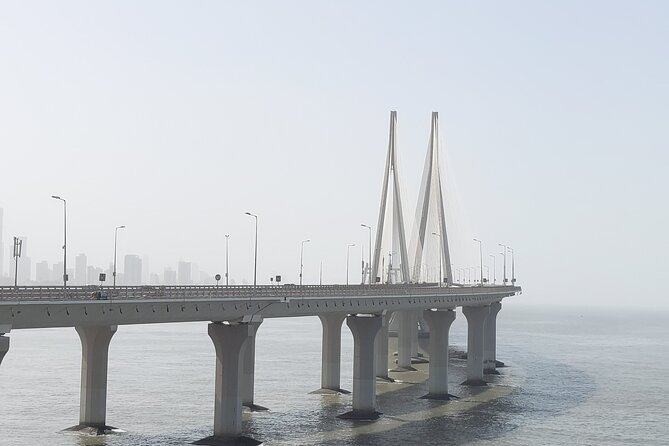
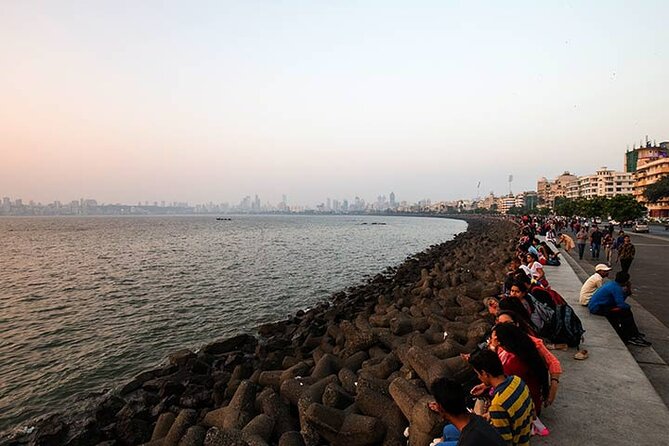
Marine Drive offers a breather from the tighter streets. The three-kilometre promenade follows a C-shaped road beside the water, and the 20-minute stop is mainly about the broad city view and the famous curve of the shoreline.
The tour then climbs conceptually, if not necessarily by foot, toward Hanging Gardens and Kamala Nehru Park. Both are scheduled for about 20 minutes. The gardens sit on Malabar Hill, while Kamala Nehru Park is known for its view over Marine Drive. You can expect a useful photo stop and a look at how Mumbai’s dense urban form appears from above.
These stops help break up the harder-edged city sightseeing. They also show why the timing matters. Twenty minutes gives you a chance to take in the view, but not a leisurely park visit. Comfortable shoes and water would be sensible for a day with repeated exits and short walks, although the tour information does not specify walking distances.
Mani Bhavan and Banganga’s quieter side of Mumbai
Mani Bhavan is one of the more meaningful stops. The building on Laburnum Road served as the focus of Gandhi’s political work in Mumbai between 1917 and 1934 and is now a museum.
The scheduled visit lasts about 20 minutes. That is a tight window for a museum, so ask Sid to focus on the rooms or events most useful to you. I would give this stop more weight than its brief timing suggests. It adds political and social context to a day otherwise filled with architecture, markets, roads, and viewpoints.
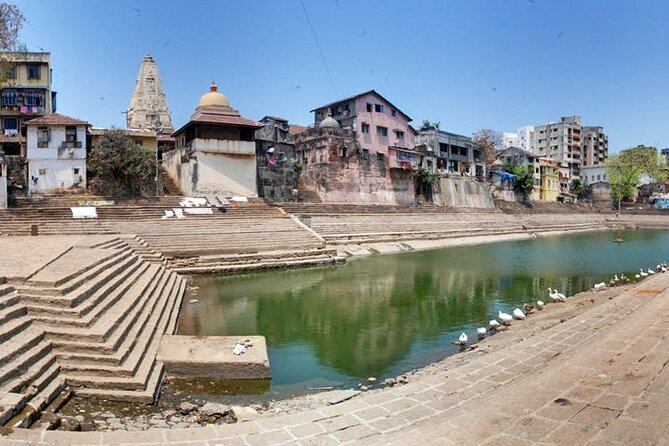
Banganga offers another shift. The temple tank forms part of the Walkeshwar Temple complex on Malabar Hill. Its presence in the itinerary shows a less polished, more religious side of South Mumbai. You have about 20 minutes here, enough to see the tank and hear why the site matters, but not enough for a long religious or historical visit.
Antilia and Churchgate: modern wealth and public movement
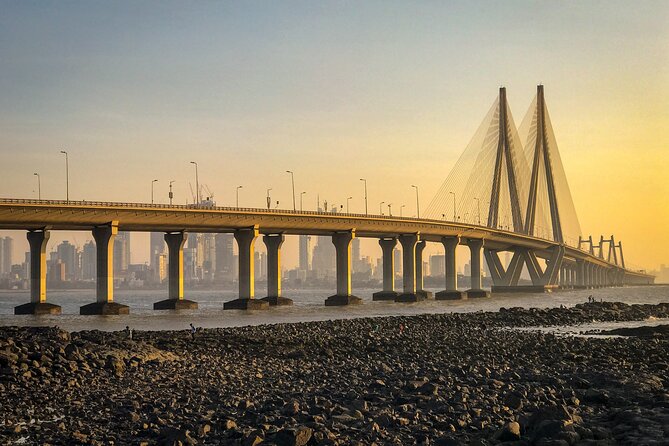
Antilia is included as a brief exterior sight. It is the private residence of billionaire Mukesh Ambani and his family, who moved there in 2012. The stop lasts around 20 minutes and gives you a glimpse of Mumbai’s extreme modern wealth.
I see this as a quick contrast rather than a major attraction. You are not visiting the residence, and the value lies in seeing how the city places immense private wealth near crowded public neighborhoods and older landmarks.
Churchgate Railway Station follows, with about 20 minutes in the schedule. The wider Churchgate area is known for the Oval Maidan, Brabourne Stadium, nearby art and architecture, and its role in Mumbai’s daily movement. The stop adds another transport-focused piece after CST, but the two stations show different sides of the city and its colonial-era planning.
Dhobi Ghat: a working service seen from close range
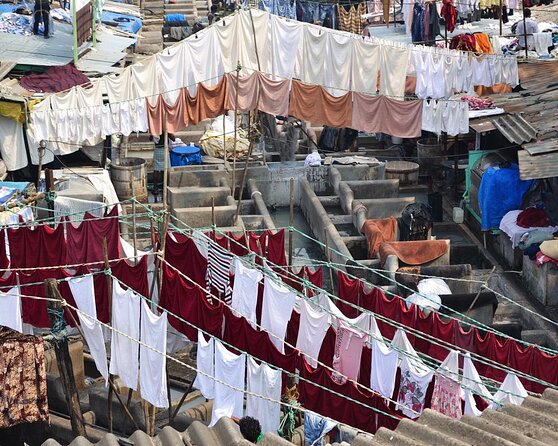
Mahalaxmi Dhobi Ghat is one of the tour’s clearest reasons to book. This open-air laundry near Mahalaxmi railway station is associated with the washermen who handle clothes for the city.
The visit lasts 30 minutes, longer than most of the early landmark stops. You can expect an explanation of how the laundry functions and why it has become such a well-known part of Mumbai’s public identity. The appeal is not simply taking photographs. It is seeing a major urban service carried out through manual work in a dense city.
Be respectful here. This is a workplace, not a stage set. Follow your guide’s instructions, avoid treating people as props, and keep the visit focused on the system and setting. The tour’s strength is the chance to connect Dhobi Ghat with the rest of Mumbai, rather than viewing it as an isolated curiosity.
Two hours in Dharavi, the heart of the day
The final stop is Dharavi, scheduled for two hours. That makes it the longest part of the tour and the section most likely to shape your impression of the city.
Dharavi covers just over 2.1 square kilometres and has a population estimated at about one million. The figures alone do not explain the place. A guided walk can help you understand the tight urban layout, the homes, workshops, and small businesses that occupy the same area, and the way people make a living within limited space.
The tour ends in Kumbhar Wada, Dharavi. You should expect a close look at neighborhood life rather than a polished attraction. The route description identifies Dharavi as a major stop, but it does not give a detailed list of workshops or businesses you will enter, so do not book expecting a guaranteed set of demonstrations.
This is where Sid’s approach matters most. The strongest feedback about the guide centers on warmth, clear explanations, local understanding, and a sensitive manner. One useful point is that he is described as flexible and willing to add places when a group has already seen part of the planned route. That can make the Dharavi portion feel more personal, though the exact route will depend on the day.
Dharavi also calls for care from you. Listen first. Ask questions about work, housing, and daily routines rather than treating hardship as entertainment. A good guide can help you see more than poverty. You can come away with a clearer picture of enterprise, community, and the sheer pressure on space in Mumbai.
How much value do you get for $75.69?
At $75.69 per person, this tour is not the cheapest way to see Mumbai. It is also not a simple transfer between landmarks. You are paying for a private 6 to 7 hour route, a guide, pickup availability, and a wide selection of stops that would be difficult to arrange efficiently on your own in one day.
The value is strongest if you have limited time in Mumbai. You can cover the Gateway, CST, Crawford Market, Marine Drive, Gandhi’s Mumbai home base, Malabar Hill, Dhobi Ghat, and Dharavi without piecing together separate rides and guides.
The value is weaker if you prefer slow museum visits or long meals. Most stops last only 20 minutes, and the tour does not list admission fees, lunch, or a dedicated dabbawala activity as separate inclusions. The title refers to dabbawalla, but the supplied stop-by-stop plan does not identify a specific dabbawala meeting or presentation. If that is your main reason for booking, confirm the details before paying.
The published rating is 5 out of 5 from 22 ratings, with every rating marked as recommended. The repeated strengths are guide communication, Sid’s personal manner, flexibility, and a clear promise that you do not need to buy anything. Those points support the price, especially for first-time visitors who want help making sense of a very large city.
Timing, pickup, and practical fit
The listed start is 9:30 a.m. at Regal Cinema in Apollo Bandar, Colaba. Pickup is offered, and confirmation is received at booking. The tour operates near public transportation, but the stated end is in Dharavi rather than back in Colaba.
The activity is private, and only your group participates. Most people can take part, though you should be ready for a long day with multiple stops and a two-hour neighborhood walk. The tour requires good weather. If poor weather cancels it, you are offered another date or a full refund.
You can cancel for a full refund up to 24 hours before the start time. Changes made inside that 24-hour window are not accepted, and late cancellations are not refunded. The experience also requires a minimum number of participants, with a different date, another experience, or a refund offered if that minimum is not met.
Who should book this Mumbai tour?
I would choose this tour if you have one main day for Mumbai and want both famous sights and working neighborhoods. It suits first-time visitors, couples, families, and small groups who value a private guide and do not want a rigid large-group schedule.
It is also a good fit if you want context rather than just photographs. Sid’s reported strengths in communication, flexibility, and sensitivity are especially useful at Dhobi Ghat and Dharavi, where a careless visit can feel shallow.
I would hesitate if you want a relaxed pace, long museum visits, or a tour built mainly around food. I would also ask for clarification if a dabbawala encounter is essential, since the detailed route does not name one.
Should you book it?
Book it if you want a broad, practical introduction to Mumbai in one private day. The combination of landmark architecture, markets, viewpoints, Gandhi’s Mani Bhavan, Dhobi Ghat, and two hours in Dharavi gives you far more than a postcard version of the city.
Go in knowing that this is a fast-moving overview. You will see many places, but most visits are short. For $75.69, the best reason to choose it is the guide and the private format, not the number of stops alone. If you tell Sid what matters most to you, you have a better chance of turning a crowded schedule into a useful and memorable day.
FAQ
Where does the tour start?
The listed meeting point is Regal Cinema in Apollo Bandar, Colaba, Mumbai, at 9:30 a.m. Pickup is also offered.
Where does the tour end?
The stated end point is Kumbhar Wada in Dharavi, Mumbai. It does not end at the starting point in Colaba.
How long does the tour last?
The tour lasts approximately 6 to 7 hours.
Is this a private tour?
Yes. Only your group participates in the activity.
What are the main stops?
The route includes the Gateway of India, University of Mumbai Library, Bombay High Court, Chhatrapati Shivaji Terminus, Crawford Market, Marine Drive, Mani Bhavan, Hanging Gardens, Kamala Nehru Park, Banganga, Antilia, Dhobi Ghat, Churchgate Railway Station, and Dharavi.
How long do you spend in Dharavi?
The scheduled Dharavi visit lasts two hours.
Is the dabbawalla experience a separate stop?
The tour title includes dabbawalla, but the detailed route does not identify a separate dabbawalla meeting or activity. Confirm this point with the provider before booking if it is important to you.
What is the cancellation policy?
You can cancel up to 24 hours before the start time for a full refund. Late cancellations and changes made within 24 hours are not accepted. Poor weather or failure to meet the minimum number of participants may result in another date or a full refund.
More city sightseeing tours in Mumbai
- Mumbai: Full-Day Sightseeing Tour of Mumbai
★ 4.9 · 1,822 reviews - Private Mumbai Sightseeing Tour (Traveller’s Choice Award Winner)
★ 5.0 · 1,565 reviews - Highlights of Mumbai Sightseeing Tour: TRAVELLERS CHOICE AWARDED
★ 5.0 · 915 reviews - Highlights of South Mumbai Guided Private Tour in AC Vehicle
★ 5.0 · 620 reviews
Recently added around Mumbai
- Private Walking Tour in Dharavi Slums★ 5.0 · 7 reviews
- Mumbai Sightseeing Tour★ 5.0 · 11 reviews
- Private Mumbai 2-Day Tour Package:City + Slum & Elephanta Island.★ 5.0 · 3 reviews
- Vegetarian Indian Cuisine Virtual Cooking Class Experience from Mumbai★ 5.0 · 4 reviews
- Mumbai by Night Guided Tour★ 5.0 · 6 reviews
- Transfer from Mumbai Airport to Hotel★ 4.0 · 7 reviews
- Full-Day Agra Tour with Taj Mahal From Mumbai By Air★ 5.0 · 8 reviews
- Taj Mahal Day Trip Including Same Day Flights from Mumbai★ 5.0 · 3 reviews
Mumbai Dharavi Slum Tours, compared.

Dharavi slum tour in Mumbai by Female tour guides of the slum
Read our review →

Dharavi Slum Slumdog Millionaire Tour with a Local
Read our review →
Mumbai Slum Tour – Visit Dharavi Slum with Local Guide
Read our review →
Dhobi Ghat Laundry and Dharavi Slum Tour with Local
Read our review →
Browse the lists this tour appears in