
Reviewed · MUMBAI MARKET AND BAZAAR TOURS
Vibrant Markets of Mumbai (2 Hours Guided Walking Tour)
Mumbai’s market district is best understood on foot, one crowded lane at a time. This two-hour walk takes you from Bhuleshwar and the Mumba Devi Temple through Zaveri Bazaar, Kalbadevi, Mangaldas Market, and Crawford Market, showing how shopping, worship, food, and old city life fit together.
I like the clear route and the local food stops. I also like that guides such as Nisar, Maze, and Giriraj have been praised for adjusting the pace, answering questions, and helping visitors cross Mumbai’s hectic streets. The main drawback is simple: two hours is a tight schedule, and crowded lanes, narrow passages, heat, and monsoon rain can make the walk tiring.
Key points at a glance
- Mumba Devi Temple: Visit the shrine connected with Mumbai’s name and learn about the city’s religious roots.
- Zaveri Bazaar: Walk through Mumbai’s biggest jewelry district, filled with gold, ornaments, and glittering stones.
- Mangaldas Market since 1893: Browse silk, cloth, tailors, and designer boutiques in one of the city’s best-known textile areas.
- Crawford Market finale: See produce and imported cheese, then finish with homemade chocolates, desserts, and mouth fresheners.
- Food along the way: The tour includes tastings of local street dishes and masala chai served in a clay pot.
- Flexible guiding: English and Hindi are available, and a private group can be arranged.
Why Mumbai’s markets make a good first walk
This is not mainly a shopping trip. It is a fast introduction to how old Mumbai works.
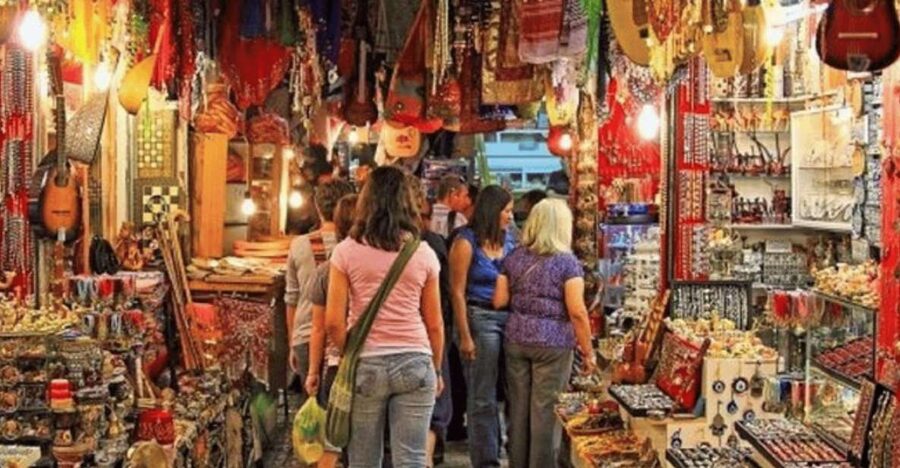
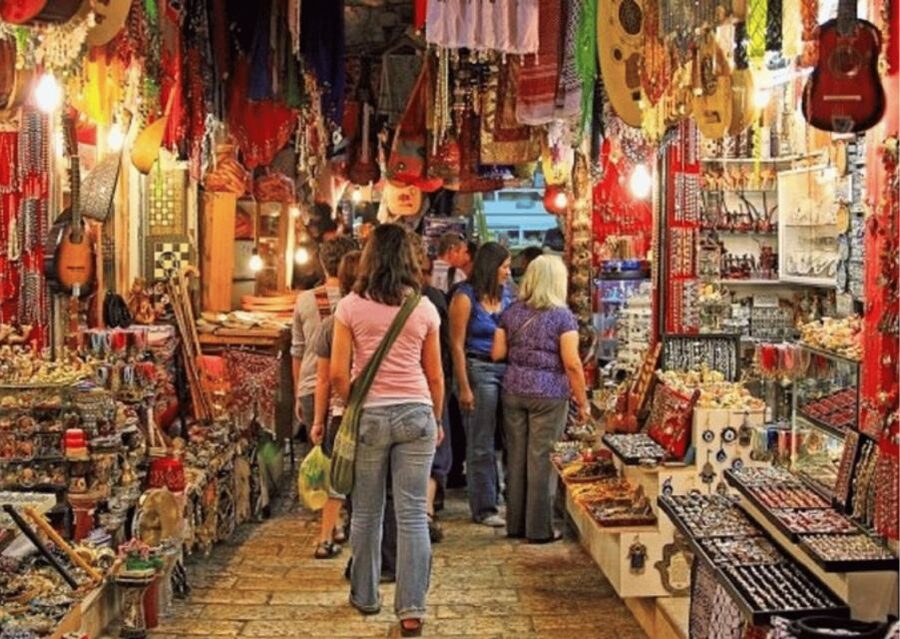
In a few blocks, you move from religious goods and flower sellers to precious metals, silk, vegetables, antiques, and household items. The market streets show the city at close range. You see what people buy for festivals, weddings, worship, cooking, and daily life.
I like this kind of tour because the guide gives the streets a shape. On your own, you might notice the bright fabrics or the trays of jewelry, but miss why one lane sells flowers and another specializes in metalwork. A good guide also helps you focus on the architecture, street names, customs, and small details that disappear when traffic and crowds demand your attention.
The route is compact but full. Each listed stop receives about 20 minutes, so expect a moving introduction rather than a slow shopping expedition. If you want to bargain for fabric, compare jewelry, or inspect antiques at length, you will need extra time after the walk.
More market and bazaar tours in Mumbai
- Mumbai: Street Food and Night Markets Tour
★ 4.9 · 719 reviews - Mumbai Morning Market Tour of Flowers, Fish, and More
★ 5.0 · 100 reviews - Mumbai Morning Market Tour of Flowers, Fish, and More
★ 5.0 · 82 reviews
Starting at BAPS Shri Swaminarayan Mandir
The meeting point is BAPS Shri Swaminarayan Mandir. You begin from here before heading toward the market area.
The temple gives the walk a calm point of reference before the street noise takes over. From there, the route moves into the commercial heart of south Mumbai, with the guide explaining what you are seeing as you go.
The tour is offered in English or Hindi. Guide names connected with highly rated departures include Nisar, also spelled Nissar in some information, Maze, Giriraj, and Hisar Shaikh. The exact guide depends on the booking, but the useful pattern is clear: guides are expected to do more than point out shops. They explain the area, help with navigation, and can shape the walk around your interests.
One practical note matters here. This is a walking tour in crowded streets, not a vehicle sightseeing trip. Wear comfortable clothing and shoes, keep your belongings secure, and be ready for close traffic, narrow lanes, and uneven pauses in the flow of people.
Bhuleshwar and BMC Market: the city’s everyday supply room
The first market section includes BMC Market and the busy streets of Bhuleshwar. This is where you see the broadest mix of ordinary city commerce.
Expect stalls and shops connected with fruits, vegetables, household goods, cloth accessories, imitation jewelry, religious articles, pooja materials, and rose petals. The variety matters. Bhuleshwar is not arranged for neat sightseeing. It is a working shopping district, and the range of goods tells you what local households and worshippers need each day.
The flower sellers are especially useful for understanding the connection between commerce and devotion. Rose petals and other offerings move through the same streets as vegetables and household supplies. A guide can explain these links while steering you through the traffic.
You may also see delicate metal crafts and other small goods among the shopfronts. This is a good place to ask questions before reaching the more specialized jewelry and textile areas.
The limitation is time. Twenty minutes gives you a sample, not a full survey. If you see a particular item you want to buy, note the location and return later. Stopping for every shop would make it impossible to complete the route.
Mumba Devi Temple and the name of Mumbai
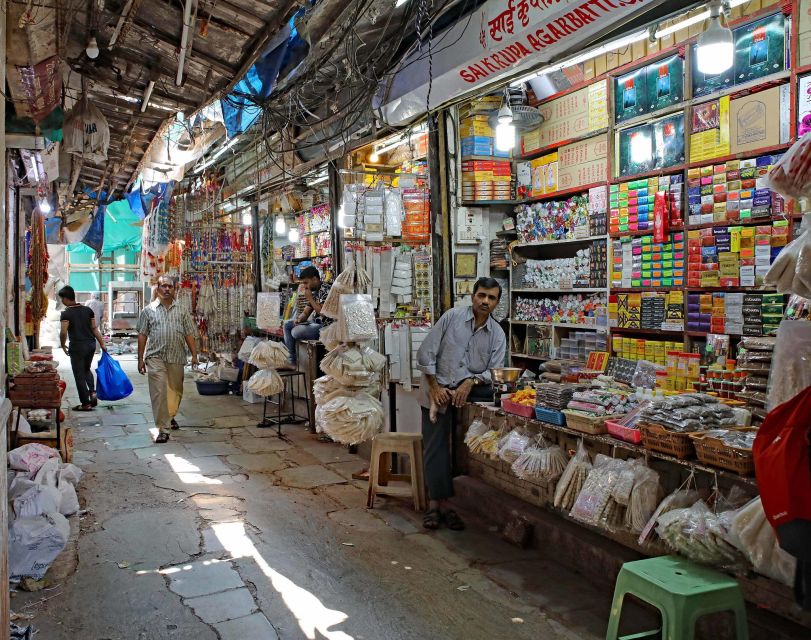
The next stop is Mumba Devi Temple, associated with the name Mumbai. That connection gives the visit more weight than a quick photo stop. It links the modern city to a local religious tradition and helps explain why this area has such a strong spiritual character.
Your guide provides the context while you walk and visit. As with any active temple, dress respectfully and follow instructions about where you can go. The supplied details do not promise a long religious lecture or a formal worship experience, so think of this as a guided visit within a market walk rather than a dedicated temple tour.
I like this pause in the route because it breaks up the shopping focus. After flowers, goods, and street traffic, the temple offers a chance to consider the city’s identity. It also shows how closely Mumbai’s places of worship sit beside commercial streets.
The stop is scheduled for about 20 minutes. That is enough for an introduction and sightseeing, but not an extended examination of every feature.
More walking tours in Mumbai
- Group Guided Walking Tour in Fort and Colaba
★ 5.0 · 1,073 reviews - Private Guided Walking Tour in Fort & Colaba
★ 5.0 · 895 reviews - Private Guided Walking Tour in Bandra Queen of Suburbs
★ 5.0 · 383 reviews - Private Guided Spiritual Walk in Banganga Hindu Temples
★ 5.0 · 271 reviews
Zaveri Bazaar and the careful look at jewelry
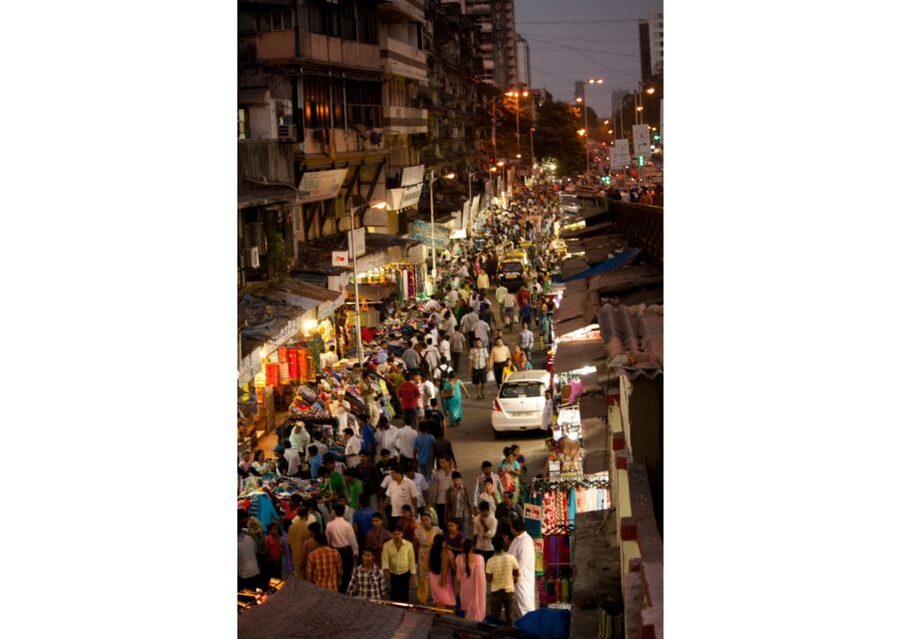
Zaveri Bazaar is the largest jewelry market in Mumbai and one of the most striking stops on the route. Its shops deal in gold, ornaments, precious metal work, and glittering stones.
Even if you have no plan to buy jewelry, the district is worth seeing as a specialized part of the city economy. You get a sense of how a major jewelry market is organized and why the area attracts shoppers looking for Indian ornaments.
This is also where a guide can add value by explaining the difference between what you are seeing, how jewelry is used in Indian dress, and how the market fits into the wider city. You may find delicate metalwork, polished displays, and designs intended for weddings or traditional outfits.
Keep your expectations practical. Twenty minutes is not enough for a serious purchase, price comparison, or custom order. Treat this part as an orientation. If you intend to buy anything valuable, use the walk to learn the area, then return with plenty of time and your own purchasing plan.
The market can feel intense because of crowds and shop activity. A guide such as Nisar has been specifically praised for helping people stay safe around Mumbai traffic. That kind of practical care matters here more than a long list of facts.
Kalbadevi, flower streets, and the route toward old Mumbai
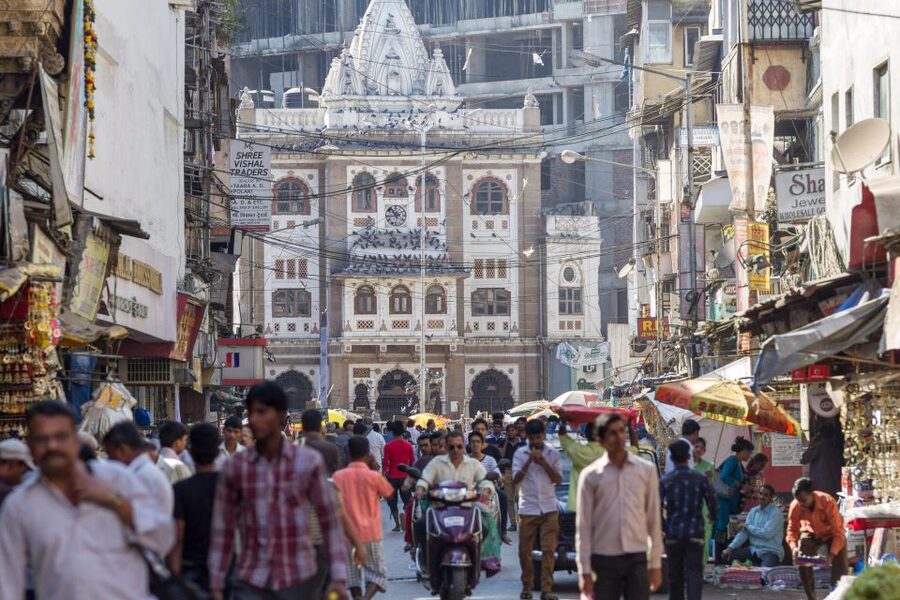
The walk passes through Kalbadevi, another busy commercial district, with time for shopping and sightseeing. The route also includes Mumbai’s famous flower street and a look toward Chor Bazaar, known for antiques and furniture.
The exact balance can depend on the guide and the pace of your group. The published route lists Kalbadevi as a stop and Chor Bazaar as part of the broader market experience, so you should not assume a long stop inside every antique shop.
This stretch is good for seeing how different trades cluster together. Flowers, furniture, antiques, cloth, religious materials, and daily goods all have their own corners. You will likely find the city most interesting here when you stop trying to photograph every item and instead watch the movement of people and goods.
If antiques are your main reason for booking, check the starting time and route details before paying. Two hours cannot cover every market named in the description at equal length. For a general introduction to the area, though, the variety is a strength.
Mangaldas Market, open since 1893
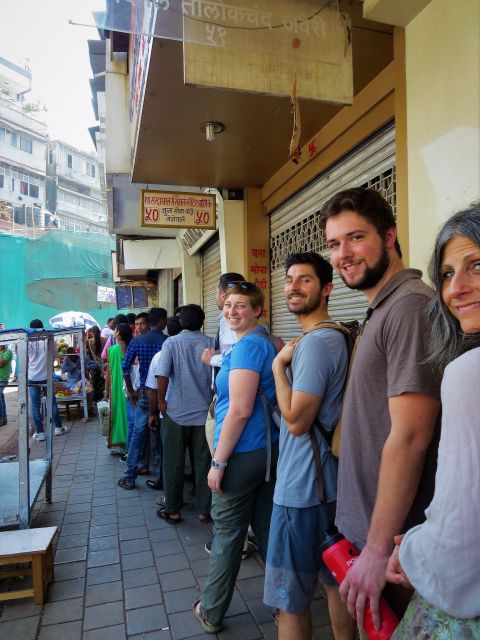
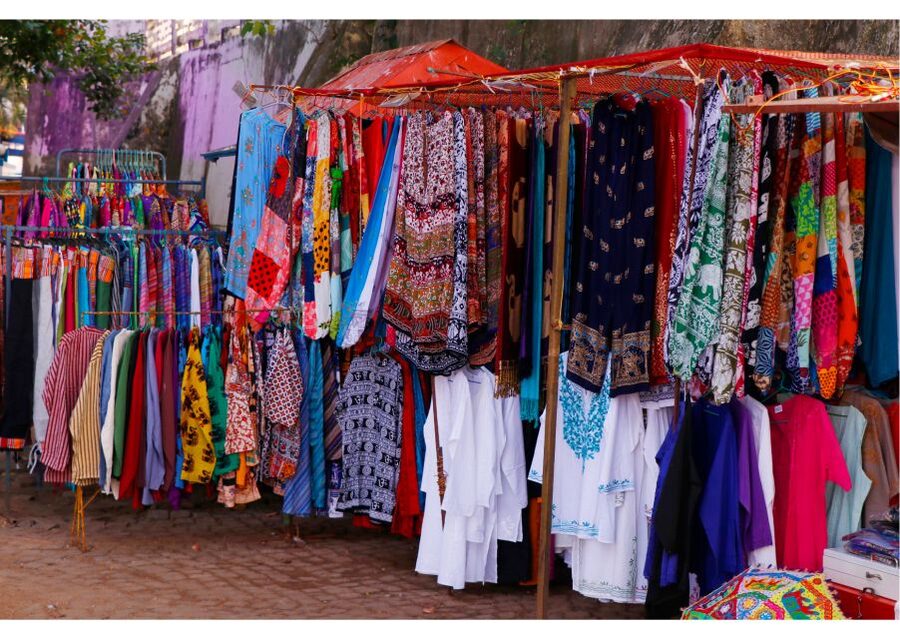
Mangaldas Market is one of the route’s best stops for anyone interested in Indian clothing. It opened in 1893 and is known for silk and cloth, with tailors and designer boutiques in the surrounding area.
This is where the tour shifts from jewelry and daily supplies to fabrics and dress. You may see colorful textiles, Mumbai silk sarees, and cloth suited to Indian outfits. The setting also helps explain how a piece of fabric moves from a market purchase toward tailoring and finished clothing.
I like the practical side of this stop. You do not just see finished garments behind glass. You get a look at the textile trade, where fabric, tailoring, and design are closely connected.
The twenty-minute visit is enough to get oriented and browse. It is not enough to commission a complicated outfit or compare every fabric stall. If you want a saree or other textile, ask your guide for help understanding the choices, then return after the tour when you are not watching the clock.
Crawford Market and the final food stops
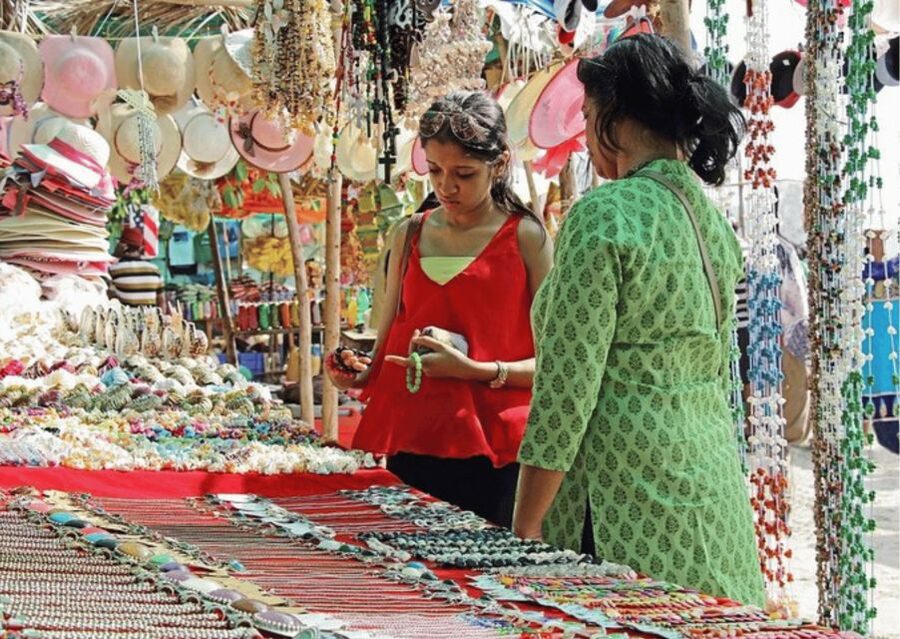
The tour finishes at Crawford Market, one of the most useful endpoints on the route. The market is known for fruits, vegetables, imported cheese, and homemade chocolates.
After the more specialized areas, Crawford Market brings the focus back to food. You can expect the guide to explain what you are seeing while you browse and taste selected local items. The food portion includes multiple authentic Mumbai street dishes, along with desserts and mouth fresheners.
A clay-pot masala chai is also part of the experience highlights. The tea offers a small but memorable local ritual, and the stated stop includes views of Mumbai. Exact tasting choices can vary, so tell the guide about allergies before eating.
The cheese and chocolate mention adds an unexpected touch. This is not only a street snack walk. Crawford Market shows both local produce and imported food, along with the city’s fondness for sweets.
The tour ends at Crawford Market rather than returning to the temple. That is useful if you want to continue exploring the market district, find lunch, or arrange your next stop from there. Hotel pickup and drop-off are not included, so plan your own transport after the walk.
What the guide adds to the experience
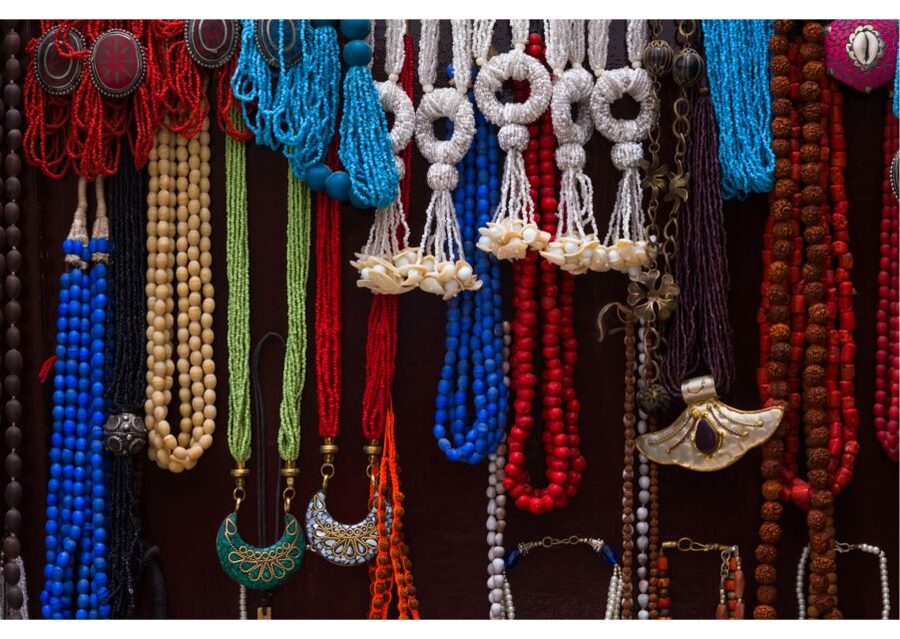
The guide is the difference between a useful market walk and a tiring shuffle through crowded streets.
The best feedback centers on clear explanations, patience, safety, and the ability to adjust the route. Nisar is repeatedly singled out for explaining the markets, discussing nearby architecture, answering questions, and helping people navigate traffic. Maze is praised for a well-organized route, while Giriraj is described as kind, generous, and well informed about Mumbai.
Those personal details matter because market walks work best as conversations. You can ask why a lane specializes in one product, how a religious item is used, or where a particular kind of cloth belongs in Indian dress.
A private group is available. That may be worth considering if you want a slower pace, have a specific interest in textiles or jewelry, or prefer more time for questions. A shared format can be better for value, but the two-hour schedule remains tight.
Price, pace, and practical value
At $14 per person, this is a low-cost way to get a guided introduction to several central markets. The price includes the guide, food tastings, conversation, local stories, and recommendations. It does not include hotel transport or personal purchases.
I see the strongest value in the local orientation. You are paying for help making sense of a complicated area, not for admission to a major monument or a long formal tour. If you have only a short time in Mumbai, the route covers a lot of ground for the money.
The tradeoff is depth. Six major sections are listed across two hours, with roughly 20 minutes attached to each. You will see more than you can study closely. Plan to return to the markets that interest you most.
The tour runs in all weather. Mumbai’s monsoon can bring rain, so carry an umbrella during that season. Festivals and weekends may bring heavier crowds. Comfortable clothes are recommended, and you should be ready to walk for the full two hours.
Food allergies should be reported to the guide before tasting. Personal food purchases are extra, so the tastings should not be treated as a complete meal.
Who should book the Mumbai market walk
I would choose this for a first visit to Mumbai, a short city stay, or anyone who wants local context before exploring alone.
It suits you if you enjoy street food, shopping districts, photography, textiles, jewelry, religious sites, and ordinary city life. It is also useful if you feel unsure about entering crowded market lanes without a local guide.
You may want something else if you want a relaxed shopping day, a long temple visit, a dedicated food tour, or extensive time inside Chor Bazaar. The route is active and fast. You should be comfortable walking, standing, and moving through crowds.
The free cancellation policy allows cancellation up to 24 hours before the tour for a full refund. You can also reserve now and pay later, which helps if your Mumbai plans are still changing.
Should you book it?
Book this tour if you want a compact, inexpensive introduction to Mumbai’s market quarters, with food, history, religious context, and help crossing busy streets. The strongest reason to go is the guide-led interpretation, especially if you are assigned someone like Nisar, Maze, or Giriraj.
Do not book it expecting a leisurely shopping trip. Think of it as a well-packed first look. Use the two hours to learn the city’s layout, mark the shops and markets you want to revisit, and finish at Crawford Market with a snack and a plan for the rest of your day.
FAQ
How long is the Vibrant Markets of Mumbai tour?
The tour lasts two hours.
Where does the tour begin?
The meeting point is BAPS Shri Swaminarayan Mandir in Mumbai.
Where does the tour finish?
The walk finishes at Crawford Market.
What languages does the guide speak?
The live guide can speak English or Hindi.
Is hotel pickup included?
No. Hotel pickup and drop-off are not included.
Is this a private tour?
A private group option is available.
What food is included?
The experience includes tastings of multiple authentic Mumbai street dishes, masala chai in a clay pot, desserts, and mouth fresheners. Crawford Market is also known for imported cheese and homemade chocolates.
Should I tell the guide about food allergies?
Yes. You should inform the guide about any allergies before eating the local street food.
What should I wear or bring?
Wear comfortable clothes suitable for about two hours of walking. During the monsoon, carry an umbrella.
Can I cancel the booking?
Yes. You can cancel up to 24 hours in advance for a full refund. You can also reserve now and pay later.
More 2-Hour Experiences in Mumbai
- 2-Hour Guided Tour of Dharavi
★ 5.0 · 359 reviews - Mumbai: 2-Hour Guided Bandra Walking Tour
★ 4.8 · 34 reviews - Mumbai: Dharavi Slum 2-Hour Walking Tour
★ 4.9 · 13 reviews - Mumbai Street Food Crawl (2 Hours Guided Food Tasting Tour)
★ 3.5 · 6 reviews
Recently added around Mumbai
- Private Walking Tour in Dharavi Slums★ 5.0 · 7 reviews
- Mumbai Sightseeing Tour★ 5.0 · 11 reviews
- Private Mumbai 2-Day Tour Package:City + Slum & Elephanta Island.★ 5.0 · 3 reviews
- Vegetarian Indian Cuisine Virtual Cooking Class Experience from Mumbai★ 5.0 · 4 reviews
- Mumbai by Night Guided Tour★ 5.0 · 6 reviews
- Transfer from Mumbai Airport to Hotel★ 4.0 · 7 reviews
- Full-Day Agra Tour with Taj Mahal From Mumbai By Air★ 5.0 · 8 reviews
- Taj Mahal Day Trip Including Same Day Flights from Mumbai★ 5.0 · 3 reviews
Mumbai Market and Bazaar Tours, compared.
Mumbai Morning Market Tour of Flowers, Fish, and More
Read our review →Mumbai Morning Market Tour of Flowers, Fish, and More
Read our review →
Mumbai Street Food Tour with Evening Bazaar Walk
Read our review →

Mumbai Street Food & Bazaar Tour with Local Transport
Read our review →
Mumbai Spice Markets and Bazaars Tour with Guide and Transport
Read our review →Browse the lists this tour appears in