
Reviewed · MUMBAI DHARAVI SLUM TOURS
Mumbai: Dhobi Ghat Laundry and Dharavi Slum Tour with Local
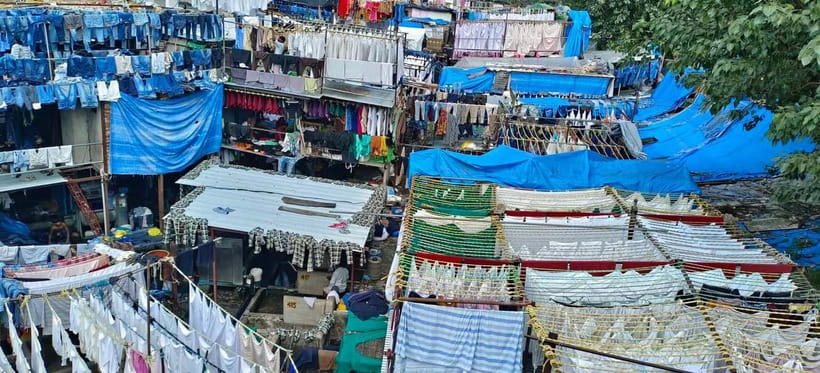
Dharavi is not a film set or a single story. This three-hour tour takes you through working areas, residential lanes, recycling workshops, and community spaces with a guide who lives in or grew up in the area. You also visit Dhobi Ghat, Mumbai’s famous open-air laundry, often reached by local train.
I like the local perspective, especially with guides such as Bharti, Abi, Ansh, and Alkama, who can explain daily life from personal experience. I also like the price: at $4.45, this is one of Mumbai’s strongest sightseeing values. The main consideration is ethical and practical: you must follow your guide’s lead, avoid intrusive photos, and be comfortable walking through crowded, working neighborhoods.
Key points at a glance
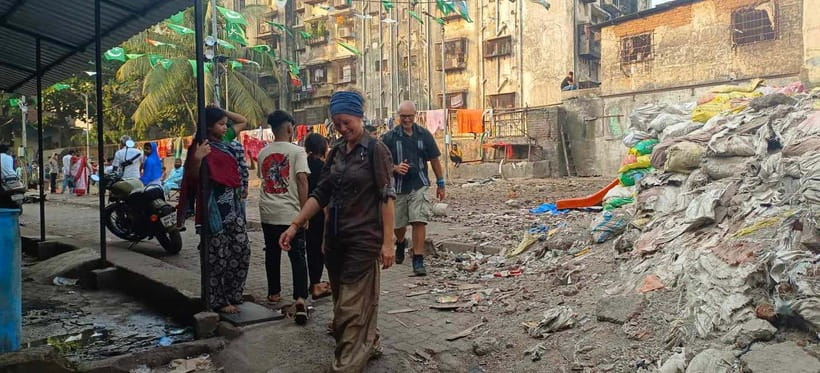
- Dharavi beyond the movie image: See residential areas, markets, workshops, and small industries rather than a staged attraction.
- A local guide makes the difference: Guides including Bharti, Abi, Ansh, Aarti, Faizan, and Alkama explain the area with personal ties and fluent English.
- Industries are part of the story: Learn about plastic recycling, leather, garments, textiles, and other businesses operating inside Dharavi.
- Dhobi Ghat adds a second side of Mumbai: Watch the large open-air laundry system and hear how it works.
- The local train may be part of the route: Several tours include one or two train rides, adding a useful taste of ordinary Mumbai transport.
- Good value with a clear ethical duty: The low price covers the guide, transport, entry fees, and water, but respectful behavior matters.
Why Dharavi needs more than a movie scene
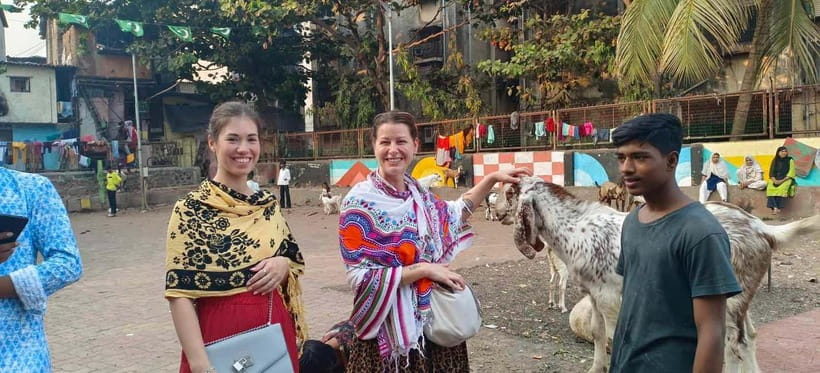
Many people first hear about Dharavi through Slumdog Millionaire. This tour uses that connection as a starting point, then moves well beyond it.
You may see the place associated with the film, but the stronger part of the visit is seeing Dharavi as a working district. Homes, family life, shops, workshops, schools, markets, and small factories exist close together. The tour explains how people earn money, where families live, how children use shared spaces, and how the area functions as part of Mumbai.
That distinction matters. A quick glance from a car window can leave you with only an image of poverty. Walking with a local guide gives you more context. You see difficult living conditions, but you also see work, trade, skill, and community life.
I would not book this tour expecting a polished attraction with broad viewpoints and neat displays. The lanes can be tight, the setting is busy, and the subject is serious. You are visiting a real neighborhood where people work and live, not a museum prepared for tourists.
More Dhobi Ghat tours in Mumbai
- Mumbai: Dharavi Slum and Dhobi Ghat Laundry Tour
★ 5.0 · 317 reviews - Private Combo Tours Sightseeing + Dharavi Slum + Dhobi Ghat & Dabbawalas
★ 5.0 · 245 reviews - Dabbawala, Dhobi Ghat & Dharavi slum Tour with Local Train Ride
★ 5.0 · 102 reviews
A guide from the community changes the experience
The most important part of this tour is the person walking beside you. The provider uses local English-speaking guides, and many have strong personal ties to Dharavi.
Bharti is repeatedly praised for growing up in Dharavi and knowing both Dharavi and Dhobi Ghat well. She has guided solo visitors, couples, families, and private groups, and has sometimes invited people for traditional Indian tea. Abi has also been described as born and raised in Dharavi, with a calm way of explaining local life and answering questions.
Ansh, Anshika, Alkama, Aarti, Faizan, Abhishek, Ridhi, and Zee are among the other guides named in the available feedback. The exact guide is not guaranteed, so you should treat these names as examples rather than a promise. What you can expect is an English-speaking local guide, with either a private or small shared format depending on the option you choose.
This local connection helps with more than facts. Your guide can explain when to slow down, where not to point a camera, how to behave near homes, and how to ask questions without turning someone’s daily routine into a spectacle. Several guides are also praised for checking the pace, helping with directions, arranging another ride when a train was delayed, or making sure a solo visitor got safely to the next stop.
Inside Dharavi’s workrooms and residential lanes
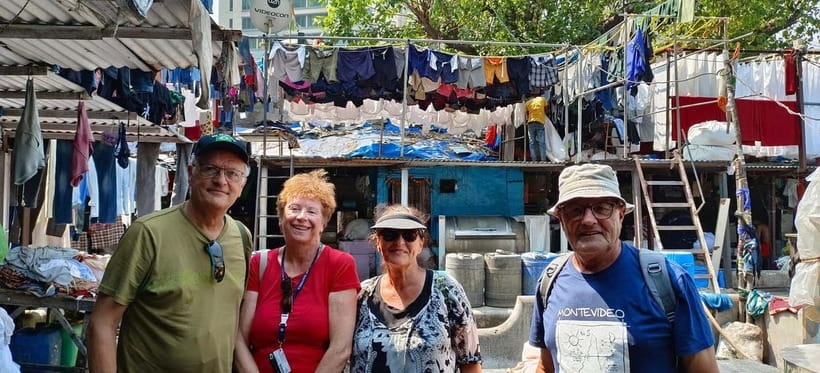
The Dharavi portion usually forms the heart of the outing. You can expect to walk through areas connected with plastic recycling, garments, textiles, leather, and other small industries.
The recycling work is especially useful to see with an explanation. Waste materials are sorted, processed, and turned into something usable or saleable. Without a guide, you might pass the workshops and see only piles of material and busy labor. With context, you can understand how several steps fit together and how this work supports families and businesses.
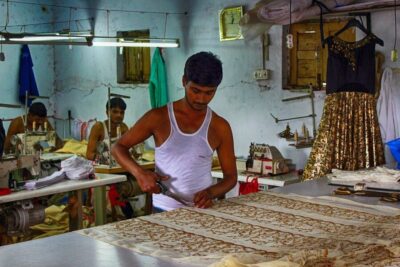
The garment and textile areas show another side of Dharavi’s economy. Workplaces can be close to homes, and the same neighborhood may contain production, storage, selling, and family life. Leather work and other industries add to the picture. The tour presents Dharavi as a place with a large internal economy, not simply as a residential slum.
The advertised figure for Dharavi’s yearly business activity is about $1 billion. Treat that as a broad tour figure rather than a precise economic statistic, but it makes an important point: this is a productive district with money moving through workshops, recycling, trade, and services.
You also see residential areas. Guides explain living arrangements, family routines, children’s play areas, and the way residents share limited space. You should expect explanation rather than access to private homes. An invitation for tea may happen with a guide, as one guest experienced with Aarti, but it is not listed as a standard part of every booking.
The ethical question, handled with care
It is reasonable to feel uneasy about visiting a slum. I would have the same concern. A tour can become voyeuristic if it treats poverty as entertainment, encourages close-up photos of strangers, or presents local residents as scenery.
This experience tries to avoid that problem by using residents and people raised in the area as guides. The stated aim is to challenge stereotypes, and the strongest feedback describes a respectful approach with no pressure to take uncomfortable photos. Guides explain the difference between observing a workplace and intruding into someone’s personal life.
Your behavior still matters. Ask before photographing people. Keep your voice down near homes. Do not block doorways or work areas. Follow instructions if your guide says a location is private or a camera should stay away.
The tour cannot remove every ethical concern. You are still a visitor entering a neighborhood where many people have less money and privacy than you do. But a thoughtful guide, a small group, and a focus on work and community make this more responsible than an unsupervised visit or a quick drive past the area.
More Dharavi walking tours in Mumbai
- Dharavi slum tour in Mumbai by Female tour guides of the slum
★ 5.0 · 1,976 reviews - Mumbai: Dharavi Slum, DhobiGhat, and Dabbawallas Tour
★ 4.9 · 689 reviews - Dharavi Slum Tour
★ 5.0 · 625 reviews - Dharavi Slum tour in Mumbai by local resident
★ 5.0 · 572 reviews
Dhobi Ghat and Mumbai’s open-air laundry
Dhobi Ghat gives the tour a different focus. This open-air laundry is a large working operation where clothes are washed, handled, dried, and prepared for return. From the outside, the scale can be hard to understand. Walking in with a guide helps you follow the system and see how the work is organized.
The laundry also shows how Mumbai’s traditional services remain part of modern city life. It is not just a colorful photo stop. It is a workplace, and the people there are carrying out paid jobs. Your guide can explain the laundry process, its background, and the role it plays in the city.
The visit may come after a local train journey from Dharavi. Several itineraries described by visitors include one or two train rides, and the train itself becomes part of the experience. For many people, this is their first time using Mumbai’s railway system with a local beside them. It adds a practical sense of how the city connects its neighborhoods.
Train travel can also make the outing less predictable. One group faced a delay caused by building work, and the guide arranged a taxi instead. That is a useful reminder to allow some flexibility. The exact sequence can vary with transport conditions, group arrangements, and the option you book.
What the three hours feel like
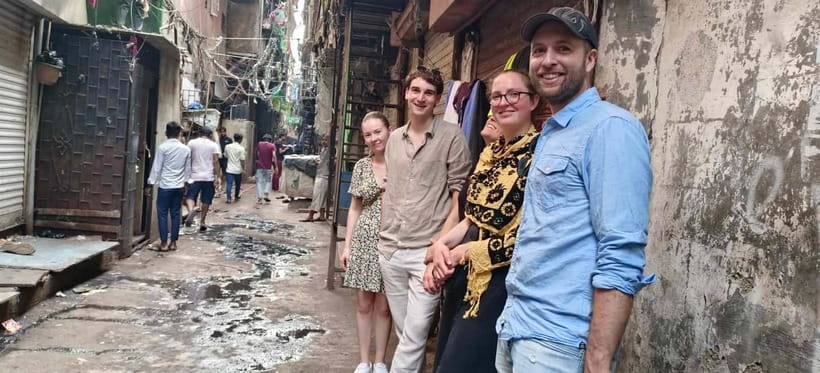
Three hours is enough time to see several sides of the area without turning the visit into an all-day commitment. The pace includes walking, listening, asking questions, and sometimes riding public transport.
You are likely to spend meaningful time in Dharavi’s working and residential sections. This is where the tour can feel most personal, since your guide may know the lanes and the people who work there. The route is not simply a list of photo stops. It is a moving explanation of how homes, businesses, markets, and transport fit together.
Dhobi Ghat then offers a clear contrast. Dharavi shows a mixed residential and industrial community, while the laundry focuses on one large service industry. Together, the two stops create a fuller picture of Mumbai’s working life.
The walking may be tiring on a hot day. One guide was specifically praised for checking the pace and making sure the group was comfortable. Wear practical shoes, carry only what you need, and use the included water wisely. Food and other drinks are not included, so plan for those separately.
Group size, private tours, and the $4.45 price
At $4.45 per person, the value is unusually strong if your goal is local context rather than luxury. The fee includes an English-speaking guide, entry tickets, travel fees, and water. Food and drinks are extra.
The tour can be private or shared, depending on the option you select. A private or very small group is useful here because the subject invites questions, and you may want to discuss sensitive issues without competing with a large crowd. It also lets the guide adjust the pace.
A shared group costs less per person and can work well if you want a social outing. The tradeoff is less control over timing and conversation. If the booking page offers a private option at a reasonable extra cost, I would consider it worthwhile for families, solo visitors, or anyone especially concerned about respectful interaction.
Reserve now and pay later is available, and cancellation is free up to 24 hours before the tour for a full refund. The meeting point can vary with the option booked, so check your confirmation carefully rather than assuming every departure begins in the same place.
Who should book this tour
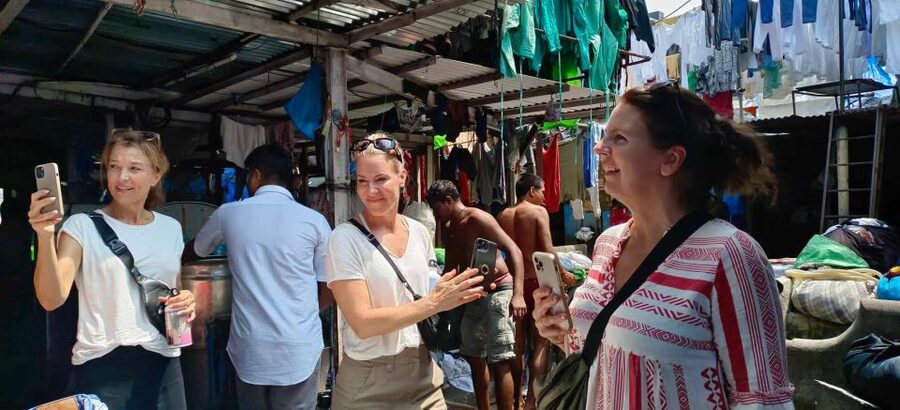
I would recommend it to you if you want to understand Mumbai through work and everyday life, not only through monuments and restaurants. It suits visitors who are curious, patient, and willing to listen.
Families can find it meaningful, though parents should prepare children for crowded lanes, working areas, and serious social subjects. One family with children aged 11 and 8 found the experience suitable with a guide who explained things at their level.
Solo visitors also have a strong reason to choose a guided format. The local route, train connections, and unfamiliar lanes are easier to manage with someone who knows the area. Solo women have specifically described feeling safe during the tour.
You may want to skip it if you dislike walking, public transport, or close urban settings. It is also not the right choice if you want guaranteed access to private homes, a fixed guide, or a purely photographic experience.
Practical advice before you go
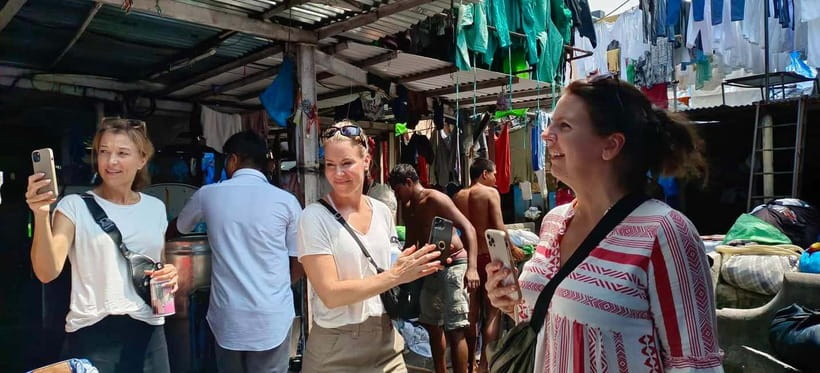
Book the smallest group you can comfortably afford. A smaller party gives you more time for questions and makes it easier to move through working areas without crowding people.
Dress for walking and warm weather. Modest, comfortable clothing is the sensible choice for a residential neighborhood. Bring water beyond the included bottle if you need more, and remember that food and drinks are not covered.
Keep your phone and camera ready for directions, but do not treat every scene as a photo opportunity. Ask your guide about photography before taking pictures, especially around homes, children, and workshops.
Read the meeting instructions closely. The meeting point varies by booking option, and the tour may use trains or another form of local transport. Start times also depend on availability.
Finally, come with questions. Ask how recycling works, how a workshop connects with the wider city, how families organize space, and how Dhobi Ghat handles laundry. The best part of the experience is the conversation with the guide, not simply the route.
Should you book it?
Book this tour if you want a direct, locally guided look at Dharavi and Dhobi Ghat, and if you are prepared to behave as a respectful visitor. The very low price, included transport fees, small-group choices, and three-hour format make it an excellent addition to a Mumbai itinerary.
The strongest reason to choose it is the guide. Bharti, Abi, Ansh, Alkama, Aarti, Faizan, and the other local guides bring personal ties, patience, and practical help to a complicated subject. You will see industry, laundry work, transport, and community life in a way that a film or sightseeing bus cannot provide.
Skip it if you want a polished attraction or feel uncomfortable entering a real residential neighborhood. For everyone else, this is one of the most useful ways to look past Mumbai’s surface and understand how people work and live in the city.
FAQ
How long does the Dharavi and Dhobi Ghat tour last?
The tour lasts three hours.
What is included in the price?
The price includes an English-speaking local guide, entry tickets, travel fees, and water.
Is food included?
No. Food and drinks are not included.
Is the tour private or shared?
Both options are available. The exact format depends on the option you select when booking.
Which language is the tour conducted in?
The live tour guide speaks English. An English audio guide may also be available as an option.
Will I see the place where Slumdog Millionaire was filmed?
The tour includes a visit to a place inside Dharavi connected with filming for Slumdog Millionaire.
What kinds of work can I see in Dharavi?
You can learn about plastic recycling, garments, textiles, leather, and other businesses operating in the area.
Does the tour include Dhobi Ghat?
Yes. The experience includes a visit to Dhobi Ghat, Mumbai’s open-air laundry.
Can the tour include a local train ride?
Several versions of the outing include local train travel between locations. The exact transport arrangement can vary, so check the option you book.
Can I cancel for a full refund?
Yes. You can cancel up to 24 hours in advance for a full refund.
Recently added around Mumbai
- Private Walking Tour in Dharavi Slums★ 5.0 · 7 reviews
- Mumbai Sightseeing Tour★ 5.0 · 11 reviews
- Private Mumbai 2-Day Tour Package:City + Slum & Elephanta Island.★ 5.0 · 3 reviews
- Vegetarian Indian Cuisine Virtual Cooking Class Experience from Mumbai★ 5.0 · 4 reviews
- Mumbai by Night Guided Tour★ 5.0 · 6 reviews
- Transfer from Mumbai Airport to Hotel★ 4.0 · 7 reviews
- Full-Day Agra Tour with Taj Mahal From Mumbai By Air★ 5.0 · 8 reviews
- Taj Mahal Day Trip Including Same Day Flights from Mumbai★ 5.0 · 3 reviews
Mumbai Dharavi Slum Tours, compared.
Dharavi slum tour in Mumbai by Female tour guides of the slum
Read our review →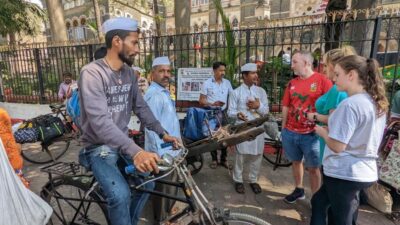
Dharavi Slum Slumdog Millionaire Tour with a Local
Read our review →
Mumbai Slum Tour – Visit Dharavi Slum with Local Guide
Read our review →

Private Full-Day Mumbai Sightseeing Tour with Dharavi Slums
Read our review →Browse the lists this tour appears in