
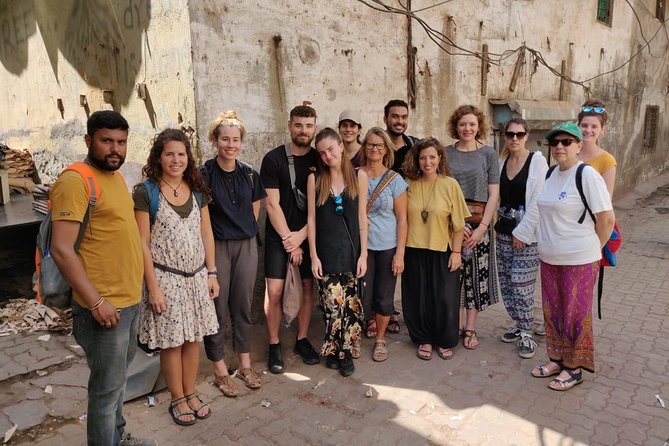
Reviewed · MUMBAI DHARAVI SLUM TOURS
Walking Tour of Dharavi Slum in Mumbai
Dharavi is more than the word slum suggests. This walking tour takes you through a working neighborhood where recycling, leather, pottery, soap, embroidery, and garment-making support local families. You see tight lanes, small workshops, religious buildings, and a community that is far more complex than the usual outsider’s picture of poverty.
I like the local guides, some of whom, including Ganesh, Alam, and Dawood, have strong ties to Dharavi and explain the area in personal, practical terms. I also like the small group size, capped at 15, and the low $12 price. The main consideration is that this is a serious walking tour through crowded working areas, not a polished sightseeing route. You need modest clothing, reasonable fitness, and respect for privacy.
Key points
- Small industries are the main attraction: See plastic recycling, leather work, pottery, soap-making, embroidery, and garment production in compact workshops.
- Local guides shape the experience: Ganesh, Alam, and Dawood are among the guides praised for clear explanations, safety, and personal insight.
- Photography is restricted: Do not expect to take pictures throughout the tour. Certain locations prohibit photography to protect residents and workers.
- The tour finishes inside Dharavi: You start near Mahim Station and end opposite Sai Multispeciality Hospital and Research Centre.
- It lasts up to two hours: The walking pace and number of stops can vary, especially with a private or very small group.
- The price is unusually low: At $12 per person, the tour offers strong value if you want context and local access rather than a list of famous Mumbai sights.
What this Dharavi walk actually shows you
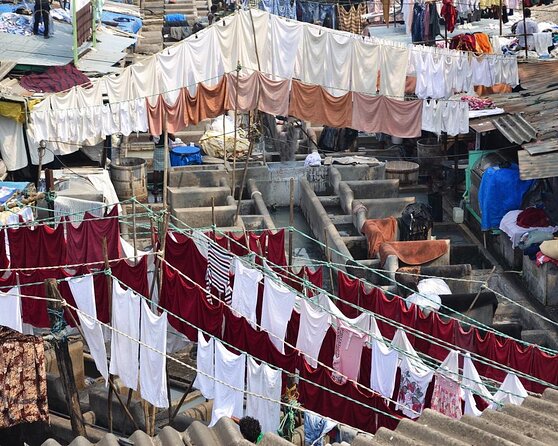
The strongest part of this experience is its change of focus. You are not simply looking at homes or passing through an area labeled as poor. You are seeing a dense neighborhood where people live, work, worship, trade, and run small businesses in limited space.
Dharavi is home to almost one million people, according to the tour information. That figure gives you a sense of scale, but the walk is most useful when it brings the area down to human size. Your guide points out workshops, explains how different trades operate, and helps you understand why the neighborhood has a strong community identity.
The guide also helps challenge the idea that Dharavi can be reduced to hardship alone. You see temples, mosques, and churches close together, reflecting the fact that people from many parts of India live here. The tour does not ask you to ignore poverty or difficult conditions. Instead, it gives you a fuller picture of work, enterprise, religion, and family life.
That balance matters. A quick look from a vehicle would tell you very little. Walking with someone who knows the area gives you context for what you are seeing and helps you avoid treating residents as scenery.
More Dharavi walking tours in Mumbai
- Dharavi slum tour in Mumbai by Female tour guides of the slum
★ 5.0 · 1,976 reviews - Mumbai: Dharavi Slum, DhobiGhat, and Dabbawallas Tour
★ 4.9 · 689 reviews - Dharavi Slum Tour
★ 5.0 · 625 reviews
Meeting near Mahim Station
The morning meeting point is near Mahim Station, which makes public transport a practical way to reach the start. The supplied directions refer to the area outside Cafe Coffee Day, while the detailed meeting address identifies Third Wave Coffee at Tip Road, Unit 58, Ground, Ram Mahal, Senapati Bapat Marg, Marinagar Colony, Mahim.
Because those two references are not identical, check the exact location on your confirmation before setting out. This is one of the few practical points I would handle carefully. A busy station area is not the place to search casually for a guide at the last minute.
The tour ends in Dharavi, opposite Sai Multispeciality Hospital and Research Centre on 90 Feet Road. You do not return to Mahim Station, and hotel pickup and drop-off are not included. Plan your next journey from the end point rather than assuming you will finish where you began.
The walk is offered to a maximum of 15 people. That is still a group, but it is small enough for you to hear the guide and ask questions. If your group is smaller, the guide may be able to adjust the pace or emphasis. One booking had no other participants, allowing the guide to tailor the walk and work around a tight schedule.
The first 90 minutes through Dharavi
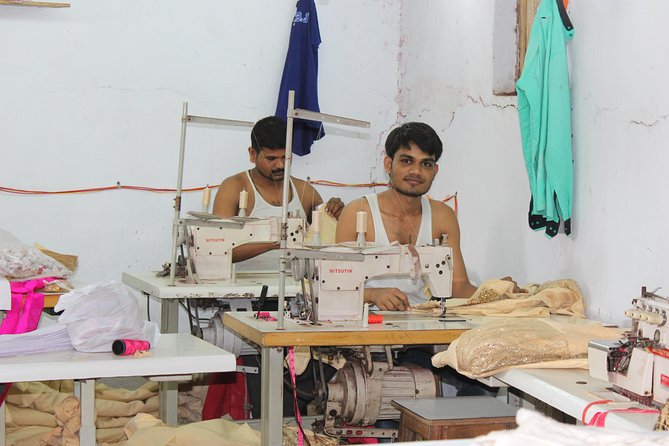
The main walking portion lasts about an hour and a half, with the full experience taking roughly 90 minutes to two hours. You move on foot through working sections of Dharavi while the guide explains what you are seeing.
Expect narrow lanes and confined workspaces. The point is not to view a series of grand buildings. The interest comes from how much activity is packed into a small area and how practical methods allow each trade to function.
Plastic recycling is a particularly useful stop. You might see how discarded plastic is handled and processed, and why recycling has become such an important local business. One visitor found this part especially worthwhile, while another felt too much time was spent on it. That difference is useful to know: if you are eager to understand local industry, you will likely appreciate the detail. If you mainly want cultural history, the industrial focus may feel heavy.
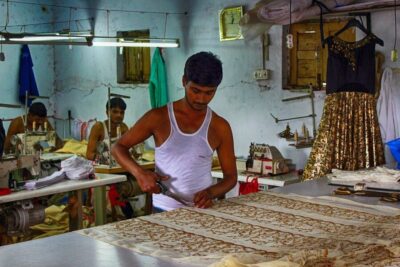
You may also visit areas connected with soap-making, embroidery, and garment production. The tour information describes small-scale methods carried out in very limited spaces. Your guide explains the work rather than leaving you to guess what each room or workshop does.
This is not a museum visit. Conditions may feel cramped and the setting can be intense. You should stay with the group, listen to instructions, and avoid blocking entrances or interrupting workers. The tour works best when you treat the area as a living neighborhood, not a stage arranged for sightseeing.
Leather workshops and the working side of Dharavi
Leather is described as Dharavi’s most dominant industry, so it receives a specific stop of about 10 minutes. This gives the tour an economic focus that many visitors do not expect from a neighborhood walk.
The leather visit helps show how local businesses can serve wider markets while operating from modest premises. Your guide can explain the trade and its place in Dharavi’s economy. The stop is brief, so do not expect a full factory tour or a long demonstration.
You may find the leather area less comfortable than a regular tourist attraction. This is working industry, not a shop designed for visitors. The setting can be close and practical, and the material being handled may not appeal to everyone. Still, I think the stop adds value because it helps you understand that Dharavi is not only a residential area. It is also a major production center.
Several guides received praise for making people feel safe and welcome. That matters here, since you are entering unfamiliar lanes and business areas. Guides named Ganesh, Alam, and Dawood were singled out for clear English, good explanations, patience, and care with the group. The specific guide assigned to you can vary, but the company appears to use guides who know the neighborhood well.
More walking tours in Mumbai
- Group Guided Walking Tour in Fort and Colaba
★ 5.0 · 1,073 reviews - Private Guided Walking Tour in Fort & Colaba
★ 5.0 · 895 reviews - Private Guided Walking Tour in Bandra Queen of Suburbs
★ 5.0 · 383 reviews - Private Guided Spiritual Walk in Banganga Hindu Temples
★ 5.0 · 271 reviews
Pottery in Kumbhar Wada
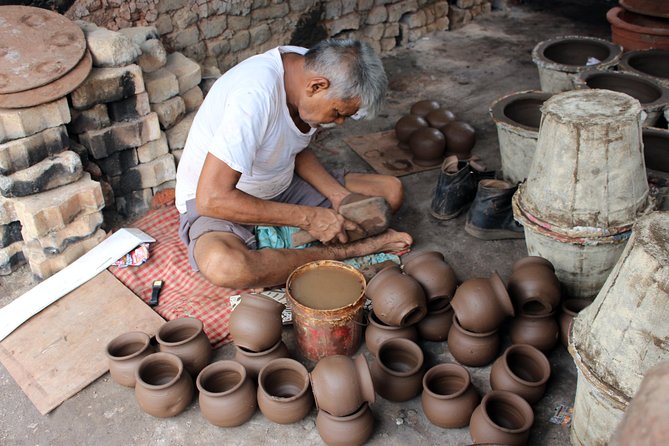
Pottery receives another short stop of about 10 minutes. This section is described as one of Dharavi’s significant industries, with pottery being made and sold locally.
The pottery area adds a different texture to the walk. Instead of recycling or leather, you see a craft built around shaping, firing, and selling ceramic goods. It also gives you a chance to notice how a trade can occupy a neighborhood and become part of its identity.
The itinerary does not promise that you will make pottery or buy anything, so approach this as an observation stop. The value is in watching the process and understanding how production fits into daily life.
I would keep your expectations flexible. The route may include other workshops, such as soap, plastic, embroidery, or garments, but the exact order and time at each place can change. The tour is built around local access and explanation, not a fixed show with identical demonstrations at every hour.
Community, religion, and the human side of the route
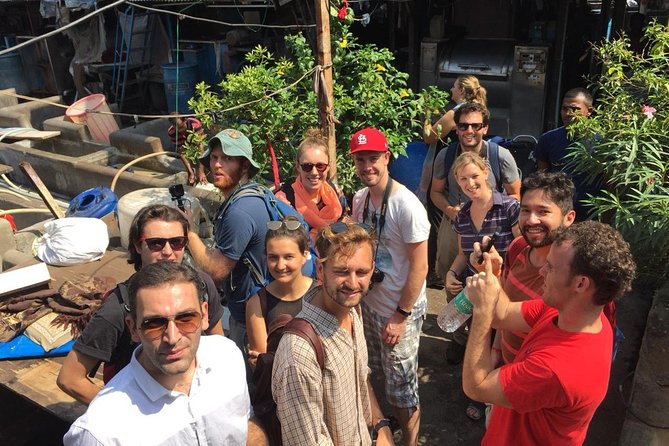
The tour’s most important lesson may come between the industry stops. Temples, mosques, and churches stand within the same broad neighborhood, reflecting Dharavi’s mix of residents from across India.
Your guide provides the context that makes these details meaningful. You learn how people from different regions and backgrounds share a tight urban area and how community ties shape daily life. That helps move the tour beyond a simple tour of businesses.
The strongest guides make this personal without turning the walk into a performance. One guide was born in Dharavi and still lives there, which can give you a direct sense of how the neighborhood is understood from within. Other guides, including those praised for their English and careful explanations, focus on the businesses and residents you encounter along the route.
You should also remember that the people around you are not part of a display. Photography is not allowed at certain locations, and guides may ask you to put your camera away more broadly. Follow those instructions without argument. The restriction can be frustrating if you want visual records, but it protects privacy and helps keep the visit respectful.
Is the tour respectful, or is it poverty tourism?
That depends partly on how you approach it. A respectful visit should focus on learning, avoid photographing people without permission, and recognize both the economic challenges and the work taking place there.
The tour is designed to challenge negative stereotypes about slum living. It highlights small businesses, religious diversity, community spirit, and practical ingenuity. Some participants were even invited into a garment-making space or a local apartment for lunch, but these moments are not guaranteed and should not be treated as promised parts of the tour.
I would not book this experience if your main goal is dramatic photos or a quick look at poor housing. You may feel uncomfortable with the setting, and photography restrictions remove much of the usual sightseeing habit. I would book it if you want to understand how an urban neighborhood functions and are prepared to listen more than you take pictures.
The guide’s role is especially important. A good guide sets boundaries, explains what you are seeing, and helps you avoid turning residents into objects of curiosity. Several guides were praised for doing exactly that, while also making people feel safe during the walk.
Price, timing, and physical demands
At $12 per person, this is inexpensive for a guided Mumbai experience lasting 90 minutes to two hours. The price includes a local guide, but not food, drinks, or transportation to and from the meeting points.
The value is strongest if you want access and explanation. You are paying for local knowledge, route planning, and an introduction to working areas that you would be unlikely to understand on your own. You are not paying for entry to monuments, a meal, or a long list of included extras.
The tour is available with group discounts, and mobile tickets make the booking simple. It is often reserved well ahead of time, with an average booking lead time of 33 days. That does not mean you must always plan a month ahead, but it is sensible to reserve early if your Mumbai dates are fixed.
Wear modest, comfortable clothing. Very short clothes are specifically discouraged. Bring water, since one guide stopped at a shop so participants could buy bottled water, but food and drinks are not included.
You need a moderate level of physical fitness. The route is on foot, and the duration can approach two hours. Children must be with an adult, and the minimum age is five. The walk is near public transportation, but the end point is different from the start, so allow time to orient yourself after the tour.
Who will get the most from this walk?
I think this tour suits first-time visitors who want a different view of Mumbai than forts, palaces, markets, and waterfront sights can provide. It also suits anyone interested in urban economics, recycling, crafts, or the way communities share limited space.
It can work well for families with older children, provided everyone can walk for up to two hours and follow privacy rules. The minimum age is five, but younger children may not get much from the industrial explanations.
This is less suitable for anyone needing a highly polished route, extensive photography, or guaranteed access to every kind of workshop. It is also not a good choice if you dislike crowded walking conditions or want to keep the day physically easy.
The small-group format helps. A group of 15 or fewer gives the guide a better chance to answer questions and keep everyone together. If you are lucky enough to have a very small group, the route may be adjusted to your interests and schedule.
Booking, cancellation, and final advice
You receive confirmation at booking unless you reserve within 12 hours of departure. In that case, confirmation comes as soon as possible and depends on availability. Free cancellation is available up to 24 hours before the start time. Within 24 hours, the amount paid is not refunded, and changes are not accepted.
I would book the Walking Tour of Dharavi if you want a thoughtful introduction to local work and community life, and if you are ready to behave as a respectful visitor. The low price, short duration, and small group make it an easy addition to a Mumbai itinerary.
Book it with realistic expectations. You will not get a glossy attraction or a guaranteed photo opportunity. You will get a local guide, working neighborhoods, compact industries, and a chance to see Dharavi as a place where people build businesses and lives. For many visitors, that is far more useful than simply passing by and guessing what lies within.
FAQ
How long does the Dharavi walking tour last?
The tour lasts approximately 1 hour 30 minutes to 2 hours. The main walking tour is listed as 1 hour 30 minutes, with separate short stops for leather and pottery.
How much does the tour cost?
The listed price is $12 per person. Group discounts are available.
Where does the tour start?
The meeting area is near Mahim Station in Mumbai. Directions refer to the area outside Cafe Coffee Day, while the detailed address gives Third Wave Coffee at Tip Road, Unit 58, Ground, Ram Mahal, Senapati Bapat Marg. Check your confirmation for the exact meeting point.
Where does the tour end?
The tour ends opposite Sai Multispeciality Hospital and Research Centre on 90 Feet Road in Dharavi. Hotel pickup and drop-off are not included.
Can I take photographs during the tour?
Photography is not allowed at certain locations. Follow your guide’s instructions and respect the privacy of residents and workers.
Is the tour suitable for children?
Children must be accompanied by an adult, and the minimum age is five. Participants should also have a moderate level of physical fitness.
What happens if I need to cancel?
You can cancel up to 24 hours before the start time for a full refund. Cancellations or changes made less than 24 hours before the tour are not accepted for a refund.
Recently added around Mumbai
- Private Walking Tour in Dharavi Slums★ 5.0 · 7 reviews
- Mumbai Sightseeing Tour★ 5.0 · 11 reviews
- Private Mumbai 2-Day Tour Package:City + Slum & Elephanta Island.★ 5.0 · 3 reviews
- Vegetarian Indian Cuisine Virtual Cooking Class Experience from Mumbai★ 5.0 · 4 reviews
- Mumbai by Night Guided Tour★ 5.0 · 6 reviews
- Transfer from Mumbai Airport to Hotel★ 4.0 · 7 reviews
- Full-Day Agra Tour with Taj Mahal From Mumbai By Air★ 5.0 · 8 reviews
- Taj Mahal Day Trip Including Same Day Flights from Mumbai★ 5.0 · 3 reviews
Mumbai Dharavi Slum Tours, compared.
Dharavi slum tour in Mumbai by Female tour guides of the slum
Read our review →
Dharavi Slum Slumdog Millionaire Tour with a Local
Read our review →
Mumbai Slum Tour – Visit Dharavi Slum with Local Guide
Read our review →
Dhobi Ghat Laundry and Dharavi Slum Tour with Local
Read our review →
Browse the lists this tour appears in