
Reviewed · MUMBAI DHARAVI SLUM TOURS
Mumbai: Slum Tour Dharavi & Dhobi Ghat Laundry with a Local
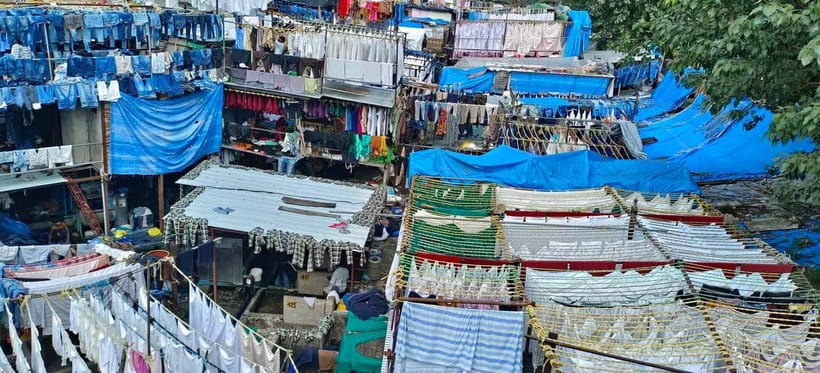
Mumbai’s Dharavi and Dhobi Ghat tour puts working life ahead of postcard scenery. A local resident leads you through Dharavi, explaining where families live, how children spend their time, and how businesses such as plastic recycling, leather, garment, textile, and metal work operate. You also visit Dhobi Ghat, Mumbai’s famous open-air laundry.
I like the local guide setup, especially when you are led by someone who lives in Dharavi and knows the area personally. I also like the tour’s honest aim: to replace the usual slum stereotype with a fuller picture of work, family, enterprise, and daily routine. The main consideration is that the Dhobi Ghat stop may feel brief, and one guide’s strict instructions and sarcastic humor were not a perfect fit for every personality.
Key points at a glance
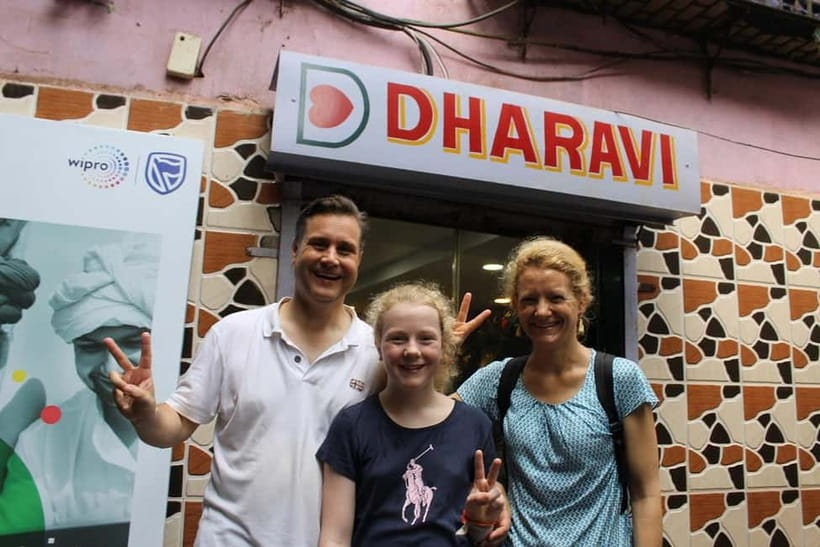
- A Dharavi resident leads the visit: Guides such as Fazim, Faizan, and Abi bring personal knowledge of homes, work, and family life.
- Dharavi is more than a place to look at: You learn about plastic recycling, leather, garments, textiles, metal work, and local income.
- Dhobi Ghat adds a second side of Mumbai: See the city’s largest open-air laundry and learn how its washing activity works.
- The tour challenges easy stereotypes: The focus is on people and livelihoods, not poverty as a spectacle.
- Small groups keep the walk manageable: Numbers are limited to nine people.
- The price is unusually low: At $4.64 per person, this is a strong-value introduction, provided you want a serious walking and listening experience rather than a polished sightseeing show.
Why this Mumbai tour is different

Dharavi is often reduced to a single word: slum. That label tells you very little about the people who live there or the work that takes place inside it. This tour tries to correct that narrow view by showing Dharavi as a residential area and a major working community.
The guide explains how homes, families, children, and small businesses fit together. You are not simply taken to a viewpoint and told a few figures. You walk inside the area with a resident guide, learning what people do for a living and how different industries operate.
The tour also gives you a useful comparison. Dhobi Ghat is a major working site devoted to laundry, while Dharavi contains many kinds of homes and businesses. Seeing both in one short outing helps you understand Mumbai as a city where work and residential life often sit close together.
The experience is not designed as light entertainment. You need to listen, observe carefully, and respect the fact that people live and work in the places you visit. That makes the tour more worthwhile, but it also means you should not expect a casual photo stop at every turn.
More Dhobi Ghat tours in Mumbai
- Mumbai: Dhobi Ghat Laundry and Dharavi Slum Tour with Local
★ 5.0 · 469 reviews - Mumbai: Dharavi Slum and Dhobi Ghat Laundry Tour
★ 5.0 · 317 reviews - Private Combo Tours Sightseeing + Dharavi Slum + Dhobi Ghat & Dabbawalas
★ 5.0 · 245 reviews
Meeting your guide near Mahim Junction
The meeting point is Third Wave Coffee in Mahim, directly opposite Mahim Junction and the west-side station area. You can reach it by Uber or local transport from your hotel. Once you arrive, sit inside the café or wait outside. The guide will look for you, ask your name, and introduce himself.
This arrangement is simple, but give yourself enough time to find the café and station area. Tuk-tuk rickshaws are not allowed at the meeting point, so do not plan on being dropped directly there by one. Your practical choices are a car service, Uber, or local transport.
The meeting point also gives the tour a useful start. You are not being collected at a grand hotel lobby and driven straight to a staged attraction. You meet near an ordinary Mumbai transport hub, then begin with a guide who works locally.
Because the group is limited to nine people, it should be easier to hear explanations and ask questions than it would be on a large coach tour. One point to keep in mind is that the guide’s manner may be firm. A guide on this route was described as strict about where the group stood, what it said, and when questions were asked. Some people may appreciate that order, while others may find it classroom-like.
Walking through Dharavi with someone who lives there
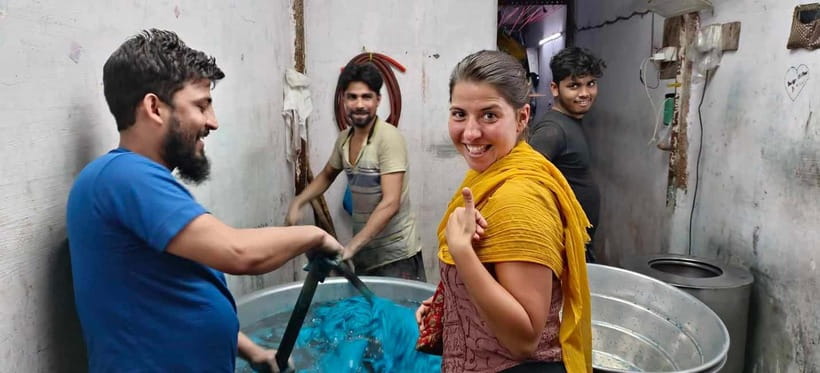
The Dharavi portion is the heart of the experience. A resident guide takes you into the community and explains daily life from an insider’s point of view. Guides named in the feedback include Fazim, Faizan, and Abi, though the person leading your departure may differ.
You can expect discussion of where people stay, how families organize their lives, where children play, and how residents relax. These details matter because they move the tour away from a distant social study. You are encouraged to see Dharavi as a lived-in neighborhood, not simply as a subject for photographs.
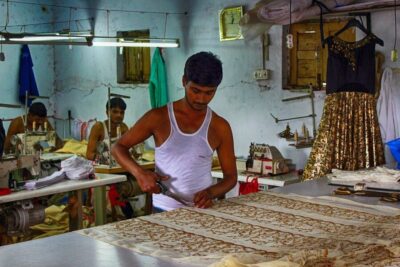
The guide also points out different types of business. Plastic recycling, leather work, garment and textile production, and metal work are all part of the local economy described on the tour. The stated yearly income connected with Dharavi’s businesses is $1 billion, a figure that gives you a sense of the area’s economic weight.
That number should not make you think of large factories and wide streets. The value of the explanation is that it shows how much work can take place through many small operations packed into a limited urban area. You learn to look for production, storage, movement of goods, and family activity rather than seeing only crowded buildings.
This part of the tour can change your view of the word slum. The area still has challenges, and the visit should not pretend otherwise. But the focus on work and enterprise helps you see residents as workers, parents, business owners, and neighbors, not as passive figures in a poverty story.
The film connection and the danger of a movie shortcut
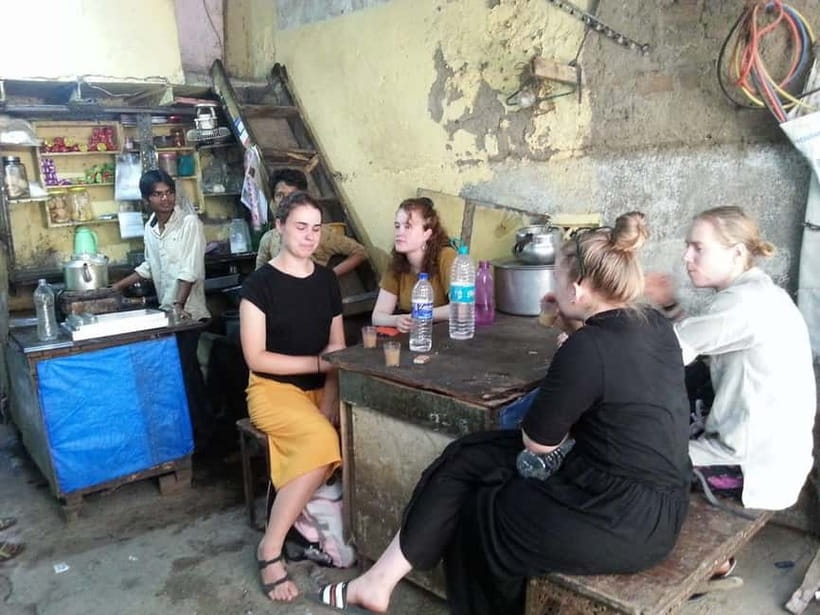
Dharavi is linked with the film Slumdog Millionaire, and the tour includes the place where scenes were filmed. For some people, this is a memorable part of the route. It connects a familiar movie image with a real place where people live and work.
Still, the film reference is best treated as a small part of the visit. Dharavi is not a movie set, and the tour’s value does not depend on recognizing a filming location. The guide’s explanations about local life and business are more useful than a quick search for a famous scene.
The film connection can also help you notice how strongly popular culture shapes expectations. You may arrive with a dramatic picture in mind. The visit then gives you a more ordinary and complicated reality, with work, homes, family routines, and local pride mixed together.
More Dharavi walking tours in Mumbai
- Dharavi slum tour in Mumbai by Female tour guides of the slum
★ 5.0 · 1,976 reviews - Mumbai: Dharavi Slum, DhobiGhat, and Dabbawallas Tour
★ 4.9 · 689 reviews - Dharavi Slum Tour
★ 5.0 · 625 reviews - Dharavi Slum tour in Mumbai by local resident
★ 5.0 · 572 reviews
What you see at Mumbai’s Dhobi Ghat
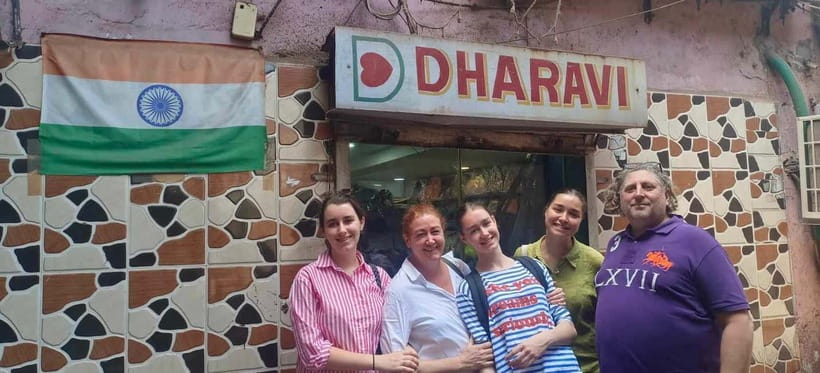
Dhobi Ghat is Mumbai’s famous open-air laundry and is described as the world’s largest open laundry facility and Asia’s biggest laundry. The site is well known among international visitors, but it remains a working place rather than a display built only for sightseeing.
Your guide explains the activities associated with the laundry and gives context for how the site functions. The stop adds a different kind of working-life story to the Dharavi visit. Here, the focus is not on a broad residential community with many industries, but on washing and laundry work gathered in one famous location.
You may not spend a long time inside Dhobi Ghat. One person felt the stop could have lasted longer, and another wished for a little more access inside the facility. That is the clearest limitation of the itinerary. If Dhobi Ghat is your main reason for booking, you may find the visit too short.
If you see the laundry as one part of a two-part tour, the timing makes more sense. Dharavi receives the larger share of attention, while Dhobi Ghat works as a compact second stop. You get the basic story and a look at the site, but not an extended workshop visit.
A useful lesson in respectful sightseeing

A tour of a residential community raises an important question: how do you look without turning people into scenery? This experience tries to address that concern by using local guides and by explaining work, family, and the area’s wider economy.
You should still behave carefully. Follow the guide’s instructions, avoid treating homes and workers as photo props, and listen before asking questions. The guide’s rules about where to stand may feel strict, but they can help protect residents and keep the group from blocking paths or interfering with work.
You should also be ready for mixed feelings. A visit like this can be interesting and eye-opening, but it can also make you uncomfortable. That is not necessarily a flaw. The important point is to approach Dharavi as a real community rather than as an unusual backdrop.
The tour’s stated goal is to challenge stereotypical ideas about slums. It does not promise that every problem disappears when you see the positive side. Instead, it gives you a wider view, showing how work, family, and enterprise exist alongside difficult conditions.
How the guide affects the experience
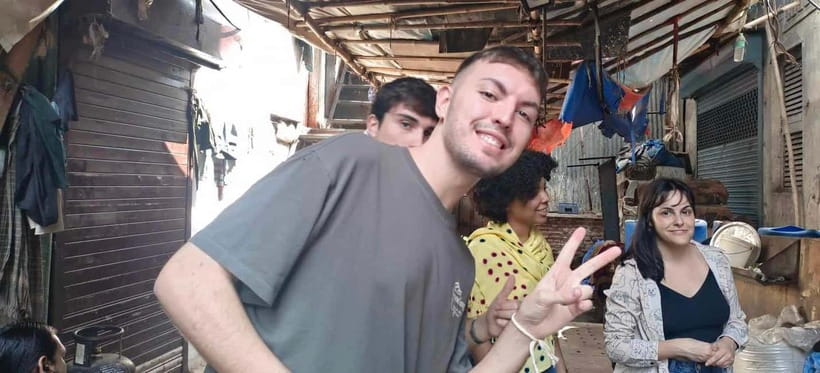
The guide makes a large difference here. A local resident can explain small details and local routines in a way that a guide from outside the area may not. The strongest descriptions of the tour point to guides who explained Dharavi’s origins, work, family life, and present-day reality with care.
Fazim received especially warm praise for taking time with explanations and looking after the group. Faizan was valued for knowing the area and showing the reality of residents’ lives. Abi was praised for leading visitors through everyday Mumbai with strong English. These details suggest that the tour can feel personal when the guide is a good match for your group.
The style is not guaranteed to suit everyone. One guide used sarcasm that sometimes felt offensive and controlled the group firmly. If you prefer a relaxed walk where you can interrupt at will, ask constant questions, and wander at your own pace, you may find the format restrictive.
If you listen first and ask questions at suitable moments, the structure should work better. This is a guided community visit, not an independent stroll. The guide needs to manage safety, privacy, and movement through working areas.
Is $4.64 good value?
At $4.64 per person, the tour is remarkably inexpensive for 2.5 hours with an English-speaking local guide, transport costs, entry tickets, and taxes included. Even with the low price, you should judge the value by what you want to learn, not by how many sights you can collect.
The strongest value comes from access and context. You are not paying only to see Dhobi Ghat from a distance. You are joining a small group and receiving explanations about Dharavi’s homes, family life, industries, and local economy.
The price also makes this a practical choice for budget visitors who want something beyond standard monuments. It costs little compared with many organized Mumbai activities, yet it gives you a close look at two working parts of the city.
Low cost does not mean the tour will feel polished or luxurious. You are meeting at a café, walking through active neighborhoods, and depending on a local guide’s communication style. Think of it as an affordable educational walk, not a comfort-focused excursion.
Timing, group size, and cancellation flexibility
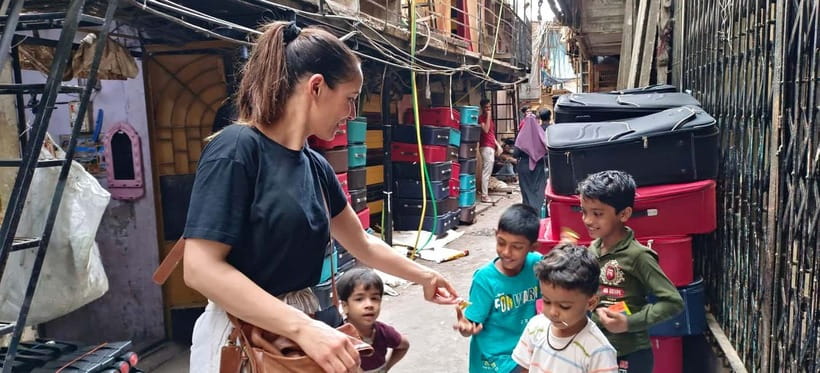
The full experience lasts 2.5 hours. That is long enough to cover both Dharavi and Dhobi Ghat, but short enough to fit into a busy Mumbai schedule. You should allow extra time around the meeting point, especially if you are coming from another part of the city.
The group is limited to nine participants. That is a useful middle ground. A private tour may offer more flexibility, but a group of nine is still small enough for the guide to speak directly to you.
The tour is offered in English with a live guide. This matters because much of the value comes from explanations rather than simply looking at buildings or laundry areas.
You can cancel up to 24 hours ahead for a full refund. You can also reserve now and pay later, which helps if your Mumbai plans are still shifting. These terms are useful for a short city visit when weather, transport, or another booking may change your schedule.
Who should book this experience?
I would point this tour toward you if you want to understand how people live and work in Mumbai, rather than spend two hours ticking off famous sights. It suits curious visitors who can listen carefully, accept a firm guide, and approach a residential area with respect.
It is especially useful for first-time visitors who have only seen Dharavi through film or headlines. The guide’s local perspective helps replace a single dramatic image with a more complete picture.
You may also like it if you are interested in urban business, recycling, textiles, leather, or the way homes and workplaces share the same area. The Dhobi Ghat stop adds another working environment and gives the outing a clear second chapter.
I would hesitate if your priority is photography, a long visit inside Dhobi Ghat, or a relaxed sightseeing stroll. The tour has rules, the laundry stop may be brief, and the guide’s personality can shape the experience strongly.
Should you book the Dharavi and Dhobi Ghat tour?
Book it if you want a low-cost, direct introduction to two working communities in Mumbai and you are willing to look past the usual slum imagery. The resident guide is the main reason to go, especially if you are paired with someone like Fazim, Faizan, or Abi, who can connect the streets with family life and local business.
Do not book it expecting a polished attraction or an extended Dhobi Ghat visit. Choose it for the human context, the local access, and the chance to understand Dharavi as a place where people live, work, and build businesses. At $4.64, the value is excellent for that purpose.
FAQ
How long does the Mumbai Dharavi and Dhobi Ghat tour last?
The tour lasts 2.5 hours and includes visits to Dharavi and Dhobi Ghat.
Where is the meeting point?
Meet at Third Wave Coffee in Mahim, directly opposite Mahim Junction and the west-side station area.
Who leads the tour?
An English-speaking local guide from Dharavi leads the tour. Guides named in the tour information include Fazim, Faizan, and Abi.
How many people can join the group?
The tour is limited to nine participants.
What will I see in Dharavi?
You will learn about homes, family life, children’s daily routines, and local businesses such as plastic recycling, leather, garment and textile work, and metal work. The tour also visits a place connected with the filming of Slumdog Millionaire.
Can I cancel the booking?
Yes. You can cancel up to 24 hours in advance for a full refund. You can also reserve now and pay later.
Recently added around Mumbai
- Private Walking Tour in Dharavi Slums★ 5.0 · 7 reviews
- Mumbai Sightseeing Tour★ 5.0 · 11 reviews
- Private Mumbai 2-Day Tour Package:City + Slum & Elephanta Island.★ 5.0 · 3 reviews
- Vegetarian Indian Cuisine Virtual Cooking Class Experience from Mumbai★ 5.0 · 4 reviews
- Mumbai by Night Guided Tour★ 5.0 · 6 reviews
- Transfer from Mumbai Airport to Hotel★ 4.0 · 7 reviews
- Full-Day Agra Tour with Taj Mahal From Mumbai By Air★ 5.0 · 8 reviews
- Taj Mahal Day Trip Including Same Day Flights from Mumbai★ 5.0 · 3 reviews
Mumbai Dharavi Slum Tours, compared.
Dharavi slum tour in Mumbai by Female tour guides of the slum
Read our review →
Dharavi Slum Slumdog Millionaire Tour with a Local
Read our review →
Mumbai Slum Tour – Visit Dharavi Slum with Local Guide
Read our review →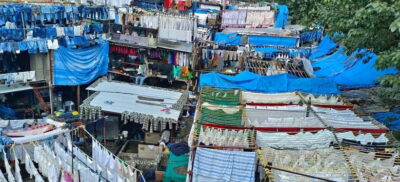
Dhobi Ghat Laundry and Dharavi Slum Tour with Local
Read our review →
Browse the lists this tour appears in