
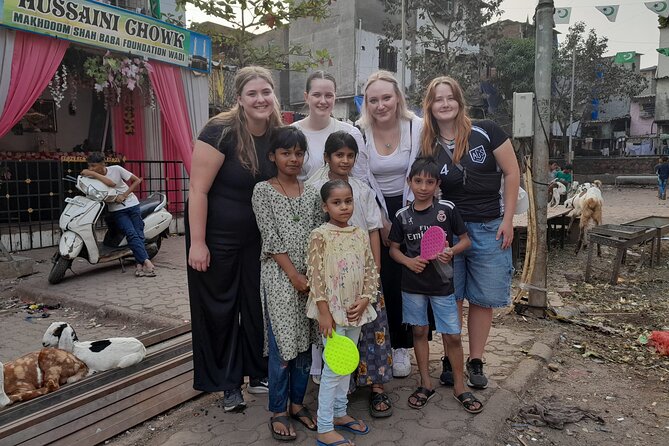
Reviewed · MUMBAI DHARAVI SLUM TOURS
Mumbai Slum Tour –An insight of Dharavi Slum with Local Guide
Dharavi is not a sightseeing backdrop. It is a working neighborhood, and this two-hour walk takes you past plastic recycling units, textile workshops, bakeries, leather production, homes, schools, and places of worship. The point is to see how people work and live, not to collect dramatic snapshots of poverty.
I like the local-resident guides, who can explain daily life in a way a standard city tour cannot. I also like the focus on working industries, especially recycling, stitching, printing, baking, and leather production. You see skills and enterprise, not only the narrow lanes that outsiders tend to notice.
The main consideration is that this is a walking tour through tight passageways and active workplaces. It may feel intense for some visitors, and you should approach it with respect, patience, and care about when photography is appropriate.
Key points to know before you book
- See Dharavi as a place of work: The walk includes plastic recycling, textiles, bakeries, leather production, markets, and small factories.
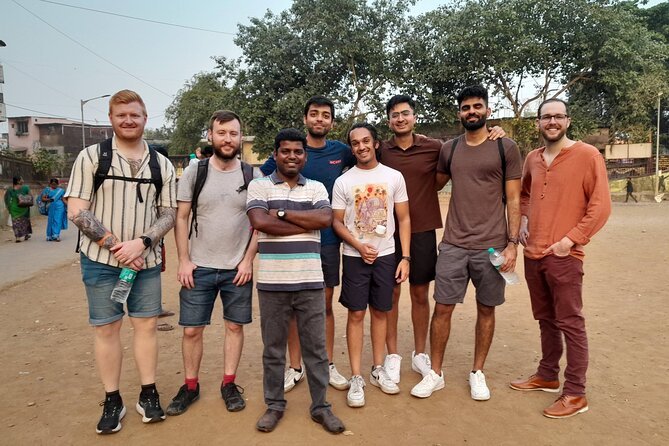
- A local guide leads the way: English-speaking residents provide context about daily routines and community life, with Ruqaiyya named in one especially positive account.
- Expect a compact two-hour route: The tour covers a lot in a short time, so comfortable walking shoes and close attention are useful.
- The price is modest: At $10.04 per person, it offers a low-cost way to add a very different side of Mumbai to your itinerary.
- Start and finish points differ: You meet at Third Wave Coffee near Mahim and finish at the operator’s Dharavi office, where help with onward transport is offered.
- Small groups and private tours are available: The stated maximum is 50 people, but smaller and private formats are offered for a more personal experience.
Why a Dharavi walk adds something different to Mumbai
Mumbai is often presented through grand railway stations, colonial buildings, seaside promenades, and film connections. Dharavi gives you another view: a dense neighborhood where homes and businesses sit close together and where practical skills support local livelihoods.
The value of this tour is the explanation. Without a guide, you might pass a doorway and see only a workshop or storefront. With context, that same doorway can reveal a small production chain, a family business, or a local service operating in a difficult urban setting.
I like that the route gives space to both industry and ordinary life. You may see goods being made for wider markets, then turn into a lane lined with homes, temples, mosques, and small shops. That mix helps correct the common idea that Dharavi can be reduced to one label.
The tour is also framed as a responsible and respectful visit. That matters. You are entering a community where people live and work, so the best approach is to listen more than you speak, keep the group together, and follow your guide’s lead around workplaces and residents.
More Dharavi walking tours in Mumbai
- Dharavi slum tour in Mumbai by Female tour guides of the slum
★ 5.0 · 1,976 reviews - Mumbai: Dharavi Slum, DhobiGhat, and Dabbawallas Tour
★ 4.9 · 689 reviews - Dharavi Slum Tour
★ 5.0 · 625 reviews
Meeting near Mahim and entering Dharavi
The listed starting point is Third Wave Coffee, Tip Road, Unit 58, Ground, Ram Mahal, Senapati Bapat Marg, Marinagar Colony, near Mahim Station, Mumbai 400016. It is near public transport, which is useful in a city where traffic can make short journeys slow.
Pickup is offered, but the exact arrangement should be confirmed when you book. The published meeting point is the coffee shop near Mahim, so do not assume that a hotel pickup is automatically included in the $10.04 price.
From the start, you are joining a walking experience rather than a vehicle tour. That makes the route more immediate, but it also means you should wear practical shoes and be ready to walk through narrow lanes for most of the two hours.
The tour ends at Kumbhar Wada in Dharavi, at the operator’s office. The guide can help you arrange transport back to your car, Uber, taxi, or train. This is a useful detail because the end point is not the same as the starting point.
Plastic recycling shows Dharavi’s working side
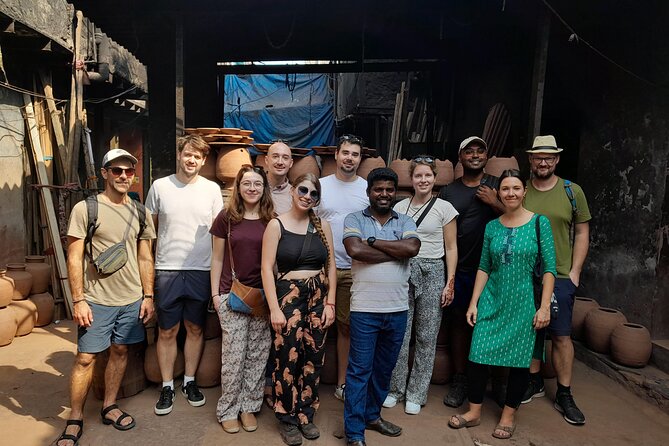
One of the first major themes is recycling. The route includes plastic units where waste is melted, molded, and reused.
This stop gives you a clear picture of small-scale manufacturing. Instead of hearing a broad statement about recycling, you can see the material being handled and turned into something useful. It is a practical lesson in how discarded plastic can become part of a local production system.
The setting also calls for care. Recycling is active work, not a staged demonstration. Stay close to your guide and avoid blocking entrances or workers. The experience is most valuable when you are observing how the business functions rather than treating the equipment as a photo prop.
For me, this is one of the strongest parts of the route because it connects Dharavi to a wider question: how cities manage waste and how local workers create income from materials others throw away.
Textile workshops reveal the craft behind everyday clothing
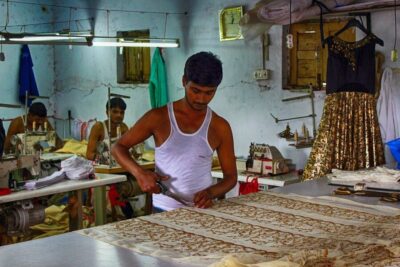
The textile portion includes stitching, dyeing, and printing. You may see the steps that turn fabric into finished clothing or other goods.
This is a good stop for anyone interested in design, production, or the hidden work behind ordinary purchases. A shirt or printed textile can look simple in a shop, but the route shows that many hands and skills may be involved before it reaches the customer.
The textile workshops also show why Dharavi is not only residential. Production takes place within the neighborhood, close to homes and other small businesses. That closeness is part of the character of the area, though it can also make the walk feel crowded and visually busy.
Your guide’s explanations matter here. Ask concise questions about what is being made and where the goods go, but remember that the tour schedule is only two hours. The walk is designed to introduce several types of work, not provide a full technical course in textile production.
A few more Mumbai tours and experiences worth comparing
- Group Guided Walking Tour in Fort and Colaba
★ 5.0 · 1,073 reviews - Mumbai: Elephanta Caves Half-Day Guided Tour with Expert
★ 4.8 · 1,032 reviews - Private Guided Walking Tour in Fort & Colaba
★ 5.0 · 895 reviews - Highlights of South Mumbai Guided Private Tour in AC Vehicle
★ 5.0 · 620 reviews
Bakeries add a familiar, everyday detail
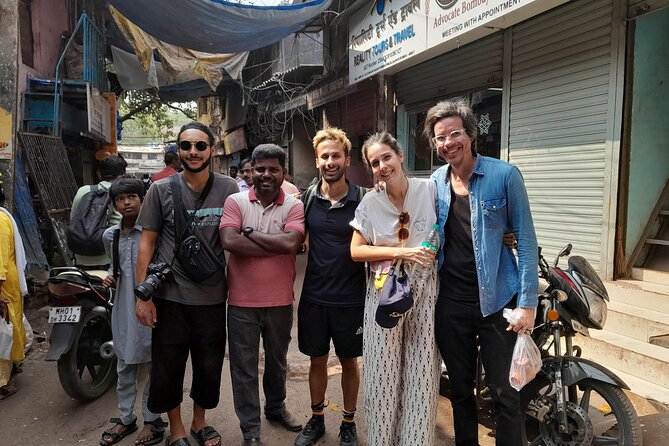
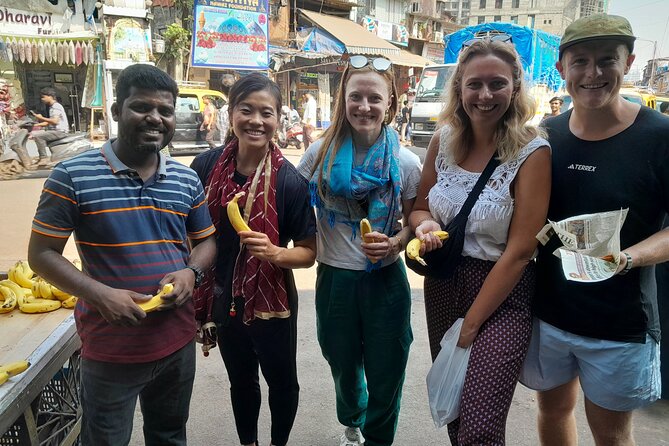
The tour visits bakery units making khari biscuits, bread, and local snacks. This part brings the experience back to food people eat every day.
A bakery is easy to understand even if you know little about Indian industry. You can connect the smell, ingredients, preparation, and finished product to daily routines in Mumbai. It also prevents the tour from becoming focused only on heavy manufacturing.
Food and drinks are not included, so do not book this expecting a tasting or a meal. The bakery stop is part of the guided route, not a promised food experience. If you want to eat during or after the tour, plan that separately.
I appreciate the bakery visit because it shows how a neighborhood economy includes ordinary services as well as goods made for export. That balance makes the tour feel more grounded.
Narrow lanes show homes, faith, and daily routines
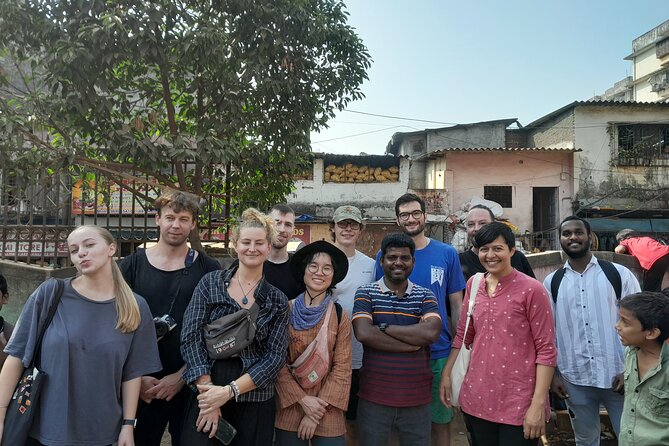
The route passes colorful narrow lanes lined with small homes, temples, and mosques. These lanes are one of the clearest reminders that Dharavi is a lived-in neighborhood rather than an open-air museum.
You may find the transition from workshops to homes quick and striking. One doorway may be connected to production, while the next belongs to a family or a place of worship. The guide can help you understand the area without reducing every sight to a simple explanation.
The lanes are narrow, so groups need to move carefully. A maximum of 50 people is stated for the activity, although private and small-group options are also available. If you want more room to ask questions or prefer a quieter format, choose the smallest group option offered at booking.
A local guide is particularly useful here. One account praises Ruqaiyya for making a solo woman feel safe enough to walk through the area. That does not mean every visitor will have the same guide, but it does point to the practical benefit of having someone local lead the route instead of attempting it alone.
Leather goods and small factories show wider connections
Leather tanneries and small factories are also included, with goods described as being made for export. This section shows how local production can connect to customers outside India.
The word export can sound abstract, so seeing the work at close range gives it meaning. It suggests that Dharavi’s businesses are not isolated from the wider economy. They make products that may travel far beyond the neighborhood.
There are two leather stops listed in the route details, so expect leather production to be one of the recurring themes. The exact order may vary, but the overall point is clear: Dharavi includes specialized work, not only informal stalls or household activity.
This can be one of the more industrial parts of the walk. If you are sensitive to workshop conditions, listen carefully to the guide and keep your expectations realistic. The tour offers observation and explanation, not a polished factory visit.
Markets, schools, and community work complete the picture
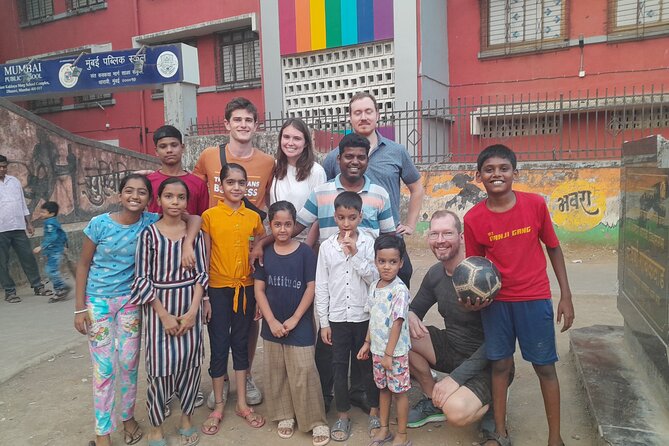
The route also includes local markets selling daily essentials and fresh produce. These stops show the support system around homes and workshops. People need food, household goods, and basic services close to where they live and work.
You may find these market areas less dramatic than the factories, but they are just as important. They reveal the routine side of Dharavi, where people shop, eat, study, and manage ordinary errands.
Community schools and work connected with education and welfare add another layer. This is an important inclusion because it moves the tour beyond business and production. A neighborhood is also shaped by how children learn and how residents support one another.
The available information does not promise entry into schools or welfare projects, so think of these as places and topics encountered along the route. The guide’s explanation is likely to be more useful than trying to rush from one sight to the next.
What the guide changes about the experience
The English-speaking guide is the central feature. Dharavi’s lanes and workshops can be difficult to interpret from the outside, and a local resident can explain what you are seeing in direct, practical terms.
A guide also helps with movement and manners. You do not need to guess which lanes to take or how to approach a workplace. The presence of a guide makes the visit safer and more respectful, particularly for a solo visitor who would not feel comfortable walking through the area independently.
Ruqaiyya is specifically named in one account, and her care with a solo woman’s comfort is worth noting. You cannot assume she will lead every departure, but you can request her if the operator allows it.
The tone of your questions matters. Ask about work, homes, education, and daily routines. Avoid treating residents as attractions. The experience works best when you see people as neighbors and workers, not as part of a spectacle.
Is $10.04 good value for two hours?
At $10.04 per person, this is inexpensive for a guided Mumbai experience. The price includes an English-speaking local guide and bottled water, while food and other drinks are excluded.
The value comes from access and interpretation rather than luxury. You are paying for a local route through workplaces and community spaces that would be difficult to understand on your own. If your goal is a polished attraction with air conditioning and set displays, this is not the right comparison.
Group discounts may lower the cost further. Private and small-group tours are also available, though the price for those formats is not given. The published maximum of 50 people means you should check the group size before booking if personal attention is important to you.
The tour is commonly booked about 15 days ahead, so reserve early if your Mumbai dates are fixed. Confirmation is provided at booking, and the activity is available with a mobile ticket.
Who will get the most from this walk?
I would recommend it to you if you want to understand how people work and live in Mumbai beyond the usual monuments. It suits visitors interested in recycling, textiles, food production, leather goods, local markets, and community life.
It is also a useful choice for solo visitors who want a local guide and a defined route. The positive account involving Ruqaiyya suggests that the guided format can be reassuring for a woman traveling alone, although comfort varies from person to person.
Families may appreciate the range of subjects, especially the recycling, bakery, and textile stops. Still, the narrow lanes and active workplaces mean children should remain close to an adult. The tour is suitable for most participants, but anyone who dislikes walking or tight spaces should consider that before booking.
You should skip it if you want a passive sightseeing ride, a food tour, or a visit focused on grand architecture. This experience asks you to pay attention to working life and to accept that the setting is real, compact, and sometimes challenging.
Booking details worth checking
Free cancellation is available if you cancel at least 24 hours before the local start time. Cancellations within 24 hours are not refunded, and changes made within that period are not accepted.
The activity lasts about two hours. Confirmation arrives at booking, and the tour is near public transportation. Bottled water is included, but food and drinks are not.
The listed start is near Mahim, while the end is at Kumbhar Wada in Dharavi. Since the guide can help you arrange a car, Uber, taxi, or train after the tour, keep the end point in mind when planning the rest of your day.
Should you book this Dharavi tour?
Book it if you want a low-cost, guided look at Dharavi’s working life and you are prepared to behave as a respectful visitor. The combination of recycling, textiles, bakeries, leather production, markets, homes, places of worship, and community education gives you far more than a quick walk through narrow lanes.
The strongest reasons to choose it are the local guide, the practical focus, and the chance to understand how a neighborhood supports both homes and businesses. The main caution is simple: this is not a polished attraction. It is a real community with real work taking place around you.
For $10.04, the tour offers good value, especially if you choose a small-group or private format and want time for questions. Check the pickup details, confirm the group size, and keep your schedule flexible around the two different meeting and ending points.
FAQ
How long does the Dharavi tour last?
The guided walking tour lasts approximately two hours.
How much does the experience cost?
The listed price is $10.04 per person.
Where does the tour start?
The listed starting point is Third Wave Coffee, Tip Road, Unit 58, Ground, Ram Mahal, Senapati Bapat Marg, Marinagar Colony, near Mahim Station in Mumbai.
Where does the tour end?
The tour ends at Kumbhar Wada in Dharavi, at the operator’s office.
Is pickup available?
Pickup is offered. Confirm the exact pickup arrangement when booking, since the listed meeting point is Third Wave Coffee near Mahim.
What does the price include?
The price includes an English-speaking local guide and bottled water.
Are food and drinks included?
No. Food and drinks are not included in the tour price.
What language does the guide speak?
The tour includes an English-speaking local guide.
How large can the group be?
The stated maximum is 50 participants. Private and small-group tour options are also available.
Can I cancel for a refund?
Yes. You can receive a full refund if you cancel at least 24 hours before the local start time. Cancellations or changes made within 24 hours are not accepted and are not refunded.
Recently added around Mumbai
- Private Walking Tour in Dharavi Slums★ 5.0 · 7 reviews
- Mumbai Sightseeing Tour★ 5.0 · 11 reviews
- Private Mumbai 2-Day Tour Package:City + Slum & Elephanta Island.★ 5.0 · 3 reviews
- Vegetarian Indian Cuisine Virtual Cooking Class Experience from Mumbai★ 5.0 · 4 reviews
- Mumbai by Night Guided Tour★ 5.0 · 6 reviews
- Transfer from Mumbai Airport to Hotel★ 4.0 · 7 reviews
- Full-Day Agra Tour with Taj Mahal From Mumbai By Air★ 5.0 · 8 reviews
- Taj Mahal Day Trip Including Same Day Flights from Mumbai★ 5.0 · 3 reviews
Mumbai Dharavi Slum Tours, compared.
Dharavi slum tour in Mumbai by Female tour guides of the slum
Read our review →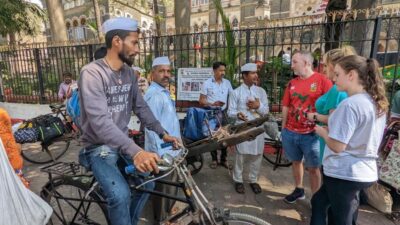
Dharavi Slum Slumdog Millionaire Tour with a Local
Read our review →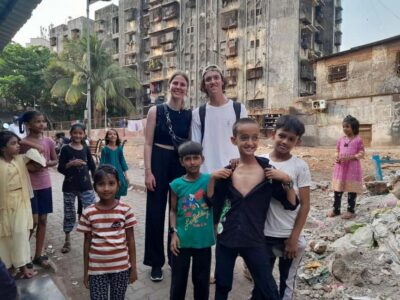
Mumbai Slum Tour – Visit Dharavi Slum with Local Guide
Read our review →
Dhobi Ghat Laundry and Dharavi Slum Tour with Local
Read our review →
Browse the lists this tour appears in