
Reviewed · MUMBAI DHARAVI SLUM TOURS
Mumbai Sightseeing with Dharavi Slum
Mumbai reveals its sharpest contrasts on this private tour. In one morning you move from the Gateway of India and the Taj Mahal Palace Hotel to Dhobi Ghat, then walk through Dharavi, where homes and small businesses share tightly packed streets.
I like the mix of grand colonial buildings and ordinary working Mumbai. I also like the private format, with an air-conditioned vehicle and a guide such as Nick or Nikesh who can explain the city in personal, local terms. The main drawback is the price: $250 for up to three people is fair for a private outing, but expensive for one person.
Key points
- Two hours in Dharavi: The longest part of the day is a guided walk through one of Asia’s largest informal settlements.
- A useful city sampler: See the Gateway of India, CST, Mani Bhavan, Dhobi Ghat, and several colonial-era buildings.
- Private group of up to three: You do not share the vehicle or guide with strangers.
- Good for a short Mumbai stay: The six-hour plan covers major sights without requiring several separate tours.
- Air-conditioned transport: This matters in Mumbai’s heat, traffic, and crowded streets.
- Guide quality shapes the day: Nick and Nikesh are the named guides associated with this experience, and the personal guiding style is a major part of its appeal.
Mumbai in six hours, from grand monuments to working neighborhoods
This tour is designed as a broad introduction rather than a slow study of one district. You see famous sights, hear short pieces of Mumbai’s colonial and modern story, and spend serious time in Dharavi.
That balance works well if you have only one day in the city, are stopping during a cruise, or want a private orientation before exploring on your own. You will not get long visits at every monument. Several places are viewed from the vehicle or treated as brief stops, so the day favors range over depth.
The tour lasts about six hours and begins at Café Coffee Day in the Ram Mahal Building on Senapati Bapat Marg, near Mahim. Pickup is offered, but the published meeting point remains the safest plan unless you confirm another arrangement directly. The experience ends back at the meeting point.
The vehicle is air-conditioned, and the price includes fees and taxes. Lunch is not included. Since this is a private activity for your group of up to three, $250 works out to about $83 per person for three people, or the full $250 if you go alone. That makes it much better value for a small group than for a solo visitor.
More Dharavi walking tours in Mumbai
- Dharavi slum tour in Mumbai by Female tour guides of the slum
★ 5.0 · 1,976 reviews - Mumbai: Dharavi Slum, DhobiGhat, and Dabbawallas Tour
★ 4.9 · 689 reviews - Dharavi Slum Tour
★ 5.0 · 625 reviews
Gateway of India and the Taj Mahal Palace
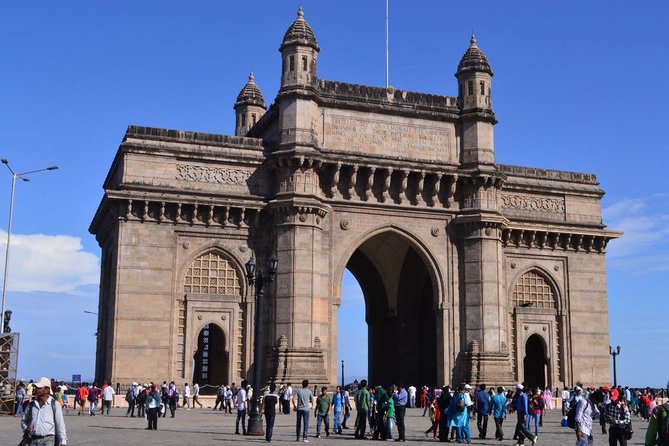
The day’s grand opening is the Gateway of India, built to welcome King George V and Queen Mary to India. It faces the harbor and is one of Mumbai’s defining landmarks.
The planned stop is only about 10 minutes, so you should expect a quick look, photographs, and an explanation of the area rather than a long visit. The Taj Mahal Palace Hotel sits beside the gateway, giving you an immediate lesson in Mumbai’s mix of imperial ceremony, luxury, and public city life.
This is a useful first stop because the two buildings are so close together. You can compare the gateway’s formal monumentality with the hotel’s famous architecture without spending time crossing the city. If you want extended time at either place, ask about the schedule before booking, since the full route contains many stops.
Colonial Mumbai by vehicle and on foot
The route takes in several major British-era buildings. Mumbai University, built in 1857, and the Rajabai Clock Towers are part of the city’s old institutional quarter. The clock tower is sometimes called the Big Ben of India, a nickname that helps explain its scale and visual role.
You also pass the Bombay High Court and the Oval Cricket Ground. Cricket is India’s beloved sport, and the open ground gives the formal stone buildings a more everyday setting. The route then includes the ruins of Watson’s Hotel, linked to the story that Jamsetji Tata was refused entry and later built the Taj Mahal Palace Hotel. Treat that story as part of the tour’s local narrative, not as the sole reason to visit the ruins.
The Municipality Building adds another grand colonial facade. These sights are valuable together because they show how Mumbai’s central districts were built for administration, commerce, law, education, and public ceremony. You may not have time to enter every building, but the sequence makes more sense than seeing them as unrelated photo stops.
CST, Mumbai’s great railway landmark

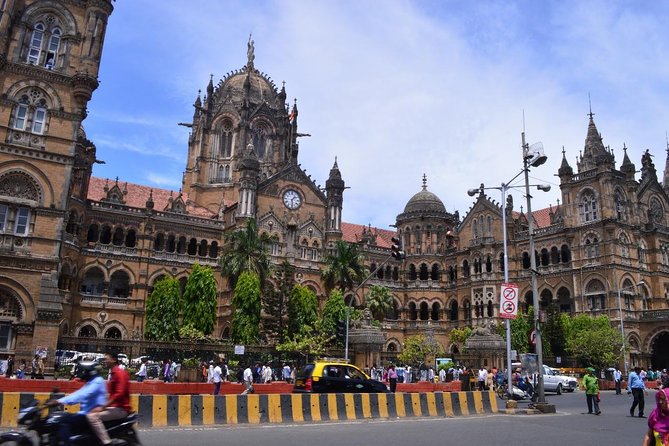
Chhatrapati Shivaji Terminus, commonly called CST, is a UNESCO World Heritage Site and one of the strongest architectural stops on the route. The planned visit lasts about 15 minutes.
That is enough to admire the exterior and hear why the station matters, but not enough for a detailed architectural inspection. The building is a reminder that Mumbai’s old railway system was not just transport infrastructure. It was also a statement of power, trade, and urban ambition.
If you care about design and history, pay close attention to the carved details and the contrast between the station’s ornate exterior and the traffic around it. The short stop keeps the day moving, but it also means you should not expect a full station tour.
More city sightseeing tours in Mumbai
- Mumbai: Full-Day Sightseeing Tour of Mumbai
★ 4.9 · 1,822 reviews - Private Mumbai Sightseeing Tour (Traveller’s Choice Award Winner)
★ 5.0 · 1,565 reviews - Highlights of Mumbai Sightseeing Tour: TRAVELLERS CHOICE AWARDED
★ 5.0 · 915 reviews - Highlights of South Mumbai Guided Private Tour in AC Vehicle
★ 5.0 · 620 reviews
Mani Bhavan and Gandhi’s Mumbai years
Mani Bhavan Gandhi Museum receives about 30 minutes, making it one of the longer indoor stops. Mahatma Gandhi lived here from 1917 to 1934, so this visit adds political and personal context to the city tour.
The museum gives the day a quieter pause after the busy central landmarks. It also keeps the experience from being only about architecture and traffic. You get a connection to India’s independence movement and to Gandhi’s years in Mumbai.
Half an hour is a reasonable amount of time for a focused visit. If Gandhi’s life is a main interest for you, you may want a separate, longer visit on another day. On this tour, Mani Bhavan works as a compact historical stop within a much wider route.
Marine Drive, Chowpatty, and the city from above
The vehicle passes Marine Drive and Chowpatty Beach. These are drive-by views, so timing and traffic affect what you see. Marine Drive offers the famous sweep of the waterfront, while Chowpatty is one of the city’s best-known public beach areas.
The itinerary also includes Kamala Nehru Park, where you can look across the Mumbai skyline and see the Old Woman’s Shoe, a playful boot-shaped structure popular with families. Nearby are the Hanging Gardens, built over water tanks near the Tower of Silence, a Parsi burial place.
These stops give you a different view of Mumbai. The Gateway and colonial buildings show the city at street level, while Kamala Nehru Park lets you look back across the built-up core. The exact time available here may be limited because the day also includes the long Dharavi walk.
Dhobi Ghat, where laundry becomes city life
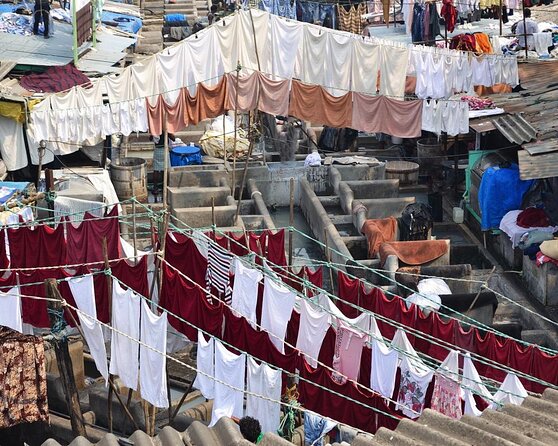
Dhobi Ghat is described as the world’s largest open-air laundry. The planned stop lasts around 20 minutes, and admission is free.
From the viewing area, you can see laundry work carried out in full public view. It is a practical, working part of Mumbai rather than a monument designed for sightseeing. That is why it fits this tour well. You are not only looking at old buildings. You are seeing one of the systems that keeps a huge city running.
Twenty minutes is enough to understand the layout and take photographs, but it is not a hands-on visit. Be respectful with cameras and follow your guide’s advice about where to stand and what to photograph. The stop is brief, yet it prepares you for the more personal walking portion in Dharavi.
Two hours walking through Dharavi

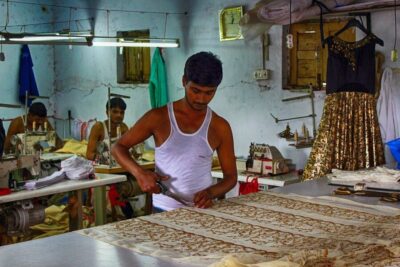
Dharavi is the emotional center of the day. You spend about two hours walking with a guide, seeing how people live and work in one of Asia’s largest informal settlements.
The important point is tone. This should not be treated as a poverty photo stop. The useful part is the explanation of daily life, housing, work, and the way a dense neighborhood functions. Your guide is there to help you talk about the area rather than simply stare at it.
The guide names connected with this experience include Nick and Nikesh. Nikesh has been described as having a personal connection to Dharavi, and the strongest descriptions of the guiding focus on safety, friendliness, humor, and firsthand explanation. That matters here. A walk through Dharavi needs tact and context more than a memorized list of facts.
You should expect narrow streets and a close look at ordinary work and home life. The tour description specifically promises a chance to see how people work and live, then talk about it. It does not promise a particular workshop, family visit, or meal, so do not assume those are included.
The two-hour duration is a real advantage. Many city tours give Dharavi a quick drive-by and call it done. Here, the neighborhood receives the largest single block of time. That gives you more room to ask questions and understand what you are seeing.
Still, this is the part of the tour that requires the most sensitivity from you. Dress and behave respectfully, avoid turning people into subjects without permission, and listen when the guide explains local expectations. If you want only polished monuments, this portion may feel uncomfortable. If you want a more honest picture of Mumbai’s working city, it is likely to be the most valuable stop.
What the private format changes
Only your group participates. That gives you more freedom to ask questions, pause briefly, or adjust the conversation around your interests. A private guide can also make the Dharavi walk feel less mechanical and more like a real exchange.
The tradeoff is cost. At $250 per group of up to three, the price makes the most sense for a couple, family, or small group of friends. Three people pay about $83 each, which is reasonable for six hours of private transport and guiding. Two people pay $125 each. Alone, you are paying a premium for privacy.
The air-conditioned vehicle is another practical benefit. Mumbai traffic can be tiring, and the route covers several separate areas. Having a vehicle between walking stops saves energy and makes it possible to see more in one morning.
The schedule is tight. Gateway of India receives 10 minutes, CST 15 minutes, and Dhobi Ghat 20 minutes. Mani Bhavan receives 30 minutes, while Dharavi receives two hours. This tells you where the tour’s priorities lie: quick orientation at major landmarks, then a longer, more direct neighborhood experience.
Who should book this Mumbai tour?
I would choose this tour if you have limited time, want a private guide, or prefer a city overview that includes ordinary life as well as famous sights. It is especially practical for a cruise stop or a first day in Mumbai, when you want someone else to connect the districts and explain what you are seeing.
It also suits solo women who want the reassurance of a private guide and organized transport. The named guides have been praised for being friendly, safe, humorous, and attentive. Those qualities matter more than polished commentary when you are walking through an unfamiliar neighborhood.
Families and small groups get the best financial value. The vehicle, guide, and admission fees are shared across up to three people. The tour is also listed as suitable for most participants and near public transportation.
I would think twice if you dislike short monument stops, want a slow architectural tour, or expect lunch to be included. The day is also not a substitute for a full museum visit or a dedicated Gandhi tour. It is a compact city sampler with Dharavi as its main experience.
Free cancellation is available up to 24 hours before the start time. Changes or cancellations within 24 hours are not refundable, so check the local start time before making last-minute plans.
Should you book Mumbai Sightseeing with Dharavi Slum?
Book it if you want breadth plus a serious Dharavi visit, and if you can fill the private vehicle with two or three people. The route gives you Mumbai’s landmark checklist, but it does not stop there. Dhobi Ghat and Dharavi show you the city as a place where people work, wash, worship, commute, and live.
Skip it if you want long visits at each monument or a low-cost group tour. The value depends on the guide, the small private group, and the two hours in Dharavi. For the right audience, that is exactly what makes the $250 price worthwhile.
FAQ
How long does the Mumbai sightseeing tour last?
The tour lasts approximately six hours and ends back at the meeting point.
What is the price of the private tour?
The price is $250 per group of up to three people. The amount is charged by group, not per person.
Where does the tour begin?
The published meeting point is Café Coffee Day, Unit 58, Ground Floor, Ram Mahal Building, Senapati Bapat Marg, T.P. Road, near Mahim, Mumbai, Maharashtra 400016.
Is hotel or other pickup available?
Pickup is offered. Since the published meeting point is Café Coffee Day, confirm the exact pickup location when booking.
What is included in the price?
An air-conditioned vehicle, all fees, and all taxes are included.
Is lunch included?
No. Lunch is not included in the tour price.
How much time is spent in Dharavi?
The guided walk through Dharavi lasts about two hours.
Recently added around Mumbai
- Private Walking Tour in Dharavi Slums★ 5.0 · 7 reviews
- Mumbai Sightseeing Tour★ 5.0 · 11 reviews
- Private Mumbai 2-Day Tour Package:City + Slum & Elephanta Island.★ 5.0 · 3 reviews
- Vegetarian Indian Cuisine Virtual Cooking Class Experience from Mumbai★ 5.0 · 4 reviews
- Mumbai by Night Guided Tour★ 5.0 · 6 reviews
- Transfer from Mumbai Airport to Hotel★ 4.0 · 7 reviews
- Full-Day Agra Tour with Taj Mahal From Mumbai By Air★ 5.0 · 8 reviews
- Taj Mahal Day Trip Including Same Day Flights from Mumbai★ 5.0 · 3 reviews
Mumbai Dharavi Slum Tours, compared.

Dharavi slum tour in Mumbai by Female tour guides of the slum
Read our review →

Dharavi Slum Slumdog Millionaire Tour with a Local
Read our review →
Mumbai Slum Tour – Visit Dharavi Slum with Local Guide
Read our review →
Dhobi Ghat Laundry and Dharavi Slum Tour with Local
Read our review →
Browse the lists this tour appears in