
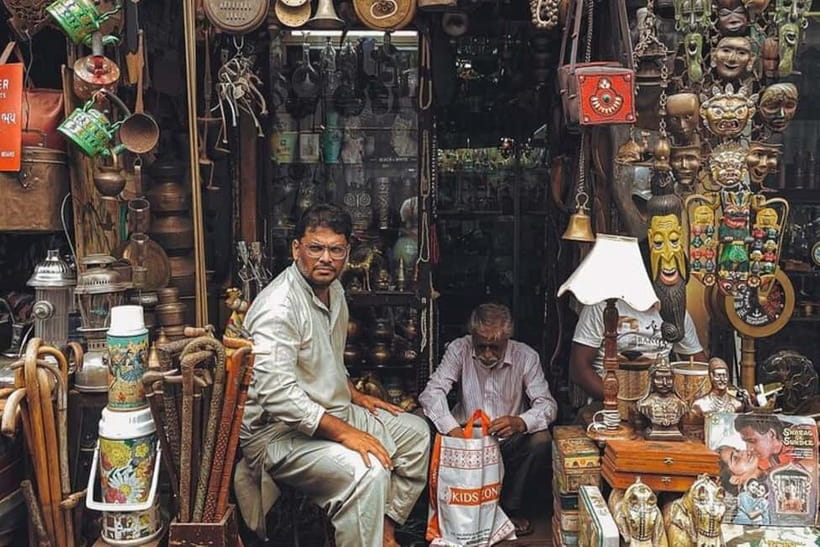
Reviewed · MUMBAI DHARAVI SLUM TOURS
Mumbai: Private Slum and Sightseeing Full-day tour
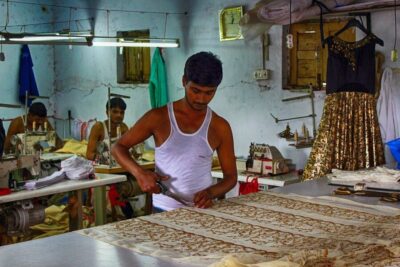
Dharavi is the heart of this day. You walk through narrow lanes where recycling, pottery, textiles, and small workshops support a working community. It is not a staged display of poverty, but a close look at the skill and effort behind one of Mumbai’s most misunderstood neighborhoods.
I like the way the tour pairs Dharavi’s working streets with grand places such as the Gateway of India and Chhatrapati Shivaji Maharaj Terminus. I also like having a private car, since Mumbai traffic can turn short distances into long rides. The drawback is the packed schedule: you see many places, but most stops last only 15 to 30 minutes.
Key points to know before booking

- Two hours in Dharavi: The longest stop is a guided walk through workshops, lanes, and local industry.
- A full Mumbai sampler: You visit colonial landmarks, religious sites, markets, a laundry district, and the seafront.
- Private air-conditioned transport: Your guide and driver can move you between distant parts of the city without joining a large group.
- Strong guide service: Past guide teams have included Sufiyan, Javed, and Bala, with drivers such as Pranav.
- Good for a first day: The route covers many major sights, though it leaves little time for unplanned stops.
- Plan for walking: Comfortable shoes and modest clothing matter, especially in Dharavi and at religious sites.
Why Dharavi gives this tour its purpose
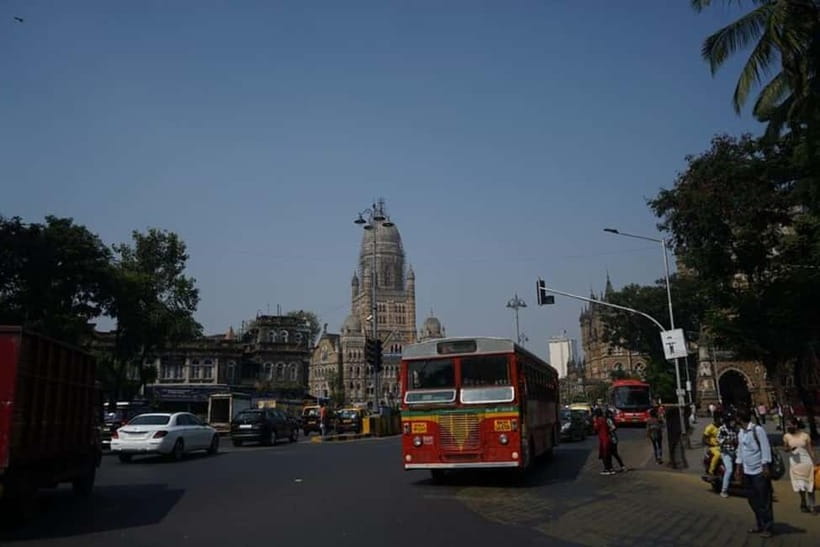
Many Mumbai sightseeing tours show you polished facades, grand hotels, and famous monuments. This one also takes you into the city’s working core, where small businesses and family-run industries operate in tight spaces.
The two-hour Dharavi walk is the most substantial part of the day. Your guide leads you through narrow lanes and explains how recycling, pottery, textiles, and other trades contribute to Mumbai’s economy. Some products made here are sent around the world, which gives the area a very different meaning from the simple label often attached to it.
You should approach this visit with respect. This is a real community, not a film set or an attraction designed only for photographs. Dress modestly, listen to your guide, and follow instructions about where you can walk or take pictures.
The walk involves uneven or confined urban spaces, and the tour is not suitable for wheelchair users or people with visual impairments. If you dislike close quarters or extended walking, this may not be the right fit.
The positive side is the time allowed. A two-hour visit gives your guide room to explain what you are seeing rather than rushing past it from a car window. Javed has been praised for providing excellent service on this type of outing, while Sufiyan has also been singled out for a friendly approach.
More Dharavi walking tours in Mumbai
- Dharavi slum tour in Mumbai by Female tour guides of the slum
★ 5.0 · 1,976 reviews - Mumbai: Dharavi Slum, DhobiGhat, and Dabbawallas Tour
★ 4.9 · 689 reviews - Dharavi Slum Tour
★ 5.0 · 625 reviews
Starting at the Gateway of India
The Gateway of India is an easy place to begin understanding Mumbai. Built during the British period, the waterfront arch faces the harbor and has become the city’s best-known meeting point.
You get about 20 minutes here for a visit, a guided introduction, and photographs. That is enough to see the monument and take in the sea air, but not enough for a long visit around the surrounding waterfront.
Across from the gateway is the Taj Mahal Palace Hotel, a famous symbol of Mumbai’s old-world luxury. The contrast is immediate: colonial architecture, busy public space, expensive hotels, and working harbor activity all sit within the same view.
This opening stop is useful because it gives you a clear visual starting point. Later, when you see Dharavi’s workshops and the city’s crowded roads, Mumbai’s sharp contrasts will make more sense.
CST, Crawford Market, and the city’s public life
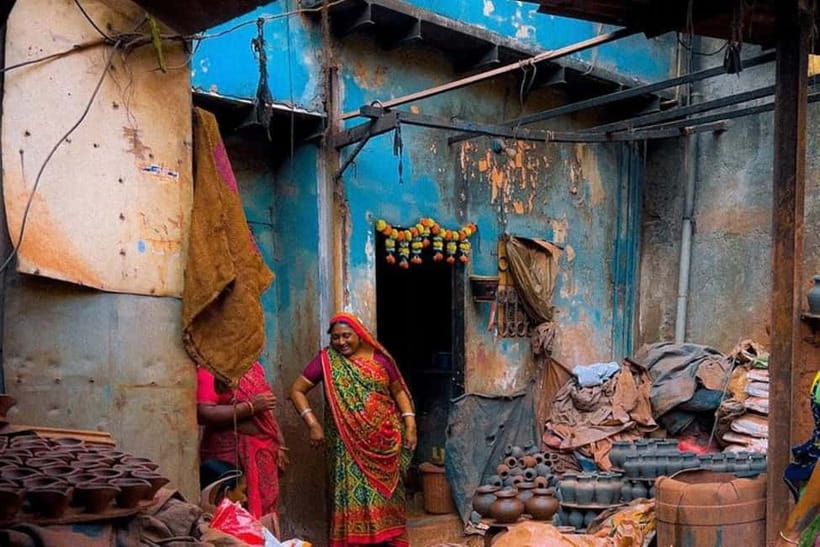
Chhatrapati Shivaji Maharaj Terminus, usually called CST, is one of Mumbai’s great architectural surprises. It is a working railway station, yet its Gothic design, carved details, and grand scale can make it look like a palace.
The visit lasts about 15 minutes. You can photograph the exterior and receive a short explanation from the guide, but the schedule does not allow for a long architectural study or a train journey.
That brief stop still earns its place. CST is not a quiet monument preserved behind a fence. It is part of daily Mumbai, with commuters using the station as the city carries on around it.
Nearby Crawford Market offers a different kind of city scene. This is a shopping market where locals buy fresh produce, spices, and other goods. You spend about 20 minutes here, with time for a short walk, a guided visit, and photographs.
Expect noise, movement, and a lot to take in quickly. The market can feel crowded, and you will not have much time to browse at leisure. Still, it is more useful than a polished shopping stop because it shows how the city buys and sells ordinary necessities.
Mani Bhavan and Mumbai’s freedom movement
Mani Bhavan is the former Mumbai home of Mahatma Gandhi. The stop lasts about 30 minutes, giving you more time here than at the Gateway or CST.
This is one of the quieter parts of the route. Instead of watching traffic or market activity, you get a place connected with Gandhi’s work during India’s independence movement. The visit adds political and personal context to a day that could otherwise become a rapid parade of buildings.
I would pay attention here even if you are not deeply familiar with Indian history. The guide can connect this house with the wider story of the freedom struggle, helping the major monuments feel less detached from the country’s past.
The half-hour limit keeps the day moving, but it may feel short if you want to read every display or spend time with the exhibits. The tour works best if you see Mani Bhavan as a focused introduction rather than a museum visit in depth.
More city sightseeing tours in Mumbai
- Mumbai: Full-Day Sightseeing Tour of Mumbai
★ 4.9 · 1,822 reviews - Private Mumbai Sightseeing Tour (Traveller’s Choice Award Winner)
★ 5.0 · 1,565 reviews - Highlights of Mumbai Sightseeing Tour: TRAVELLERS CHOICE AWARDED
★ 5.0 · 915 reviews - Highlights of South Mumbai Guided Private Tour in AC Vehicle
★ 5.0 · 620 reviews
Banganga Tank and the Jain Temple

Banganga Tank gives you a change of pace. Surrounded by temples and old religious structures, this sacred water tank creates a sense of an older Mumbai tucked inside the modern city.
You get around 20 minutes for a visit, a short guided explanation, and photographs. It is a compact stop, but it helps show that Mumbai is not defined only by British buildings, skyscrapers, markets, and traffic.
The Jain Temple is also scheduled for about 20 minutes. Its carved decoration and religious importance make it another useful pause from the road. Please dress modestly and treat the site as a place of worship, not simply as a photo opportunity.
These two stops are especially valuable for visitors who want more than a standard city checklist. The tour does not present Mumbai as one single culture or period. It moves between colonial sites, Hindu and Jain religious places, modern wealth, working districts, and public spaces.
Dhobi Ghat and Mumbai’s working systems
At Mahalaxmi Dhobi Ghat, you stop for about 15 minutes to see the famous open-air laundry in action. Clothes are washed and handled in a large communal operation, creating a scene that is both highly organized and visually striking.
The short stop is enough for an overview and photographs. It is not a workshop visit, and you should not expect an extended walk through the laundry area.
Dhobi Ghat fits well with Dharavi because both places show labor rather than postcard Mumbai. One reveals a long-running laundry system, while the other shows many forms of small-scale production. Together, they make the city’s economy easier to understand.
You will probably want to ask your guide how the laundry works and how it fits into local life. The value here comes less from the photograph than from the explanation around it.
Kamla Nehru Park and the Marine Drive view
Kamla Nehru Park is a short viewpoint stop, scheduled for about 15 minutes. From here, you can look toward Marine Drive and the Arabian Sea, taking in the curve that gives the waterfront its famous Queen’s Necklace nickname when the lights come on after dark.
This is a good place to pause and reset. Much of the day takes place at street level, among traffic and crowds. The elevated view lets you see how the city’s major roads, shoreline, and buildings fit together.
The timing matters. Fifteen minutes is enough for a quick panorama, but not a leisurely park visit. If you want a long sit-down break, this itinerary does not really provide one.
The final drive along Marine Drive adds another visual change. As the sun goes down and city lights begin to appear, the road becomes a fitting end to a day spent moving through Mumbai’s many sides.
What the private car adds
The tour includes pickup and drop-off in Mumbai, a private air-conditioned car, an English-speaking guide, and packaged water. Hindi guiding is also available.
That transport is more important than it may first appear. The route covers South Mumbai, central districts, religious sites, Dharavi, and the western waterfront. Mumbai traffic can be slow, so a private vehicle saves you from arranging separate rides between each stop.
A private group also gives you more room to ask questions. If you want to understand the history of CST, the work at Dhobi Ghat, or the industries in Dharavi, you can raise the subject with your guide instead of trying to keep up with a large group.
The tradeoff is that traffic still controls the day. A private car does not make Mumbai roads empty. Travel time between stops can change, and a delayed journey may reduce time at later sights.
Past guide and driver combinations have included Bala and Pranav, with Bala praised for clear explanations about the city, its people, and its past. Pranav was also noted for safe, efficient driving. Those details matter on a long city tour, where a good driver can make the road sections calmer.
Is $85 good value for eight hours?
At $85 per person, this is not the cheapest way to see Mumbai. You are paying for a private vehicle, pickup and drop-off, a guide, and an eight-hour route that links places spread across the city.
The value improves if you have only one free day. Booking separate taxis, finding guides at individual sights, and working out the order of stops would take time and could create extra costs. Here, the main landmarks and the Dharavi walk are arranged into one day.
The price is less compelling if you prefer slow travel. Many stops last only 15 or 20 minutes, and food and drinks are not included. You may also want more time at the market, Mani Bhavan, or the waterfront than the schedule allows.
For a first introduction, I think the combination is fair. You get range, context, and a private guide instead of only a drive past famous buildings. The strongest value comes from Dharavi and the guide service, not from the number of photographs you can collect.
Practical advice for making the day work
Wear comfortable shoes. The Dharavi walk lasts two hours, and additional walking takes place at Crawford Market, religious sites, and selected landmarks.
Choose modest clothing. This is important for visits to the Jain Temple, Banganga Tank, and local communities. Respectful dress also helps you feel more comfortable throughout the day.
Bring patience for traffic. The itinerary covers a lot of ground, and the road between two nearby-looking places can take longer than expected. A private car gives you control over the group, but not over Mumbai’s traffic.
Food is not included, so plan around that before you set out. Packaged water is provided, but meals and other drinks are your responsibility.
The experience is offered in English or Hindi. The tour is private, which makes it a good choice for families, couples, or small groups who want to ask questions and keep the day together.
The tour does not allow pets, alcohol, or drugs, and nudity is prohibited. It is also not suitable for wheelchair users or people with visual impairments.
Who should book this Mumbai day tour?
I would choose this tour if you have limited time and want a broad first look at Mumbai. It suits you especially well if you want major landmarks but also want to understand local work, religious life, and the city’s less polished areas.
It is a good match for visitors who prefer a guide to explain what they are seeing. The route has plenty of context to absorb, and a strong guide can make the difference between simply passing a building and understanding why it matters.
I would hesitate if you want a relaxed pace, long museum visits, or free time for shopping. The schedule is ambitious, and the city’s traffic can make it feel even fuller.
The tour currently carries a five out of five rating from four verified bookings. The praise centers on friendly, informative guides and safe driving, with Dharavi described as the most powerful part of the day. Those are the qualities I would prioritize when deciding.
Should you book it?
Book it if you want to see Mumbai’s major sights in one organized day and are willing to give two hours to a serious, respectful look at Dharavi. The mix of CST, Gateway of India, Banganga Tank, Dhobi Ghat, Mani Bhavan, Crawford Market, and Marine Drive gives you a broad picture of the city.
Skip it if you need wheelchair access, dislike walking through tight urban areas, or prefer to explore just two or three places slowly. For everyone else, the private car, local guide, and Dharavi visit make this a useful introduction to Mumbai, with enough working-city detail to go beyond the usual postcard view.
FAQ
How long does the Mumbai private tour last?
The tour lasts eight hours, including the Dharavi walk and sightseeing around Mumbai.
Is the tour private?
Yes. The experience is arranged for a private group rather than a shared group.
Which languages are available?
Live guiding is available in English and Hindi.
Is pickup and drop-off included?
Yes. Pickup and drop-off in Mumbai are included.
What transport is provided?
You travel between sights in a private air-conditioned car.
How long is the Dharavi visit?
The guided Dharavi portion lasts about two hours and includes walking.
Is food included?
No. Food and drinks are not included. Packaged water is provided.
Is the tour suitable for wheelchair users?
No. The experience is listed as unsuitable for wheelchair users and people with visual impairments.
More Full-Day in Mumbai
- Private Full-Day Mumbai Sightseeing Tour with Dharavi Slums
★ 5.0 · 338 reviews - Private Full-Day Mumbai Sightseeing & Dharavi Slum Tour
★ 4.9 · 272 reviews - Ultimate Mumbai Full Day: Sights, Bollywood Dance, Lunch & Spices
★ 5.0 · 201 reviews - Private Full-Day Mumbai City Tour with Elephanta Caves Excursion
★ 5.0 · 113 reviews
Recently added around Mumbai
- Mumbai Sightseeing Tour★ 5.0 · 11 reviews
- Private Walking Tour in Dharavi Slums★ 5.0 · 7 reviews
- Private Mumbai 2-Day Tour Package:City + Slum & Elephanta Island.★ 5.0 · 3 reviews
- Vegetarian Indian Cuisine Virtual Cooking Class Experience from Mumbai★ 5.0 · 4 reviews
- Mumbai by Night Guided Tour★ 5.0 · 6 reviews
- Transfer from Mumbai Airport to Hotel★ 4.0 · 7 reviews
- Full-Day Agra Tour with Taj Mahal From Mumbai By Air★ 5.0 · 8 reviews
- Taj Mahal Day Trip Including Same Day Flights from Mumbai★ 5.0 · 3 reviews
Mumbai Dharavi Slum Tours, compared.

Dharavi slum tour in Mumbai by Female tour guides of the slum
Read our review →

Dharavi Slum Slumdog Millionaire Tour with a Local
Read our review →
Mumbai Slum Tour – Visit Dharavi Slum with Local Guide
Read our review →
Dhobi Ghat Laundry and Dharavi Slum Tour with Local
Read our review →
Browse the lists this tour appears in