

Reviewed · MUMBAI DHARAVI SLUM TOURS
Mumbai: Private City sightseeing and Dharavi Slum Tour
Mumbai is easiest to understand when you see its grand colonial buildings and working neighborhoods side by side. This private tour links the Gateway of India, CST, Marine Drive, and other major sights with a two-hour walk through Dharavi, where small businesses, homes, schools, and workshops fill narrow lanes.
I like the private format, which lets you ask questions and set the pace within an eight-hour day. I also like that guide Rakesh lives in Dharavi, giving the neighborhood visit a personal connection rather than treating it as a quick look from a vehicle. The main consideration is the pace: you cover many stops, so most landmarks receive a short visit rather than a long museum-style exploration.
Key points at a glance

- Rakesh’s local connection: Your Dharavi walk is led by a guide who lives in the settlement.
- A two-hour Dharavi visit: See leather work, pottery, soap making, baking, dyeing, plastic recycling, and local markets.
- Mumbai’s major landmarks: Visit or drive past the Gateway of India, CST, Taj Mahal Palace, Marine Drive, Mani Bhavan, and more.
- Private value: The $109 price covers a group of up to three people, hotel pickup and drop-off, entry tickets, a guide, and water.
- A packed city day: Dhobi Ghat, Oval Maidan, Kala Ghoda, Hanging Gardens, and several colonial buildings fit into one outing.
- Practical shoes matter: You will walk through Dharavi and at several city stops, so wear comfortable footwear.
Dharavi first, with a guide who lives there
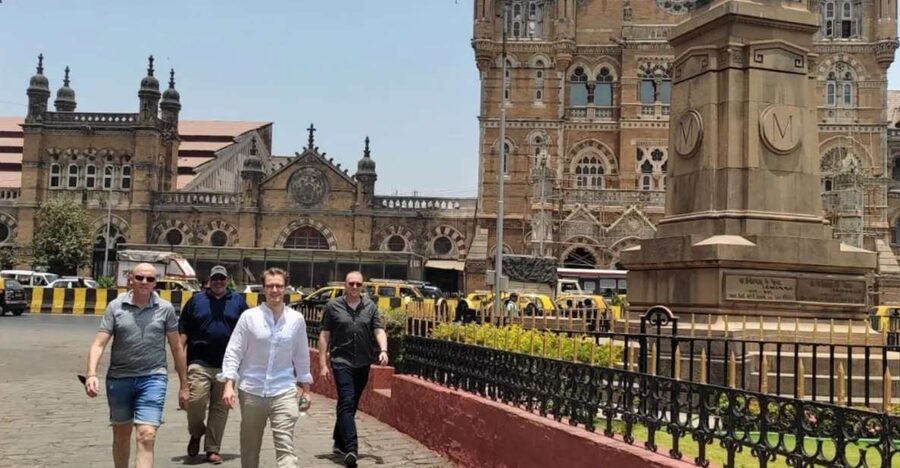
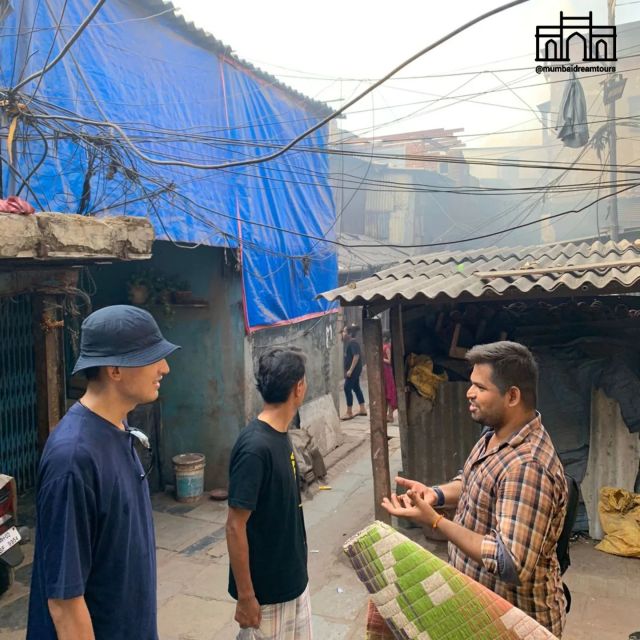
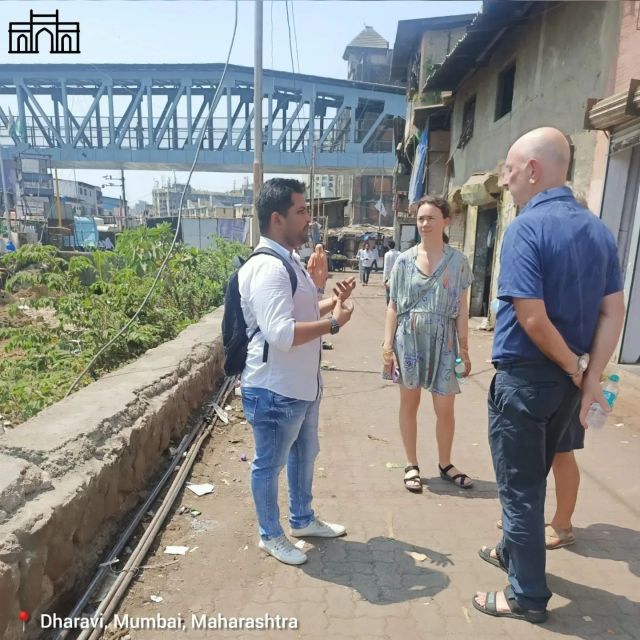
The emotional center of this day is Dharavi. You spend about two hours walking through one of Mumbai’s largest informal settlements, not simply viewing it from a car. The route includes narrow alleys, homes, schools, hospitals, small industries, and a local market.
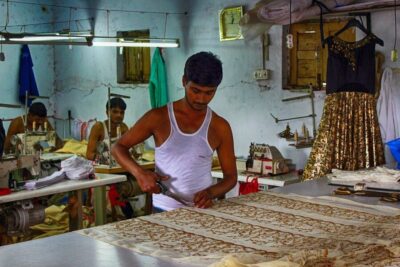
The most useful part is the working side of Dharavi. You might see leather production, pottery, soap making, bakery work, color dyeing, plastic recycling, and the recycling of used vegetable oil cans. These are not abstract examples of urban enterprise. They are the ordinary businesses that help make the neighborhood function.
Rakesh’s connection to Dharavi matters. He lives in the area and can explain what you are seeing from a resident’s point of view. That does not turn the visit into a polished attraction, and that is precisely why you should expect a direct, sometimes uncomfortable walk through a crowded residential district.
You will pass close to daily life. Be respectful with photography and follow your guide’s instructions. The tour description specifically includes homes, schools, hospitals, and religious activity, including Muslim residents making a shrine for Hindus. That detail gives you a glimpse of the neighborhood’s social mix, but it is best approached with quiet attention rather than a camera-first attitude.
The Dharavi portion is also a useful correction to the word slum. The area is not only poverty or hardship. It is a place of work, family life, trade, recycling, and community. At the same time, the tour does not pretend that narrow lanes and limited space are easy living conditions. You get a more complete picture because both sides are visible.
More Dharavi walking tours in Mumbai
- Dharavi slum tour in Mumbai by Female tour guides of the slum
★ 5.0 · 1,976 reviews - Mumbai: Dharavi Slum, DhobiGhat, and Dabbawallas Tour
★ 4.9 · 689 reviews - Dharavi Slum Tour
★ 5.0 · 625 reviews
Dhobi Ghat and Mumbai’s working rhythm
After Dharavi, the tour visits Dhobi Ghat for about 20 minutes. This open-air laundry is a classic Mumbai sight, where clothes are washed in full public view. The stop is brief, so think of it as a focused look and an explanation from your guide, not an extended visit.
Dhobi Ghat pairs well with Dharavi because both places show work happening in plain sight. Mumbai’s famous image is often built around finance, film, hotels, and grand architecture. These working districts reveal another part of the city, one based on manual labor, small businesses, and services.
The short stop also shows the tradeoff of this tour. You get broad coverage, but you will not spend half an hour at every location. If your priority is detailed photography or long museum visits, you may want a slower plan. If you have one day and want the city’s main sights plus Dharavi, the compact schedule is practical.
CST and the colonial center
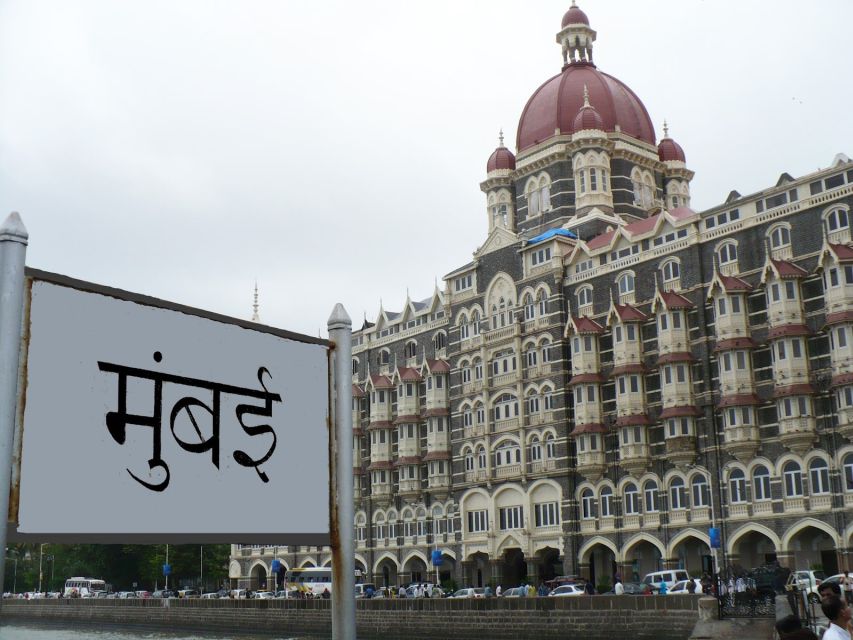
Chhatrapati Shivaji Maharaj Terminus, often called CST, receives about 20 minutes. This UNESCO World Heritage Site is one of the city’s grandest railway buildings, and your guide can explain its place in Mumbai’s British-era architecture and present-day transport system.
You also pass or see several other colonial-era landmarks, including the Bombay High Court, Mumbai University, Rajabai Clock Tower, the Municipality Building, the Telegraph Office, the India Post Office Building, Flora Fountain, and Hutatma Chowk. Many of these are viewed from the vehicle or during short sightseeing stops, so keep your eyes open between formal visits.
Rajabai Clock Tower is presented as the Big Ben of India, an easy comparison that helps you recognize its scale and Victorian character. The Bombay High Court and Mumbai University add more examples of the city’s old institutional architecture. You do not need to be an architecture expert to enjoy this stretch. The point is seeing how much of central Mumbai still reflects its colonial past.
The Watson’s Hotel ruins come with a memorable local story. Tata was refused entry to the hotel, and later built the Taj Mahal Hotel. The story is part of Mumbai’s mix of business, colonial social rules, and civic pride. Treat it as a guide’s historical anecdote rather than the sole reason to visit the ruins.
Oval Maidan, Kala Ghoda, and the city’s public spaces
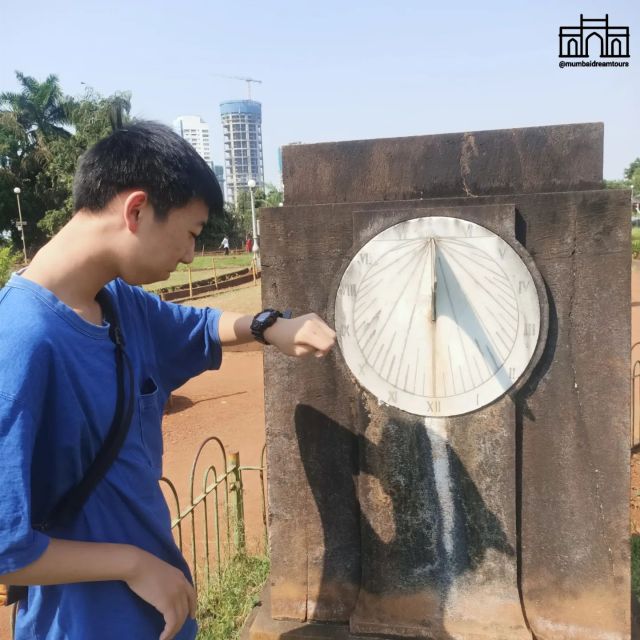
Oval Maidan is a short stop, around 10 minutes. It is a cricket ground and a reminder that cricket is not just a professional sport in India. It is played in public spaces and woven into ordinary city life.
Kala Ghoda receives about five minutes, making it more of a quick orientation stop than a full neighborhood visit. It is useful for getting a sense of Mumbai’s arts and heritage district, though you should not expect time to explore its galleries or streets at length.
The city tour also takes you past the Gateway of India and the Taj Mahal Palace. At the Gateway, you have about 20 minutes for sightseeing and walking. The arch was built to welcome King George V and Queen Mary to India, and it later became one of Mumbai’s best-known waterfront symbols.
The Taj Mahal Palace is given around 10 minutes of guided sightseeing. You should not expect a hotel tour or access to private interiors. The value is in seeing the building as part of the city’s story and hearing the connection with the Watson’s Hotel tale.
More city sightseeing tours in Mumbai
- Mumbai: Full-Day Sightseeing Tour of Mumbai
★ 4.9 · 1,822 reviews - Private Mumbai Sightseeing Tour (Traveller’s Choice Award Winner)
★ 5.0 · 1,565 reviews - Highlights of Mumbai Sightseeing Tour: TRAVELLERS CHOICE AWARDED
★ 5.0 · 915 reviews - Highlights of South Mumbai Guided Private Tour in AC Vehicle
★ 5.0 · 620 reviews
Marine Drive, Malabar Hill, and Gandhi’s Mumbai
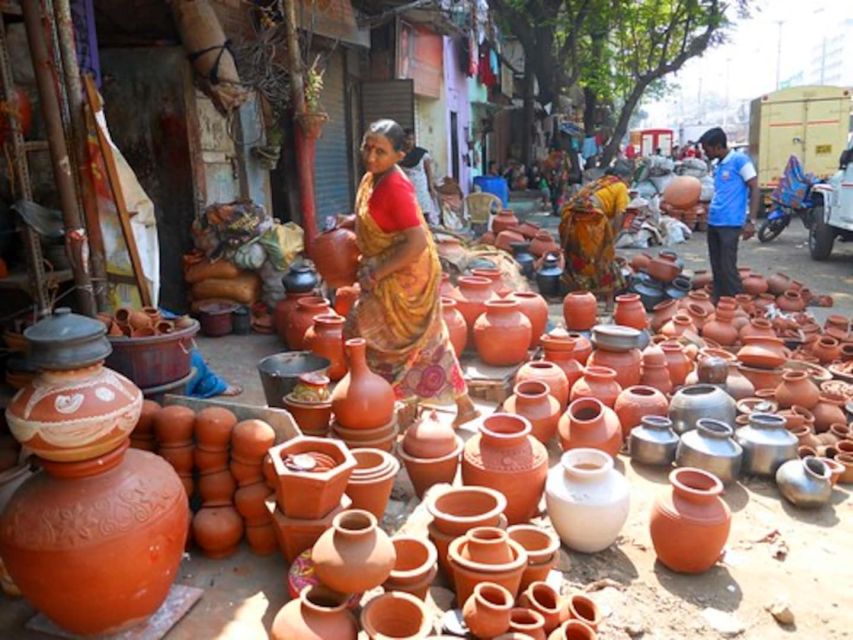
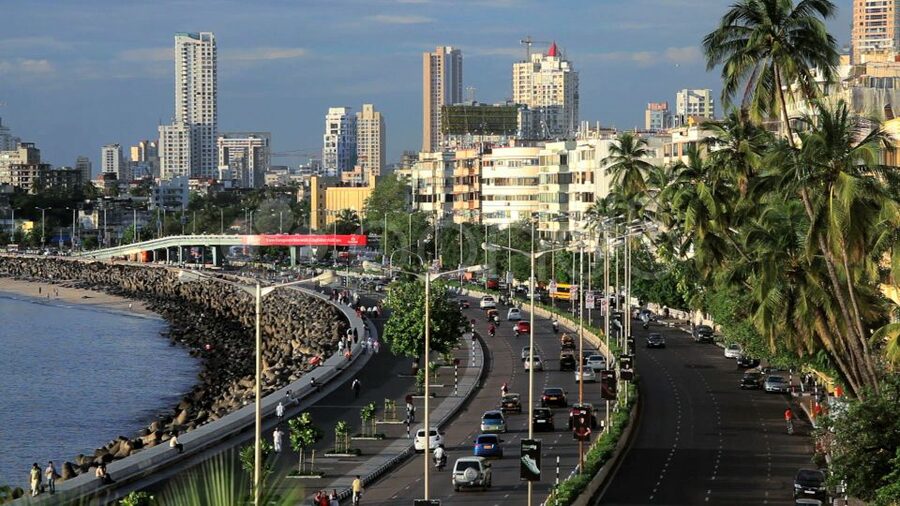
Marine Drive is a brief, 10-minute stop or drive-by. It gives you a look at Mumbai’s famous seafront road, while Chowpatty Beach is also passed along the way. This is one of the places where the vehicle helps: you can cover more of the coastline without spending the whole day walking between points.
At Malabar Hill, the tour visits Kamala Nehru Park and the Hanging Gardens. Kamala Nehru Park offers a skyline view and the well-known Old Woman’s Shoe feature. The Hanging Gardens were built above water tanks near the Tower of Silence, a Parsi burial place. The stop lasts about 20 minutes, enough for a view and a short walk, but not a leisurely park visit.
Mani Bhavan gets about 30 minutes and is one of the more substantial stops. This museum is linked with Mahatma Gandhi and gives the day a strong historical and personal dimension. Compared with several quick photo stops, Mani Bhavan gives you more time to slow down and consider Mumbai’s role in Gandhi’s life and work.
The order can vary with traffic and local conditions, but the day generally moves between central Mumbai, Dharavi, the waterfront, and Malabar Hill. Mumbai traffic can make an eight-hour schedule feel full. I would avoid adding another major attraction to the same day.
What the private format is really worth
The advertised price is $109 per group of up to three people. That is not a per-person rate. For three people, it works out to roughly $36 each before any optional food or drinks, while a couple pays more per person but still gets a private vehicle and guide for the day.
The package includes hotel pickup and drop-off, an English-speaking guide, entry tickets, and a bottle of mineral water. Food and drinks are not included. Since the day lasts eight hours, plan to eat before departure or ask the operator about timing for a meal. Do not assume lunch is part of the price.
The private setup is especially useful in Dharavi. You can ask what a workshop does, pause for an explanation, or raise questions about the neighborhood without trying to keep up with a large group. It also makes the outing suitable for a small family or a couple who want one guide for the whole day.
The tradeoff is that a private tour does not automatically mean a slow tour. You still cover many sights in one day. The schedule is built for range, not for sitting in a museum, lingering at the Gateway, or making repeated stops for photos.
Who will get the most from this day
I would choose this tour if you have limited time in Mumbai and want both major landmarks and a direct look at local working life. It is also a good fit if you prefer having transport between scattered sights instead of arranging taxis or public transport throughout the day.
It suits first-time visitors who want context as they go. Rakesh was praised for explaining the city, answering questions, and making people feel safe and informed. Those qualities matter on a day that moves from grand public buildings to the tight lanes of Dharavi.
You should be comfortable walking for two hours in Dharavi and wearing practical shoes. The tour is not presented as wheelchair-friendly, and no accessibility details are provided, so you should confirm your needs before booking.
I would be more cautious if your main goal is luxury sightseeing, private access inside every landmark, or a slow architectural study. Several stops last only five to 20 minutes, and some buildings are viewed from the vehicle. This is a city overview with a substantial neighborhood walk, not a series of long museum visits.
Practical advice before you go
Send the operator your pickup and drop-off locations. Pickup is included, but the exact timing depends on the starting point and the day’s traffic.
Wear comfortable shoes. That advice is especially important for Dharavi, where you will walk through narrow lanes for about two hours. Carry only what you need and keep your belongings secure in crowded areas.
Bring questions. Rakesh’s strongest quality is his willingness to explain Mumbai and share local insight. Ask about the industries you see, how the neighborhood functions, or the stories behind the buildings. The private format gives you room to make the day more personal.
Keep your expectations clear about photography. Dharavi is a living residential area, not a stage set. Ask before photographing people, homes, workshops, or religious activity.
The tour offers free cancellation up to 24 hours before the start time, and you can reserve now and pay later. Availability and starting times should be checked before booking. English is the listed tour language.
Should you book the Mumbai City and Dharavi tour?

Book it if you want one well-filled day that connects Mumbai’s grand landmarks with its working neighborhoods. The combination of a guide who lives in Dharavi, a two-hour local walk, hotel transport, and a private group price gives the tour real value for up to three people.
Skip it if you want a relaxed pace or prefer to explore each attraction in depth. The route covers a lot, and some stops are short. For most first visits, though, the mix is worthwhile: CST and the Gateway show the city’s public face, while Dharavi, Dhobi Ghat, and the small industries show how Mumbai works day to day.
FAQ
How long does the tour last?
The experience lasts eight hours.
How many people can join for the listed price?
The price of $109 covers a private group of up to three people.
Is hotel pickup included?
Yes. Hotel pickup and drop-off are included. You need to send the pickup and drop-off locations to the operator.
What language does the guide speak?
The tour is conducted in English.
Who is the guide?
The guide is Rakesh, and he lives in Dharavi.
How long is the Dharavi visit?
The guided Dharavi walk lasts about two hours.
Which Mumbai landmarks are included?
The route includes or passes the Gateway of India, Taj Mahal Palace, Mumbai University, Rajabai Clock Tower, Watson’s Hotel ruins, Oval Maidan, Bombay High Court, CST, the Municipality Building, Marine Drive, Chowpatty Beach, Mani Bhavan, Kamala Nehru Park, Hanging Gardens, and Dhobi Ghat.
Are entry tickets included?
Yes, entry tickets are included.
Are food and drinks included?
No. Food and drinks are not included. A mineral water bottle is provided.
What should I bring?
Bring comfortable shoes. You will walk during the Dharavi visit and at several sightseeing stops.
Can I cancel for a full refund?
Yes. You can cancel up to 24 hours in advance for a full refund.
Recently added around Mumbai
- Private Walking Tour in Dharavi Slums★ 5.0 · 7 reviews
- Mumbai Sightseeing Tour★ 5.0 · 11 reviews
- Private Mumbai 2-Day Tour Package:City + Slum & Elephanta Island.★ 5.0 · 3 reviews
- Vegetarian Indian Cuisine Virtual Cooking Class Experience from Mumbai★ 5.0 · 4 reviews
- Mumbai by Night Guided Tour★ 5.0 · 6 reviews
- Transfer from Mumbai Airport to Hotel★ 4.0 · 7 reviews
- Full-Day Agra Tour with Taj Mahal From Mumbai By Air★ 5.0 · 8 reviews
- Taj Mahal Day Trip Including Same Day Flights from Mumbai★ 5.0 · 3 reviews
Mumbai Dharavi Slum Tours, compared.

Dharavi slum tour in Mumbai by Female tour guides of the slum
Read our review →
Dharavi Slum Slumdog Millionaire Tour with a Local
Read our review →
Mumbai Slum Tour – Visit Dharavi Slum with Local Guide
Read our review →
Dhobi Ghat Laundry and Dharavi Slum Tour with Local
Read our review →
Browse the lists this tour appears in