
Reviewed · MUMBAI DHARAVI SLUM TOURS
Mumbai: Dharavi Slumdog Tour -See the real Slum with a Local
Dharavi is not a movie set or a single story of hardship. It is a working Mumbai neighborhood where homes sit beside plastic recycling rooms, garment workshops, leather businesses, metal operations, and small family enterprises. This walking tour takes you inside with a local resident guide, rather than leaving you to view the area from a car window.
I like the direct look at how people earn a living, and I like the effort to show Dharavi as a community with skill, enterprise, and shared daily life. Guides such as Abishek, Zeeshan, Bharti, Mohammed, and Faizan are praised for clear explanations and personal perspective. One thing to consider: the experience can feel uncomfortable, and a reported stop at a leather shop at the end may feel commercial or overpriced.
Key points before you book
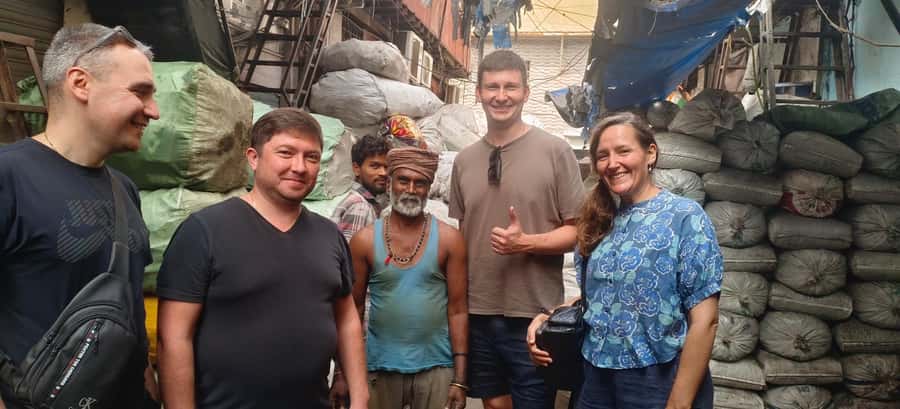
- Local guides lead the walk: Your guide is a Dharavi resident, with guides including Abishek, Zeeshan, Bharti, Mohammed, Faizan, and Rakesh.
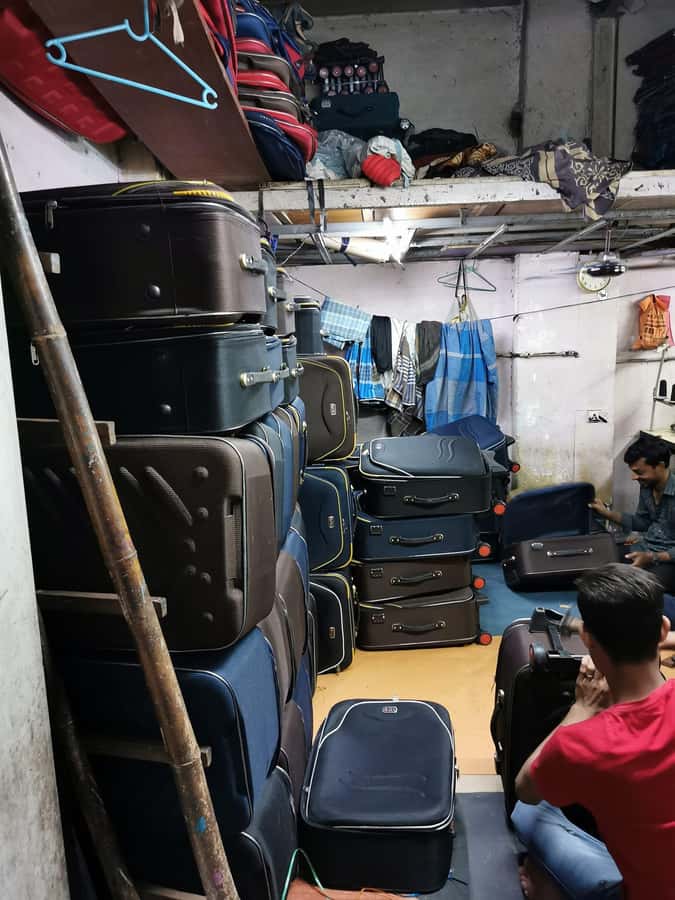
- Work is the main story: You may see plastic recycling, garments, textiles, leather, metalwork, and laundry operations.
- The tour challenges easy stereotypes: You are shown homes, family life, children’s play areas, businesses, and places of worship within the community.
- The Slumdog Millionaire connection is included: The route visits an area associated with filming for the movie.
- It costs $4.99 per person: Water, entry into Dharavi, and an English-speaking local guide are included.
- Meet at Third Wave Coffee in Mahim: The cafe is opposite Mahim railway junction on the west side, and the tour returns there.
Why a local guide changes the Dharavi experience
Dharavi can be easy to misunderstand from the outside. The word slum often suggests only poor housing and difficult conditions. Inside, you find something more complicated: people live there, but they also work, run businesses, raise children, recycle materials, produce goods, and maintain relationships across religious and cultural lines.
That is where this tour earns its place. Your guide is not simply pointing out buildings. A resident guide can explain how the area functions from the inside and answer questions about daily work, housing, family life, and community customs. The strongest guide reports describe people who explain complicated issues with simple examples and allow plenty of room for questions.
Names associated with the guiding team include Abishek, Zeeshan, Bharti, Mohammed, Faizan, and Rakesh. You cannot choose a particular guide from the information provided, but you can expect an English-speaking local resident. Bharti, in particular, is described as showing the area with care for people’s privacy, an important quality on a tour through someone else’s home.
I would approach the walk with curiosity and restraint. This is not a place for loud reactions, intrusive questions, or treating residents as scenery. The tour works best when you listen, keep an open mind, and remember that the people you see are going about ordinary business.
More Dharavi walking tours in Mumbai
- Dharavi slum tour in Mumbai by Female tour guides of the slum
★ 5.0 · 1,976 reviews - Mumbai: Dharavi Slum, DhobiGhat, and Dabbawallas Tour
★ 4.9 · 689 reviews - Dharavi Slum Tour
★ 5.0 · 625 reviews
Meeting at Mahim and getting oriented
The meeting point is Third Wave Coffee in Mahim, opposite Mahim railway junction on the west side. When you arrive, you can wait outside or sit inside the cafe. Your guide will meet you there, ask your name, and introduce themselves.
This is a useful arrangement because it gives you a clear, public place to gather before entering a busy neighborhood. The tour ends back at the same meeting point, so you do not need to work out a new finishing point in an unfamiliar part of Mumbai.
The information does not give a tour length or a detailed timetable. I would allow enough room in your day to avoid rushing to another appointment. You should also confirm the meeting instructions when booking, since the spelling in the supplied details is rough and the location depends on finding the correct Third Wave Coffee near Mahim railway junction.
Plastic recycling and the working side of Dharavi
The tour’s strongest feature is its focus on work. Dharavi is described as home to a large range of small industries, with plastic recycling, garment and textile production, leather work, and metal operations among the key stops. The area’s businesses are said to generate about $1 billion in annual income, a figure that helps explain why Dharavi is not simply a residential settlement.
Plastic recycling can be especially revealing. You may see how discarded material becomes part of a local production chain. The point is not just to watch machinery or piles of material. It is to understand how labor, trade, and reuse fit together in a dense neighborhood where work and home may be close together.
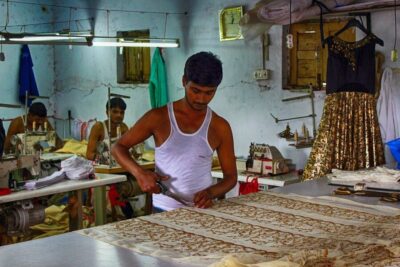
Textile and garment businesses show another side of local enterprise. A guide can explain how materials move through workshops and how families or small operators make a living. Leather and metal work add further examples of specialized skills being practiced within the community.
You should keep your expectations realistic. This is a guided walk, not a factory tour with formal demonstrations at every stop. Conditions may be crowded, noisy, or physically plain. That is part of the setting, but the tour’s value comes from explanation and context rather than polished displays.
Homes, families, and shared community life
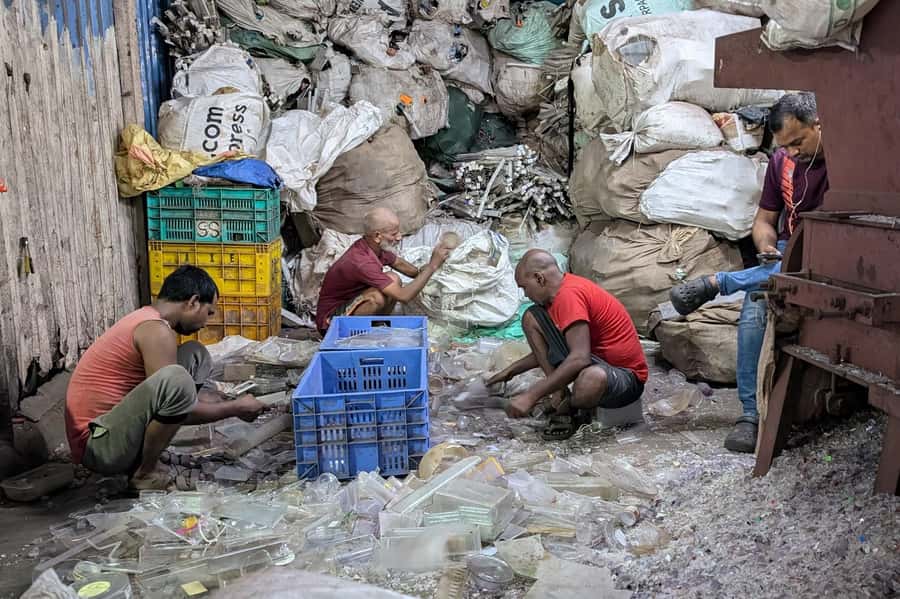
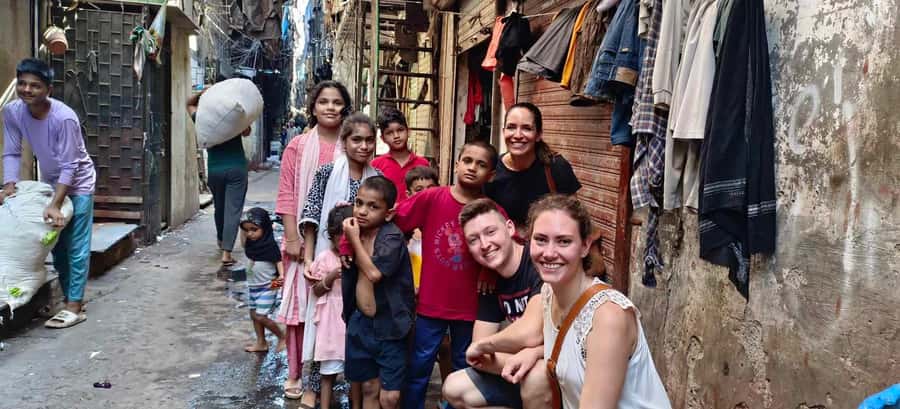
The route also looks at where people live, where families spend time, and where children play. This part requires the most tact. Dharavi is a neighborhood, not an exhibit, and residents have a right to privacy.
The best approach is to follow your guide’s lead. If the guide asks you not to photograph or stare in a certain area, follow that instruction without debate. Bharti’s emphasis on respecting privacy is exactly the standard I would want from this kind of experience.
One useful theme is how people from different religions live and work near one another. A walk through the area can show that community life is not defined by a single faith or background. The tour is intended to show cooperation and shared routines, not just hardship.
You may also see children greeting visitors. A guide described them as saying hello without expecting anything in return. That does not mean you should hand out sweets, money, or gifts. A friendly greeting is enough, and respecting the normal rhythm of the neighborhood matters more than creating a memorable photo.
A completely different side of the city:
- Mumbai: Full-Day Sightseeing Tour of Mumbai
★ 4.9 · 1,822 reviews - Private Mumbai Sightseeing Tour (Traveller’s Choice Award Winner)
★ 5.0 · 1,565 reviews - Group Guided Walking Tour in Fort and Colaba
★ 5.0 · 1,073 reviews - Mumbai: Elephanta Caves Half-Day Guided Tour with Expert
★ 4.8 · 1,032 reviews
Laundry, train travel, and the details worth asking about
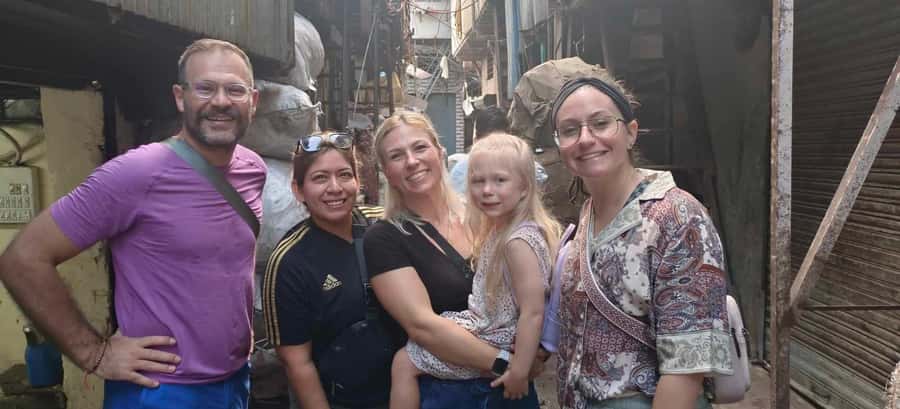
A laundry area is described as one of the memorable parts of the route. You may learn how individual laundry lots are managed, from collection through processing and delivery back to customers. This is the sort of stop that makes the tour practical rather than abstract. It shows a service industry working through many small steps.
One account also describes a train ride with local commuters, packed closely into the carriage. This is not clearly stated as a guaranteed part of every departure, so ask your guide whether it is included on your route and day. If it is, it adds a sharp reminder that getting around Mumbai can be an experience in itself.
The train section may not suit everyone. Crowded public transport can be tiring and uncomfortable, and you should not assume it is part of the $4.99 package unless the operator confirms it. Still, the possibility is worth asking about if you want to understand how the neighborhood connects with the wider city.
The Slumdog Millionaire filming area
The tour visits a place inside Dharavi where Slumdog Millionaire was filmed. For some people, this is the initial reason to book. The film connection gives you a familiar reference point, but it should not become the main purpose of the walk.
The more useful question is how the movie’s image relates to the real neighborhood. Dharavi is not a film set frozen in time. It is a living place where people work, shop, travel, and care for their families. Seeing the filming location alongside active businesses can help you separate cinematic storytelling from everyday reality.
The tour aims to push back against simple movie-driven images of poverty. That is a worthwhile goal, but I would still treat the film stop as one part of a larger visit. The recycling, workshops, homes, and guide’s explanations offer more lasting insight than a quick look at a screen location.
What the $4.99 price really includes
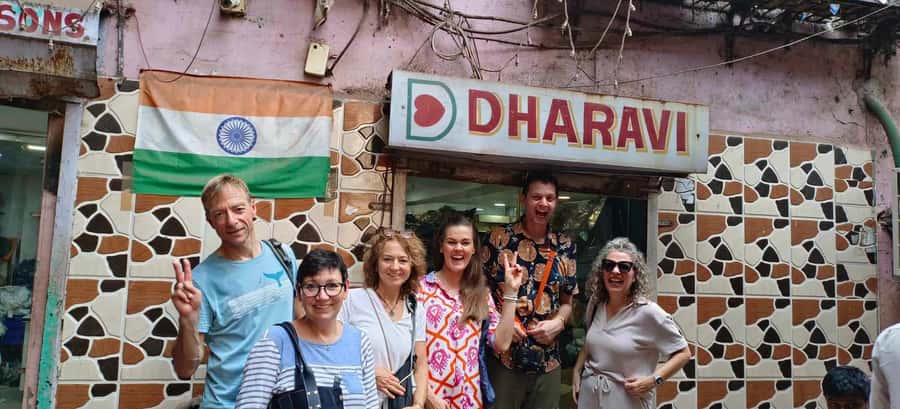
At $4.99 per person, this is an unusually low-cost way to add a guided local experience to a Mumbai itinerary. The price includes an English-speaking local resident guide, entry tickets for visiting inside Dharavi, and water.
The value is strongest if you want context you would not get by walking around alone. A very cheap tour can still be worthwhile when the guide helps you understand what you are seeing, explains the work taking place, and gives you a respectful way to enter the neighborhood.
The low price does not mean you should expect a private tour, luxury transport, air conditioning, or a polished attraction. None of those features are listed. You are paying for access, local guidance, and interpretation, not comfort.
There is one point I would handle carefully. A leather shop may be included near the end of some routes. One visitor found the shop’s prices high and felt the workers producing the goods might not benefit fairly from the sale. I would ask your guide whether a shop stop is planned and decide in advance how you want to handle browsing or buying. You are not required to purchase anything.
The tour’s limits and the questions you should ask
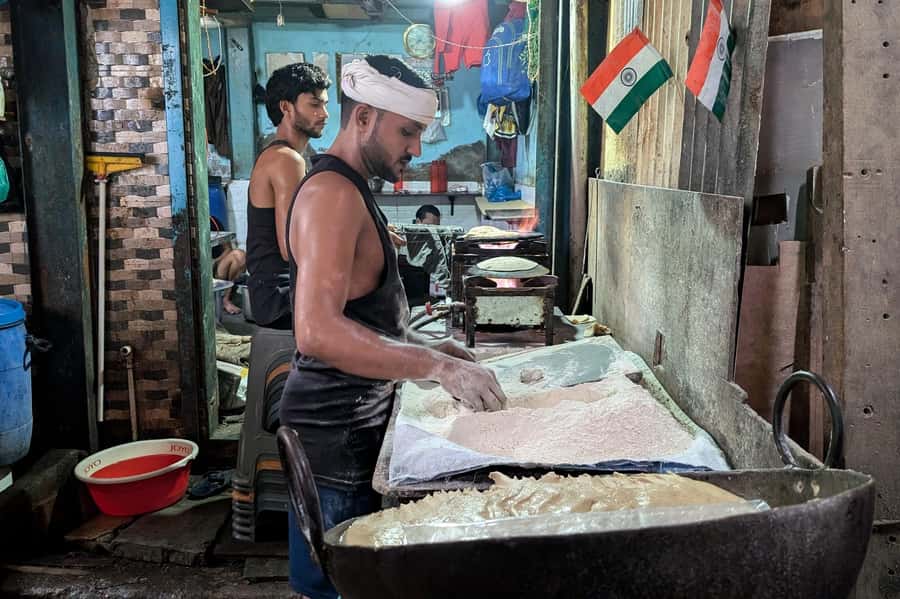
The main drawback is the ethical tension of visiting a poor neighborhood for sightseeing. The tour tries to address this by using resident guides and showing work and community life rather than presenting misery as entertainment. Even so, you may feel uneasy, and that reaction is reasonable.
The second concern is accuracy. One guide reportedly gave an incorrect claim about leather used for luxury handbags. The impressive work in Dharavi does not need exaggerated stories. I would treat specific claims about famous brands or international supply chains with caution and ask follow-up questions if something sounds too neat.
The listing also gives no group-size information, tour duration, age guidance, or accessibility details. If those points matter to you, ask before paying. The route may involve walking through tight working areas, and the possible train segment could add further physical demands, but the supplied information does not confirm the exact conditions.
Pets are not allowed. The tour is offered in English. You can reserve now and pay later, and cancellation is allowed up to 24 hours before the start for a full refund, according to the booking terms provided.
Who will get the most from this walk
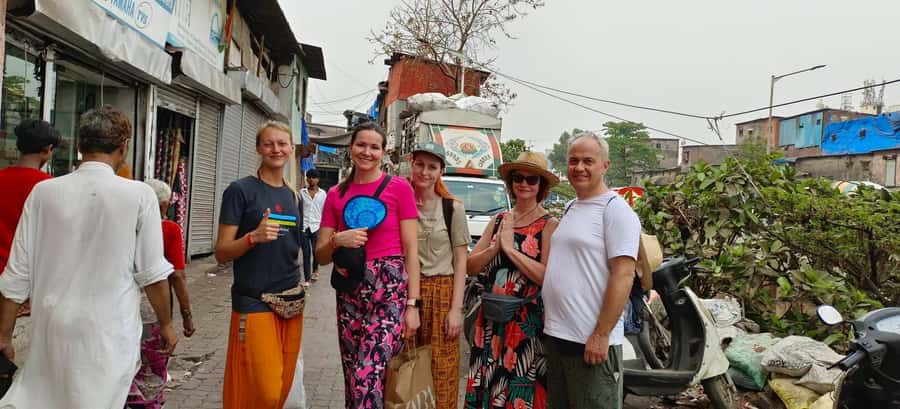
I would recommend this experience to you if you want to understand Mumbai beyond monuments, markets, and restaurant districts. It suits people who enjoy learning how cities work, especially through small businesses and personal stories.
It is also a good fit if you are interested in ethical tourism. A resident guide gives local people a more active role in explaining their own community. That does not remove every concern, but it is a better arrangement than viewing Dharavi from a distance without context.
You may want to skip it if you are looking for a relaxed sightseeing stroll, a carefully staged attraction, or guaranteed comfort. The subject matter is serious, the setting may be crowded, and the visit asks you to behave with care.
Should you book the Dharavi Slumdog Tour?
I would book it for the local perspective, the look at recycling and small industry, and the chance to see Dharavi as a working community rather than a movie image. At $4.99, the price is easy to justify if you are prepared for a plain, sometimes confronting walk.
Go with realistic expectations. Ask about the exact route, the possibility of a train ride, and any leather-shop stop. Listen closely, avoid intrusive photography, and judge the experience by the quality of the guide’s explanations rather than by how many dramatic sights you can collect. If you want a respectful introduction to an important part of Mumbai, this tour is worth considering.
FAQ
How much does the Dharavi tour cost?
The tour costs $4.99 per person.
What is included in the price?
The price includes an English-speaking local resident guide, entry tickets for visiting inside Dharavi, and water.
Where does the tour begin?
The meeting point is Third Wave Coffee in Mahim, opposite Mahim railway junction on the west side.
Where does the tour finish?
The activity ends back at the meeting point at Third Wave Coffee.
What language is the tour offered in?
The tour is offered in English.
Who leads the tour?
A Dharavi resident leads the walk. Guides associated with the experience include Abishek, Zeeshan, Bharti, Mohammed, Faizan, and Rakesh.
What industries can you see in Dharavi?
The tour can show plastic recycling, garment and textile work, leather production, metalwork, and other local businesses.
Does the tour visit a Slumdog Millionaire filming location?
Yes. The route visits a place inside Dharavi where Slumdog Millionaire was filmed.
Can you cancel the booking?
Yes. You can cancel up to 24 hours in advance for a full refund. You can also reserve and pay later.
Recently added around Mumbai
- Private Walking Tour in Dharavi Slums★ 5.0 · 7 reviews
- Mumbai Sightseeing Tour★ 5.0 · 11 reviews
- Private Mumbai 2-Day Tour Package:City + Slum & Elephanta Island.★ 5.0 · 3 reviews
- Vegetarian Indian Cuisine Virtual Cooking Class Experience from Mumbai★ 5.0 · 4 reviews
- Mumbai by Night Guided Tour★ 5.0 · 6 reviews
- Transfer from Mumbai Airport to Hotel★ 4.0 · 7 reviews
- Full-Day Agra Tour with Taj Mahal From Mumbai By Air★ 5.0 · 8 reviews
- Taj Mahal Day Trip Including Same Day Flights from Mumbai★ 5.0 · 3 reviews
Mumbai Dharavi Slum Tours, compared.
Dharavi slum tour in Mumbai by Female tour guides of the slum
Read our review →
Dharavi Slum Slumdog Millionaire Tour with a Local
Read our review →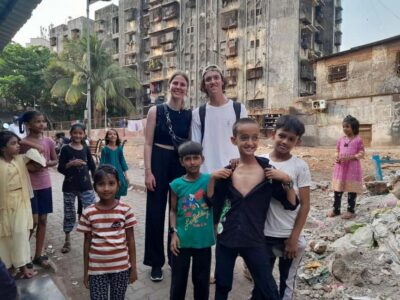
Mumbai Slum Tour – Visit Dharavi Slum with Local Guide
Read our review →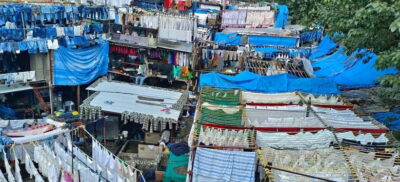
Dhobi Ghat Laundry and Dharavi Slum Tour with Local
Read our review →
Browse the lists this tour appears in