
Reviewed · MUMBAI DHARAVI SLUM TOURS
“Mumbai Dharavi Slum Tour”
Dharavi is not just a maze of tight lanes. It is a working part of Mumbai, with recycling shops, clothing workshops, leather makers, pottery kilns, schools, markets, and homes packed close together. This tour gives you a local guide to explain what you are seeing and help you speak with residents respectfully.
I like the wide look at Dharavi’s working economy, from plastic and cardboard recycling to luggage and leather production. I also like the chance to see Kumbharwada’s pottery traditions and cross from the industrial area into the residential lanes. The main drawback is that the experience asks you to walk through people’s homes and workplaces, so you need to bring tact, modest clothing, and a willingness to observe without treating the area like a spectacle.
Key points to know
- A working neighborhood, not a staged attraction: You see recycling, manufacturing, schools, markets, and homes as part of everyday Dharavi.
- The railway bridge sets the scene: The walk begins near Mahim station and introduces Dharavi’s place within the wider city.
- Local guides shape the experience: Javed, Ruqaiyya, Ravi, and Kavita have led tours, with Ravi drawing on his own upbringing in the area.
- The route covers two very different sides: The industrial section comes first, followed by residential lanes, markets, schools, leather work, and pottery.
- The price is unusually low: At $4.39 per person, the tour offers a lot of guided walking for little money, though meals are not included.
- Plan for a flexible schedule: The tour takes about two hours on the main route, while the available options range from two to three and a half hours.
Crossing the railway bridge into Dharavi
You meet at a coffee shop near Mahim train station, on the west side of the station. This is a practical starting point because the railway is one of Mumbai’s great organizing forces, and the bridge gives your guide a natural place to explain the area before you enter it.
The walk across the bridge leads toward Dharavi. At this point, the guide discusses informal settlements around the world and gives you basic context about Dharavi itself. That introduction matters. Without it, the first narrow lane or crowded workshop could feel like a jumble of impressions. With it, you have a better chance of understanding Dharavi as a place where people live, work, study, trade, and raise families.
The meeting point is a coffee shop rather than a major landmark, so check the exact pickup details attached to your chosen option. The tour finishes back near the station, with the stated drop-off locations including Mumbai and Third Wave Coffee.
More Dharavi walking tours in Mumbai
- Dharavi slum tour in Mumbai by Female tour guides of the slum
★ 5.0 · 1,976 reviews - Mumbai: Dharavi Slum, DhobiGhat, and Dabbawallas Tour
★ 4.9 · 689 reviews - Dharavi Slum Tour
★ 5.0 · 625 reviews
The industrial side: recycling, clothing, and luggage
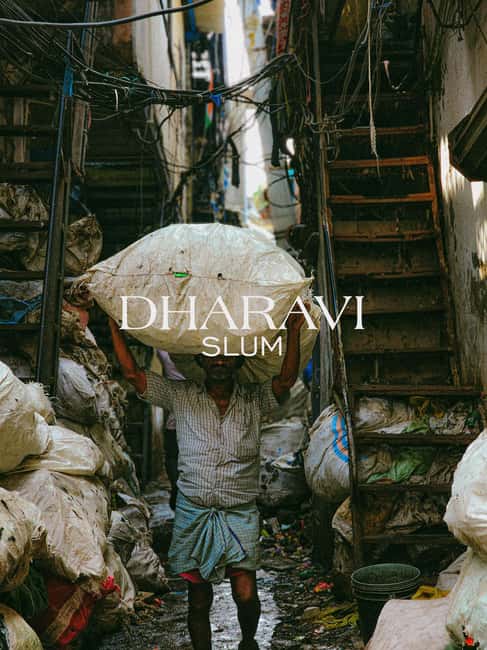
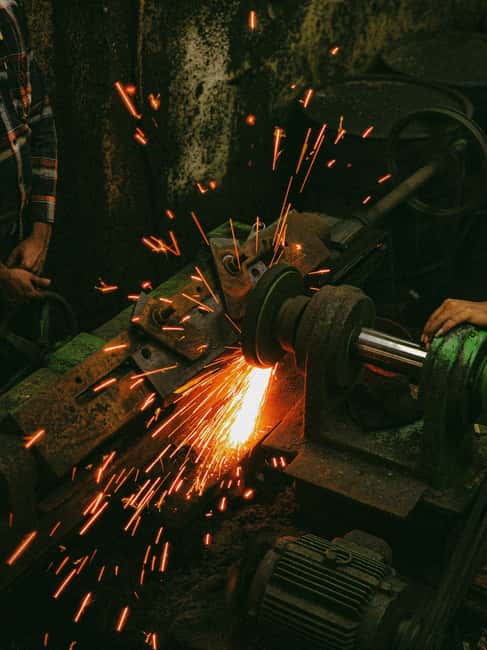
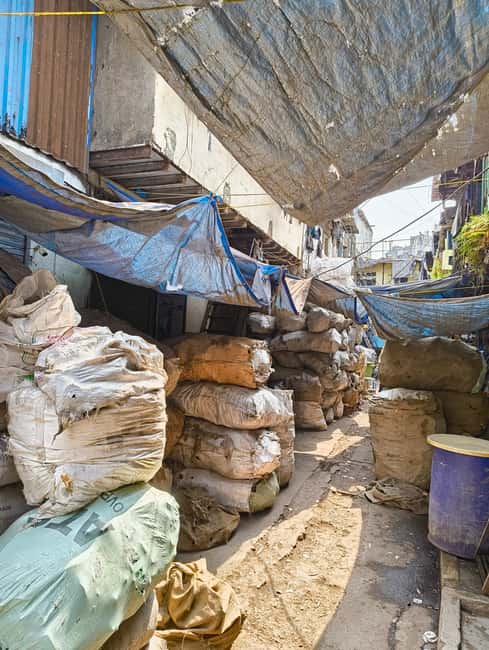
The first major section takes you into Dharavi’s industrial area. Here, the focus is work. You may see recycling activity involving plastics, wood, cardboard, and other materials. The guide explains how these operations fit into Dharavi’s economy and why so much production can take place in a compact urban district.
This is one of the strongest parts of the walk because it moves beyond the usual picture of poverty. Dharavi has serious challenges, but it also has skills, trade, and enterprise. Recycling is not an abstract environmental topic here. It is visible work, carried out in the middle of a dense neighborhood.
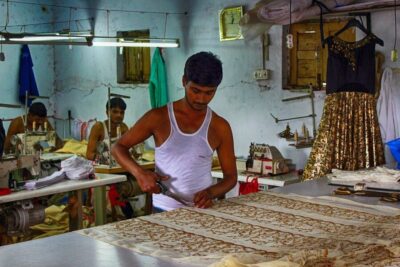
You also visit manufacturing sites connected with clothing, backpacks, and luggage. The appeal is not simply watching an item being made. It is seeing how small-scale production can function in close quarters, often with several stages of work handled nearby. Your guide can point out what you are looking at and help explain the role of migrant workers and the conditions in which they live.
Keep your expectations grounded. This is a walking tour, not a factory demonstration with polished displays or a formal visitor center. Workshops may be compact and active, and the amount of time spent at each stop can depend on what is operating when you arrive. The value comes from context and access, not from a neat, staged presentation.
Meeting the people who make Dharavi work
A key promise of the tour is help speaking with local people. Your guide acts as a bridge, handling language and social cues so you are less likely to interrupt or misunderstand. English and Hindi are available, and the guide’s role is especially useful in places where work is underway.
Several guides have led this experience. Javed is described as enthusiastic and well informed, while Ruqaiyya is praised for her English and easy manner. Kavita brings personal knowledge of the area, and Ravi grew up there and knows its lanes and stories. Your assigned guide will vary, but these names give you an idea of the local perspective available on the tour.
Ravi’s background is particularly useful because he can connect the route with daily life rather than treating Dharavi as a collection of unusual sights. He is also known on YouTube, according to the information provided, but his more important advantage is his personal connection to the area.
You should still be careful with photography and conversation. The supplied information does not set out a formal photography policy, so ask your guide before taking pictures of people, homes, workshops, or schools. A friendly smile is not automatic permission for a close-up photograph. In Dharavi, good manners are part of the experience, not an optional extra.
Crossing into the residential lanes
After the industrial section, you cross a street into the residential part of Dharavi. The change is important. You are no longer looking mainly at production. You are seeing the spaces where people live, shop, learn, and move through the day.
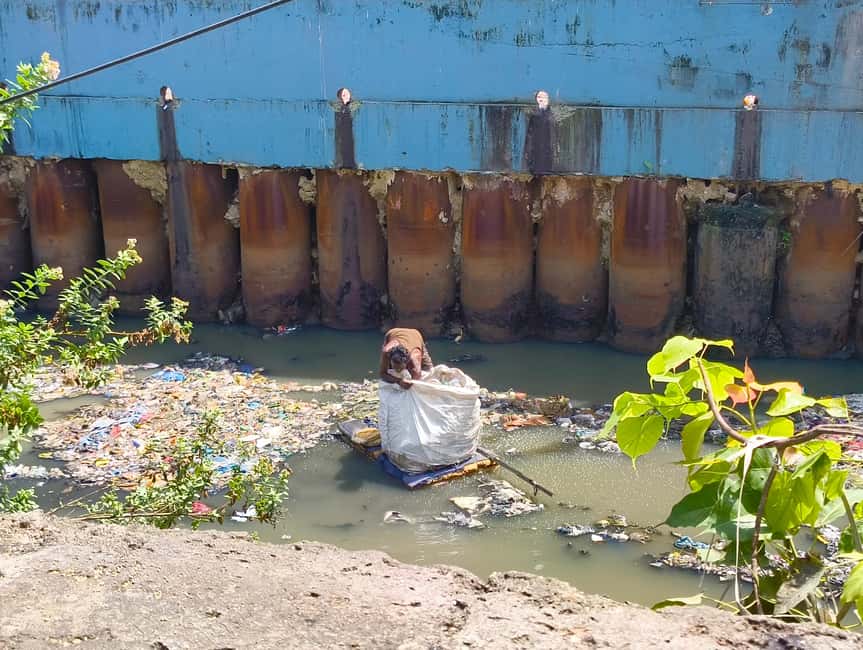
The route includes a view of Mumbai’s largest sewer. That may sound like a small detail, but it helps explain the practical pressures of living in a dense settlement. Sanitation, drainage, water, and limited space are not side issues here. They shape daily life.
You then enter narrow alleys that can feel confusing if you have never visited Dharavi before. This is where a local guide is most valuable. The guide knows the route, keeps the group moving, and gives meaning to the turns and side lanes. Without that help, you might see only tight passages and crowded buildings. With it, you can better understand how homes, businesses, schools, and shops fit together.
The residential part also demands more restraint from you. People are not scenery, and homes are not museum exhibits. Walk quietly, stay with the group, and follow your guide’s advice about where to stand and what you may photograph.
A completely different side of the city:
- Mumbai: Full-Day Sightseeing Tour of Mumbai
★ 4.9 · 1,822 reviews - Private Mumbai Sightseeing Tour (Traveller’s Choice Award Winner)
★ 5.0 · 1,565 reviews - Group Guided Walking Tour in Fort and Colaba
★ 5.0 · 1,073 reviews - Mumbai: Elephanta Caves Half-Day Guided Tour with Expert
★ 4.8 · 1,032 reviews
Markets, schools, leather, and Kumbharwada
The local market is one of the more approachable stops. You see fresh produce and get a glimpse of the shopping routines that support the neighborhood. A market can tell you a great deal about daily life without requiring you to intrude into private spaces. It also breaks up the industrial focus and shows that Dharavi is a complete community, not only a place of work.
The tour also passes various schools and discusses their educational practices. The information does not promise entry into classrooms or a formal meeting with teachers, so treat this as an outside look and an explanation from the guide. Even so, schools help you see the area through a different lens. Children’s education is part of the neighborhood’s future, and the guide can explain how learning fits into a place where work and home often sit close together.
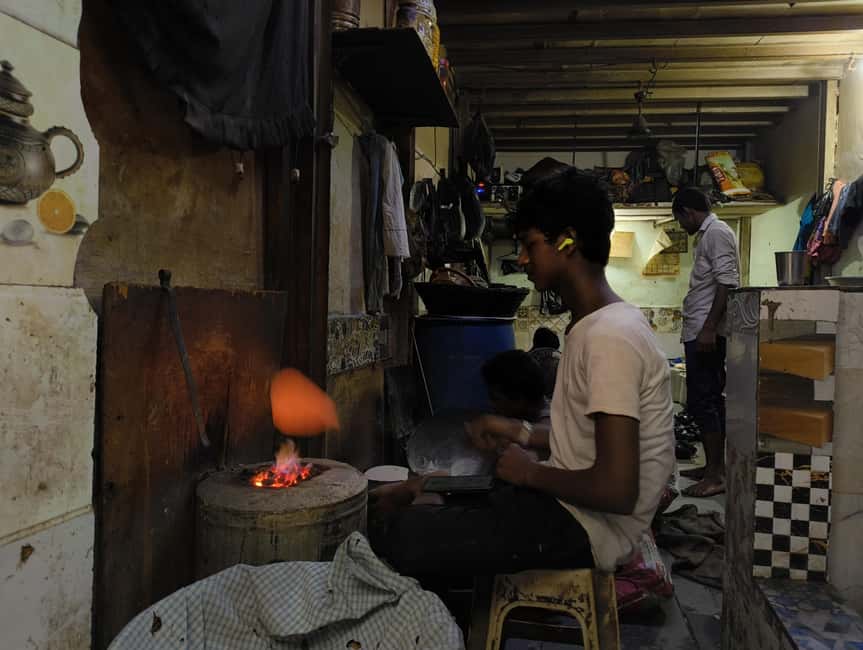
Leather manufacturing is another featured part of the residential route. The guide explains the production process and helps you understand the practical skills involved. As with the other workshops, conditions may be basic and the space may be tight. That is precisely why the guide’s explanation matters. You are seeing a real workplace, not a showroom designed for tourists.
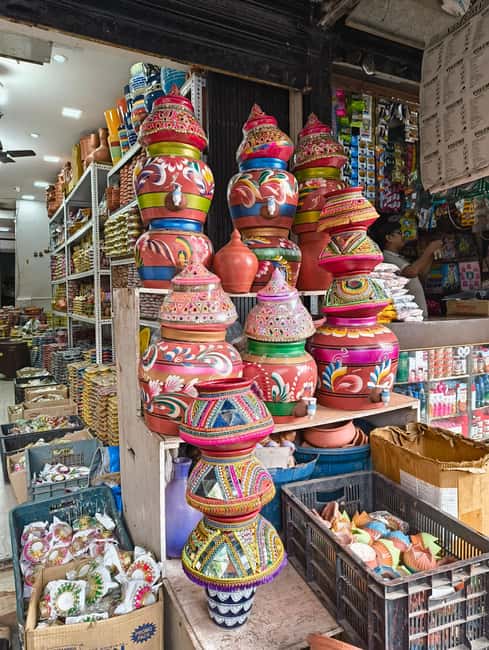
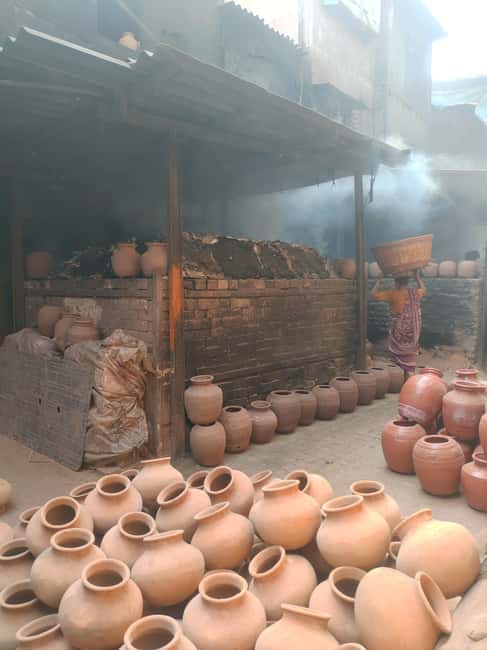
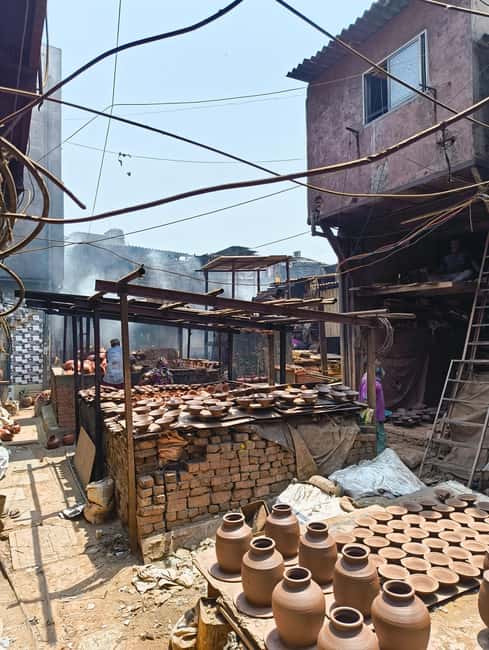
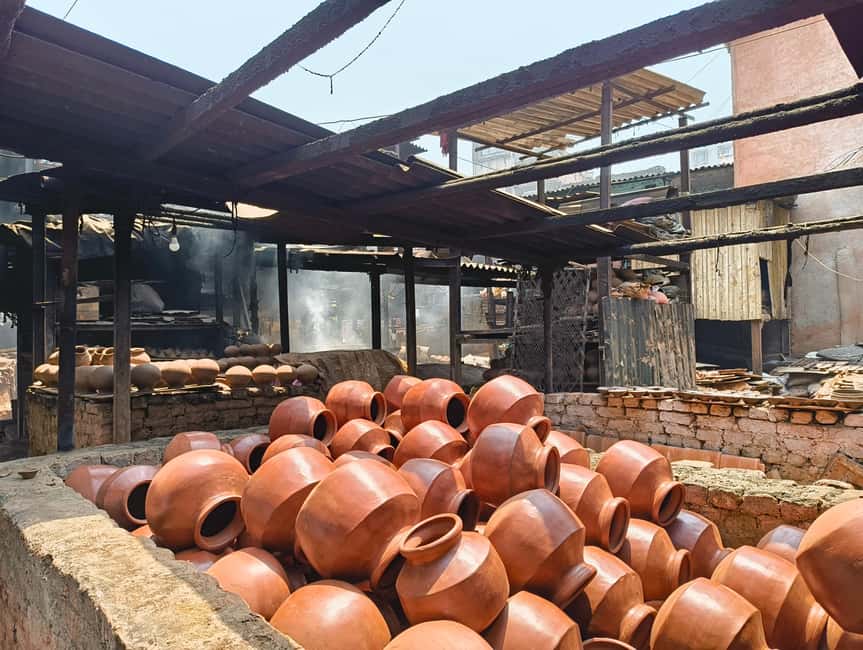
Kumbharwada is the most distinctive stop for many people. This section is known for pottery, and you may see traditional pot-making skills at work. It adds an older craft tradition to a route otherwise centered on recycling and urban manufacturing. The contrast is useful: Dharavi is not defined by one industry or one story.
The pottery visit is also a reminder that the area contains communities with their own trades and identities. Listen to the guide’s explanation rather than rushing from one photo opportunity to the next. A few minutes of attention will give you more than a quick glance through a doorway.
What the tour says about Dharavi
The most useful lesson is that Dharavi cannot be reduced to the word slum. The word describes poor housing conditions, but it does not fully describe a place with production, trade, schools, markets, skilled workers, and established communities.
That does not mean you should romanticize the area. The route includes difficult living conditions, a large sewer, cramped lanes, and workplaces that may not meet the standards you are used to. The positive side of the experience is not pretending those problems do not exist. It is seeing them alongside the energy and resourcefulness of the people who live and work there.
I like tours that give a fuller picture, and this one is built around that balance. You see the physical limits of the neighborhood, but you also see how people earn a living and maintain community life. The guide’s explanations are essential because the same alley can look chaotic to one person and highly organized to someone who knows how it works.
For you, the central question is your attitude. If you want a dramatic photo collection of poverty, skip this tour. If you want to understand a major Mumbai community through work, housing, and local trade, it can be a worthwhile use of a few hours.
Duration, price, and walking demands
The advertised price is $4.39 per person, which is remarkably low for a two to three and a half hour guided walk. At that price, the tour offers strong value if you want local interpretation rather than a private car, a meal, or a polished attraction.
The stated Dharavi portion is about two hours, while the overall available duration ranges from two to three and a half hours depending on the selected option and starting time. Check the exact option before booking. The difference could matter if you have a train, flight, or another Mumbai activity scheduled afterward.
You will be walking through narrow lanes and crossing a railway bridge. Wear practical shoes and dress for the weather. The instructions specifically ask women not to wear overly short outfits, and modest clothing is sensible for anyone entering residential areas and places of work.
Packaged bottled water is included. Meals are not, so do not expect lunch or snacks to be part of the tour. The route finishes near the coffee shop and train station, making it easy to continue your day, but the exact final point can vary by option.
The group can be private, which is worth considering if you want more time for questions or prefer a slower, quieter visit. A private format may also make it easier to discuss sensitive topics with the guide. The supplied details do not state the price difference for a private group, so confirm that when choosing.
Who will get the most from this walk
This tour suits you if you are curious about how cities work from the ground up. It is a good match for visitors interested in urban life, small business, recycling, craft production, migration, housing, and the way communities adapt to limited space.
It also suits independent-minded visitors who want a local guide rather than a large sightseeing circuit. The route is short enough to fit into a Mumbai day, but varied enough to show several sides of Dharavi.
Families with older children may find the recycling and pottery sections especially thought-provoking, though parents should prepare children to behave respectfully around homes and workplaces. The walk may be less suitable if you have difficulty with uneven or crowded walking routes, since the experience is built around crossing a bridge and moving through narrow lanes.
You should also think about emotional readiness. Dharavi can be fascinating, but it can also be confronting. The tour asks you to hold two ideas at once: people may face hard living conditions, and the neighborhood can still be organized, productive, social, and hopeful.
Booking details worth checking
The tour is led in English or Hindi. Guides named in the available information include Javed, Ruqaiyya, Ravi, and Kavita, but you should not assume a particular person will lead your departure unless the booking option says so.
Free cancellation is available up to 24 hours before the tour for a full refund. You can also reserve now and pay later, which helps if your Mumbai schedule is still shifting. Starting times depend on availability, so confirm the departure time and meeting point before you set out.
The meeting point is a coffee shop near Mahim train station, West. Since the first step is finding the right coffee shop, allow enough time to get your bearings rather than arriving at the last second. The tour returns near the station area.
Should you book the Mumbai Dharavi Slum Tour?
Book it if you want a guided, human look at Dharavi that includes both its problems and its working life. The combination of recycling, manufacturing, markets, schools, leather work, pottery, and residential lanes gives you more than a quick pass through one section of Mumbai.
The $4.39 price makes it an easy addition to your itinerary, and the five-star score from seven available ratings points to consistently strong guide-led experiences. Javed, Ruqaiyya, Ravi, and Kavita are all associated with warm, capable guiding, with Ravi offering the added perspective of growing up in the area.
Skip it if you want a relaxed sightseeing walk, polished facilities, or a route with no sensitive encounters. This is a real neighborhood, and the right attitude matters. Dress modestly, ask before taking photographs, listen to your guide, and treat residents as people rather than subjects.
For visitors prepared to do that, this is one of the more useful low-cost ways to understand a working side of Mumbai that most standard sightseeing routes leave out.
FAQ
Where does the Mumbai Dharavi Slum Tour start?
The meeting point is a coffee shop near Mahim train station, on the west side of the station.
How long does the tour take?
The available options range from two to three and a half hours. The guided Dharavi walk itself is listed as about two hours, so check the duration of your selected option.
What languages are available?
The tour is offered with a live guide speaking English or Hindi.
What areas of Dharavi does the tour visit?
The route covers the industrial area and residential area, including recycling activities, clothing and luggage production, a local market, schools, leather work, Kumbharwada pottery, narrow alleys, and living conditions.
Is bottled water included?
Yes. Packaged bottled water is included, but meals are not.
What should I wear?
Wear clothing suited to the weather. Women are specifically asked not to wear overly short outfits, and modest clothing is appropriate for the residential and working areas.
Recently added around Mumbai
- Private Walking Tour in Dharavi Slums★ 5.0 · 7 reviews
- Mumbai Sightseeing Tour★ 5.0 · 11 reviews
- Private Mumbai 2-Day Tour Package:City + Slum & Elephanta Island.★ 5.0 · 3 reviews
- Vegetarian Indian Cuisine Virtual Cooking Class Experience from Mumbai★ 5.0 · 4 reviews
- Mumbai by Night Guided Tour★ 5.0 · 6 reviews
- Transfer from Mumbai Airport to Hotel★ 4.0 · 7 reviews
- Full-Day Agra Tour with Taj Mahal From Mumbai By Air★ 5.0 · 8 reviews
- Taj Mahal Day Trip Including Same Day Flights from Mumbai★ 5.0 · 3 reviews
Mumbai Dharavi Slum Tours, compared.
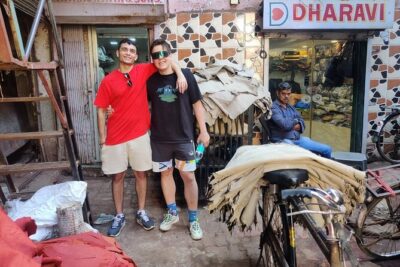
Dharavi slum tour in Mumbai by Female tour guides of the slum
Read our review →
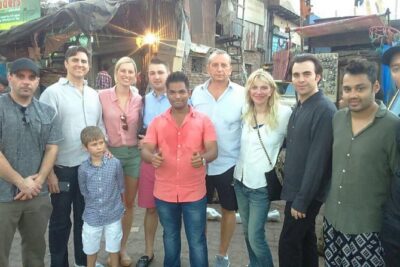
Dharavi Slum Slumdog Millionaire Tour with a Local
Read our review →
Mumbai Slum Tour – Visit Dharavi Slum with Local Guide
Read our review →
Dhobi Ghat Laundry and Dharavi Slum Tour with Local
Read our review →
Browse the lists this tour appears in