
Reviewed · MUMBAI DHARAVI SLUM TOURS
Dhobi Ghat (Open Air Laundry) with Dharavi Slum Guided Tour
Mumbai’s most revealing sights are often places where daily work happens. At Mahalaxmi Dhobi Ghat, rows of washers clean hotel and hospital linens in an open-air laundry dating to 1890. In Dharavi, you’ll see small workshops turning plastic, leather, metal, fabric, and other materials into goods sold in India and abroad.
I like this tour for two clear reasons: the private format gives your group room to ask questions, and the included air-conditioned transport makes it easier to connect two very different parts of the city. I also like that the Dharavi walk includes commercial and residential areas, rather than showing only one polished slice of the neighborhood.
The main consideration is that this is a long half-day with a walking portion through narrow lanes and working communities. Some visitors may find the subject matter confronting, and you should approach Dharavi with respect, not as a spectacle.
Key points to know before booking
- Dhobi Ghat dates to 1890: See an open-air laundry still used to wash clothes and linens for Mumbai businesses.
- Dharavi is a working economy: The walk covers plastic recycling, leather goods, pottery, soap, bakery work, dyeing, and garment production.
- You get a private tour: Only your group participates, with an English-speaking local guide.
- Transport is built in: Pickup and drop-off, an air-conditioned vehicle, tolls, and parking fees are included.
- A rooftop viewpoint is included: You can look across the dense tin-roofed settlement from above.
- The tour has strong practical appeal: It runs about five to six hours, costs $30 per person, and includes mineral water plus a refreshment break.
Why Dhobi Ghat makes a strong first stop
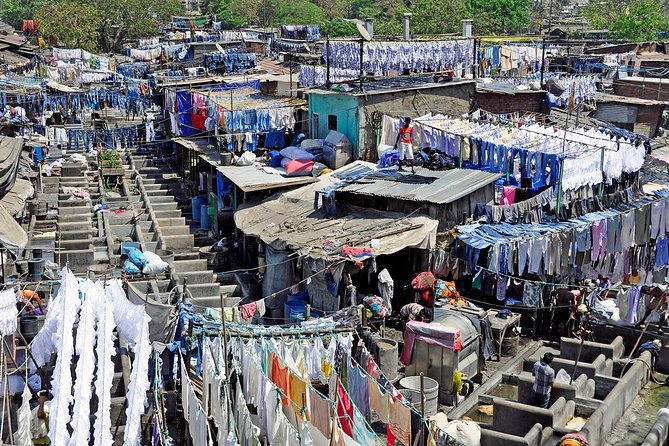
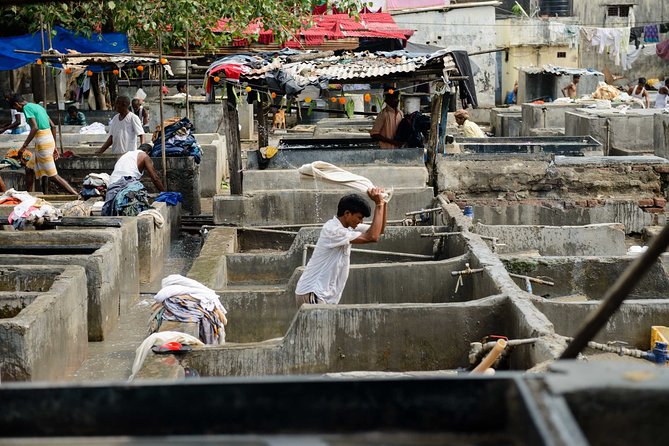
Dhobi Ghat is not a museum display. It is a working laundry where dhobis clean and dry clothes and linens in the open air. The site was constructed in 1890, and its name has become a common term across India for places where many washers work together.
You’ll spend about an hour here, with admission included. The best part is the sight of a large commercial process taking place in a compact, highly organized setting. Clothes from Mumbai hotels and hospitals pass through the hands of workers who wash, scrub, dry, and prepare them for return.
That makes Dhobi Ghat more than a quick photo stop. It gives you a useful introduction to Mumbai’s informal and traditional work systems before you enter Dharavi, where the scale and variety of small businesses become even more striking.
The stop is also a good reason to have a guide. Without context, you might see only rows of washing areas and drying clothes. A guide can explain who uses the laundry, how the work fits into the city, and why this traditional system has lasted so long.
You should allow time for photographs, but keep your camera manners in mind. This is a workplace, not a staged performance. Look first, listen to the guide, and avoid treating people at work as background decoration.
More Dhobi Ghat tours in Mumbai
- Mumbai: Dhobi Ghat Laundry and Dharavi Slum Tour with Local
★ 5.0 · 469 reviews - Mumbai: Dharavi Slum and Dhobi Ghat Laundry Tour
★ 5.0 · 317 reviews - Private Combo Tours Sightseeing + Dharavi Slum + Dhobi Ghat & Dabbawalas
★ 5.0 · 245 reviews
Walking through Dharavi’s small industries
The Dharavi portion lasts about two hours and is done on foot. The route covers both commercial and residential sections, so you’ll see more than workshops. Small lanes, homes, schools, hospitals, and places of worship form part of the area’s daily life.
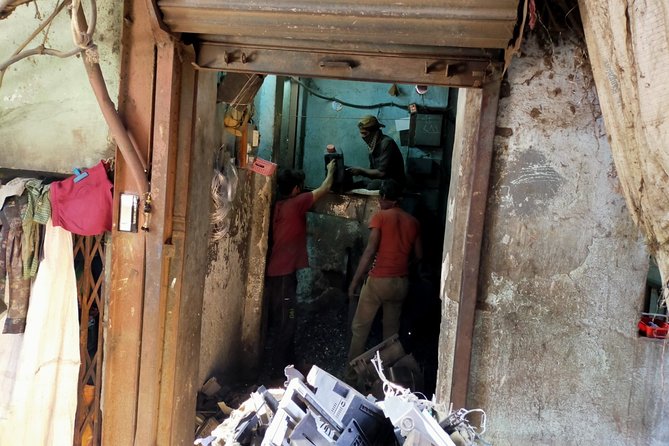
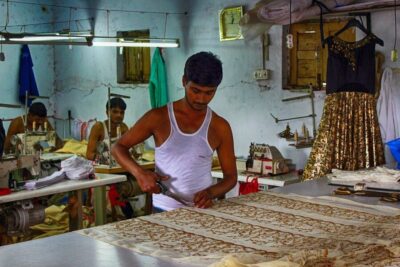
The focus is on enterprise. Dharavi contains many small-scale operations that make or process goods in very limited space. You may see plastic recycling, leather work, pottery, embroidered clothing, soap making, bakery work, color dyeing, and the recycling of used vegetable oil.
The recycling area is one of the tour’s strongest features. Plastic and metal arrive from many places, and you can follow the process from sorting through processing to finished plastic pellets. This gives you a plain, practical look at how materials are recovered and put back into use.
The leather industry is another important stop. Dharavi produces leather goods for local and international markets, along with other items made in tiny workshops. The value here is not simply seeing a product. You begin to understand how a narrow work area can support a business, a family, and a supply chain.
Pottery, garments, soap, and baked goods show a different side of Dharavi. They make the area feel less like one industry and more like a collection of linked trades. You’ll see how people use available space and basic resources to produce items for sale far beyond the immediate neighborhood.
The route also includes a Hindu shrine being made by Muslim residents, a detail that adds social context to the walk. You’ll pass through a place where religious identity, work, family life, and commerce exist close together.
The rooftop view and the community stop
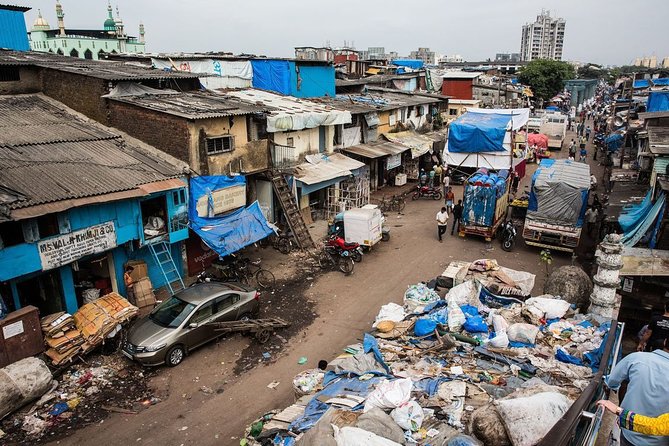
A rooftop visit is included, giving you a broad view over the tin-roofed huts and dense rows of homes. From ground level, Dharavi can feel like a maze of small lanes. From above, you can better understand its size and how closely homes and workshops sit together.
The view is memorable, but it needs a respectful approach. You are looking at a real residential area where many people live and work. The rooftop should help you understand the physical setting, not turn someone else’s home into a novelty.
The tour also includes a community centre. The supplied details do not specify its full program, so you should ask your guide what is taking place during your visit. That flexibility can be useful, since local activity may vary.
Your guide matters particularly during this section. One named guide associated with the experience is Rakesh, who is described as friendly and clear in his explanations. The tour also works well for visitors who do not speak English fluently, since the guide can use simpler words and speak at a slower pace when needed.
A local guide can also help you move through Dharavi with better awareness. One guide has been described as a resident of the area who was recognized by people along the route. That sort of local connection can make the walk feel less like a quick inspection and more like an informed introduction.
What the private format changes
This is a private activity, so only your group takes part. That is a real advantage in Dharavi, where you may want to stop briefly, ask about a business, or clarify what you are seeing without holding up a large group.
A private guide can also adjust the explanation to your interests. You might want to focus on recycling, leather, architecture, religious life, or the practical details of running a business in a small space. The guide’s ability to explain in simple English is useful for mixed-language groups as well.
The tour normally starts at 10:00 a.m. at Third Wave Coffee on Tip Road, Unit 58, Ground, Ram Mahal, Senapati Bapat Marg, Marinagar Colony, near Mahim Station. The activity ends back at the same meeting point.
Pickup and drop-off are listed as included, but because the stated meeting point is specific, confirm the exact pickup arrangement when you book. The vehicle is air-conditioned, and tolls and parking fees are covered. That matters in Mumbai, where moving between neighborhoods can take time and an organized vehicle is more comfortable than arranging separate transport.
The complete experience takes about five to six hours. The listed Dhobi Ghat visit is one hour and the Dharavi walking tour is two hours, leaving time for driving, explanations, breaks, and transitions. Do not schedule a tight afternoon connection immediately afterward.
More Dharavi walking tours in Mumbai
- Dharavi slum tour in Mumbai by Female tour guides of the slum
★ 5.0 · 1,976 reviews - Mumbai: Dharavi Slum, DhobiGhat, and Dabbawallas Tour
★ 4.9 · 689 reviews - Dharavi Slum Tour
★ 5.0 · 625 reviews - Dharavi Slum tour in Mumbai by local resident
★ 5.0 · 572 reviews
Food, water, walking, and comfort
No meal is included. Mineral water is provided, and the operator says a refreshment is offered during the tour so you can pause and recover from the heat and walking.
You should still plan for a physically active morning and afternoon. The Dharavi portion takes place on foot through small alleys, and the tour requires you to stay with the guide in a working neighborhood. Wear practical clothing and shoes suitable for walking, but no special equipment is listed as necessary.
The air-conditioned vehicle gives you a useful break between outdoor sections. It also means you can cover Dhobi Ghat and Dharavi without spending time arranging taxis or navigating the city on your own.
The tour requires good weather. If poor weather causes cancellation, you are offered another date or a full refund. You can cancel for a full refund up to 24 hours before the start time. Changes or cancellations made within 24 hours are not accepted for a refund.
Is $30 a fair price?
At $30 per person, this is good value if you want transport, a private guide, and two major Mumbai stops in one half-day. The price includes the English-speaking guide, private transportation, an air-conditioned vehicle, water, tolls, parking fees, and admission for the listed stops.
The value is strongest for first-time visitors who would otherwise need to arrange transport between Mahalaxmi and Dharavi and find a suitable local guide. You are paying for coordination as much as for entry.
The price is less attractive if you only want a quick view of Dhobi Ghat or prefer to explore independently. The Dharavi walk is the main reason to book, since it adds access to working areas and explanations that are difficult to gain from a passing drive.
Group discounts are offered, so the per-person cost may work better for families or small groups. Since the activity is private, you also avoid being placed with an unknown group.
Who will get the most from this tour?
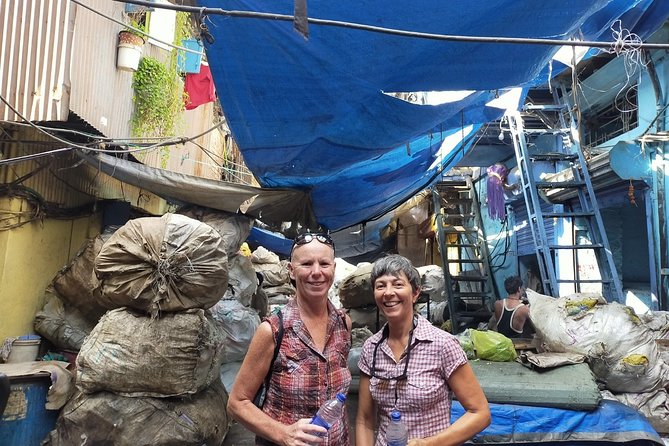
I would recommend it to you if you want to see how Mumbai works, not just its famous landmarks. The tour suits curious visitors interested in labor, recycling, small business, urban life, and local production.
It is especially useful for:
- First-time visitors who want a guided introduction to two unusual Mumbai sights
- People interested in social and economic history
- Photographers looking for strong visual subjects, with respectful behavior
- Families and small groups who value private transport
- Visitors who prefer a local guide to explain what they are seeing
- Anyone who wants to understand Dharavi as a place of work and residence, not only as a film location
The tour may not suit you if you dislike walking, prefer major monuments, or feel uncomfortable visiting a residential community. Dharavi is not presented as a theme park, and the strongest experience comes from paying attention to people’s work and daily routines.
The route includes the area associated with the film Slumdog Millionaire, but the movie connection should not be the main reason to go. The more useful story is the one you see in front of you: recycling, manufacturing, housing, trade, and community life operating side by side.
Should you book the Dhobi Ghat and Dharavi tour?
Book it if you want a guided, practical look at Mumbai’s working side. The combination of the 1890 Dhobi Ghat, Dharavi’s recycling and manufacturing areas, a rooftop view, private transport, and an English-speaking guide gives you a lot for $30.
I especially like the tour for its private format and its focus on real work. Rakesh is one guide named in connection with the experience, and the guide style can be adjusted for visitors who need slower or simpler English.
Before booking, make sure you are comfortable with a two-hour walk through commercial and residential lanes. Confirm the pickup details, leave room in your schedule for a five to six-hour outing, and bring a respectful attitude. If those points suit you, this is one of Mumbai’s more useful half-day introductions.
FAQ
How long does the tour last?
The experience lasts approximately five to six hours, including transport, the Dhobi Ghat visit, the Dharavi walk, explanations, and a refreshment break.
What time does the tour start?
The stated start time is 10:00 a.m.
Where does the tour start?
The meeting point is Third Wave Coffee, Tip Road, Unit 58, Ground, Ram Mahal, Senapati Bapat Marg, Marinagar Colony, near Mahim Station, Mumbai, Maharashtra 400016.
Where does the tour end?
The activity ends back at the meeting point.
Is the tour private?
Yes. Only your group participates in the activity.
Is transportation included?
Yes. Pickup and drop-off, private transportation, an air-conditioned vehicle, tolls, and parking fees are included.
Is a guide included?
Yes. A local English-speaking guide is included. Rakesh is one guide named in connection with this experience.
Is food included?
No meal is included. Mineral water and a refreshment during the tour are provided.
What will I see at Dhobi Ghat?
You will visit Mumbai’s open-air laundry, where dhobis clean and dry clothes and linens used by hotels and hospitals. The site dates to 1890.
What will I see in Dharavi?
The walking tour includes recycling areas, leather industries, pottery, soap making, bakery work, color dyeing, embroidered garments, small alleys, schools, hospitals, homes, a community centre, and a rooftop view. It covers both commercial and residential areas.
Can I cancel for a refund?
You can cancel up to 24 hours before the start time for a full refund. Cancellations or changes made less than 24 hours before the experience are not refunded. If poor weather causes the operator to cancel, you are offered another date or a full refund.
Recently added around Mumbai
- Mumbai Sightseeing Tour★ 5.0 · 11 reviews
- Private Walking Tour in Dharavi Slums★ 5.0 · 7 reviews
- Private Mumbai 2-Day Tour Package:City + Slum & Elephanta Island.★ 5.0 · 3 reviews
- Vegetarian Indian Cuisine Virtual Cooking Class Experience from Mumbai★ 5.0 · 4 reviews
- Mumbai by Night Guided Tour★ 5.0 · 6 reviews
- Transfer from Mumbai Airport to Hotel★ 4.0 · 7 reviews
- Full-Day Agra Tour with Taj Mahal From Mumbai By Air★ 5.0 · 8 reviews
- Taj Mahal Day Trip Including Same Day Flights from Mumbai★ 5.0 · 3 reviews
Mumbai Dharavi Slum Tours, compared.
Dharavi slum tour in Mumbai by Female tour guides of the slum
Read our review →
Dharavi Slum Slumdog Millionaire Tour with a Local
Read our review →
Mumbai Slum Tour – Visit Dharavi Slum with Local Guide
Read our review →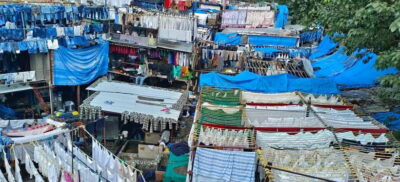
Dhobi Ghat Laundry and Dharavi Slum Tour with Local
Read our review →
Browse the lists this tour appears in