

Reviewed · MUMBAI DHARAVI SLUM TOURS
Dharavi Slum Walking Tour: Mumbai’s Inspiring Small Industries
Dharavi is not simply a place to look at from a car window. This two-hour walk takes you into narrow lanes, working spaces, homes, and the Kumbharwada pottery colony, showing how local families earn a living through recycling, leather, textiles, garments, and pottery. The commercial side is the main surprise, with small industries operating in very limited spaces.
I like the tour’s local guides, including guides such as Sharon and Ruqaiyya, who explain daily life with personal detail. I also like the clear contrast between Dharavi’s work areas and residential lanes. The main consideration is that this is a close-up visit, not a distant sightseeing stop. Some passages are extremely narrow, and the focus on industry may feel longer than expected if you mainly want to see residential life.
Key points to know before you book
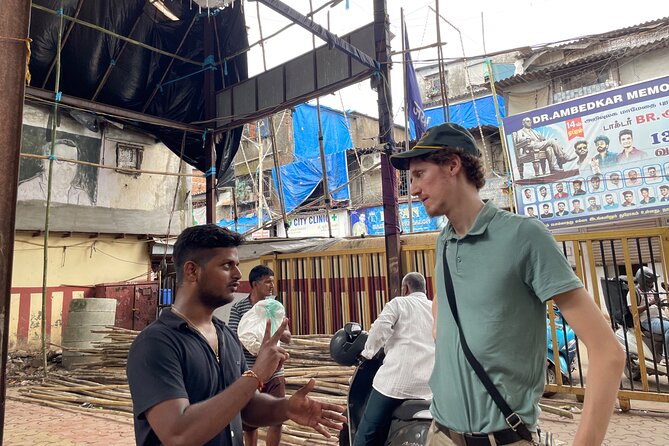
- A two-hour walk through working areas: See recycling, plastic, cardboard, aluminum, garments, leather, and other small businesses at close range.
- Kumbharwada is included: The pottery colony adds a strong visual and cultural element to the walk.
- The tour enters residential lanes: You see the homes and daily setting as well as the workspaces.
- Local guides shape the experience: Sharon and Ruqaiyya have led particularly well-received walks, with Ruqaiyya described as someone who lives in Dharavi.
- It is a private activity: Only your group participates, despite group discounts being available.
- Transfers can simplify the day: A version with hotel pickup, drop-off, and city sightseeing is offered.
Dharavi beyond the car window
Dharavi is often reduced to a quick photo stop or a dramatic statistic. That approach misses what makes this neighborhood worth understanding. On this walk, you see a dense place where homes and businesses sit side by side, and where small-scale work supports a large community.
The route begins at Third Wave Coffee on Senapati Bapat Marg, near Mahim. From there, your guide leads you into Dharavi for about two hours, returning you to the same meeting point at the end.
This is not a polished attraction with marked viewing platforms. You walk through real lanes and active workspaces. That makes the experience more revealing, but it also means you should expect limited personal space, uneven surroundings, and people going about their work rather than performing for visitors.
The guide is important here. A good guide gives context, keeps the pace comfortable, and helps you understand what you are seeing without turning the neighborhood into a spectacle. Guides such as Sharon and Ruqaiyya have received especially warm praise for their personal approach. Ruqaiyya, who lives in Dharavi, can offer a direct connection to the place that a guide from outside may not provide.
More Dharavi walking tours in Mumbai
- Dharavi slum tour in Mumbai by Female tour guides of the slum
★ 5.0 · 1,976 reviews - Mumbai: Dharavi Slum, DhobiGhat, and Dabbawallas Tour
★ 4.9 · 689 reviews - Dharavi Slum Tour
★ 5.0 · 625 reviews
Starting with Dharavi’s small industries
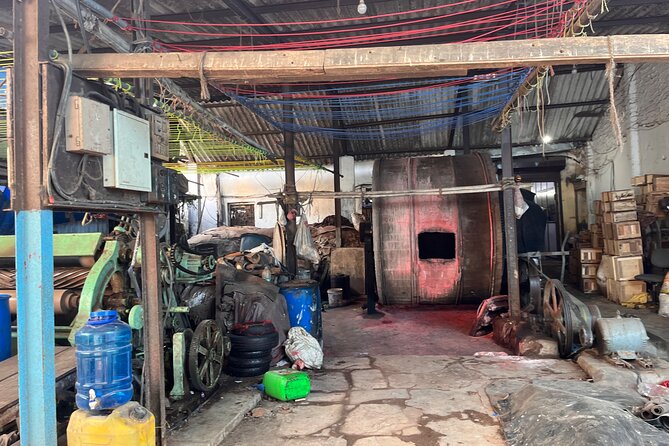
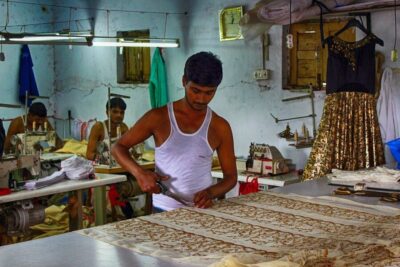
The first section focuses on the commercial side. You may see work involving plastic, cardboard, aluminum, recycling, garments, leather, and other forms of manufacturing. The attraction is not a single famous building. It is the concentration of many small operations within a compact area.
I find this part useful because it changes the way you think about Dharavi. Instead of seeing only crowded housing, you see workshops, storage areas, production spaces, and people earning a living. The scale is modest, but the range of work is broad.
The walk can bring you very close to the action. One description of the route notes lanes as narrow as two feet across, with the tour moving through workplaces rather than viewing them from a main road. That closeness is one of the tour’s strongest features, but it is also the point most likely to challenge you.
You should not expect a tidy, museum-style presentation. The industrial areas may feel cramped and busy, and the route can be uncomfortable if you prefer to observe from a distance. If your interest is how neighborhoods function economically, this section is excellent. If you are mainly interested in homes and family life, you may wish the residential portion were longer.
The residential lanes and everyday life
After the commercial areas, the walk moves into Dharavi’s residential side. Small-roofed homes sit near government and private buildings, workshops, and narrow passageways. The setting gives you a better sense of how work and home life overlap.
The value of this section lies in the details your guide supplies. Without explanation, a maze of lanes can seem confusing or intrusive. With a local guide, you can learn how residents use the space and how different parts of the neighborhood fit together.
This is also where respectful behavior matters most. You are walking through people’s daily surroundings, not a set built for sightseeing. Keep your voice low, listen to your guide, and be thoughtful with photography. The tour allows you to capture photos, but a good visit depends on paying attention to people as much as to buildings.
The balance between industry and housing is not perfect for every visitor. One guide may spend more time explaining the commercial side, while you may want more time in the residential lanes. The available feedback includes a clear preference for shortening the industrial portion and spending longer around homes. That is useful to know before booking, especially if residential life is your main interest.
Why Kumbharwada matters
Kumbharwada, Dharavi’s pottery colony, is a key part of the walk. It gives the route a distinct craft focus after the recycling and manufacturing areas.
The colony helps show that Dharavi is not one single type of workplace. Different trades have their own spaces, skills, rhythms, and traditions. Even if you have little interest in pottery, the change in setting adds variety to the tour and helps break up the industrial portion.
Because the visit is guided, you are not left to guess what makes Kumbharwada important. Your guide can connect the pottery work to the wider picture of Dharavi’s small businesses and residents’ daily lives. The supplied details do not promise a demonstration, a purchase opportunity, or a chance to make pottery, so you should book it as a guided visit rather than a hands-on workshop.
More walking tours in Mumbai
- Group Guided Walking Tour in Fort and Colaba
★ 5.0 · 1,073 reviews - Private Guided Walking Tour in Fort & Colaba
★ 5.0 · 895 reviews - Private Guided Walking Tour in Bandra Queen of Suburbs
★ 5.0 · 383 reviews - Private Guided Spiritual Walk in Banganga Hindu Temples
★ 5.0 · 271 reviews
What the guides add
A Dharavi walk rises or falls on the quality of its guide. The lanes can be confusing, and a series of workshops needs explanation if it is to mean more than a quick look.
Sharon has been praised for offering detailed insight and a friendly manner. Ruqaiyya has also been singled out for being engaging and personable, with the added perspective of living in Dharavi herself. You cannot assume which guide you will receive, but you can see how much the guide’s role matters.
A local guide also helps you move safely through a crowded, narrow area. The tour description specifically presents the guide as helping with safety while allowing you to take photos. That does not remove the need for common sense, but it should make the route easier to manage than exploring unfamiliar lanes alone.
This is a private activity, so only your group participates. That makes it easier to ask questions and adjust the pace than on a large shared tour. Group discounts are available, which may make the price especially appealing if you are traveling with family or friends.
Two hours, one meeting point
The walk lasts about two hours. That is long enough to see both commercial and residential sections without taking up an entire Mumbai sightseeing day.
You meet at Third Wave Coffee, Unit 58, Ground, Ram Mahal, Senapati Bapat Marg, Marinagar Colony, near Mahim. The tour ends back at this meeting point, so plan your next activity around returning there rather than assuming the guide will leave you at a central Mumbai landmark.
The meeting point is near public transportation, which is useful because the walking tour itself does not automatically include transport. A transfer option is available with hotel pickup and drop-off, and one package also includes city sightseeing. If you are new to Mumbai or have a tight schedule, that option can reduce the effort of reaching Mahim.
The standard walk is the better fit if you are comfortable arranging your own way there and want a focused experience. The transfer option makes more sense if you want to connect Dharavi with a wider day of sightseeing. Check the exact option you select, since the basic activity and the transfer package are not the same thing.
Is $9.51 a fair price?
At $9.51 per person, this is inexpensive for a private, guide-led experience lasting about two hours. The value comes from access and explanation, not from admission to a major monument.
You are paying for a local route through working and residential areas, the Kumbharwada pottery colony, and a guide who can explain what you are seeing. A self-guided walk might cost less, but it would not offer the same structure, context, or help with navigating narrow lanes.
The price is particularly attractive for a small group because the activity is private and group discounts are offered. If you add hotel transfers and city sightseeing, the cost will depend on the selected package, so compare the options rather than judging the transfer version by the base price alone.
The low price does not mean the experience will feel lightweight. It also does not make it a luxury tour. Expect a direct, practical walk with simple logistics and a strong emphasis on local work and daily life.
Who should choose this Dharavi walk?
I would recommend it to you if you want to understand how a neighborhood works rather than simply photograph it. It suits visitors interested in small businesses, recycling, craft production, urban life, and the relationship between homes and workplaces.
It is also a good match if you value a guide who can answer questions and offer personal context. The private format helps couples, families, and small groups keep the walk focused on their interests.
You may want to think twice if you dislike tight spaces, active work areas, or walking through residential lanes. This is not a broad city view from a comfortable bus. It brings you close to the setting, and that can feel intense.
The tour is also less suitable if you want a long, slow look at homes and family life. The industrial section takes a substantial part of the route. You can still see the residential side, but the experience gives equal weight to Dharavi as a place of work.
Practical advice for a respectful visit
Wear comfortable shoes suited to two hours of walking. The route includes narrow lanes, and you may spend much of the time on foot rather than stopping at formal attractions.
Keep your group compact and follow the guide’s directions. Since the tour moves through active workplaces and residential areas, avoid blocking passageways or lingering where people need to work.
Photography is allowed as part of the experience, but use judgment. Ask your guide when you are unsure, and remember that the most useful souvenir may be what you learn rather than a close-up image of a person at work.
Give yourself enough time to reach the starting point at Third Wave Coffee. The activity begins and ends there, and the tour does not automatically solve all your transport needs unless you select the transfer option.
Free cancellation is available if you cancel at least 24 hours before the start time. Changes or cancellations made later are not accepted for a refund, and the cut-off follows Mumbai local time.
Should you book it?
Book this tour if you want a close, guided look at Dharavi’s small industries and you are comfortable entering narrow lanes and residential areas. The combination of recycling, leather, textiles, garments, pottery, and housing gives you a fuller picture than a quick drive past the neighborhood.
The strongest reason to choose it is the guide. Sharon and Ruqaiyya have been praised for warmth, detail, and personal insight, though the assigned guide may vary. The private format and $9.51 starting price also make it a strong value for a small group.
Skip it if you want a distant viewpoint, a polished attraction, or a tour focused mainly on residential life. For everyone else, this is a practical and revealing way to spend two hours in Mumbai, provided you approach Dharavi with curiosity, patience, and respect.
FAQ
How long does the Dharavi walking tour last?
The walking tour lasts approximately two hours.
Where does the tour begin?
It begins at Third Wave Coffee, Unit 58, Ground, Ram Mahal, Senapati Bapat Marg, Marinagar Colony, near Mahim, Mumbai.
Where does the tour finish?
The activity ends back at the meeting point at Third Wave Coffee.
Is Kumbharwada included?
Yes. The itinerary includes a visit to the Kumbharwada pottery colony within Dharavi.
What types of work can I see?
The tour covers recycling and small industries involving plastic, cardboard, aluminum, garments, leather, textiles, and other manufacturing.
Does the tour visit residential areas?
Yes. The route includes Dharavi’s residential side as well as its commercial areas.
Is this a private tour?
Yes. Only your group participates in the activity.
Are group discounts available?
Yes. Group discounts are listed as a feature of the experience.
Is hotel pickup available?
A transfer option includes hotel pickup and drop-off. The standard walking tour begins and ends at Third Wave Coffee.
Can I cancel for a full refund?
Yes, if you cancel at least 24 hours before the experience start time. Cancellations made less than 24 hours in advance are not refunded.
Recently added around Mumbai
- Mumbai Sightseeing Tour★ 5.0 · 11 reviews
- Private Walking Tour in Dharavi Slums★ 5.0 · 7 reviews
- Private Mumbai 2-Day Tour Package:City + Slum & Elephanta Island.★ 5.0 · 3 reviews
- Vegetarian Indian Cuisine Virtual Cooking Class Experience from Mumbai★ 5.0 · 4 reviews
- Mumbai by Night Guided Tour★ 5.0 · 6 reviews
- Transfer from Mumbai Airport to Hotel★ 4.0 · 7 reviews
- Full-Day Agra Tour with Taj Mahal From Mumbai By Air★ 5.0 · 8 reviews
- Taj Mahal Day Trip Including Same Day Flights from Mumbai★ 5.0 · 3 reviews
Mumbai Dharavi Slum Tours, compared.
Dharavi slum tour in Mumbai by Female tour guides of the slum
Read our review →
Dharavi Slum Slumdog Millionaire Tour with a Local
Read our review →
Mumbai Slum Tour – Visit Dharavi Slum with Local Guide
Read our review →
Dhobi Ghat Laundry and Dharavi Slum Tour with Local
Read our review →
Browse the lists this tour appears in