

Reviewed · MUMBAI DHARAVI SLUM TOURS
Dharavi Slum Walking Tour: Daily Life in Asia’s Largest Slum
Dharavi is not a sightseeing backdrop. It is a working neighborhood where homes, workshops, shops, and family life share the same tight lanes. This two-hour walk shows you the area’s industries and residential streets, then finishes in Kumbharwada, where potters continue a long local craft tradition.
I like the direct local perspective, especially from guides such as Sufiyan, who was born and raised in Dharavi, and Bala, who has been praised for explaining figures in everyday terms. I also like the small maximum group size of 15, which makes it easier to ask questions without turning the walk into a moving crowd.
The main consideration is simple: this is a walking tour through narrow residential and industrial areas, not a polished attraction. You need moderate physical fitness, and you should come ready to listen, observe discreetly, and accept that some parts may feel confronting.
Key points to know before you book
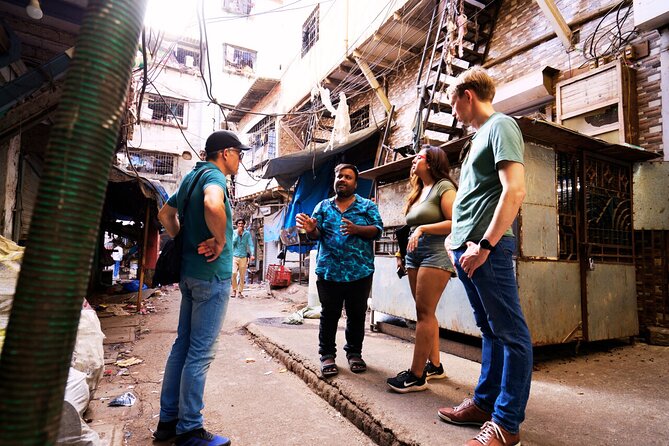
- Dharavi beyond the stereotype: See working industries, homes, schools of daily life, and community pride rather than only poverty.
- Kumbharwada finale: The walk ends in a historic potters’ colony where clay work is still practiced.
- Local guides: Sufiyan and Bala are among the guides associated with the experience, with Sufiyan noted for his personal connection to Dharavi.
- A compact two-hour route: The tour covers industrial and residential areas without taking up an entire day in Mumbai.
- Small group format: The maximum group size is 15, a useful limit in narrow lanes.
- Low-cost introduction: At $5.59 per person, this is an inexpensive way to see a side of Mumbai that is difficult to understand from a taxi window.
Seeing Dharavi as a working neighborhood
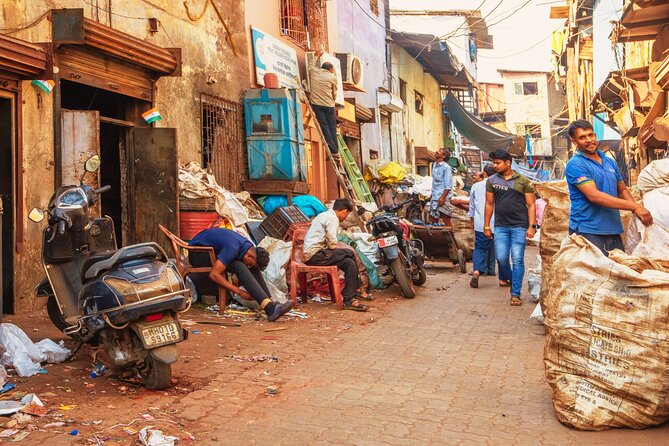
The tour’s most useful idea is that Dharavi is not defined by one label. It is a place where people live, work, produce goods, recycle materials, cook food, and run small businesses in close quarters.
You begin at Third Wave Coffee on Senapati Bapat Marg in the Mahim area. From there, the route moves into Dharavi with a guide who speaks Hindi and English. The guide’s job is not simply to point out buildings. You hear how the area works and why residents take pride in their homes and businesses.
I find that distinction important. A short visit can easily turn into a quick look at hardship, with outsiders staring at poverty and then leaving with a shallow impression. This walk aims to show the economic activity and social life that exist alongside real challenges.
The experience is especially useful if you want context for Mumbai. You see how a neighborhood can contain industrial work, family homes, workshops, food production, and craft traditions within a small area. The walk does not remove the difficult parts, but it gives them a more complete setting.
More Dharavi walking tours in Mumbai
- Dharavi slum tour in Mumbai by Female tour guides of the slum
★ 5.0 · 1,976 reviews - Mumbai: Dharavi Slum, DhobiGhat, and Dabbawallas Tour
★ 4.9 · 689 reviews - Dharavi Slum Tour
★ 5.0 · 625 reviews
Recycling, leather, pottery, food, and textiles
The first part of the route focuses on Dharavi’s industrial side. You might see recycling work, leather production, pottery, food production, and textiles. These are not presented as isolated curiosities. Together, they show the skill and effort that support local livelihoods.
Recycling is one of the clearest examples of the area’s practical economy. Materials are sorted and processed through small operations rather than handled only by large, distant companies. The exact activity you see can vary, but the larger point is consistent: Dharavi contains a great deal of work that visitors rarely notice from Mumbai’s main roads.
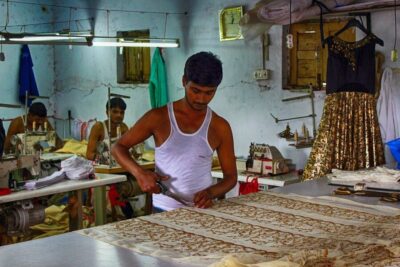
Leatherwork and textiles offer another look at local production. Small workshops can be easy to miss if you walk through without a guide. Your guide helps explain what is happening and how different businesses fit into the neighborhood.
Food production adds another layer. It reminds you that Dharavi is not only a place where people sleep after working elsewhere. It has its own production and trade, with residents earning a living close to home.
I like this part of the tour because it challenges the lazy idea that a slum is simply an area without economic activity. At the same time, you should not expect a factory tour with formal displays, safety briefings, or a fixed presentation. This is a real neighborhood, and the experience depends on walking, listening, and taking in what is around you.
Residential lanes and everyday routines

After the industrial area, the walk continues through narrower residential lanes. Here, the focus shifts from work to daily life. You might see children playing, families cooking, and neighbors talking from their doorways.
This is the most sensitive section of the experience. You are passing through someone’s home area, not entering a museum. A respectful attitude matters more here than getting the perfect photograph or asking a personal question simply because you are curious.
The guide helps provide context about the community’s difficulties and its sense of pride. That balance is one of the strongest reasons to book with a local guide instead of attempting to wander through the area alone. You receive explanations about what you are seeing, and you have someone who can help keep the visit polite and appropriate.
The narrow lanes may also make the walk physically demanding in a modest way. The tour lasts about two hours, and the route is on foot. The booking information calls for moderate physical fitness, so this is not the right pick if you need a mostly seated activity.
You should also prepare for a busy setting. The tour description presents Dharavi as active and closely packed, with industrial and residential uses side by side. Wear practical clothing and shoes for walking, and keep your belongings secure. The supplied information does not specify a dress code or luggage arrangements, so avoid bringing anything that would make walking awkward.
Kumbharwada and the potters’ tradition

The walk concludes in Kumbharwada, Dharavi’s historic potters’ colony. This is one of the route’s most distinctive stops because it connects present-day working life with a craft tradition passed down through generations.
Here, artisans shape clay pots using established methods. The value of the stop is not only visual. It gives you a clear example of how a traditional craft can remain part of a modern urban neighborhood.
Kumbharwada also gives the tour a satisfying final focus. Earlier, you see industries based on recycling, leather, textiles, and food. At the end, you see pottery as both work and cultural practice. The result is a broader picture of Dharavi than a simple walk through residential lanes would offer.
The overview also identifies Dhobi Ghat among the key sites associated with the experience. The detailed route information centers on Dharavi and ends in Kumbharwada, so I would not book this expecting a full, separate Dhobi Ghat visit unless the operator confirms that point before departure.
More walking tours in Mumbai
- Group Guided Walking Tour in Fort and Colaba
★ 5.0 · 1,073 reviews - Private Guided Walking Tour in Fort & Colaba
★ 5.0 · 895 reviews - Private Guided Walking Tour in Bandra Queen of Suburbs
★ 5.0 · 383 reviews - Private Guided Spiritual Walk in Banganga Hindu Temples
★ 5.0 · 271 reviews
What the local guides add
The guide is the main reason this experience can work. Without explanation, you might see narrow lanes and workshops but miss how they connect. With a good guide, the same walk becomes a lesson in local business, community life, and Mumbai’s urban growth.
Sufiyan is specifically associated with the tour and is described as having been born and raised in Dharavi. That gives him a personal connection to the area rather than an outside guide’s prepared script. He is also noted for clear English, careful explanations, and making visitors feel safe and comfortable.
Bala is another named guide connected with the experience. His approach includes turning statistics into everyday examples, which can help if you want more than a list of numbers. Data about population, income, or production can feel distant. Comparisons to ordinary life make those figures easier to understand.
The guide language is Hindi and English. If you are comfortable in either language, you should be able to follow the explanations and ask questions. Since guides may vary by departure, it is best to treat the names as examples rather than a guarantee that one particular person will lead your walk.
The small-group limit helps here. With no more than 15 people, there is a better chance to hear the guide and ask something relevant. A group of 15 is not private, though, and the narrow streets may still feel close in places.
Does the $5.59 price offer good value?
At $5.59 per person, this is unusually inexpensive for a guided Mumbai experience. Admission is included, and the walk lasts roughly two to two and a half hours. On price alone, it offers strong value.
The more important question is what you want your money to buy. You are not paying for a large attraction with signs, displays, air-conditioning, or a polished visitor center. You are paying for a local guide, access to a structured walking route, and help understanding a place that can be difficult to interpret on your own.
I think the price works best for budget-conscious visitors who want a meaningful addition to a Mumbai itinerary. It is also useful if you have only a short amount of time and want to see more than the usual central sights.
The low cost should not encourage careless behavior. Dharavi is a home and workplace for many people. Treat the price as payment for the guide’s time and local knowledge, not as a ticket that gives you unrestricted access to private life.
Meeting point, finish, and practical planning
You meet at Third Wave Coffee, Unit 58, Ground Floor, Ram Mahal, Senapati Bapat Marg, Marinagar Colony, near Mahim station in Mumbai. The precise meeting point matters because the walk does not begin at a major tourist monument.
The tour ends on 90 Feet Road in Muslim Nagar, RP Nagar, Dharavi. Since the start and end are different, plan your onward route before you set out. The supplied information confirms that the area is near public transportation, but it does not provide a full transfer plan from the end point.
A mobile ticket is provided, and booking confirmation arrives at the time of booking. I would save the ticket on your phone before leaving your hotel, since a reliable connection may not be available at every point of the walk.
The experience requires good weather. If poor weather forces cancellation, you are offered another date or a full refund. You can cancel for a full refund up to 24 hours before the start time. Inside that 24-hour window, the amount paid is not refunded, and changes are not accepted.
Who will appreciate this walk most

This tour suits you if you want to understand Mumbai through its working communities rather than only through monuments and shopping streets. It is a good fit for visitors who enjoy guided walks, local stories, and honest discussion of difficult social issues.
It also suits budget travelers. The price is modest, the route is short enough to fit into a busy schedule, and the small group makes the experience more personal than a large coach excursion.
Families with older children may find it educational, but the suitability depends on the child’s maturity and comfort with serious subjects. The supplied information does not set a minimum age, so you would need to decide based on your group.
I would think twice if you want a relaxed sightseeing stroll, extensive photography, or a tour built around major architectural landmarks. You should also reconsider if two hours of walking in narrow streets would be physically uncomfortable.
Should you book the Dharavi walking tour?
I would book this tour if you want a clear, local explanation of Dharavi’s work, homes, and traditions at a very low price. The strongest features are the personal guide perspective, the mix of industrial and residential areas, and the final visit to Kumbharwada.
The best way to approach it is with curiosity and restraint. Listen more than you photograph, ask questions respectfully, and remember that the people you see are living ordinary lives in their own neighborhood.
Book it if you want a thoughtful introduction to one of Mumbai’s most misunderstood communities. Skip it if you are looking for a conventional attraction with controlled exhibits and easy walking. For the right visitor, this is a short tour with a lot to think about.
FAQ
How long does the Dharavi walking tour last?
The guided walk lasts approximately two hours, with the broader timing described as two to two and a half hours.
Where does the tour begin?
The meeting point is Third Wave Coffee, Unit 58, Ground Floor, Ram Mahal, Senapati Bapat Marg, Marinagar Colony, near Mahim station in Mumbai.
Where does the tour end?
The walk ends on 90 Feet Road in Muslim Nagar, RP Nagar, Dharavi, Mumbai.
What languages does the guide speak?
The guide is fluent in Hindi and English.
How many people can join the tour?
The maximum group size is 15 people.
What does the tour cost?
The listed price is $5.59 per person.
Can I cancel for a full refund?
Yes. You can cancel at least 24 hours before the experience start time for a full refund. Cancellations or changes made within 24 hours are not refunded or accepted. If poor weather causes the operator to cancel, you are offered another date or a full refund.
Recently added around Mumbai
- Mumbai Sightseeing Tour★ 5.0 · 11 reviews
- Private Walking Tour in Dharavi Slums★ 5.0 · 7 reviews
- Private Mumbai 2-Day Tour Package:City + Slum & Elephanta Island.★ 5.0 · 3 reviews
- Vegetarian Indian Cuisine Virtual Cooking Class Experience from Mumbai★ 5.0 · 4 reviews
- Mumbai by Night Guided Tour★ 5.0 · 6 reviews
- Transfer from Mumbai Airport to Hotel★ 4.0 · 7 reviews
- Full-Day Agra Tour with Taj Mahal From Mumbai By Air★ 5.0 · 8 reviews
- Taj Mahal Day Trip Including Same Day Flights from Mumbai★ 5.0 · 3 reviews
Mumbai Dharavi Slum Tours, compared.
Dharavi slum tour in Mumbai by Female tour guides of the slum
Read our review →
Dharavi Slum Slumdog Millionaire Tour with a Local
Read our review →
Mumbai Slum Tour – Visit Dharavi Slum with Local Guide
Read our review →
Dhobi Ghat Laundry and Dharavi Slum Tour with Local
Read our review →
Browse the lists this tour appears in