
Reviewed · MUMBAI DHARAVI SLUM TOURS
Dharavi Slum Tour & Mumbai Sightseeing
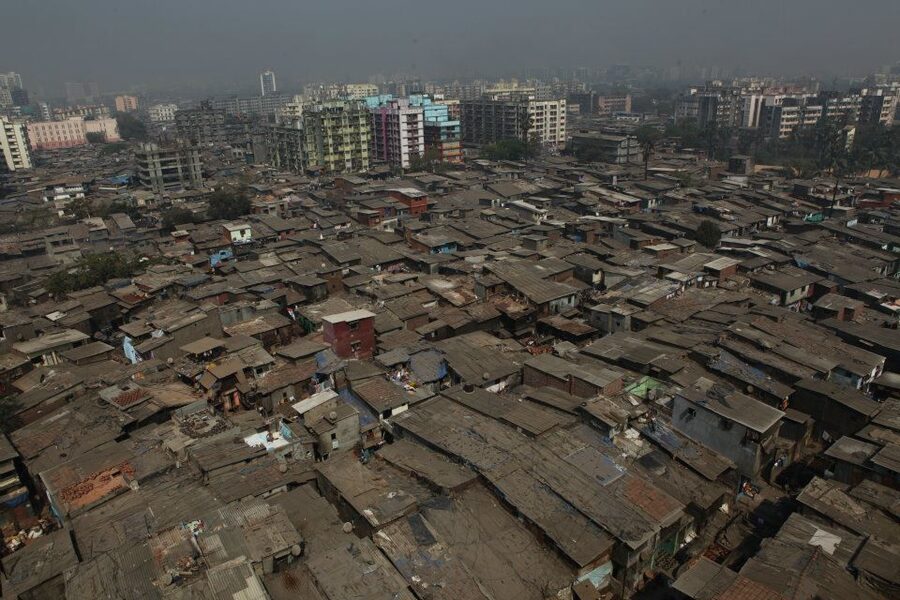
Mumbai’s most revealing stop is Dharavi, where narrow lanes lead past recycling yards, bakeries, sweet shops, tailoring units, soap makers, and small cyber cafes. This is not a quick photo stop. With a local university student guide, you get a close look at a working neighborhood and hear the stories that make its community feel like a city within the city.
I like two things right away: the private car lets you cover a huge amount of Mumbai without wrestling with traffic on your own, and the guide can adjust the sightseeing to your interests. I also like the unusual mix of places, from Gandhi’s former home and the open-air laundry at Dhobi Ghat to the grand Gateway of India and the views from Kamala Nehru Park.
The main consideration is pace. Six hours is a lot of ground for one day, but it also means short visits at several stops. Dharavi takes about 110 minutes, while many major sights get only 15 to 25 minutes. Bring water, wear practical clothes, and remember that shorts are not allowed.
Key points to know before booking
- Dharavi takes the largest share of the day: Expect about 110 minutes walking through lanes, workshops, recycling areas, and Kumbharwada.
- A private car makes Mumbai manageable: Air conditioning, parking, tolls, and taxes are included, with hotel pickup and return.
- The sightseeing covers several sides of the city: You see colonial architecture, religious sites, Gandhi’s Mumbai home, major landmarks, and everyday working life.
- Guides can shape the day around you: Past guides have included Dev, Sunny, Siddhi, Dhermesh, Anthony, Aardi, and others, with frequent praise for their stories and flexibility.
- This is good value for a first Mumbai visit: At $70 per person, the price makes more sense for two or more people sharing a private experience than for a solo visitor.
- Plan for a fast-moving day: You will walk in Dharavi and at several sights, then spend plenty of time in the car crossing Mumbai.
Why Dharavi is the heart of this Mumbai tour
Dharavi is the reason to choose this experience over a standard city drive. The tour presents it as a working neighborhood, not simply as a place to point a camera. Your guide leads you through tight lanes and side streets where daily life and small-scale industry sit close together.
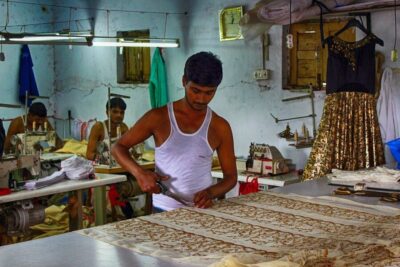
The route can include plastic and metal recycling yards, mass-producing tailor shops, bakeries, sweet shops, soap and cosmetic units, and tiny cyber cafes. You might notice strong smells from food, soap, and manufacturing as you walk. Locals may brush past in the narrow passages, and the close quarters are part of the experience.
The visit to Kumbharwada adds another layer. The area is known for pottery and is described as one of the defining parts of Dharavi. Your guide’s explanations matter here because the scenes can be hard to interpret on your own. A local guide such as Dhermesh can explain how the neighborhood works, answer questions, and help you see more than a line of workshops and lanes.
I would approach this walk with respect and curiosity. It is not a polished attraction, and that is precisely why it can be meaningful. You are seeing people work, shop, move through their neighborhood, and maintain a strong sense of community. Ask before taking photographs, listen to your guide, and avoid treating homes or workers as scenery.
The walk lasts about 110 minutes, making it the longest stop of the day. Good walking shoes and water are sensible. Rain can make the experience wet and less comfortable, so take extra care during the rainy season.
More Dharavi walking tours in Mumbai
- Dharavi slum tour in Mumbai by Female tour guides of the slum
★ 5.0 · 1,976 reviews - Mumbai: Dharavi Slum, DhobiGhat, and Dabbawallas Tour
★ 4.9 · 689 reviews - Dharavi Slum Tour
★ 5.0 · 625 reviews
Gateway of India and the Taj Mahal Palace
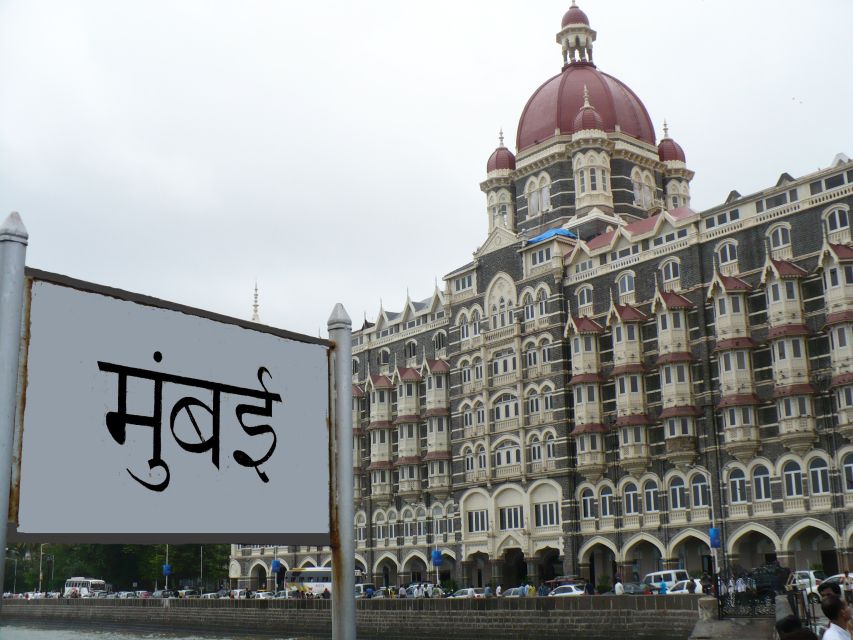
The Gateway of India gives you Mumbai’s classic postcard view. Built to welcome King George V and Queen Mary to India, the arch faces the waterfront and remains one of the city’s best-known monuments. You get roughly 20 minutes here for a guided visit, photographs, a walk, and perhaps some shopping.
Just around the corner is the Taj Mahal Palace hotel. Its original building was commissioned by Jamshedji Tata and opened to guests on December 16, 1903. The hotel adds a useful piece of Mumbai’s social and architectural story to the waterfront stop.
The time is short, so do not expect a long museum visit or a full hotel tour. Think of this as a compact introduction to two landmarks that belong together. Your guide can supply the context while you take in the architecture and harbor setting.
Marine Drive and Mumbai’s city views

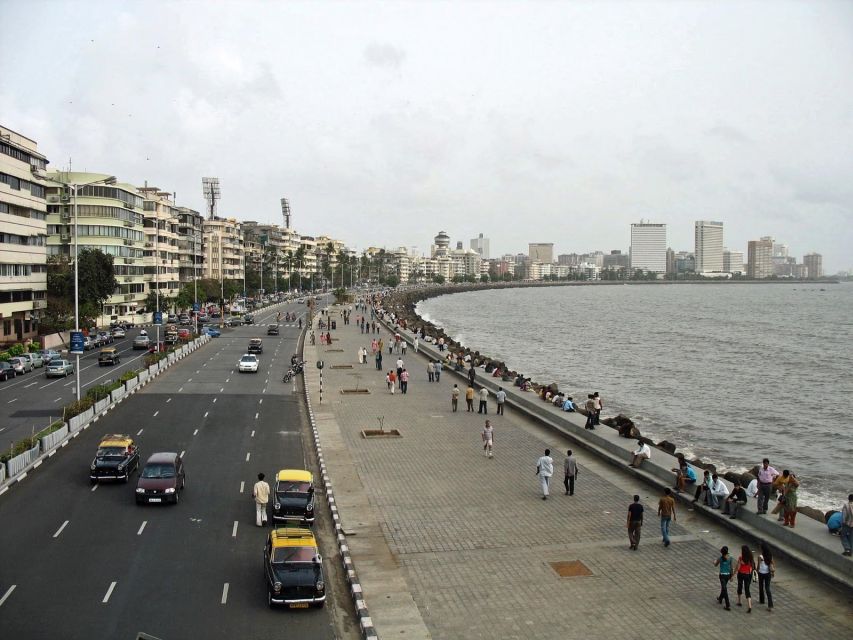
Marine Drive is one of the easiest places to understand Mumbai’s scale. The road curves along the waterfront, and it is often called the Queens Necklace because of its line of lights. The itinerary allows about 15 minutes for a photo stop, guided explanation, and walk.
That is enough to see the famous curve and get a feel for the setting, but not enough for an extended promenade. I like this stop as a pause between denser parts of the city. It gives you open space after the tight lanes of Dharavi and the busy streets around central Mumbai.
The drive also passes many important buildings and districts. Depending on traffic and timing, you may see the Prince of Wales Museum, Maharashtra Police Headquarters, Flora Fountain, Hutatma Chowk, the Telegraph Office, India Post Office Building, Kala Ghoda, David Sassoon’s Library, and the National Gallery of Modern Art.
Most of these are viewed from the car or during short stops, so keep your eyes open between scheduled visits. Mumbai traffic is part of the day, and the air-conditioned vehicle makes the long crossings far easier than managing them independently.
Chhatrapati Shivaji Maharaj Terminus and British-era Mumbai
Chhatrapati Shivaji Maharaj Terminus, often called CST, is one of Mumbai’s major architectural landmarks and a UNESCO World Heritage site. The tour gives you around 25 minutes for photographs and a guided visit.
The station is a useful reminder that Mumbai is not defined by one period or one style. The route also points out Mumbai University, built in 1857, Rajabai Clock Tower, often nicknamed the Big Ben of India, the Oval Cricket Ground, and the Bombay High Court.
These sights are important even if you are not an architecture specialist. Together they show how the city’s colonial-era civic buildings sit beside modern commerce and dense local neighborhoods. The drawback is that several are drive-by sights rather than extended interior visits, so the guide’s explanations become especially useful.
More city sightseeing tours in Mumbai
- Mumbai: Full-Day Sightseeing Tour of Mumbai
★ 4.9 · 1,822 reviews - Private Mumbai Sightseeing Tour (Traveller’s Choice Award Winner)
★ 5.0 · 1,565 reviews - Highlights of Mumbai Sightseeing Tour: TRAVELLERS CHOICE AWARDED
★ 5.0 · 915 reviews - Highlights of South Mumbai Guided Private Tour in AC Vehicle
★ 5.0 · 620 reviews
Mani Bhavan and the story of Gandhi in Mumbai
Mani Bhavan was Mahatma Gandhi’s Mumbai residence. The stop lasts about 25 minutes and includes a guided visit, sightseeing, and a walk.
I like the way this visit changes the rhythm of the day. After monuments, traffic, and industrial lanes, Mani Bhavan offers a more personal setting connected to one of India’s most important political figures. The supplied details do not promise a lengthy museum visit, so treat it as a focused stop rather than a full afternoon at the site.
The guide can connect the building to Gandhi’s time in Mumbai and help place the visit within the wider city story. If you have a particular interest in Gandhi, tell your guide early. The private format makes it possible to give this stop more attention if time and traffic allow.
Dhobi Ghat, Mumbai’s open-air laundry
Dhobi Ghat is one of the tour’s most unusual city sights. It is known as Asia’s largest open-air laundry, where clothes are washed and handled in a highly organized working setting.
The visit takes about 25 minutes. You get a photo stop, guided explanation, sightseeing, and a walk. I would expect a quick look rather than a hands-on activity. This is another place where respectful observation matters, since the laundry is a workplace rather than a staged performance.
Dhobi Ghat pairs well with Dharavi because both show Mumbai through work and local enterprise. Dharavi gives you narrow streets and many kinds of production, while Dhobi Ghat focuses on one highly visible service. Together, they make the city feel less like a collection of monuments and more like a place where millions of practical tasks keep daily life moving.
Kamala Nehru Park and the Hanging Gardens
The drive up toward Kamala Nehru Park gives you a change of viewpoint. From the park, you can see the city skyline and the well-known Old Woman’s Shoe landmark. The stop lasts about 15 minutes.
Nearby are the Hanging Gardens, built on top of water tanks near the Tower of Silence, a Parsi burial place. The tour also includes Banganga Tank and a Jain temple, although the listed timing does not give each of these places a separate stop.
This section of the route works best for visitors who want more than the standard monument circuit. You get a religious site, a historic water tank, a hilltop park, and a view over Mumbai. The short visit means you should keep expectations realistic. You will see and discuss these places, but you may not have time for a slow, detailed exploration of every one.
What the private car changes
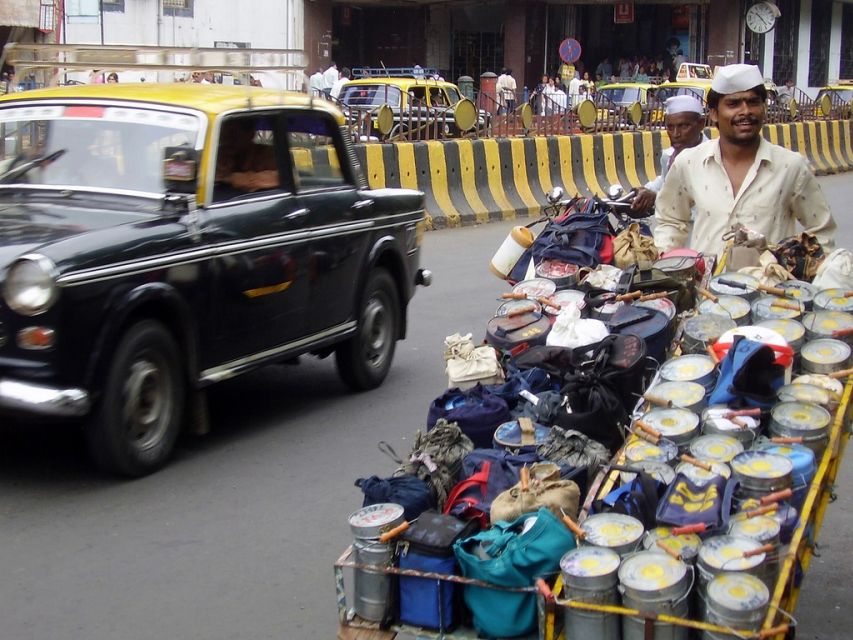
Mumbai is enormous, and the six-hour schedule would be difficult to manage alone. The tour includes an air-conditioned car, driver, tolls, parking, and taxes. Pickup and return are included, with the guide meeting you in your hotel lobby once you provide the hotel details.
That arrangement is valuable because you can move between Dharavi, South Mumbai, Marine Drive, Mani Bhavan, Dhobi Ghat, and the hilltop parks without arranging separate rides. It also gives you a place to cool down between walks.
The car does not remove traffic from the equation. Mumbai roads can make a short distance take time, and the itinerary is ambitious. Still, the driver and guide can handle the route while you watch the city pass by. Several guides have also been praised for sharing anecdotes about the streets and adapting the sightseeing to personal interests.
This is a private group experience, not a large coach tour. That matters if you want to ask questions, adjust priorities, or spend more time at Dharavi and less time on a quick photo stop. The guides named in the supplied feedback include Dev, Mukesh, Dhermesh, Siddhi, Anthony, Manjo, Sunny, and Aardi. The strongest pattern is personal attention, clear explanations, and flexibility.
Is $70 per person good value?
At $70 per person, this tour sits above a basic group sightseeing bus, but it offers much more control. You receive a private group, hotel pickup, a car with air conditioning, an English-speaking guide, parking, tolls, and taxes. There are no hidden costs listed.
The value is strongest if you are traveling with a partner, family, or small private group. A solo visitor pays the full per-person price without anyone to share the private vehicle, and one piece of feedback specifically noted that the tour can feel more expensive for one person.
Lunch is not included. You should plan for that, especially because the schedule is tight and the tour lasts six hours. Food stops are not specified, so ask your guide at the start if you need time to eat.
The booking terms are flexible: you can cancel up to 24 hours before the experience for a full refund, and you can reserve now and pay later. The tour is offered in English, and shorts are not allowed. Dress modestly and comfortably for both the city sights and Dharavi walk.
Who will enjoy this experience most?
I would choose this tour if you have only one full day in Mumbai and want both famous landmarks and ordinary working life. It is also a strong fit for first-time visitors who would rather have local context than piece together taxis, trains, and separate guides.
It suits curious, adaptable people best. Dharavi is not a passive attraction, and the narrow lanes can feel intense. If you want only palaces, museums, and polished viewpoints, the Dharavi portion may not be comfortable for you.
The tour also works well for anyone who wants flexibility. You can ask to prioritize Gandhi, architecture, city views, local neighborhoods, or the Dharavi visit. The guide cannot control Mumbai traffic, but a private format gives you more say than a fixed group route.
Should you book this Mumbai tour?
Book it if you want a fast but thoughtful introduction to Mumbai, especially if Dharavi is a priority. The combination of a local guide, private vehicle, major monuments, Gandhi’s home, Dhobi Ghat, hilltop views, and colonial-era buildings gives you a much broader picture than a standard landmark tour.
Do not book it expecting long visits at every stop or a relaxed museum day. The schedule moves quickly, lunch is extra, and the Dharavi walk requires respectful behavior and a willingness to see a working neighborhood on its own terms.
For two or more people, $70 per person is a fair price for the transport, guide, flexibility, and range of sights. For a solo visitor, compare the cost with shorter group options. If you have one day, want to see a lot, and value direct explanations from a local guide, this is a sensible way to get your bearings in Mumbai.
FAQ
How long does the Mumbai tour last?
The experience lasts six hours, including hotel pickup, sightseeing, the Dharavi walk, and return to your hotel.
What places are included?
The route includes Dharavi, Gateway of India, Marine Drive, Chhatrapati Shivaji Maharaj Terminus, Mani Bhavan, Dhobi Ghat, and Hanging Gardens Mumbai. It also covers or passes Mumbai University, Rajabai Clock Tower, Oval Cricket Ground, Bombay High Court, Kamala Nehru Park, Banganga Tank, a Jain temple, and several British-era buildings.
How much time is spent in Dharavi?
The Dharavi portion takes about 110 minutes and includes a guided walk through lanes and by-lanes, with areas such as Kumbharwada, recycling yards, bakeries, sweet shops, tailoring units, and small manufacturing businesses.
Is hotel pickup included?
Yes. The guide meets you in your Mumbai hotel lobby, and you need to provide your hotel details when booking.
Is transportation included?
Yes. An air-conditioned car is included, along with the driver, tolls, parking, and taxes.
Is this a private tour?
Yes. The activity is offered for a private group rather than as a shared large-group tour.
What language does the guide speak?
The live tour guide speaks English.
Is lunch included?
No. Lunch is not included in the $70 price.
Can I cancel the booking?
You can cancel up to 24 hours in advance for a full refund. You can also reserve now and pay later.
Recently added around Mumbai
- Private Walking Tour in Dharavi Slums★ 5.0 · 7 reviews
- Mumbai Sightseeing Tour★ 5.0 · 11 reviews
- Private Mumbai 2-Day Tour Package:City + Slum & Elephanta Island.★ 5.0 · 3 reviews
- Vegetarian Indian Cuisine Virtual Cooking Class Experience from Mumbai★ 5.0 · 4 reviews
- Mumbai by Night Guided Tour★ 5.0 · 6 reviews
- Transfer from Mumbai Airport to Hotel★ 4.0 · 7 reviews
- Full-Day Agra Tour with Taj Mahal From Mumbai By Air★ 5.0 · 8 reviews
- Taj Mahal Day Trip Including Same Day Flights from Mumbai★ 5.0 · 3 reviews
Mumbai Dharavi Slum Tours, compared.

Dharavi slum tour in Mumbai by Female tour guides of the slum
Read our review →

Dharavi Slum Slumdog Millionaire Tour with a Local
Read our review →
Mumbai Slum Tour – Visit Dharavi Slum with Local Guide
Read our review →
Dhobi Ghat Laundry and Dharavi Slum Tour with Local
Read our review →
Browse the lists this tour appears in