
Reviewed · MUMBAI DHARAVI SLUM TOURS
Dharavi Slum Tour
Dharavi is not simply a place of poverty to observe from a bus window. It is a working community where homes, workshops, recycling businesses, pottery studios, and small industries operate close together. A local guide who lives in Dharavi leads you through that daily life, giving the neighborhood a human face.
I like the chance to meet people who know the area from the inside, and I like that the tour focuses on work and enterprise as well as living conditions. The pottery workshop and vegetarian meal in a family home add a personal touch. The main drawback is that this is still a walking tour through a dense, modest neighborhood, so heat, narrow paths, and the sensitive nature of the subject may not suit everyone.
Key points to know before you book
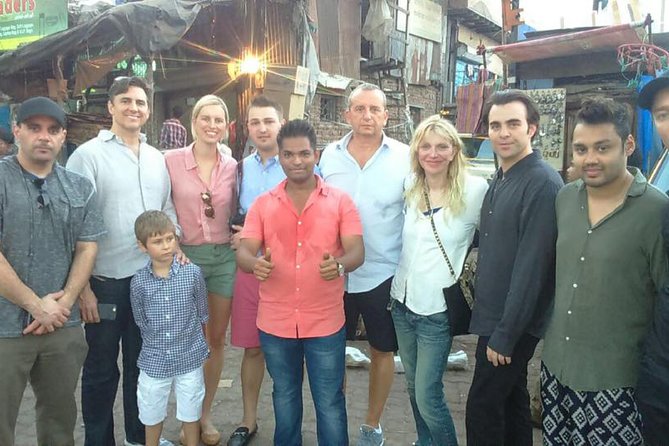
- Your guide lives in Dharavi: Guides including Rakesh, Alkama, Hardik, and Dinesh have led this walk, bringing personal knowledge of the neighborhood.
- The focus is work as well as housing: You may see recycling activity, small businesses, pottery, commercial lanes, and residential areas.
- Pottery and a family meal add context: The experience can include trying pottery and eating vegetarian food in a local home.
- It lasts about two hours: That is enough time for a useful introduction without taking up a full day in Mumbai.
- The group can reach 20 people: Private and small-group options are available, but group size may affect how personal the walk feels.
- Plan for heat and modest dress: Wear closed-toed shoes, cover your shoulders and legs, and carry water and a cap.
Seeing Dharavi through local eyes
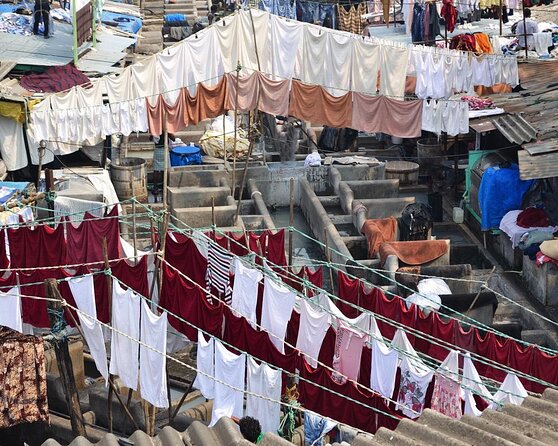
The most useful part of this tour is the guide’s point of view. Dharavi is often reduced to a label, but the walk presents it as a place where people live, work, trade, and build businesses. The guide helps you connect those pieces instead of simply pointing out difficult living conditions.
Guides named Rakesh, Alkama, Hardik, and Dinesh have led different departures. The strongest theme in the feedback is the quality of the personal connection. Rakesh was praised for explaining both the commercial and residential areas, while Alkama was described as a young man building his own future while studying. Hardik answered questions, shared plenty of local detail, and offered tea during one visit.
That personal element matters. You are not just walking through an unfamiliar place with a map. You can ask how people use the space, how local work functions, and what daily life is like. The English-speaking guide also helps you understand details that would be easy to miss on your own.
At the same time, you should approach the tour with care. Dharavi is a home, not a theme park. Follow the guide’s instructions about photography, avoid treating residents as subjects, and listen before forming quick opinions. The tour is most worthwhile when you treat the neighborhood and its residents with the same respect you would give any community.
More Dharavi walking tours in Mumbai
- Dharavi slum tour in Mumbai by Female tour guides of the slum
★ 5.0 · 1,976 reviews - Mumbai: Dharavi Slum, DhobiGhat, and Dabbawallas Tour
★ 4.9 · 689 reviews - Dharavi Slum Tour
★ 5.0 · 625 reviews
The two-hour walk through homes and businesses
The activity is listed at about two hours, though one account describes a visit lasting around two and a half hours. Your precise route and pace may vary, but the central stop is Dharavi itself.
The walk covers both commercial and residential areas. That combination is important. If you saw only workshops, you would miss the human side of the area. If you saw only housing, you would miss the economic activity that supports so many families.
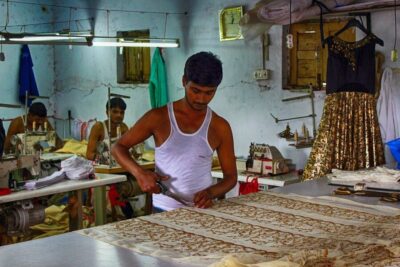
Dharavi is known for recycling and small-scale enterprise. The tour uses those working areas to show how business fits into a tightly packed neighborhood. You may see activity connected with production, repair, recycling, or local trade. The supplied details do not promise a fixed list of workshops, so the exact businesses can depend on the day and route.
The residential sections offer a different view. Homes and working spaces can sit very close together, and the guide explains how people use the limited space available. This is where the walk can feel most confronting. You may notice heat, noise, crowded paths, and basic surroundings. A good guide gives that setting context without turning hardship into entertainment.
You should not expect a polished sightseeing route. This is a walking experience in an active neighborhood. Wear shoes that can handle uneven or dirty surfaces, keep your belongings secure, and stay with the group. Most people can participate, but you need to be comfortable walking through narrow, busy spaces for the duration of the tour.
Meeting at Mahim and finishing near 90 Feet Road
The meeting point is Third Wave Coffee on Tip Road, Unit 58, Ground Floor, Ram Mahal, Senapati Bapat Marg, Marinagar Colony, near Mahim station. This is a useful detail because the tour does not begin inside Dharavi itself.
Arrive early enough to find the café and meet your guide without rushing. The tour ends near Sai Multispeciality Hospital and Research Centre on 90 Feet Road, behind Sion Hospital, in the Dharavi area. An Uber is usually easy to arrange from the end point, according to the supplied tour information.
Private transportation is not included. You are responsible for getting to the starting point and arranging your ride afterward. Since the start and end points differ, this is not a simple return-to-hotel excursion. Check the route from your accommodation before booking, especially if you have a tight schedule afterward.
The tour is near public transportation, and the Mahim meeting location can work well if you are already moving around central Mumbai. Still, give yourself extra time for city traffic and for finding the correct entrance. The mobile ticket is convenient, but your phone should be charged and ready to show the booking confirmation.
Pottery, tea, and a vegetarian meal
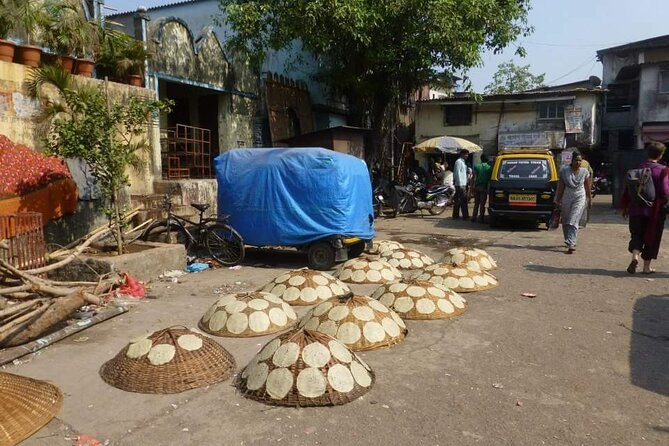
The most hands-on part of the experience is the visit to a potter’s workshop, where you can try working with clay. This gives you something practical to do rather than simply watch. It also offers a small window into a local trade and the skill involved in making useful objects by hand.
The tour also includes the chance to eat vegetarian food in a family home. That can be one of the most memorable parts because food creates a more personal connection than a quick walk past a business. It is also a useful reminder that Dharavi is made up of households and relationships, not only workshops and recycling units.
The wording of the experience presents these activities as part of the tour, but the exact timing may vary. Ask your guide how the meal and pottery fit into your route at the beginning. If you have dietary restrictions, confirm what food can be provided before you book, since only vegetarian fare is specified.
One review describes a guide offering tea. That is a small detail, but it captures the tone of the best departures: conversation, questions, and a chance to pause. You should not expect a restaurant meal or a formal cooking class. Think of these moments as simple introductions to local life.
A completely different side of the city:
- Mumbai: Full-Day Sightseeing Tour of Mumbai
★ 4.9 · 1,822 reviews - Private Mumbai Sightseeing Tour (Traveller’s Choice Award Winner)
★ 5.0 · 1,565 reviews - Group Guided Walking Tour in Fort and Colaba
★ 5.0 · 1,073 reviews - Mumbai: Elephanta Caves Half-Day Guided Tour with Expert
★ 4.8 · 1,032 reviews
Why the local guide makes the difference
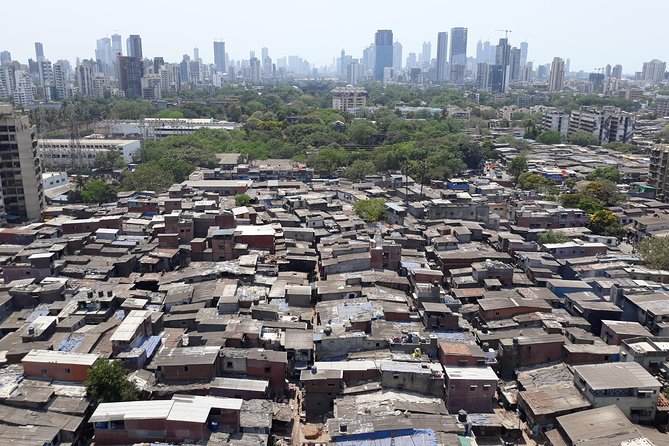
A guide who lives in Dharavi can explain the area with more nuance than a guide who only visits for work. The supplied guide names include Rakesh, Alkama, Hardik, and Dinesh, though you may receive a different guide depending on the date.
The strongest praise centers on guides who were patient, calm, and willing to answer questions. One account describes a guide who never rushed the group. Another highlights a guide who made the group feel safe while explaining the neighborhood in an interesting way.
Those qualities matter here. You may have questions about money, housing, sanitation, work, or family life, and some subjects can be awkward to raise. A respectful guide can help you ask without sounding intrusive. The guide also helps you understand where to look and what not to photograph.
The guide’s role is not to make Dharavi look perfect. The area has real challenges, and the tour does not erase them. Instead, it adds the fact that people work, study, run businesses, and create homes in the same environment. That fuller picture is the reason to book a local walking tour rather than simply viewing Dharavi from outside.
Price and value at $13.42
At $13.42 per person, this is a low-cost way to spend two hours in Mumbai. The price includes an English-speaking guide who lives in Dharavi and bottled water. It does not include transportation or tips.
The value comes from access and explanation. You could walk near Dharavi on your own, but you would not have the same context, and you might not know where it is appropriate to go. A local guide gives structure to the visit and helps you understand the relationship between homes, workshops, and businesses.
The price is especially reasonable if the pottery activity and family meal are included in your departure. Those additions give the tour more substance than a simple neighborhood walk. Confirm the precise inclusions if those activities are essential to your decision, since the route can vary.
A private tour may be the better value for families or people who want to ask many questions. A shared departure keeps the cost low, but the group can reach 20 people. In a dense neighborhood, a large group may make it harder to hear or speak with the guide. If personal attention matters to you, choose the private option when available.
Tipping is not included. Bring some cash if you want to thank your guide, but the tour price itself remains modest even after that optional extra.
Comfort, clothing, and the right mindset
Dharavi can be hot, and one account specifically advises carrying water and a cap. Bottled water is included, but I would still dress for warm conditions and bring extra water if you need it.
Modest clothing is required. Women should not wear sleeveless shirts, short shorts, or low-cut tops. Everyone should wear closed-toed shoes. These rules are practical as well as respectful, since you are visiting homes and working areas rather than a standard attraction.
Most people can take part, but the walk may feel demanding if you dislike heat or crowded surroundings. The activity information does not provide details about wheelchair access or a fully step-free route, so ask the operator before booking if that is important for you.
Your attitude matters as much as your clothing. Do not treat the neighborhood as a backdrop for dramatic photographs. Ask before taking pictures, listen to the guide, and remember that the people you see are going about ordinary work and family life.
Who will get the most from this tour
I would recommend this experience to you if you want to understand Mumbai through its people and working communities. It suits curious first-time visitors, students, photographers who can work respectfully, and anyone interested in small business, recycling, crafts, or urban life.
It is also a good choice if you have only a few hours free. The two-hour format gives you a serious introduction without taking an entire day away from Mumbai’s other sights. Flexible start times make it easier to fit around your plans.
Families may appreciate the pottery activity, though parents should prepare children for heat and an honest look at difficult living conditions. The experience is less suitable if you want a glossy sightseeing stop, a luxury excursion, or a route designed mainly for photographs.
The tour is conducted in English. If you need another language, the supplied information does not confirm that option. Small groups and private departures are available, so compare those choices before booking.
Booking details and cancellation
Confirmation is normally provided when you book. If you book within one hour of departure, confirmation arrives as soon as possible and depends on availability.
You can cancel for a full refund up to 24 hours before the start time. Cancellations or changes made within 24 hours are not refunded or accepted. The deadline uses Mumbai local time, so check carefully if you are booking from another country.
The tour is often booked around 16 days ahead. That does not guarantee that every date sells out, but it suggests you should reserve in advance if you need a particular start time or a private departure.
Should you book the Dharavi Slum Tour?
Book it if you want a respectful, locally guided look at how people live and work in one of Mumbai’s most discussed communities. The low price, short duration, personal guides, pottery stop, and family meal make it a strong introduction to a side of the city that is easy to misunderstand from a distance.
Skip it if you are uncomfortable walking through modest residential areas or if your main goal is polished sightseeing. For everyone else, go with an open mind, dress appropriately, carry water, and give the guide room to explain the place beyond the word slum. That is where the tour earns its value.
FAQ
How long does the Dharavi Slum Tour last?
The tour lasts approximately two hours. One supplied account describes a visit of about two and a half hours, so allow some flexibility.
How much does the tour cost?
The listed price is $13.42 per person.
Where does the tour begin?
It begins at Third Wave Coffee, Tip Road, Unit 58, Ground Floor, Ram Mahal, Senapati Bapat Marg, Marinagar Colony, near Mahim station, Mumbai.
Where does the tour end?
The tour ends near Sai Multispeciality Hospital and Research Centre on 90 Feet Road in Dharavi, behind Sion Hospital. Uber cabs are available from the end point.
Is transportation included?
No. Private transportation is not included. You must arrange your own travel to the meeting point and from the ending point.
What should I wear?
Wear modest clothing and closed-toed shoes. Women should not wear sleeveless shirts, short shorts, or low-cut tops.
Is bottled water included?
Yes. Bottled water is included in the tour price.
Can I cancel for a refund?
Yes. You can cancel at least 24 hours before the start time for a full refund. Cancellations and changes within 24 hours are not accepted, and the payment is not refunded.
Recently added around Mumbai
- Private Walking Tour in Dharavi Slums★ 5.0 · 7 reviews
- Mumbai Sightseeing Tour★ 5.0 · 11 reviews
- Private Mumbai 2-Day Tour Package:City + Slum & Elephanta Island.★ 5.0 · 3 reviews
- Vegetarian Indian Cuisine Virtual Cooking Class Experience from Mumbai★ 5.0 · 4 reviews
- Mumbai by Night Guided Tour★ 5.0 · 6 reviews
- Transfer from Mumbai Airport to Hotel★ 4.0 · 7 reviews
- Full-Day Agra Tour with Taj Mahal From Mumbai By Air★ 5.0 · 8 reviews
- Taj Mahal Day Trip Including Same Day Flights from Mumbai★ 5.0 · 3 reviews
Mumbai Dharavi Slum Tours, compared.
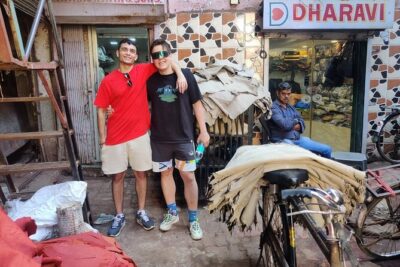
Dharavi slum tour in Mumbai by Female tour guides of the slum
Read our review →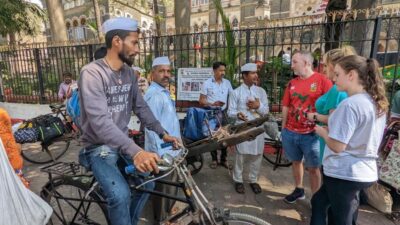
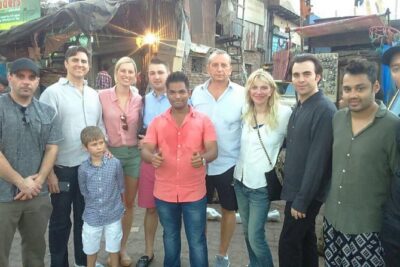
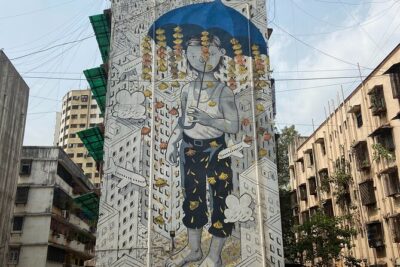
Dharavi Slum Slumdog Millionaire Tour with a Local
Read our review →
Mumbai Slum Tour – Visit Dharavi Slum with Local Guide
Read our review →
Dhobi Ghat Laundry and Dharavi Slum Tour with Local
Read our review →
Browse the lists this tour appears in