
Reviewed · MUMBAI DHARAVI SLUM TOURS
Private Guided Walking Tour in Dharavi Slums
Dharavi is more than a place of poverty. It is also a working part of Mumbai, where recycling, leather production, pottery, trade, worship, schooling, and home life share a tightly packed space. This two-hour private walk gives you a direct look at that complicated reality, rather than reducing the area to a photo stop.
I like the mix of local voices and wider context. Guides such as Bharti, a fourth-generation Dharavi resident, and Kamlesh bring personal detail, while hosts such as Jimmy and Palak add history and background. I also like the route’s focus on work, especially recycling, leather, and pottery, not just living conditions.
The main consideration is ethical and emotional. You will see real poverty and cramped homes, and some people may feel uncomfortable walking through a residential area as visitors. The tour aims to be respectful, but you should arrive ready to listen, avoid intrusive photography, and treat Dharavi as a community rather than a spectacle.
Key things to know before booking
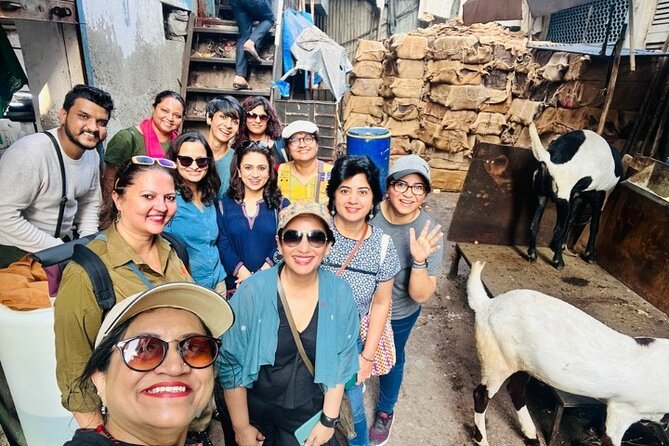
- See Dharavi as a working economy: Recycling, leather goods, pottery, and small businesses are central parts of the walk.
- Meet at Mahim: The tour begins at Third Wave Coffee near Mahim and ends at Kumbharwada in Dharavi.
- Expect local perspectives: Guides may include Dharavi residents such as Bharti or Kamlesh, alongside Khaki Tours hosts.
- Allow two hours: The route covers Mahim, recycling areas, residential lanes, tanneries, and the potters’ settlement.
- Bring water and skip the showy attitude: Bottled water and snacks are not included, and respectful behavior matters more than photographs.
Why Dharavi deserves a closer look
Many people arrive in Mumbai with a simple picture of Dharavi: crowded homes, narrow lanes, and hardship. Those things are present, but they tell only part of the story. Dharavi is also a place where people work, run businesses, worship, study, make goods, and support families.
That contrast is what gives this walk its value. You are not being asked to ignore poverty or pretend that living conditions are easy. Instead, the route puts daily work beside daily life. A recycling operation may sit close to homes. A leather workshop may share space with a family’s living area. Potteries, markets, temples, schools, and alleys all form part of the same compact community.
I find that approach more useful than a tour built only around shock. The point is not to decide that Dharavi is either hopeless or inspirational. You are given a chance to see both pressure and enterprise at the same time.
The private format helps here. Only your own group takes part, so the pace and tone can feel more personal than a large walking party. It also gives you room to ask questions, though the quality of the experience will depend partly on which guide is assigned and how openly you engage.
More Dharavi walking tours in Mumbai
- Dharavi slum tour in Mumbai by Female tour guides of the slum
★ 5.0 · 1,976 reviews - Mumbai: Dharavi Slum, DhobiGhat, and Dabbawallas Tour
★ 4.9 · 689 reviews - Dharavi Slum Tour
★ 5.0 · 625 reviews
Starting at Mahim and tracing Dharavi’s beginnings
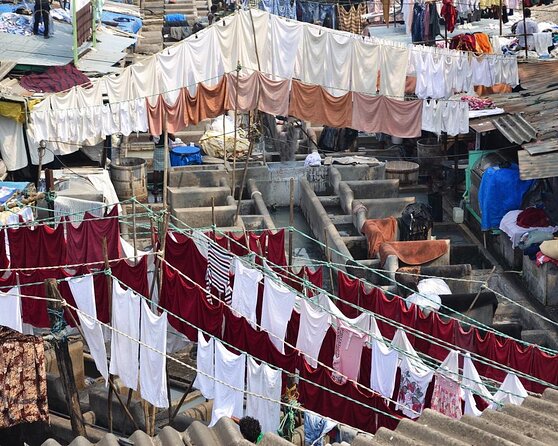
The meeting point is Third Wave Coffee, Unit 58, Ground Floor, Ram Mahal, on Senapati Bapat Marg in Mahim. The first stop is near Mahim, where Dharavi began developing at the edge of the city. This opening section lasts about 10 minutes and has no admission charge.
That short introduction matters because Dharavi did not appear as an isolated pocket unrelated to Mumbai. Its location and growth are tied to the wider city. Starting in Mahim gives you a little orientation before the route turns into the denser parts of the community.
Do not expect a long historical lecture at this point. The stop is brief, but it helps frame what follows. Guides such as Jimmy have been praised for adding historical background, while local hosts such as Kamlesh or Bharti can connect that background to present-day life.
The meeting point is near public transportation, which is useful if you are building the walk into a day around Mahim or central Mumbai. The finish is elsewhere, at Kumbhar Wada in Dharavi, so plan your onward route from the end rather than assuming you will return to the coffee shop.
Recycling in Dharavi’s industrial lanes
The second stop lasts about 30 minutes and focuses on recycling. Here you see how Mumbai’s waste enters an informal industrial system and is sorted, processed, and put back into use.
This is one of the strongest parts of the walk because it changes the way you think about Dharavi. The area is not only residential. It also handles work that supports the wider city. Recycling requires labor, organization, storage, movement, and buyers. Seeing that activity in place gives you a better sense of how the community contributes to Mumbai’s economy.
The setting may feel crowded and rough around the edges. This is working space, not a polished visitor center. You may find narrow routes, industrial smells, and busy activity. That is part of the point, but it also means you should wear practical shoes and keep your attention on the path.
The tour does not include bottled water or snacks. Carry water with you, especially in warm weather. Since the walk takes place through active work areas, follow your guide’s directions and do not handle materials or interrupt workers.
Residential lanes, leather work, and everyday life
The next 30-minute section leads through Dharavi’s bylanes. This is where the tour becomes most personal, and also where respectful conduct matters most.
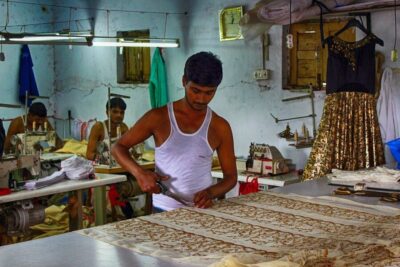
You will see the conditions in which residents live, along with tanneries where Dharavi’s leather products are made. The close contact between workshops and homes is important. It shows how work and family life often operate side by side, rather than in separate commercial and residential districts.
The leather work adds another useful layer. You are not simply looking at homes in a dense settlement. You are also seeing a production chain connected to goods sold beyond Dharavi. That does not erase the difficulties of the area, but it gives you a fuller picture of how residents earn a living.
This part can feel confronting. Some homes are close together, and the lanes are not designed for sightseeing groups. You should avoid staring into doorways, blocking passages, or taking photographs of people without permission. The tour’s purpose is to build understanding, not to collect dramatic images.
The strongest guide combinations bring two kinds of information together. Jimmy and Kamlesh, for example, have been described as offering history alongside a personal local view. Bharti, a fourth-generation Dharavi resident, has also led walks that focus on life, culture, and work from someone with family roots in the community.
More walking tours in Mumbai
- Group Guided Walking Tour in Fort and Colaba
★ 5.0 · 1,073 reviews - Private Guided Walking Tour in Fort & Colaba
★ 5.0 · 895 reviews - Private Guided Walking Tour in Bandra Queen of Suburbs
★ 5.0 · 383 reviews - Private Guided Spiritual Walk in Banganga Hindu Temples
★ 5.0 · 271 reviews
Kumbharwada and the work of the potters
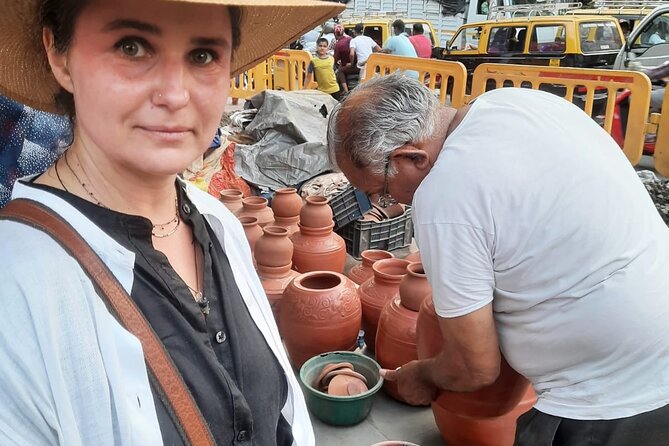
The final stop is Kumbharwada, Dharavi’s potters’ settlement. This section takes about 30 minutes and is the natural finish of the route. The tour ends at Kumbhar Wada rather than at the original Mahim meeting point.
Kumbharwada gives you another example of specialized work surviving within a dense urban setting. Pottery is not presented as a museum craft separated from daily life. You see where potters work and live, making the settlement part of the larger story of Dharavi’s economy.
This stop also balances the more industrial sections of the tour. Recycling and leather production show one side of local work. Pottery adds a different craft tradition and a clearer sense of neighborhood identity.
Because the tour ends here, you may want to leave extra time before your next fixed plan. The listed duration is approximately two hours, but walking through working lanes can take longer if the group pauses for questions or local activity slows the route.
The guides make the difference
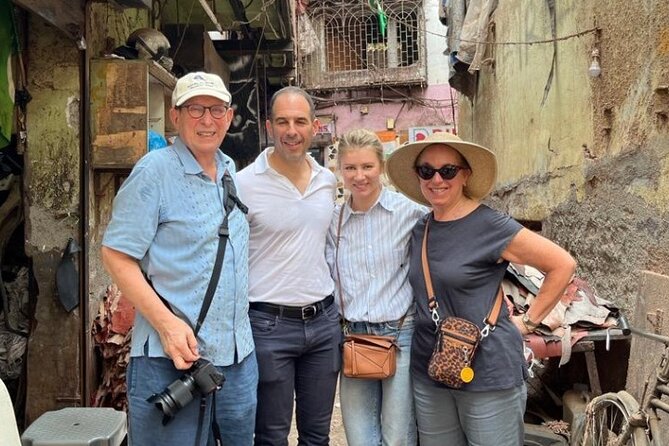
The experience depends heavily on the guide. Khaki Tours uses a mix of hosts and local Dharavi residents, and several names associated with the walk include Bharti, Kamlesh, Jimmy, Palak, Sultan, Sonniya, Maiyur, Siddhesh, and Bharati.
You should not assume that a particular person will lead your departure unless the booking confirms it. Still, the range of guide backgrounds is a strength. A host who explains Mumbai’s development can give you structure. A resident guide can explain how people live and work in the area from direct experience.
Bharti’s connection is especially notable. As a fourth-generation resident, she can speak about Dharavi as home rather than simply as a place to interpret for outsiders. Kamlesh has also been praised for offering personal insight, while guides such as Palak have covered details about Dharavi’s origins, area, population, and development.
The most useful questions are specific and respectful. Ask how different industries operate, how homes and workshops share space, or how the community has changed. Avoid turning a resident guide into a personal exhibit. You are there to learn from local experience, not demand private details.
Is a private walk worth $44.75?
At $44.75 per person, this is not the cheapest way to see Dharavi. You are paying for about two hours, a private group, guided interpretation, and access to a route that would be difficult to understand on your own.
The value comes from the context. Walking through Dharavi without guidance might show you narrow lanes and crowded buildings, but it would not necessarily explain the recycling economy, leather work, pottery, history, or relationship between homes and businesses. A local host also helps you move through the area with better judgment.
A private tour can be good value for families or small groups because only your party participates, and group discounts are available. The format may also suit people who prefer to ask questions without holding up a large public group.
Still, expectations matter. This is not a sightseeing route with grand monuments, air-conditioned stops, or included refreshments. The admission charge is free at each stop, and the cost is mainly for the hosting and guiding. If you want a conventional attraction, this may feel expensive. If you want a structured introduction to a complex community, the fee is easier to justify.
Who should take this tour?
I would recommend it to you if you want to understand how Mumbai’s informal industries work and are willing to see difficult conditions without turning them into entertainment. It is a good fit for adults, families, students, and first-time visitors who want more context than a quick drive past Dharavi can provide.
The tour can work for families with children. One family with three children found the experience suitable, but parents should prepare children in advance. Explain that people live and work here, and that residents are not part of a display.
It is also a strong choice for visitors interested in urban economics, recycling, manufacturing, migration, community life, and local culture. The combination of recycling, tanning, pottery, homes, schools, temples, and markets gives you several subjects in a short time.
You may want to skip it if you dislike walking through residential areas or feel uneasy about seeing poverty directly. The tour is respectful in purpose, but it cannot remove the discomfort created by the setting. That honesty is important.
Practical details for a respectful visit
Wear comfortable shoes. The tour uses bylanes and working areas rather than smooth museum paths. Keep your group together and listen when the guide asks you to pause, move, or avoid a particular area.
Bring bottled water because it is not included. Snacks are also not provided. The tour lasts about two hours, so eat beforehand if you need a meal rather than expecting refreshments along the route.
Photography requires judgment. Ask before photographing residents, homes, workers, or workshops. A photograph may feel harmless to you but intrusive to someone whose home or workplace is being observed.
The tour requires good weather. If poor weather causes cancellation, you are offered another date or a full refund. You can cancel up to 24 hours before the start time for a full refund. Changes or cancellations inside 24 hours are not accepted and are not refunded.
The right way to think about Dharavi
The best result of this walk is not a simple verdict about Dharavi. You may leave thinking more about how the city depends on work that many people never see. You may also leave aware that enterprise does not cancel poverty, and community pride does not remove difficult living conditions.
That balance is the reason I would choose this experience over a quick photo stop. The route brings you close to real work and real homes, but the guide’s role is to add meaning and restraint. The goal is a better understanding of Dharavi as part of Mumbai, not a dramatic story about hardship.
The tour’s strongest elements are its local connections, its attention to recycling and production, and its mix of history with present-day life. The main weakness is built into the subject itself: walking through a poor residential community can feel ethically uneasy, even when the tour is carefully led.
Should you book the Dharavi walking tour?
Book it if you want a thoughtful, small-group introduction to Dharavi and can approach the community with patience. The combination of recycling industries, leather work, residential lanes, and Kumbharwada pottery gives you far more than a single view of slum life.
I would especially consider it if you value local guides. A walk led by someone such as Bharti or Kamlesh can make the difference between looking at Dharavi and beginning to understand it. The $44.75 price is reasonable for a private, guided experience, though less appealing if you are seeking a low-cost attraction.
Skip it if you want comfort, easy photography, or a neatly packaged story. Dharavi is complicated, and this tour is most worthwhile when you are prepared to meet that complexity with respect.
FAQ
How long does the Dharavi walking tour last?
The tour lasts approximately two hours.
Where does the tour begin?
It begins at Third Wave Coffee, Unit 58, Ground Floor, Ram Mahal, Senapati Bapat Marg, Marinagar Colony, near Mahim Station in Mumbai.
Where does the tour end?
The tour ends at Kumbhar Wada in Dharavi.
Is this a private tour?
Yes. Only your own group participates in the activity.
What is included in the price?
The price includes hosting charges. Bottled water and snacks are not included.
What will I see during the walk?
The route includes Mahim, recycling industries, Dharavi’s residential bylanes, leather tanneries, and Kumbharwada’s potters’ settlement. You may also see markets, temples, schools, homes, and other local businesses.
Can I cancel for a full refund?
Yes. You can cancel at least 24 hours before the experience start time for a full refund. Cancellations or changes made within 24 hours are not refunded or accepted.
Recently added around Mumbai
- Private Walking Tour in Dharavi Slums★ 5.0 · 7 reviews
- Mumbai Sightseeing Tour★ 5.0 · 11 reviews
- Private Mumbai 2-Day Tour Package:City + Slum & Elephanta Island.★ 5.0 · 3 reviews
- Vegetarian Indian Cuisine Virtual Cooking Class Experience from Mumbai★ 5.0 · 4 reviews
- Mumbai by Night Guided Tour★ 5.0 · 6 reviews
- Transfer from Mumbai Airport to Hotel★ 4.0 · 7 reviews
- Full-Day Agra Tour with Taj Mahal From Mumbai By Air★ 5.0 · 8 reviews
- Taj Mahal Day Trip Including Same Day Flights from Mumbai★ 5.0 · 3 reviews
Mumbai Dharavi Slum Tours, compared.
Dharavi slum tour in Mumbai by Female tour guides of the slum
Read our review →
Dharavi Slum Slumdog Millionaire Tour with a Local
Read our review →
Mumbai Slum Tour – Visit Dharavi Slum with Local Guide
Read our review →
Dhobi Ghat Laundry and Dharavi Slum Tour with Local
Read our review →
Browse the lists this tour appears in