
Reviewed · MUMBAI DHARAVI SLUM TOURS
Private Slumdog Millionaire Tour in Dharavi with Slum Visit
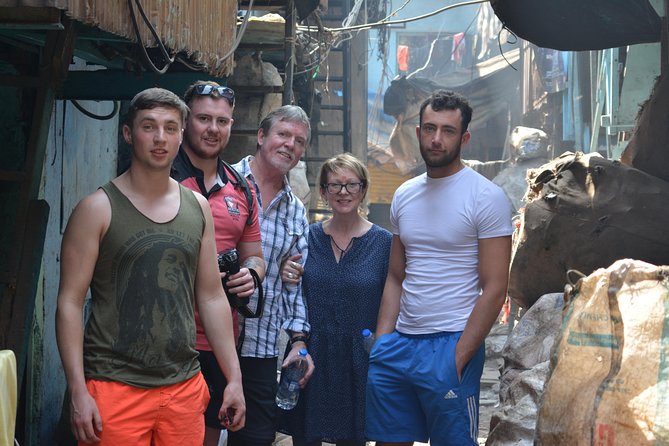
Dharavi is not a movie set. It is a working neighborhood where recycling, leather, food, clothing, and small factories support thousands of families. This three-hour private walk takes you through the commercial side first, then into residential lanes, with a local guide helping you understand what you are seeing.
I like the private format, which gives you room to ask questions and adjust the pace. I also like the practical focus: you see plastic, aluminum, paper, cardboard, and oil-paint recycling, then move on to bakeries, leather workshops, luggage makers, and clothing businesses. The main consideration is that this is a walking tour through narrow lanes and difficult living conditions, so it may feel intense rather than easygoing.
Key points to know before booking
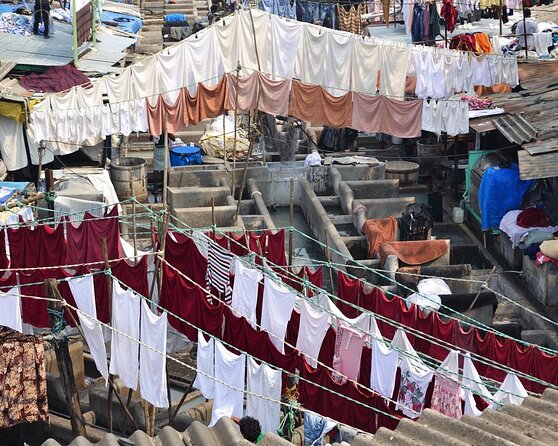
- A working neighborhood, not just a film location: The tour shows recycling, manufacturing, food production, and homes connected to daily life.
- Private attention for $37.20 per person: Your group tours alone, making it easier to ask direct questions and set a comfortable pace.
- Commercial first, residential second: You see how materials are processed before entering the narrow lanes where people live.
- Guides with personal ties to Dharavi may lead the walk: Pooja, Ravi, Bulgi, and Chirag are among the guides named in the tour feedback, and one guide showed a visitor her own home.
- Meet near Mahim Railway Station: The listed start point is Third Wave Coffee at Ram Mahal on Senapati Bapat Marg.
- Allow the full three hours: Comfortable shoes matter, and a delayed start can cut into the time available inside Dharavi.
Seeing Dharavi beyond the movie title
The name Slumdog Millionaire draws attention, but it can also give you the wrong idea. This tour uses the film as an entry point, then moves quickly toward the people and businesses that make Dharavi function.
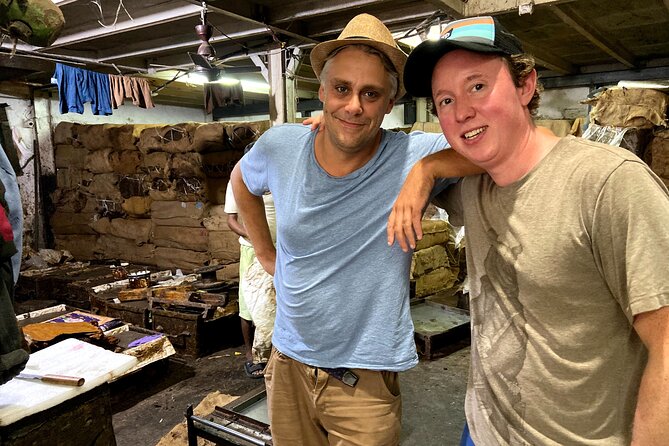
I appreciate that the route is not limited to looking at homes from the outside. The commercial section shows work in progress, with raw materials being sorted, broken down, reused, and turned into saleable goods. That gives you a clearer picture of Dharavi as a place of work as well as a place to live.
The word slum can flatten a complicated neighborhood into one harsh image. Here, you see cramped lanes and difficult conditions, but also the skill, organization, and resourcefulness needed to run small industries in a tight urban setting. Your guide is important because the streets alone cannot explain what each workshop does or how the different parts connect.
This is a tour for understanding, not entertainment built around poverty. You should expect to listen closely, avoid treating private homes as photo backdrops, and let your guide set the tone. The experience is more useful when you approach it with curiosity and respect.
More Dharavi walking tours in Mumbai
- Dharavi slum tour in Mumbai by Female tour guides of the slum
★ 5.0 · 1,976 reviews - Mumbai: Dharavi Slum, DhobiGhat, and Dabbawallas Tour
★ 4.9 · 689 reviews - Dharavi Slum Tour
★ 5.0 · 625 reviews
The commercial side: recycling as local industry
The first part of the walk focuses on Dharavi’s commercial area. This is the strongest section for visitors who want to see how informal businesses operate at close range.
The route includes plastic recycling, aluminum recycling, paper recycling, cardboard recycling, and the reuse of oil-paint cans. Those stops give the tour a practical thread. You are not simply told that recycling happens here. You can follow several different material streams and see how discarded goods become useful inputs for other products.
The work may be noisy, cramped, and visually rough. That is part of the point, but it is also a reason to wear sturdy, comfortable shoes and pay attention to where you step. The tour description does not promise a polished factory visit. Expect small working spaces and active lanes rather than a formal museum display.
I find this section especially valuable because it corrects a common assumption. Dharavi is often presented only through housing conditions, but its businesses are central to the neighborhood’s identity. Recycling and manufacturing are not background details. They are the economic engine you are being shown.
The guide can also help you understand what you are seeing at a human scale. One guide, Pooja, was praised for explaining how automobile and other plastic waste is broken down into usable pellets for new plastic products. That kind of detail turns a quick look at machinery into a clearer lesson in production and reuse.
Leather, luggage, bakeries, and clothing workshops
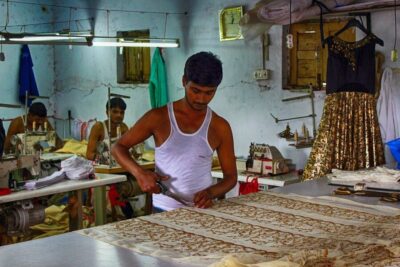
After the recycling businesses, the tour moves through other working sectors. Leather factories, luggage-bag manufacturing, bakeries, and clothing industries are all part of the planned route.
These stops broaden the experience. Recycling shows how materials move through the local economy, while leather and luggage work show how finished goods are made. Bakeries add a food-production angle, and clothing businesses reveal another form of small-scale manufacturing.
The exact order and amount of time at each business can vary. This is a private walking tour, not a timed exhibition with a fixed viewing platform at every stop. Your guide may pause longer where your group has questions or move along when a lane is crowded or work is underway.
That flexibility is one of the private tour’s real advantages. If you are interested in manufacturing, you can ask for more explanation. If the industrial details are less important to you, your guide can keep the walk moving toward the residential section.
The drawback is that some visitors may expect a neat, organized presentation. You will not get that here. The businesses are part of a living neighborhood, and conditions can be crowded and basic. I would choose this tour for the access and context, not for comfort or visual polish.
Entering the residential lanes
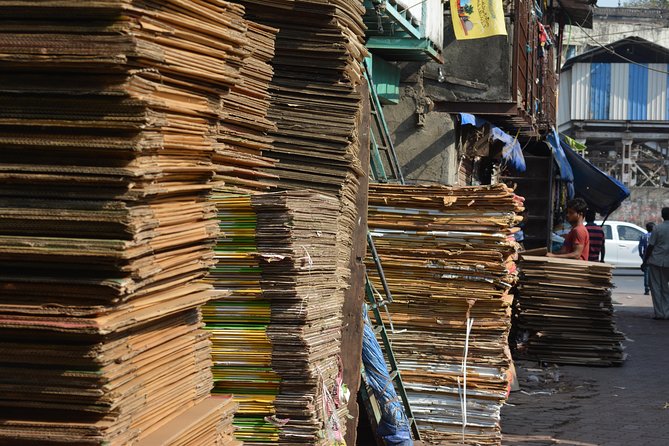
The second half takes you into Dharavi’s residential area. The guide shows how people live, leads you through very narrow alleys, and points out aspects of local culture and schools.
This is where the tour becomes more personal. The commercial section explains work. The residential section helps you understand the everyday setting around that work. The lanes can feel close and confining, and you should expect the surroundings to challenge your preconceptions.
One of the most striking details from the tour feedback is that a local guide showed her own house. If your guide has a similar personal connection, the visit may feel more grounded than a standard sightseeing walk. Still, do not assume every departure includes a home visit. Guide assignments and access can vary.
The presence of schools is another useful detail. It keeps the neighborhood from being reduced to factories and crowded housing. Children, families, education, work, and local businesses all occupy the same compact area, and the guide’s explanation helps you see those connections.
You should follow your guide’s instructions closely in this part. The lanes are narrow, and the area is a real residential community rather than a set arranged for visitors. Keep your group together, stay aware of people going about their day, and avoid turning private life into a spectacle.
A few more Mumbai tours and experiences worth comparing
- Private Mumbai Sightseeing Tour (Traveller’s Choice Award Winner)
★ 5.0 · 1,565 reviews - Private Guided Walking Tour in Fort & Colaba
★ 5.0 · 895 reviews - Highlights of South Mumbai Guided Private Tour in AC Vehicle
★ 5.0 · 620 reviews - Private Mumbai Sightseeing Tour(Travellers Choice Award Winner)
★ 5.0 · 565 reviews
Why a private guide matters here
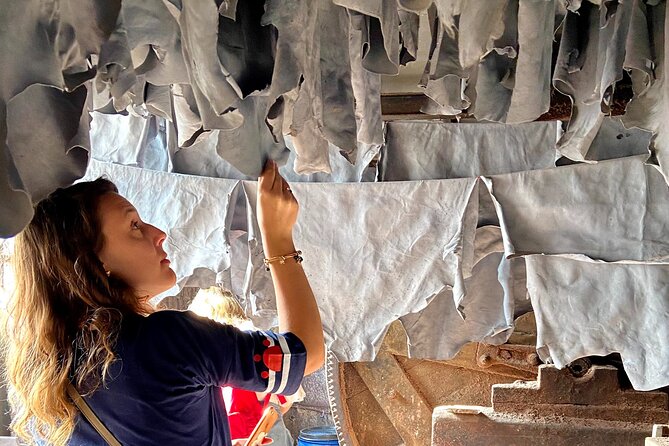
Dharavi is not the kind of place I would recommend exploring without local help. The tour meets near Mahim Railway Station, and the route includes parts of the neighborhood that are difficult to access independently.
A private guide gives you a point of contact from the start. You can ask what a business does, why a material is being processed, or how the commercial and residential areas fit together. You also have a better chance of getting an explanation suited to your interests rather than listening to a one-size-fits-all speech.
The listed English-speaking guides include Pooja and Ravi, while other visitors were led by Bulgi and Chirag. Chirag was described as an 18-year-old student from Dharavi, which shows how the experience may be led by people with direct local connections. You should not book expecting a particular person unless the operator confirms that guide in advance.
The private setup also helps if your group has different comfort levels. Some people will want to ask many questions. Others may need a little time to take in the surroundings. A private walk is more adaptable than a large group, though the route itself remains active and demanding.
There is one important service warning. The tour has a very strong overall rating, but one booking ended with a guide no-show, a long wait at the coffee shop, and no prompt communication. The operator accepted responsibility and apologized. I would confirm the meeting details shortly before departure, especially if you have a tight schedule afterward.
Meeting point, timing, and what to wear
The listed meeting point is Third Wave Coffee, Tip Road, Unit 58, Ground, Ram Mahal, Senapati Bapat Marg, Marinagar Colony, near Mahim Railway Station in Mumbai. The tour ends back at the meeting point.
Pickup is offered in the tour details, but the specific start information centers on this meeting point. Confirm your exact arrangement when booking so you know if you should go directly to the coffee shop or wait for a pickup instruction.
The walk lasts about three hours. That is enough time to cover both commercial and residential areas without turning the visit into a rushed photo stop. It also means you should not place a major appointment immediately afterward.
Comfortable shoes are essential. The tour is on foot, and the residential lanes can be especially tight. Bottled water is included, which is useful during a three-hour walk, but you should still dress for Mumbai’s conditions and choose clothing you can walk in comfortably.
Most people can participate, and service animals are allowed. The activity is near public transportation, which makes the Mahim meeting point practical for many visitors. No special fitness level is stated, but you should be comfortable walking for several hours through narrow urban lanes.
Is $37.20 good value?
At $37.20 per person, the value depends on what you want from a Mumbai tour. If you want a quick photo stop connected to Slumdog Millionaire, this is more time and context than you need. If you want a private introduction to Dharavi’s businesses, homes, and local economy, the price is reasonable.
You are paying for a private guide, English-language explanations, access to areas that can be hard to navigate alone, and a route covering both work and home life. Bottled water is included, and group discounts may be available.
The strongest value comes when you use the private format well. Ask questions. Tell the guide if you want more time with recycling, manufacturing, or the residential area. A group that stays silent may get a worthwhile walk, but a curious group will get much more from the same three hours.
The price is less attractive if you expect every stop to operate like a formal attraction. There are no promises of polished facilities, guaranteed access to a particular factory, or a fixed guide. The appeal is the local setting and personal explanation.
Who will get the most from this walk?
I would recommend this experience to first-time Mumbai visitors who want to see a side of the city that is hard to understand from major sights alone. It also suits repeat visitors who have already seen the standard landmarks and want a closer look at local work and housing.
Families with older children and teenagers may find the tour useful. One guide, Chirag, was described as an 18-year-old student from Dharavi, and the experience was considered a strong eye-opener for teenagers. The subject matter is serious, but it can lead to thoughtful questions about work, recycling, education, and city life.
The tour is also a good fit if you value personal contact. Guides such as Ravi and Pooja received especially strong praise for answering questions, explaining the work, and making visitors feel safe. That personal connection is a major part of the experience.
I would hesitate to recommend it to anyone looking for a relaxed, polished sightseeing outing. The conditions may be confronting, and the narrow lanes are not designed for comfort. If you are uncomfortable seeing poverty up close, think carefully before booking.
How to approach the visit respectfully
Your attitude will shape the quality of the experience. The area is home to real families and active businesses, so listen before taking photos and follow the guide’s instructions. The supplied information does not set out a photography policy, so ask your guide rather than assuming.
Avoid judging the neighborhood from one glance. You may see difficult conditions alongside profitable work, schools, homes, and strong local organization. Give your guide time to explain the contradictions.
It also helps to ask practical questions rather than only asking about hardship. What happens to the recycled material? How does a workshop fit into the local economy? How do people combine home life and work? Those questions lead to a fuller understanding of Dharavi.
The best guides make this possible. Ravi was praised for making the walk educational and inspiring, while Pooja was noted for patience and clear explanations. The quality of the experience will depend partly on who leads your group, but the private format gives you a better chance to build a real conversation.
Should you book the Dharavi private tour?
Book it if you want a serious, local look at Dharavi rather than a quick movie-themed excursion. The combination of recycling businesses, leather and luggage workshops, bakeries, clothing industries, schools, narrow lanes, and residential life gives you a fuller picture of the neighborhood.
The private format is worth considering at $37.20 per person, especially if you are traveling with friends or family and can use the group discount. I like the access, the direct questions, and the chance of meeting a guide with personal ties to Dharavi.
Go in prepared for a walking tour through crowded and difficult surroundings. Confirm the meeting details, wear good shoes, leave enough time for the full three hours, and keep your expectations focused on understanding rather than entertainment. For the right visitor, this is one of Mumbai’s more thought-provoking local experiences.
FAQ
Where does the Dharavi tour start?
The listed meeting point is Third Wave Coffee, Tip Road, Unit 58, Ground, Ram Mahal, Senapati Bapat Marg, Marinagar Colony, near Mahim Railway Station in Mumbai.
Where does the tour end?
The activity ends back at the meeting point.
How long does the tour last?
The tour lasts approximately three hours.
Is this a private tour?
Yes. Only your group participates in the private activity.
What is included?
The tour includes a private guided walk, an English-speaking guide, and bottled water.
Can I cancel for a full refund?
Yes. You can cancel at least 24 hours before the local start time for a full refund. Cancellations or changes made within 24 hours are not refunded or accepted.
Recently added around Mumbai
- Private Walking Tour in Dharavi Slums★ 5.0 · 7 reviews
- Mumbai Sightseeing Tour★ 5.0 · 11 reviews
- Private Mumbai 2-Day Tour Package:City + Slum & Elephanta Island.★ 5.0 · 3 reviews
- Vegetarian Indian Cuisine Virtual Cooking Class Experience from Mumbai★ 5.0 · 4 reviews
- Mumbai by Night Guided Tour★ 5.0 · 6 reviews
- Transfer from Mumbai Airport to Hotel★ 4.0 · 7 reviews
- Full-Day Agra Tour with Taj Mahal From Mumbai By Air★ 5.0 · 8 reviews
- Taj Mahal Day Trip Including Same Day Flights from Mumbai★ 5.0 · 3 reviews
Mumbai Dharavi Slum Tours, compared.
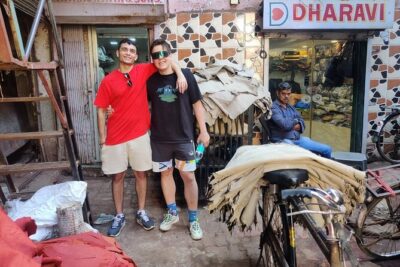
Dharavi slum tour in Mumbai by Female tour guides of the slum
Read our review →
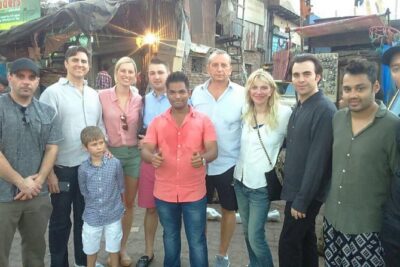
Dharavi Slum Slumdog Millionaire Tour with a Local
Read our review →
Mumbai Slum Tour – Visit Dharavi Slum with Local Guide
Read our review →
Dhobi Ghat Laundry and Dharavi Slum Tour with Local
Read our review →
Browse the lists this tour appears in