
Reviewed · MUMBAI DHARAVI SLUM TOURS
Private Dharavi Slum and Sightseeing Tour
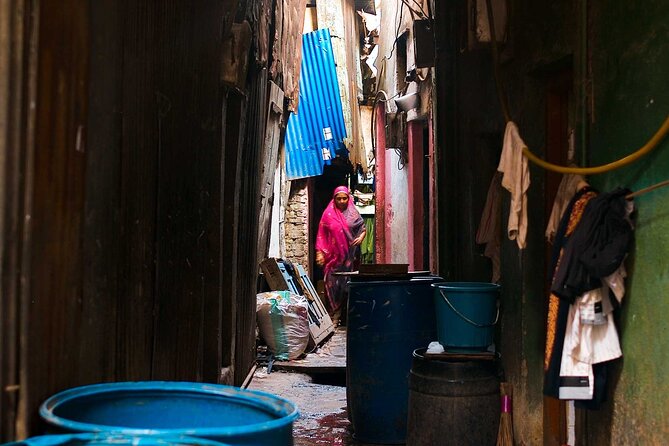
Mumbai’s character comes into sharp focus in Dharavi, where homes, workshops, shops, and small industries operate side by side. This private tour gives you a guide through an area that can be difficult to visit on your own, then links it with temples, markets, waterfronts, and major city sights.
I like the private car and hotel transfers, which make a long day in a crowded city easier to manage. I also like the mix of places: Dharavi and Sassoon Dock show working Mumbai, while Marine Drive, CST, and the Gateway of India cover its grand public face. The main drawback is the pace. Twelve stops in roughly nine hours means several visits are short, and the day may feel hectic.
Key points at a glance
- Two hours in Dharavi: Learn about homes, workshops, and the many businesses operating within the settlement.
- Private sightseeing by car: Your group has its own English-speaking guide and driver for the full day.
- A wide view of Mumbai: The route covers religious sites, markets, historic buildings, harbors, and sea views.
- Strong guide element: Chetan and Sabina are among the guides associated with this experience, both praised for clear local history and good storytelling.
- Packed nine-hour schedule: Most stops last 20 to 30 minutes, with extra time at Dharavi and Chor Bazaar.
- Good value for first-time visitors: At $87.23 per person, the price includes transport, guiding, hotel pickup and drop-off, and water, but not meals.
Why Dharavi is the heart of this tour
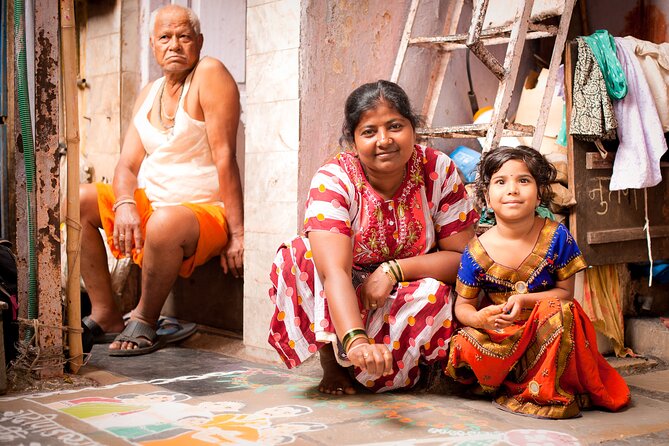
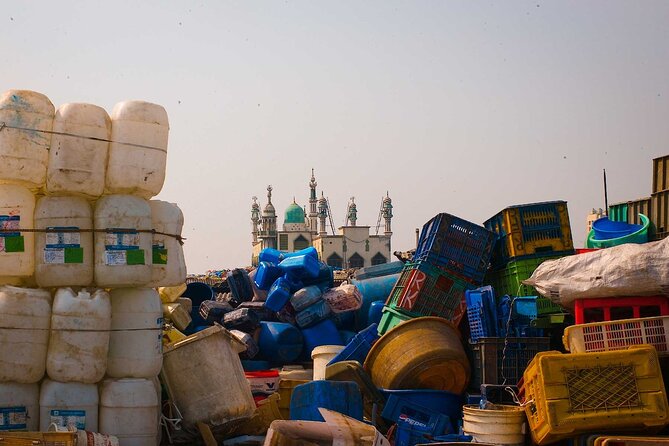
The tour begins with about two hours in Dharavi, one of Asia’s biggest slum areas. That description only tells part of the story. Dharavi is also a place where people live and work, with many industries operating in a tightly packed urban setting.
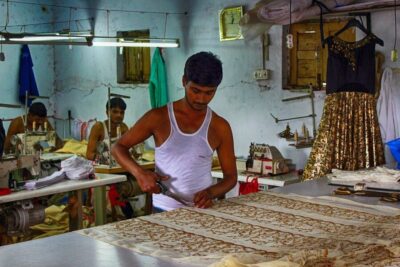
Your guide explains the businesses and the daily life of residents as you walk. The value here is access and context. On your own, you would see only fragments from the edge of the settlement. With a local guide, you can better understand how homes and workplaces fit together and why Dharavi is such an important part of Mumbai’s economy and identity.
This is not a quick photo stop. Two hours gives the walking portion enough time to be educational rather than a passing glimpse. You should approach it with respect. People live here, and the point is to learn about the community and its work, not treat it as a spectacle.
Some people feel uneasy about visiting a poor neighborhood as part of a tour. That is a fair concern. The quality of the experience depends heavily on the guide’s tone and on your own behavior. Listen, ask polite questions, avoid intrusive photography, and remember that this is a residential area first.
The private format helps here. You can ask your guide to explain something you do not understand, rather than follow a large group from one stop to the next. Chetan and Sabina have been praised for their clear explanations, energy, and ability to put Mumbai’s past and present into context.
More Dharavi walking tours in Mumbai
- Dharavi slum tour in Mumbai by Female tour guides of the slum
★ 5.0 · 1,976 reviews - Mumbai: Dharavi Slum, DhobiGhat, and Dabbawallas Tour
★ 4.9 · 689 reviews - Dharavi Slum Tour
★ 5.0 · 625 reviews
Dhobi Ghat and Mumbai’s working side
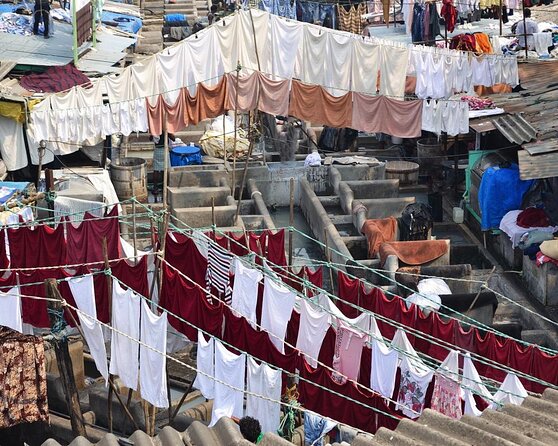
After Dharavi, the tour stops at Dhobi Ghat for about 10 minutes. This famous outdoor laundry area is where dhobiwallahs, or washermen, scrub and process linens from large hospitals and hotels.
The stop is brief, so think of it as a focused look rather than a full visit. You will have time to see the working area and take in the scale of the operation, but not time for a long conversation or extended exploration. It is a useful follow-up to Dharavi because both stops show the labor that keeps Mumbai running.
Jain Temple and Banganga’s sacred water
The Jain Temple receives about 20 minutes. It is known for intricate decoration and offers a quiet contrast to the city streets. Your guide can explain the basic principles of Jainism, including its strong emphasis on peace and non-violence.
Twenty minutes is enough to look around, but dress and behave with care at any religious site. The schedule does not promise an extended religious presentation, so this works best as a respectful architectural and cultural stop.
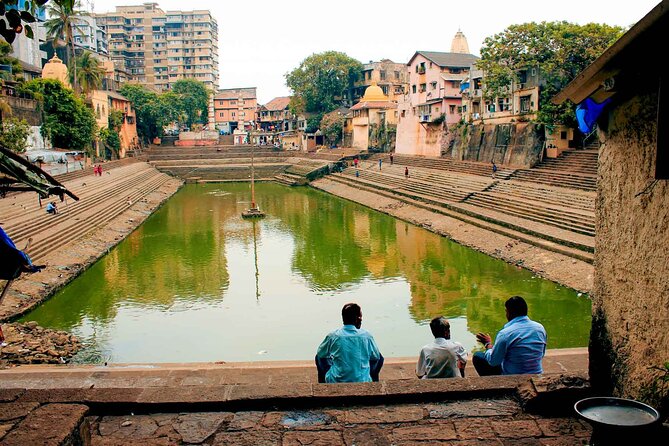
Next comes Banganga, an old water tank surrounded by Hindu temples. The tank dates to the 12th century and is believed to have healing water. Local tradition says its spring is linked to the holy Ganges River.
Banganga is one of the more atmospheric stops on the route. It gives you a sense of Mumbai’s older religious life, far removed from the modern towers and busy roads. You have about 20 minutes here, enough to see the tank and its temple setting, though not enough for a long visit.
Kamala Nehru Park and the Queen’s Necklace
At Kamala Nehru Park, you get a short break from traffic and buildings. The park sits on Malabar Hill and offers a wide view over Marine Drive and the Arabian Sea.
The stop lasts around 20 minutes. The attraction is the outlook rather than a long walk in the park. Bring your camera, but also allow a moment to understand the shape of Mumbai from above. Marine Drive curves along the shore, and from this height its lights are associated with the nickname Queen’s Necklace.
The tour later brings you down to Marine Drive itself for about 25 minutes. That pairing works well. First you see the road and shore from above, then you get time at street level for a stroll beside the water.
Marine Drive is one of the easiest places in Mumbai to appreciate without a long explanation. It is open, breezy, and made for watching the city move around you. Still, do not expect a leisurely afternoon here. The schedule gives you a taste, not an extended waterfront visit.
More city sightseeing tours in Mumbai
- Mumbai: Full-Day Sightseeing Tour of Mumbai
★ 4.9 · 1,822 reviews - Private Mumbai Sightseeing Tour (Traveller’s Choice Award Winner)
★ 5.0 · 1,565 reviews - Highlights of Mumbai Sightseeing Tour: TRAVELLERS CHOICE AWARDED
★ 5.0 · 915 reviews - Highlights of South Mumbai Guided Private Tour in AC Vehicle
★ 5.0 · 620 reviews
Haji Ali Mosque and the sea causeway
The Haji Ali Mosque is surrounded by water at the end of a long causeway. It contains the tomb of Saint Haji Ali, a wealthy Muslim who gave up his former life and went to Mecca.
The stop is planned for about 30 minutes, making it one of the longer sightseeing visits outside Dharavi and Chor Bazaar. The setting is the main attraction: a religious site reached by a narrow route into the sea, with water on all sides.
Conditions can affect how this stop feels, but the supplied tour details do not promise a specific tide, weather condition, or interior access. Your guide and driver handle the route, while you should allow time to walk carefully and respect the religious setting.
Crawford Market and Chor Bazaar
Crawford Market is one of Mumbai’s major wholesale markets for fruit, vegetables, and meat. It is also noted as the first building in India to receive electricity.
You have about 30 minutes here. That is enough to see the market’s commercial energy and understand its role in the city, though it is not a shopping expedition with unlimited time. If strong smells and crowded market conditions bother you, this may be one of the more demanding parts of the day.
Chor Bazaar receives about 45 minutes, the longest stop after Dharavi. Its name means Thieves Market, and it is known as a large flea market selling almost anything. The tour information also points to local sweets, homemade pickles, and chutneys, so this is a good place to browse for edible souvenirs.
The key word is browse. The tour does not promise particular products or guaranteed purchases. Prices, stock, and quality can vary, and you should use normal care in any busy market. Still, the extra time makes Chor Bazaar more useful than a quick drive past it.
CST and the Gateway of India
Chhatrapati Shivaji Terminus, usually called CST, is one of India’s busiest railway stations and Mumbai’s only UNESCO World Heritage Site. The station was also featured in the final song of the film Slumdog Millionaire.
You get about 20 minutes here. The stop is best for seeing the building’s exterior and feeling the movement around one of Mumbai’s major transport hubs. If you visit near rush hour, expect a lot of activity. The point is not a quiet architectural inspection. It is a short look at a working station with major historical importance.
The Gateway of India follows with another 20-minute stop. Built in 1911, it later became linked to the end of British rule when British troops marched under it in 1948.
The Gateway is one of Mumbai’s essential landmarks, but it can feel crowded and busy. A private vehicle helps connect it with the rest of the day, especially when you are trying to see many parts of a large city. Your time here is enough for photographs and a quick look toward the waterfront, not for a slow harbor visit.
Sassoon Dock and the city’s fishing trade
Sassoon Dock gives the day another working port scene. You can watch local fishermen bring in their catch at this busy harbor.
The planned visit is about 30 minutes. Like Dharavi, this is valuable because it shows an active part of Mumbai rather than a landmark designed for sightseeing. The contrast matters: you see how the city earns, trades, cleans, worships, travels, and relaxes, all within one long route.
The dock may feel rougher and less polished than places such as the Gateway of India or Marine Drive. That is part of its purpose on this tour. You are seeing an operating port, not a staged attraction.
What the private format really adds
A private tour means only your group takes part. You have a local English-speaking guide and driver for the entire tour, plus hotel or residence pickup and drop-off.
That arrangement is useful in Mumbai because the itinerary crosses many separate areas. You do not need to work out every transfer between Dharavi, Malabar Hill, the markets, the waterfront, and South Mumbai. You can also ask questions as they come up and adjust the emphasis within the limits of the day.
The tour is described as customizable, but the listed schedule is already full. In practice, customization is most likely to mean discussing what matters most to you, not adding many extra attractions. If you want more time at Dharavi, a market, or a religious site, say so early and understand that another stop may need to be shortened.
Guides named in feedback about the experience include Chetan and Sabina. Chetan has been praised for his command of Mumbai’s history, while Sabina has been described as enthusiastic, entertaining, and able to introduce places visitors might not find alone. Guide quality matters more here than on a simple point-to-point transfer because much of the value comes from explanation.
Is $87.23 a fair price?
At $87.23 per person, this is not the cheapest way to see Mumbai. It can be good value if you want a full day with private transport, a guide, hotel transfers, and a broad selection of sights.
You are paying for convenience and interpretation as much as for admission. The stops themselves are listed with free entry, and food is not included. The price makes the most sense for first-time visitors, people staying outside central Mumbai, or anyone who wants to cover many areas without arranging separate taxis and guides.
For a solo visitor, the cost may feel high. For a small private group, it becomes easier to justify because the vehicle and guide serve everyone in your party. Group discounts are offered, though the exact reduction is not stated.
Water or a cold drink is included. Plan to buy your own food, and do not expect a restaurant stop to be part of the package. Since the day is long, you should treat meals as something to arrange around the tour rather than assume they are covered.
Who should book this Mumbai day?
I would choose this tour if you are visiting Mumbai for the first time and want both major sights and a closer look at daily work and worship. It suits people who prefer a guide’s explanation to a list of landmarks and who are comfortable with a full schedule.
It also suits anyone who wants Dharavi included but does not feel confident visiting independently. The private setup gives you a clearer point of contact and a chance to ask questions.
I would hesitate if you want a slow day with long museum visits, extended meals, or lots of time at each landmark. The route is ambitious. Several stops last only 20 minutes, and even the 45 minutes at Chor Bazaar can pass quickly.
Wear practical clothing and comfortable shoes for the walking portions. Be respectful in Dharavi, at the Jain Temple, Banganga, and Haji Ali Mosque. Keep your expectations realistic: you are sampling many sides of Mumbai in one day, not exploring every stop in depth.
Should you book it?
Book this tour if you want a broad, guided introduction to Mumbai with Dharavi as the anchor. The mix of settlement, markets, religious sites, sea views, ports, and colonial-era landmarks gives you a much fuller picture than a standard sightseeing loop.
Skip it if your ideal day is unhurried or if you dislike crowded working areas. The packed schedule can feel like Mumbai madness, but that is also what makes the tour useful. It shows the city as a place where ordinary work, faith, commerce, history, and tourism all meet.
Free cancellation is available if you cancel at least 24 hours before the start time. Changes or cancellations inside that window are not accepted for a refund.
FAQ
How long does the tour last?
The tour lasts approximately nine hours.
Is hotel pickup included?
Yes. Hotel or residence pickup and drop-off are included.
Is this a private tour?
Yes. Only your group participates in the activity.
What language does the guide speak?
The tour includes a local English-speaking guide.
Is food included?
No. Food is not included, though water or a cold drink is provided.
How long is the Dharavi visit?
The Dharavi portion lasts about two hours.
Does the tour include Dhobi Ghat?
Yes. The tour includes a visit of about 10 minutes.
Are entry tickets included?
The listed stops have no admission charge. The tour includes the guide, driver, transport, and stated refreshments, but food is not included.
Can I cancel for a full refund?
Yes, if you cancel at least 24 hours before the experience start time. Cancellations within 24 hours are not refunded.
Recently added around Mumbai
- Private Walking Tour in Dharavi Slums★ 5.0 · 7 reviews
- Mumbai Sightseeing Tour★ 5.0 · 11 reviews
- Private Mumbai 2-Day Tour Package:City + Slum & Elephanta Island.★ 5.0 · 3 reviews
- Vegetarian Indian Cuisine Virtual Cooking Class Experience from Mumbai★ 5.0 · 4 reviews
- Mumbai by Night Guided Tour★ 5.0 · 6 reviews
- Transfer from Mumbai Airport to Hotel★ 4.0 · 7 reviews
- Full-Day Agra Tour with Taj Mahal From Mumbai By Air★ 5.0 · 8 reviews
- Taj Mahal Day Trip Including Same Day Flights from Mumbai★ 5.0 · 3 reviews
Mumbai Dharavi Slum Tours, compared.

Dharavi slum tour in Mumbai by Female tour guides of the slum
Read our review →

Dharavi Slum Slumdog Millionaire Tour with a Local
Read our review →
Mumbai Slum Tour – Visit Dharavi Slum with Local Guide
Read our review →
Dhobi Ghat Laundry and Dharavi Slum Tour with Local
Read our review →
Browse the lists this tour appears in