
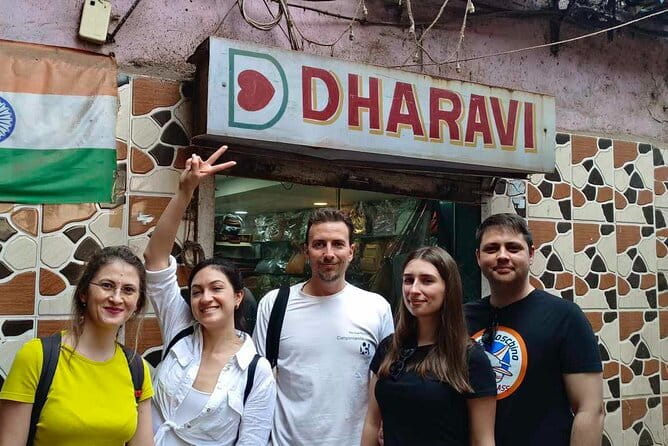
Reviewed · MUMBAI DHARAVI SLUM TOURS
Mumbai: Dhobi Ghat Laundry & Dharavi Slum Tour with a Local
Mumbai’s Dhobi Ghat is a remarkable working laundry, not a staged attraction. Rows of concrete washing pens, drying areas, ironing work, and delivery routines give you a close look at one of the city’s most unusual industries. From there, a local guide leads you into Dharavi, where recycling, leather, clothing, and textile businesses operate beside family homes.
I like the tour’s local point of view, especially guides such as Zeeshan and Faizan, who grew up in Dharavi and explain the neighborhood with personal detail. I also like the small group limit of 15 people and the low price of $9.49, which makes three hours of guided sightseeing a strong value. The main consideration is that this is a walking tour through crowded working areas, so comfortable shoes, patience, and respect for residents matter.
Key points to know before booking
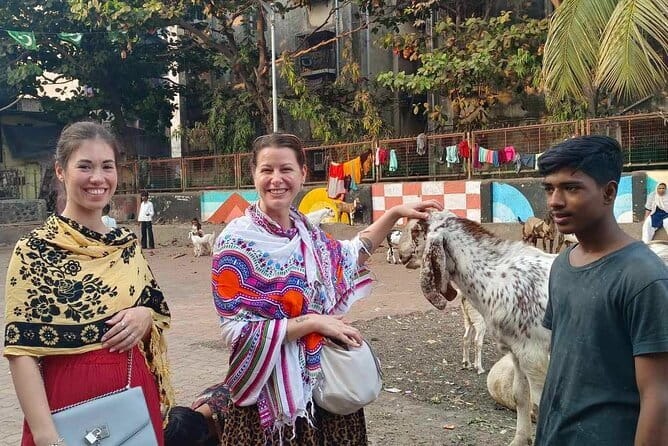
- Dhobi Ghat is a working laundry: Learn how clothes are washed, dried, ironed, sorted, and delivered.
- Dharavi is shown through local eyes: Guides from the area explain work, family life, and daily routines beyond movie stereotypes.
- Small industries are central to the visit: Expect to see plastic recycling, leather work, garment production, and textile businesses.
- The guide can shape the experience: Zeeshan, Faizan, Bharti, Rakesh, and Alkama are named guides praised for clear explanations and personal insight.
- The tour lasts about three hours: Dhobi Ghat takes roughly one hour, while Dharavi takes about two hours.
- The price is unusually low: At $9.49 per person, the tour includes the guide, transport fees, entry fees, and a water bottle.
Why this tour shows a different Mumbai
Mumbai is easy to experience from the outside: grand railway stations, colonial buildings, seaside roads, and famous food. This tour takes you into places where work happens in plain sight. You see laundry handled at a huge scale, then enter a neighborhood where homes and businesses share the same tight urban space.
The point is not to treat Dharavi as a curiosity. A good visit should help you understand how people earn money, organize family life, and build businesses in a place often reduced to one word: slum. This tour makes that effort directly. Its description emphasizes that Dharavi is more than the image created by Slumdog Millionaire, and the route includes working areas connected with recycling, leather, garments, and textiles.
I would choose this experience if you want context, not just photographs. It gives you a better sense of how Mumbai works for people who live and work in the city every day.
Still, you should know what you are signing up for. You will walk through active residential and industrial areas. The experience may feel intense, especially if you have never visited a neighborhood with such a close mix of work, home, traffic, and public life. Keep your camera put away unless your guide makes it clear that photography is suitable, and follow local instructions.
More Dhobi Ghat tours in Mumbai
- Mumbai: Dhobi Ghat Laundry and Dharavi Slum Tour with Local
★ 5.0 · 469 reviews - Mumbai: Dharavi Slum and Dhobi Ghat Laundry Tour
★ 5.0 · 317 reviews - Private Combo Tours Sightseeing + Dharavi Slum + Dhobi Ghat & Dabbawalas
★ 5.0 · 245 reviews
Dhobi Ghat: Mumbai’s outdoor laundry system
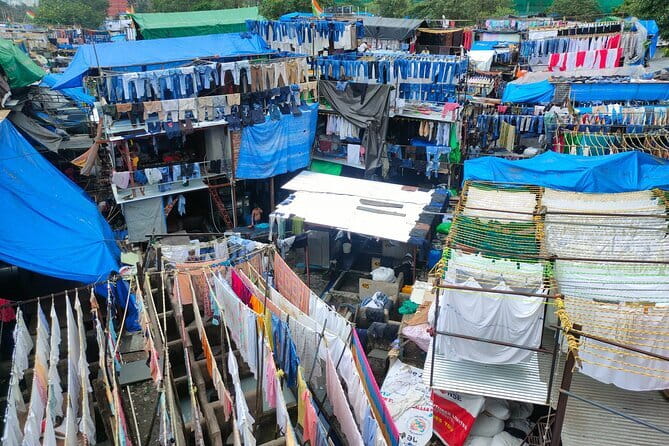
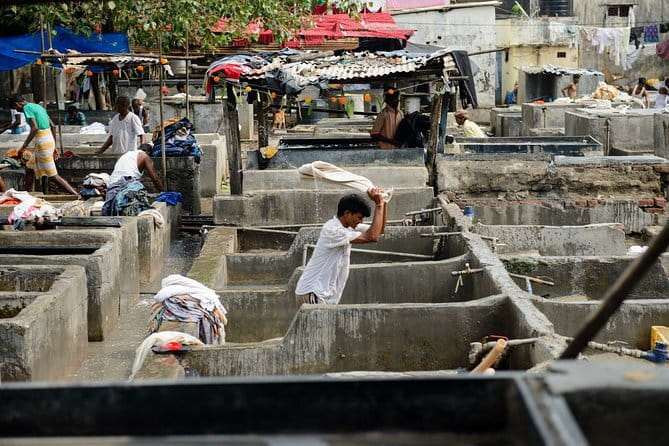
The first stop takes about one hour at Dhobi Ghat, described as the world’s largest outdoor laundry. This is not simply a place where clothes are washed. You learn about the full chain of work: washing, drying, ironing, sorting, and delivery.
That process is what makes the stop worthwhile. From a viewing point or while walking with the guide, you can begin to see how a basic household task becomes a coordinated city service. The laundry workers handle clothing for customers across Mumbai, and each stage has its own rhythm and practical demands.
Your guide explains where the washing happens, how clothes are laid out to dry, how ironing is done, and how items reach customers. The details help turn an unusual sight into a working system you can understand.
Dhobi Ghat is also a useful opening to the tour. It introduces you to the idea that Mumbai’s most interesting places are often workplaces rather than monuments. You are not only looking at rows of laundry. You are seeing the people, routines, and delivery arrangements behind a service that many city residents depend on.
The stop lasts about an hour, so it should not feel like a rushed photo break. You have time to listen and ask questions. Admission is included, as are the stated travel fees, so you do not need to budget for a separate entrance charge.
Dharavi through work, homes, and local business
The second stop takes about two hours and is the heart of the experience. Dharavi is home to almost one million people, according to the tour information, and the visit focuses on how people live and make a living there.
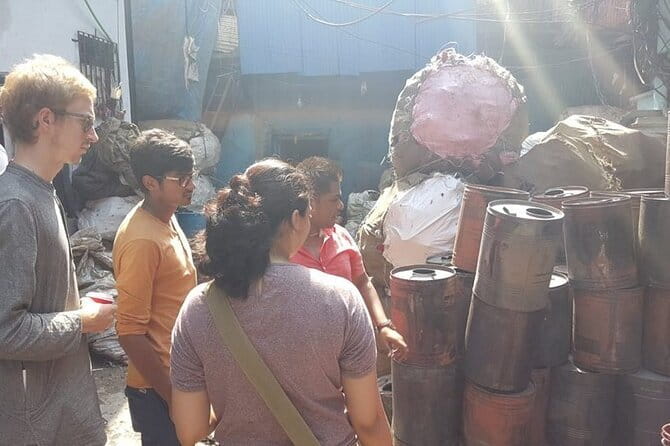
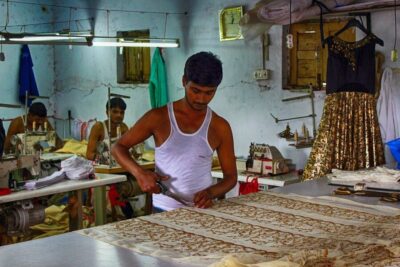
You can expect the guide to point out the relationship between housing and business. Families live in the area, children play there, and small enterprises operate nearby. The route includes industries such as plastic recycling, leather, garment production, and textiles. These are not abstract examples. They are the kinds of businesses that give the neighborhood its economic purpose.
This is where a local guide matters most. Zeeshan and Faizan are both identified as guides who grew up in Dharavi, while Bharti, Rakesh, and Alkama are also named in the tour feedback. Their role is not only to lead you through narrow routes. They explain what you are seeing and offer a personal connection to the place.
Faizan is described as easy to understand in English and especially strong at explaining recycling and working conditions. Zeeshan is praised for explaining local history and context with warmth and detail. Bharti is noted for knowing the area thoroughly. Rakesh is described as enthusiastic and engaging, while Alkama is credited with facts and amusing anecdotes.
Guide assignments can change, so you should not book expecting a particular person. Still, these details show the kind of leadership the tour aims to provide: personal, clear, and tied to the community.
Moving beyond the movie version of Dharavi
Dharavi became internationally famous because of Slumdog Millionaire. The movie may be part of your reason for coming, but it should not be the main way you understand the neighborhood.
This tour uses the film as a reference point, including locations connected with it, then pushes past that narrow image. You learn about work, recycling, local businesses, families, and ordinary routines. That is a more useful approach than treating Dharavi as a movie set.
I appreciate this part of the tour because it asks you to examine your own assumptions. The word slum often suggests only poverty and hardship. Dharavi certainly presents difficult living and working conditions, but it also contains skill, enterprise, community ties, and economic activity. Seeing both sides makes the visit more honest.
Your guide is also there to help you move through the area safely and respectfully. One family review specifically praised Zeeshan for helping a nine-year-old feel comfortable while guiding everyone through busy roads and public spaces. That makes the tour a possible choice for families with older children, provided parents prepare them to behave respectfully and listen carefully.
More Dharavi walking tours in Mumbai
- Dharavi slum tour in Mumbai by Female tour guides of the slum
★ 5.0 · 1,976 reviews - Mumbai: Dharavi Slum, DhobiGhat, and Dabbawallas Tour
★ 4.9 · 689 reviews - Dharavi Slum Tour
★ 5.0 · 625 reviews - Dharavi Slum tour in Mumbai by local resident
★ 5.0 · 572 reviews
The local transport and meeting arrangement
The tour begins at Third Wave Coffee, at Tip Road, Unit 58, Ground, Ram Mahal, Senapati Bapat Marg, Marinagar Colony, Station, Mahim, Mumbai, Maharashtra 400016. Starting at a coffee shop gives you a clear public meeting point and a place with air conditioning while you wait.
From the meeting point, the route includes travel connected with the tour. The overview also refers to a local train ride as part of the Mumbai experience, while one account describes crossing the train tracks on the way toward Dharavi. Since the precise train timing and route are not provided, treat this as a possible part of the movement between stops rather than a separate sightseeing segment with a fixed schedule.
The tour ends at Mahalakshmi, on K K Road, Mumbai 400018. This is useful if you plan to continue sightseeing in that part of the city. The guide can also help you book an Uber or local transport back to your hotel or another destination.
The transport fees are included. Food is not included, so eat before the tour or plan your next meal afterward. A water bottle is included, but Mumbai’s heat and the walking involved make it sensible to carry extra water if you need it.
How the three hours feel on the ground

The schedule divides the experience into about one hour at Dhobi Ghat and two hours in Dharavi. That balance makes sense. Dhobi Ghat gives you a focused look at one industry, while Dharavi needs more time because the route covers work, homes, businesses, and the social setting around them.
The total duration is long enough to feel substantial without taking up a full day. If you have only a short stay in Mumbai, you can fit it around other sightseeing. The tour is also listed with a maximum of 15 people, which is a reasonable size for walking through busy areas and asking questions.
You should wear comfortable walking shoes. The route is not designed for polished sightseeing paths. You may be moving through active streets, work areas, and crowded public spaces, so easy footwear and a willingness to keep pace will improve the experience.
The meeting and end points are near public transportation, which helps if you prefer to make your own way. You receive confirmation when booking, and the activity offers mobile ticketing. These details are simple but useful in Mumbai, where having the meeting address ready on your phone can save time.
What the $9.49 price includes
At $9.49 per person, this is one of the lower-cost guided experiences in Mumbai. The price includes an English-speaking local guide, travel fees, entrance fees, and a water bottle. Food is the only clear exclusion listed.
The real value comes from access and explanation. You could pass the edge of Dhobi Ghat or travel near Dharavi without understanding what takes place inside. The guide gives structure to what you see and helps explain work that would otherwise remain hard to interpret.
A low price does not mean the tour is lightweight. You are getting three hours, two major stops, and a local guide. The small group limit also helps. A group of 15 is still large enough to have energy, but more manageable than a bus group when you are walking through narrow or busy areas.
The tradeoff is comfort. This is not a private, polished tour with long breaks and hotel pickup. You meet at the stated coffee shop, use local transport, walk through working neighborhoods, and arrange your own food. For me, that is a fair exchange for the price and the direct local focus.
Who will enjoy this experience most
I would recommend the tour to you if you want to see Mumbai’s working side and are open to a serious conversation about poverty, enterprise, and community. It suits first-time visitors who want more context than standard landmarks provide.
It can also work well for families with older children and teenagers. A guide such as Zeeshan can explain difficult subjects in an approachable way, but parents should set expectations before the walk. This is a real neighborhood, not a theme park, and respectful behavior is essential.
The tour may not suit you if you want a relaxed, photo-first outing. You should also think twice if you dislike walking through crowded areas or feel uncomfortable visiting residential communities. The point is to learn, and that requires attention and sensitivity.
Practical ways to make the visit better
Arrive at the Third Wave Coffee meeting point with your phone charged and the address saved. A mobile ticket is accepted, but you still need to be at the correct location at the start time.
Wear comfortable shoes and clothing suitable for walking. Keep valuables secure, listen to the guide, and avoid photographing people, homes, or workplaces without permission.
Ask questions about the work you see. The tour covers recycling, leather, garments, and textiles, so you can learn more by asking how each business fits into the neighborhood. Guides with local ties, including Zeeshan and Faizan, are especially well placed to explain personal and economic connections.
Finally, leave room in your schedule after the tour. The official end point is Mahalakshmi, and the guide can help you arrange an Uber or local transport. That makes it easier to continue your day without rushing away from the group.
Should you book this Mumbai tour?
Book it if you want a low-cost, local-led look at two working parts of Mumbai that are often misunderstood. Dhobi Ghat gives you a clear lesson in city-scale laundry, while Dharavi adds human context through recycling, leather, clothing, textiles, family life, and community work.
I would not book it simply to collect dramatic photographs or recreate a movie scene. The best reason to go is to listen, observe, and leave with a more accurate picture of Dharavi than the usual headlines provide.
The three-hour length, included transport fees, water bottle, small group size, and $9.49 price make the decision easy for most curious visitors. Just bring comfortable shoes, an open mind, and respect for the people whose homes and workplaces you are visiting.
FAQ
How long is the Dhobi Ghat and Dharavi tour?
The experience lasts approximately three hours. About one hour is allocated to Dhobi Ghat and about two hours to Dharavi.
What places does the tour visit?
The tour visits Dhobi Ghat and Dharavi. It also includes local travel as part of the experience and refers to a Mumbai train ride in the tour description.
Is an entrance fee included?
Yes. The stated entrance or admission fees are included in the tour price.
Is transportation included?
Yes. Traveling fees are included. The tour begins at Third Wave Coffee in Mahim and ends in Mahalakshmi.
Where does the tour start?
The meeting point is Third Wave Coffee, Tip Road, Unit 58, Ground, Ram Mahal, Senapati Bapat Marg, Marinagar Colony, Station, Mahim, Mumbai, Maharashtra 400016, India.
Where does the tour end?
The tour ends at K K Road, Mahalakshmi, Mumbai, Maharashtra 400018, India. The guide can help you arrange an Uber or local transport afterward.
Is food included?
No. Food is not included in the tour price.
How many people can join the group?
The tour has a maximum group size of 15 people.
Can I cancel for a full refund?
Yes, if you cancel at least 24 hours before the experience start time. Cancellations or changes made within 24 hours are not eligible for a refund.
Recently added around Mumbai
- Private Walking Tour in Dharavi Slums★ 5.0 · 7 reviews
- Mumbai Sightseeing Tour★ 5.0 · 11 reviews
- Private Mumbai 2-Day Tour Package:City + Slum & Elephanta Island.★ 5.0 · 3 reviews
- Vegetarian Indian Cuisine Virtual Cooking Class Experience from Mumbai★ 5.0 · 4 reviews
- Mumbai by Night Guided Tour★ 5.0 · 6 reviews
- Transfer from Mumbai Airport to Hotel★ 4.0 · 7 reviews
- Full-Day Agra Tour with Taj Mahal From Mumbai By Air★ 5.0 · 8 reviews
- Taj Mahal Day Trip Including Same Day Flights from Mumbai★ 5.0 · 3 reviews
Mumbai Dharavi Slum Tours, compared.
Dharavi slum tour in Mumbai by Female tour guides of the slum
Read our review →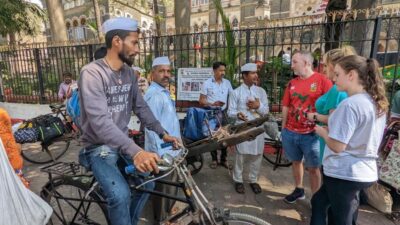
Dharavi Slum Slumdog Millionaire Tour with a Local
Read our review →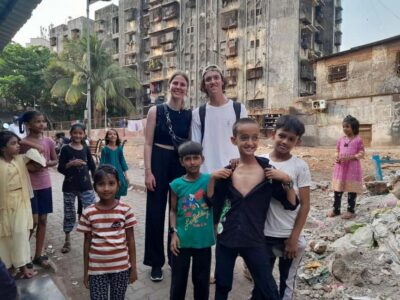
Mumbai Slum Tour – Visit Dharavi Slum with Local Guide
Read our review →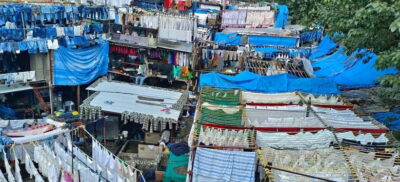
Dhobi Ghat Laundry and Dharavi Slum Tour with Local
Read our review →
Browse the lists this tour appears in