
Reviewed · MUMBAI DHARAVI SLUM TOURS
Mumbai Slum Tour – Visit Dharavi Slum with Local Guide
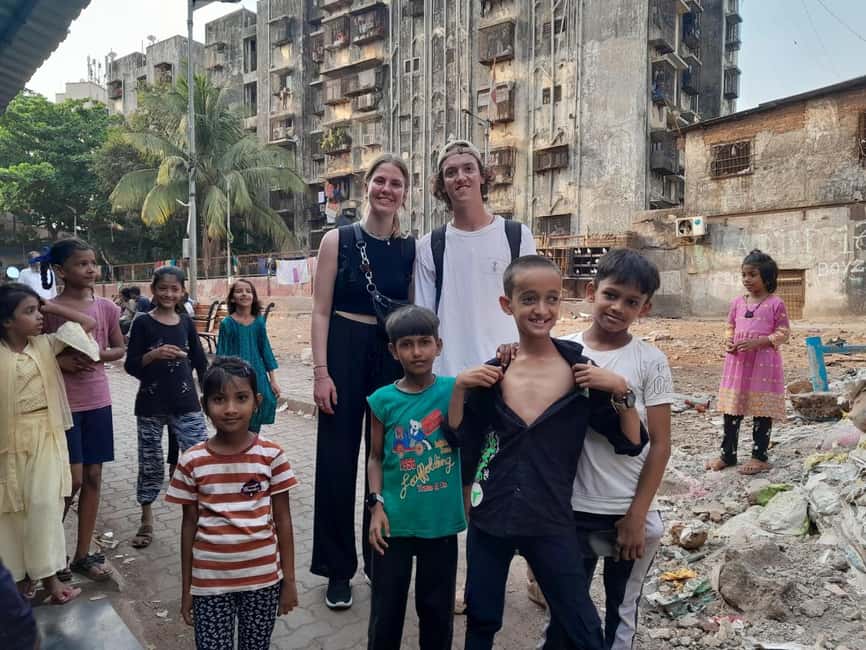
Dharavi is far more than the cramped picture many people carry in their heads. It is a working neighborhood where homes, schools, shops, workshops, and small factories fit into a tight maze of lanes. This tour puts you inside that daily life with guides who have grown up in the area, including Priscilla, Shivam, Balaji, Siddesh, and Sufiyan.
I like two things right away: the route covers both industry and home life, and the guides explain Dharavi through personal experience, not from a distance. You may see pottery, leather work, garments, recycling, markets, and schools in one walk. The main drawback is that this is a narrow-lane walking tour with limited restroom access, little shade, and no wheelchair access.
Key points at a glance
- Local guides with family ties to Dharavi: Guides such as Balaji and Sufiyan have lived in the community for generations.
- A working neighborhood, not just a sightseeing stop: The route shows recycling, leather, garments, pottery, markets, homes, and schools.
- A useful 2 to 3.5-hour introduction: You get enough time to see several parts of Dharavi without giving up your whole day in Mumbai.
- Strong English communication: Guests repeatedly praise Priscilla, Shivam, Siddesh, Balaji, and Sufiyan for clear explanations and patient answers.
- Private or small-group choices: A smaller group can make questions easier and help the walk feel more personal.
- Excellent value at $5: The price is unusually low for a guided Mumbai experience, though snacks are not included.
Seeing Dharavi as a place where people work
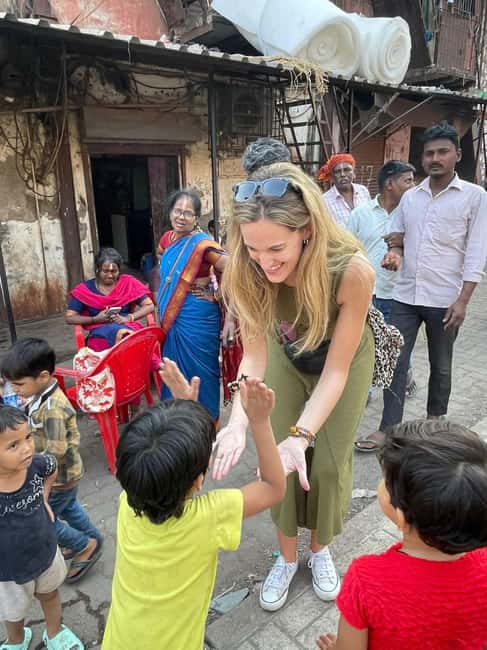
The word slum can flatten a complicated neighborhood into a single image of poverty. This walk gives you a fuller view. Dharavi has serious housing and infrastructure challenges, but it is also a place where people earn money, run workshops, send children to school, trade goods, and maintain strong community ties.
The tour presents Dharavi as one of Mumbai’s major centers of small-scale enterprise. The local economy is described as generating more than $1 billion each year. You will not see every business in one visit, but the route gives you a clear sense of how many different kinds of work happen within a compact area.
I value that balance. A good visit should not turn hardship into entertainment, and it should not pretend that difficult conditions do not exist. The best part of this experience is the way it shows residents as workers, business owners, parents, students, and neighbors, rather than as background scenery.
Your guide helps set that tone. Because the guides live in Dharavi or have close family connections there, they can explain what you are seeing in everyday terms. Siddesh, for example, is praised for explaining work, income, housing, and education clearly. Balaji is known for sharing the area’s origins and present-day life, while Shivam is often singled out for his clear English and easy conversation.
More Dharavi walking tours in Mumbai
- Dharavi slum tour in Mumbai by Female tour guides of the slum
★ 5.0 · 1,976 reviews - Mumbai: Dharavi Slum, DhobiGhat, and Dabbawallas Tour
★ 4.9 · 689 reviews - Dharavi Slum Tour
★ 5.0 · 625 reviews
Walking the narrow lanes and residential areas
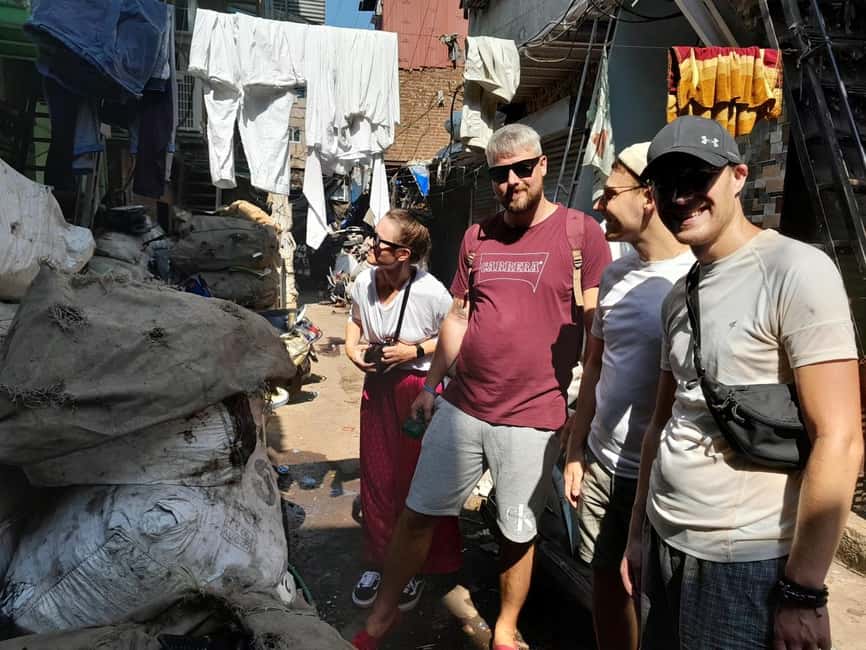
The walk usually takes you through lanes too tight for normal city traffic. This is where you see the smallest homes, doorways, market activity, and the close arrangement of domestic and working life.
You should expect an active route rather than a polished attraction. People may be going to work, carrying goods, shopping, or moving through the neighborhood. The guide’s job is important here. A local person can help you understand where to pause, how to behave, and which details matter without making you feel lost.
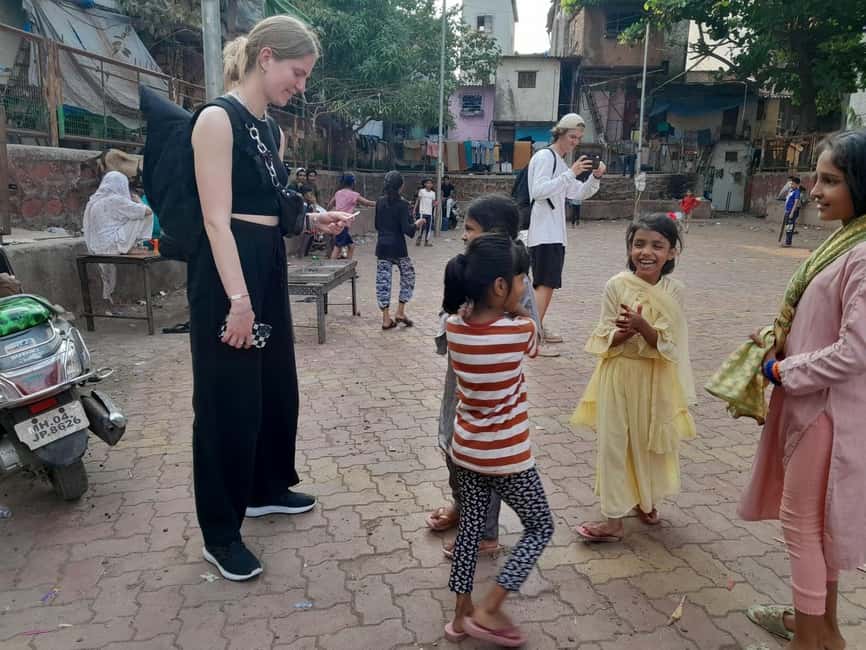
The residential section may be the most personal part of the visit. You gain a sense of how families live in a densely packed setting and how different communities share the same neighborhood. Dharavi includes people with roots across India, and several languages are spoken there.
That variety is one of the tour’s useful lessons. Dharavi is not a single community with one culture or one story. It is made up of people from different parts of India who live and work close together. The experience highlights cooperation and community pride, while still leaving room for honest discussion about space, income, and daily pressures.
Please remember that this is someone’s home. Do not photograph people without permission, and avoid treating private domestic areas like a display. Professional cameras and flash photography are not allowed, which helps keep the visit less intrusive.
Recycling, leather, garments, and pottery
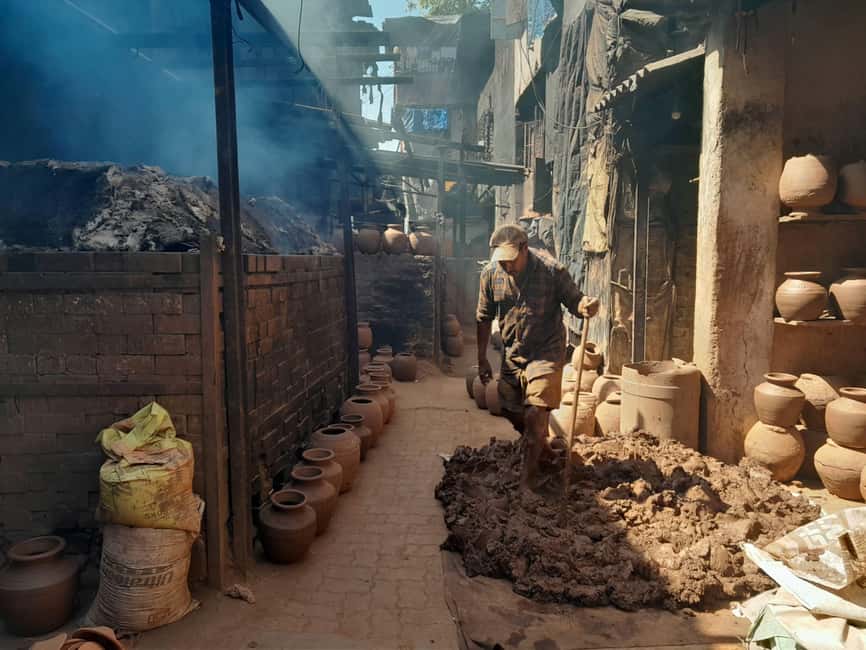
The industrial portion is the tour’s clearest answer to the question of how Dharavi functions. You may visit or pass working areas connected with recycling, leather, garment production, and pottery.
Recycling is especially useful to see because it shows how a large amount of material is sorted and processed by small businesses. The point is not simply to watch a work process. It is to understand how employment, trade, and household income fit together inside the neighborhood.
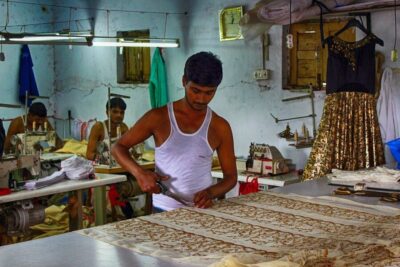
Leather and garment work show another side of Dharavi’s production. These are not large, glossy factories. They are smaller operations woven into the surrounding streets and buildings. That arrangement can seem surprising if you are used to separating residential districts from industrial zones.
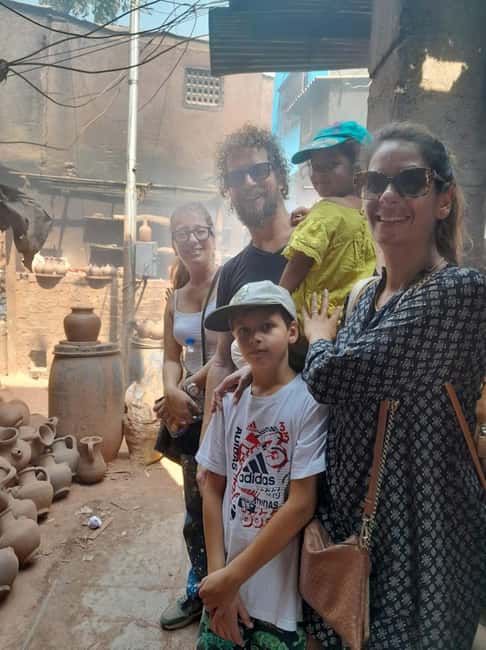
The pottery area adds a different texture to the walk. You may see traditional craft work continuing alongside modern recycling and clothing businesses. The mix helps explain why Dharavi feels less like a single-purpose district and more like a complete town compressed into a small urban space.
Your guide can explain what each business does and how it connects with the wider city. Ask questions as you go. Guides such as Siddesh, Shivam, and Balaji are praised for giving clear answers rather than rushing through a memorized speech.
Markets, schools, and ordinary routines
The market section brings you back to everyday needs. It shows how residents buy food and household goods close to home, and how commerce works at street level.
You will also see schools or educational areas along the route. This matters because it keeps the story from focusing only on work and poverty. Education is part of how families plan for the future, and it gives you another way to understand the neighborhood’s goals.
The tour can be eye opening because the street may hold several kinds of activity at once. A home can sit beside a workshop. A market can be close to a school. Workers, children, shoppers, and visitors share the same limited space.
That density can be tiring. You may need to walk carefully, stay close to your guide, and keep your belongings secure. The route is not designed for a slow, open stroll. Comfortable shoes are essential, and a sun hat, sunscreen, water, and weather-appropriate clothing will make the experience easier.
A few more Mumbai tours and experiences worth comparing
- Group Guided Walking Tour in Fort and Colaba
★ 5.0 · 1,073 reviews - Mumbai: Elephanta Caves Half-Day Guided Tour with Expert
★ 4.8 · 1,032 reviews - Private Guided Walking Tour in Fort & Colaba
★ 5.0 · 895 reviews - Highlights of South Mumbai Guided Private Tour in AC Vehicle
★ 5.0 · 620 reviews
Why a local guide changes the experience
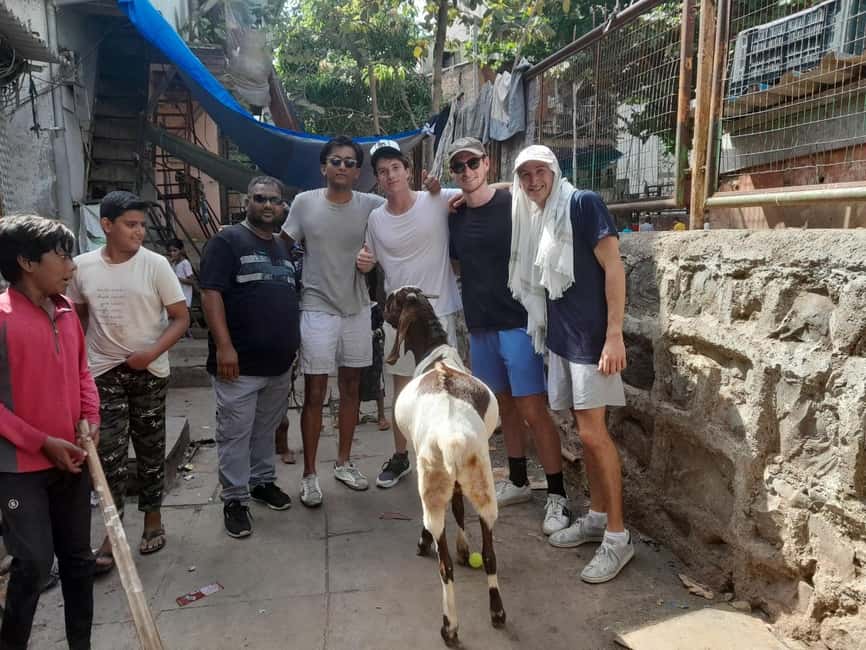
A map can show you where Dharavi is. It cannot explain how the neighborhood works. A local guide adds the missing context.
The strongest guides on this experience are praised for their English, patience, warmth, and ability to answer direct questions. Priscilla is described as friendly and clear. Shivam is often praised for his humor and explanations. Siddesh is valued for his detailed answers, while Sufiyan is noted for looking after visitors carefully and explaining the area through his own experience.
This matters because you may have sensitive questions. You might want to ask about housing, redevelopment plans, income, education, business, or how different communities live together. A good guide can discuss these subjects in a calm, human way.
The local connection also helps correct lazy assumptions. Dharavi is not simply a place where people lack options. It is a place where people have built livelihoods under difficult conditions. At the same time, the tour does not require you to ignore the hardships. You can see pride and pressure side by side.
The guides themselves say they enjoy meeting people from other cultures and sharing their own. That exchange is one reason this works better than looking at the area from a vehicle or from a distant viewpoint.
The $5 price and what you get
At $5 per person, this is one of the least expensive guided experiences you can book in Mumbai. The fee includes a local English-speaking guide and bottled water. Snacks are not included.
The value is especially strong if you want context rather than a quick photo stop. For the price of a modest snack or short taxi ride, you get roughly two hours of guided walking inside one of Mumbai’s most discussed neighborhoods. Some options extend the total activity to around 3.5 hours, depending on pickup and the package selected.
Do not judge the price as a sign that the experience is basic. The main cost advantage comes from the local model and the simple format. You are paying for a walk and a guide, not an elaborate attraction with displays, transport throughout, or meal service.
The low price also means you should arrive with realistic expectations. This is not a comfortable sightseeing bus, and there is no promise of air conditioning, frequent seating, or food along the way. It is a direct neighborhood walk, which is precisely why many people find it worthwhile.
Pickup, timing, and the end of the walk
The meeting point depends on the option you book. Pickup is optional, and if you select it, you wait at your hotel’s main entrance or lobby. The driver normally calls or sends a WhatsApp message on arrival, often around ten minutes before pickup, and may check with hotel staff using your booking name.
The guided portion takes place in Dharavi and lasts about two hours. Drop-off options include Matunga Road Railway Station, the Matunga Central Railway Workshop area, and Hanuman Nagar in Mumbai. Check your chosen option carefully because pickup and drop-off details can differ.
This timing makes the tour easy to fit into a Mumbai day. You can give it a morning or afternoon slot and still leave room for other sights. Starting times depend on availability, so check the schedule before you commit to a plan with tight connections.
Restroom facilities may be limited along the route. Use a restroom before you begin, especially if you choose hotel pickup and expect a longer total outing.
How to behave respectfully in Dharavi
A respectful approach makes a real difference. Dress for a residential community rather than a beach. Short skirts and sleeveless shirts are not allowed, so wear clothing that covers you comfortably.
Keep valuables secure in crowded areas. Use a small bag that closes well, and avoid displaying expensive items. Your guide will help you move safely, but normal city awareness still matters.
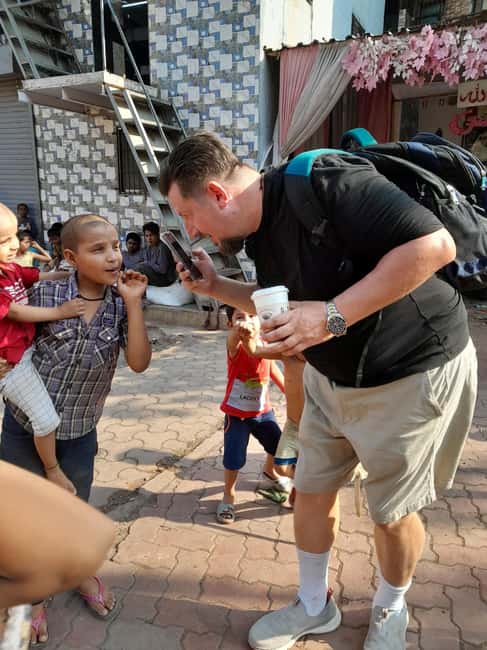
Photography requires restraint. Professional cameras and flash photography are not allowed. Even with a phone, ask before photographing people, homes, children, or active workplaces. You are walking through a lived-in neighborhood, not a film set.
I also suggest asking questions without assuming the answer. Instead of treating Dharavi as a symbol, ask how a business operates, how schools serve the area, or what redevelopment could mean for residents. The guides are there to explain, and the conversation is usually more valuable when it begins with curiosity rather than judgment.
Who will enjoy this tour most
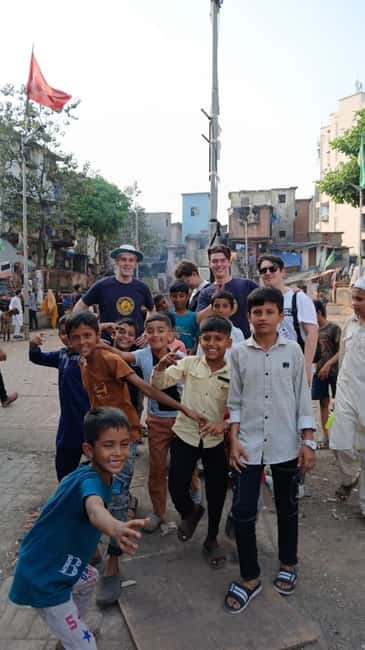
I recommend this experience if you want to understand Mumbai beyond monuments, shopping streets, and restaurants. It suits visitors who are comfortable walking in tight spaces and who want a local explanation of work, housing, and community life.
It is also a good choice if you have only one day in Mumbai. The tour covers several sides of Dharavi in a short period, and the $5 price leaves room in your budget for other activities.
Private and small-group options are available. A private walk may suit you if you want to ask many questions or discuss sensitive subjects at your own pace. A small group can provide a social setting while still allowing direct contact with the guide.
I would think twice if you need step-free access, have serious difficulty walking, or require regular restroom stops. The experience is not suitable for wheelchair users or people with visual impairments. It may also be uncomfortable if you dislike crowded lanes, heat, or the possibility of confronting difficult social realities.
Should you book the Dharavi walk?
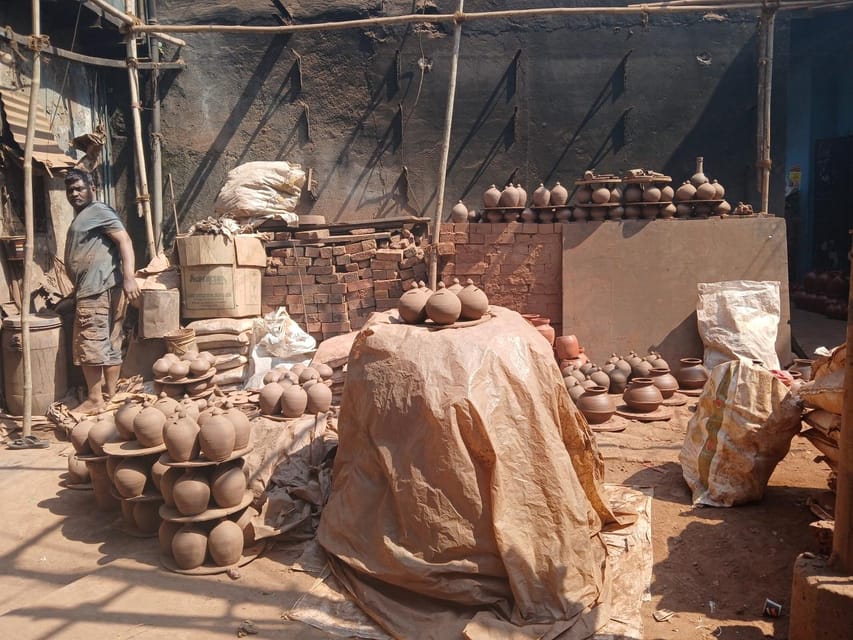
Book it if you want a direct, local-led look at how people live and work in Dharavi. The tour’s best features are its range, its low price, and the guides’ personal connection to the neighborhood. You can see recycling, leather, garments, pottery, markets, schools, and homes in one compact route.
Go with an open mind and respectful habits. This is not poverty tourism when handled properly, but it does require you to remember that you are entering people’s homes and workplaces. If you want a polished attraction, skip it. If you want a more honest look at Mumbai’s people, enterprise, and daily routines, this is a strong choice at $5.
Free cancellation is available up to 24 hours before the start time, and you can reserve now and pay later. Those flexible terms are useful if your Mumbai schedule is still shifting.
FAQ
How long does the Dharavi tour last?
The activity lasts between 2 and 3.5 hours, depending on the option selected. The guided walk in Dharavi itself is listed as about two hours.
How much does the tour cost?
The listed price is $5 per person.
What is included in the price?
A live English-speaking tour guide and bottled water are included.
Are snacks included?
No. Snacks are not included, so plan to eat before or after the walk.
Is hotel pickup available?
Pickup is optional with selected options. If you book pickup, wait at the main hotel entrance or lobby. The driver normally calls or sends a WhatsApp message when arriving.
Where can the tour finish?
Drop-off locations include Matunga Road Railway Station, the Matunga Central Railway Workshop area, and Hanuman Nagar in Mumbai. The exact arrangement depends on the option selected.
What should I bring?
Wear comfortable shoes and weather-appropriate clothing. Bring a sun hat, sunscreen, and water. Bottled water is also included.
Can I cancel the booking?
Yes. You can cancel up to 24 hours in advance for a full refund. You can also reserve now and pay later.
Recently added around Mumbai
- Private Walking Tour in Dharavi Slums★ 5.0 · 7 reviews
- Mumbai Sightseeing Tour★ 5.0 · 11 reviews
- Private Mumbai 2-Day Tour Package:City + Slum & Elephanta Island.★ 5.0 · 3 reviews
- Vegetarian Indian Cuisine Virtual Cooking Class Experience from Mumbai★ 5.0 · 4 reviews
- Mumbai by Night Guided Tour★ 5.0 · 6 reviews
- Transfer from Mumbai Airport to Hotel★ 4.0 · 7 reviews
- Full-Day Agra Tour with Taj Mahal From Mumbai By Air★ 5.0 · 8 reviews
- Taj Mahal Day Trip Including Same Day Flights from Mumbai★ 5.0 · 3 reviews
Mumbai Dharavi Slum Tours, compared.
Dharavi slum tour in Mumbai by Female tour guides of the slum
Read our review →
Dharavi Slum Slumdog Millionaire Tour with a Local
Read our review →
Dhobi Ghat Laundry and Dharavi Slum Tour with Local
Read our review →

Private Full-Day Mumbai Sightseeing Tour with Dharavi Slums
Read our review →Browse the lists this tour appears in