
Reviewed · MUMBAI DHARAVI SLUM TOURS
Mumbai Dharavi Slum Tour With Local English Guide
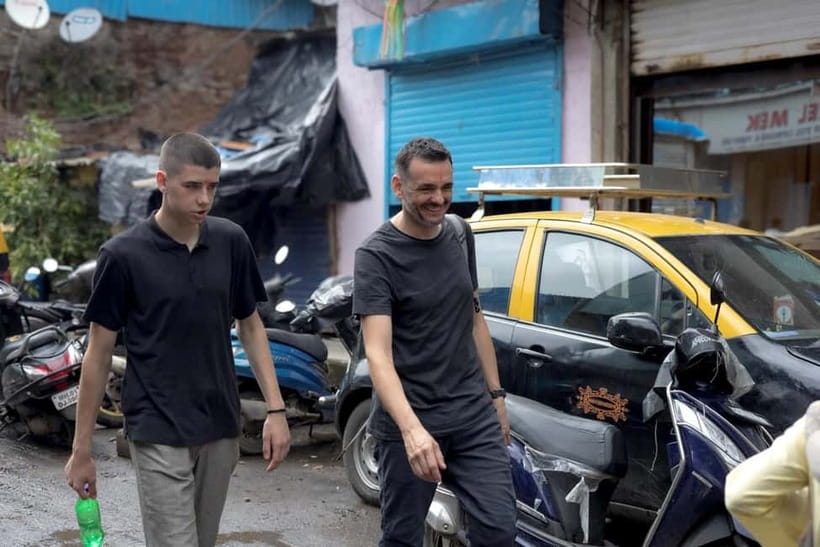
Dharavi is far more than a place seen from a car window. On this two-hour walking tour, you enter its working lanes with a local guide and see how workshops, family businesses, and small industries help support Mumbai. Guides such as Ruba, Ruqaiyya, Sharon, Jay, and Ansh explain daily life with warmth and plain-speaking detail.
I like the local perspective and the chance to see pottery wheels, leather workshops, bakeries, recycling units, and other businesses at close range. I also like the price: at $7, this is an unusually affordable way to put Mumbai’s economy and social life into context.
The main consideration is that Dharavi can be noisy, crowded, and emotionally intense. You are walking through a residential community, not an open-air museum, so respectful behavior matters. Some lanes can also make it hard to hear the guide.
Key points to know before booking
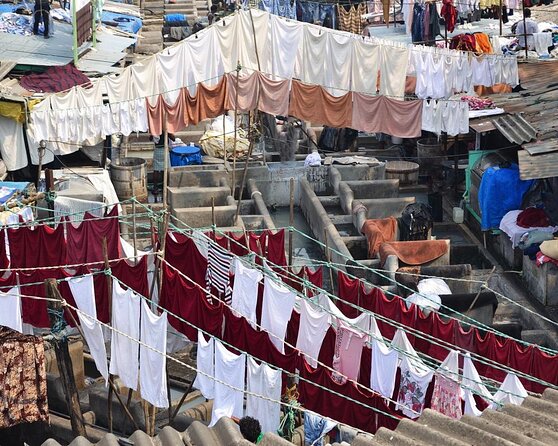
- Two hours on foot: The tour covers Dharavi’s lanes, workshops, and community areas rather than offering a quick drive-by view.
- Guides vary: Ruba, Ruqaiyya, Sharon, Jay, Ansh, Subhan, Chirag, Ravi, and Rohid have all led tours connected with this experience.
- A working community: Expect to learn about pottery, leather goods, recycling, bakeries, and family-run businesses.
- English commentary: The live tour is conducted in English, with time for questions and local stories.
- Simple meeting plan: Start and finish options include Third Wave Coffee and Ram Mahal, while the booking information also refers to a Mahim Station meetup. Confirm your exact point after booking.
- Good value, limited extras: The $7 price covers the guide and walking experience, but not food, drinks, or hotel transport.
Entering Dharavi with a local guide
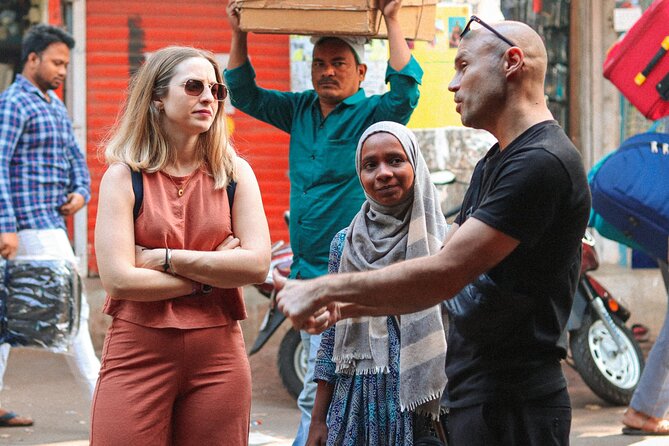
The most important feature here is not a particular landmark. It is the person walking beside you. Dharavi can be confusing to understand from statistics or a passing view, but a guide can explain how people live and work in the same compact area.
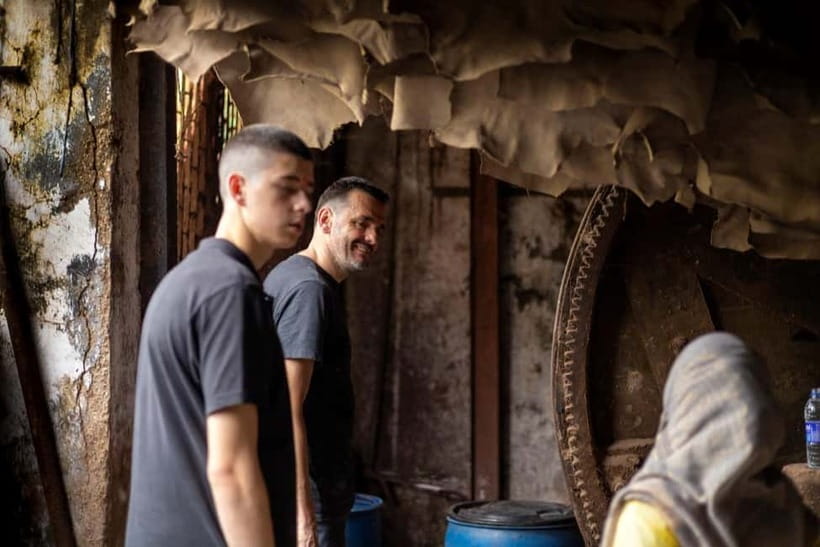
Your guide leads you through key parts of the community on foot. The route focuses on working areas, workshops, and local businesses, with explanations about the people who live there and where many families came from. That human context makes the walk more useful than simply looking at crowded lanes and taking photographs.
Guide assignments vary, but several names appear repeatedly in the experience details: Ruba, Ruqaiyya, Sharon, Jay, Ansh, Subhan, Chirag, Ravi, Rohid, and others. Ruqaiyya is described as having grown up in Dharavi and knowing the area for many years. Sharon has been praised for explaining the community with care and for handling sensitive subjects respectfully. Ruba receives particular praise for answering questions patiently and creating a comfortable atmosphere.
You should not book this expecting every tour to have the same guide. The individual guide can shape the tone of the visit, so ask about the assigned guide if that matters to you. The shared feature is an English-speaking local escort who can explain what you are seeing as you go.
More Dharavi walking tours in Mumbai
- Dharavi slum tour in Mumbai by Female tour guides of the slum
★ 5.0 · 1,976 reviews - Mumbai: Dharavi Slum, DhobiGhat, and Dabbawallas Tour
★ 4.9 · 689 reviews - Dharavi Slum Tour
★ 5.0 · 625 reviews
Seeing Dharavi as a place of work
One of the strongest parts of the walk is the focus on enterprise. Dharavi is not presented only as a place of hardship. You also see people making, repairing, processing, baking, and selling goods.
The route may include pottery workshops, where spinning wheels and hands-on craft show the skill behind everyday objects. Leather artisans produce goods described as world-class, while small bakeries and recycling units reveal industries that are easy to miss if you only think of Dharavi as housing.
Family businesses are another important part of the picture. A guide can show how homes and workplaces may exist close together, and how small-scale trade supports the wider city. The point is not to turn work into a spectacle. It is to help you understand the effort, organization, and practical skill behind an area often reduced to a single label.
Interactive workshops are included in the experience description. The exact format may vary, but you should expect opportunities to see craftspeople at work and ask questions. Keep in mind that the tour is only two hours, so it offers a sample rather than a full study of Dharavi’s industries.
The human side of the tour
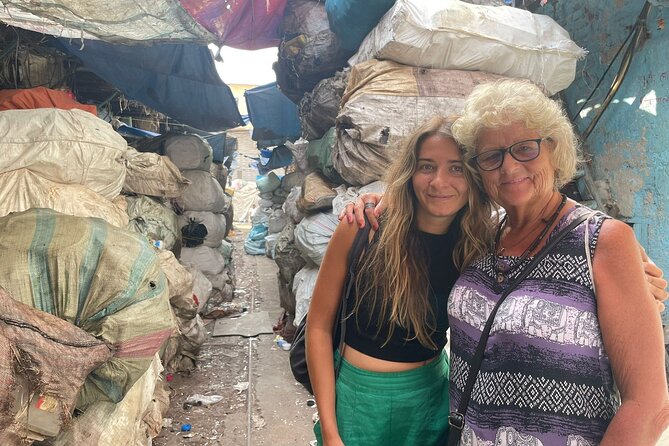
The best guides explain more than what a building is used for. They connect the physical setting with people’s daily routines, family backgrounds, and hopes. That is where this tour has its greatest value.
Ruqaiyya has been praised for discussing the makeup of the community and where residents come from. Other guides have been described as open to questions about living conditions, work, and the challenges of daily life. You get a more complete view when the conversation includes both difficulty and pride.
This balance matters. A slum tour can easily become uncomfortable if it treats residents as scenery. The experience works better when you listen, avoid intrusive photographs, and remember that people are going about their work and home life. Ask before taking pictures of individuals or workshops, even if your guide explains where photography is acceptable.
The tone also depends on your own attitude. Come ready to learn, not to collect dramatic images. The most useful questions are about work, housing, community life, and Mumbai’s growth. A guide can then provide context rather than simply pointing out what looks unusual to an outsider.
What the two-hour route may include
The exact order can change, but the tour is built around a walking circuit through Dharavi. Here is what each part offers.
A few more Mumbai tours and experiences worth comparing
- Group Guided Walking Tour in Fort and Colaba
★ 5.0 · 1,073 reviews - Mumbai: Elephanta Caves Half-Day Guided Tour with Expert
★ 4.8 · 1,032 reviews - Private Guided Walking Tour in Fort & Colaba
★ 5.0 · 895 reviews - Highlights of South Mumbai Guided Private Tour in AC Vehicle
★ 5.0 · 620 reviews
Meeting at Third Wave Coffee or Ram Mahal
The available start options include Third Wave Coffee and Ram Mahal. The information also refers to a Mahim Station meetup, so check your confirmed meeting instructions carefully rather than assuming the nearest location.
This is a meeting-based tour, not a hotel pickup service. You need to reach the starting point yourself, and you will return to one of the stated drop-off points at Ram Mahal or Third Wave Coffee. Since Mumbai traffic and station areas can be busy, allow time to find the guide.
Walking through working lanes
Once the tour begins, the focus shifts quickly to Dharavi itself. You walk through lanes where residential life and work happen close together. The setting is active and practical, with people moving through their day.
Your guide explains the industries along the way and helps you notice details you could easily pass without understanding. Without a guide, you might see a workshop or narrow lane but miss its role in the local economy. The commentary turns a visual walk into a lesson about how the area functions.
Wear comfortable clothing and shoes suitable for two hours of walking. Large bags and luggage are not allowed, so this is not a good activity to schedule while carrying airport baggage.
Workshops and artisans
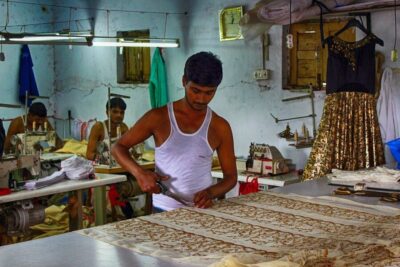
The craft stops add a direct, hands-on quality. Pottery, leather work, and other workshops show the concentration and skill behind local production. The inclusion of interactive sessions with artisans gives you a chance to ask questions instead of only listening to a prepared talk.
Do not expect a shopping-heavy craft tour. The main purpose is to understand the work and the people behind it. If a purchase opportunity exists, treat it as secondary and do not assume that every workshop sells directly to visitors.
Small businesses and recycling units
Bakeries, recycling units, and family businesses show another side of Dharavi. These are not decorative attractions. They are working places tied to income and city life.
This section can be especially useful if you are interested in urban economies. You see how many modest operations, taken together, help make the neighborhood productive. The guide’s explanation is crucial because the visual details alone may not tell you how goods move through the area or how different trades fit together.
A rooftop view
One of the more memorable reported stops is a rooftop view across Dharavi’s dense rooftops and toward Mumbai’s skyline. It gives you a moment to step back from the narrow lanes and see the area in relation to the larger city.
The view is not the main reason to book. It is a useful visual reminder that Dharavi sits inside one of India’s great cities, not apart from it. The contrast between the closely packed roofs and Mumbai’s wider skyline helps put the community’s location into perspective.
Why a guide matters here
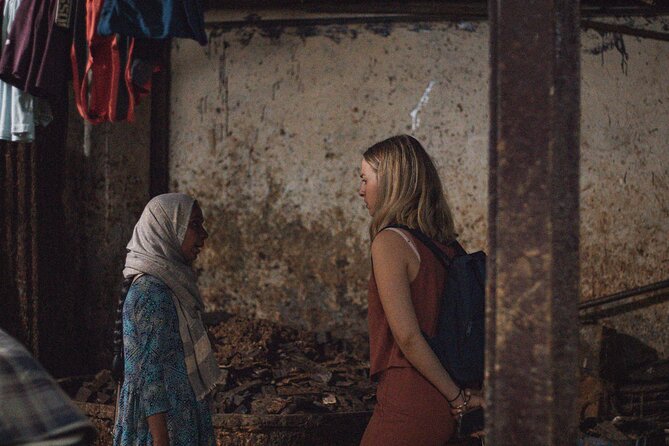
A guide is especially useful in Dharavi because the value lies in explanation. The route is not built around famous monuments with signs telling you what you are seeing. Much of the interest comes from conversations about industry, migration, housing, and daily routines.
Previous guide experiences connected with this tour include detailed explanations from Jay, friendly help from Subhan, strong English from Chirag, and local insight from Ravi and Rohid. Ansh has been described as particularly good at giving an authentic and thoughtful account of the area. These individual strengths suggest that a good guide can make the difference between a confusing walk and a meaningful one.
The guide may also help you feel more at ease. One account describes assistance with a train ticket and a safe return to the hotel area after the tour. Hotel transfer is not included, but practical local help can still be valuable, especially if you are new to Mumbai.
Do remember that English is the listed tour language. If you need another language, this experience may not suit you.
Price, group size, and practical value
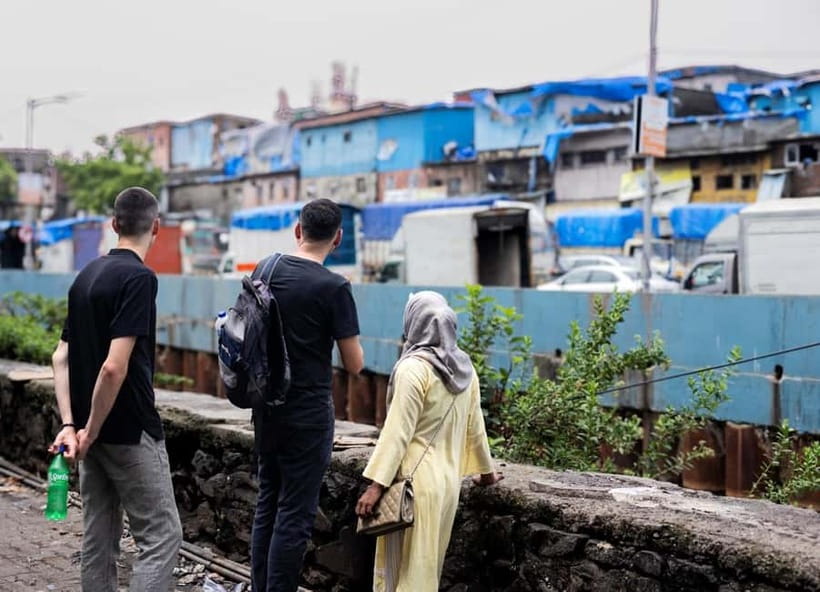
At $7 per person, this tour is inexpensive even by budget sightseeing standards. The fee covers a professional local guide, a two-hour walking experience, and access to the planned community and workshop route. It does not cover food, drinks, hotel pickup, or hotel drop-off.
The low price does not mean the tour is superficial. Two hours is enough to see several types of work and ask questions, though not enough to understand every part of Dharavi. I see it as an introduction that gives you a stronger basis for exploring Mumbai afterward.
A private group is available. That can be worthwhile if you want to ask many questions, prefer a quieter pace, or are concerned about sensitive conversations in a large group. Some scheduled group tours may end up being very small, even just two people, but you should not assume that will happen on your date.
The tour also offers reserve-now, pay-later booking and free cancellation up to 24 hours in advance. Those terms are useful if your Mumbai plans are still shifting, but confirm the exact conditions at the time of booking.
The main drawback: intensity and noise
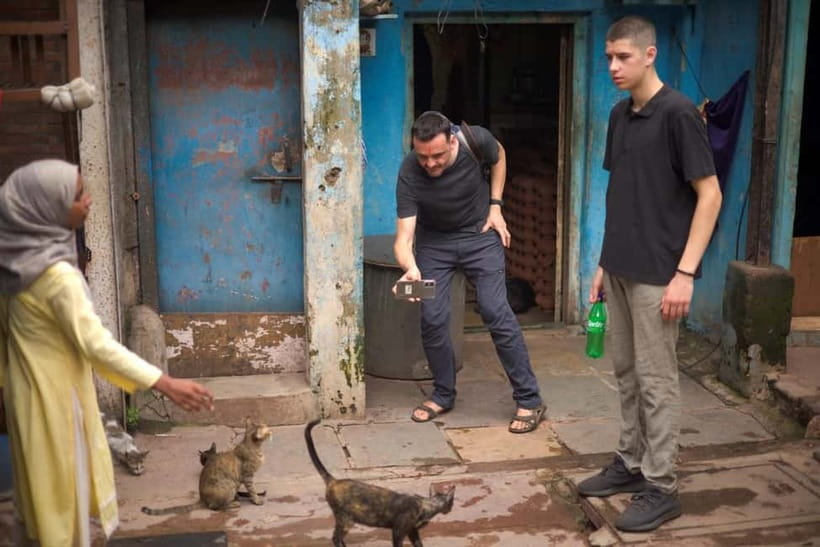
The biggest caution is not about comfort alone. Dharavi may challenge your assumptions about poverty, work, and urban life. You may see difficult living conditions alongside strong enterprise and community pride. That mixture can stay with you after the walk.
The lanes can also be noisy, and one account specifically notes that hearing the commentary is sometimes difficult. Stay close to the guide and speak up if you miss an explanation. Comfortable clothes are recommended, and you should leave large bags behind.
This is not the right choice if you want a polished sightseeing route, quiet streets, or a purely photographic outing. It is a better fit if you can listen carefully, accept some physical and emotional intensity, and treat the neighborhood with respect.
Who should book this experience?
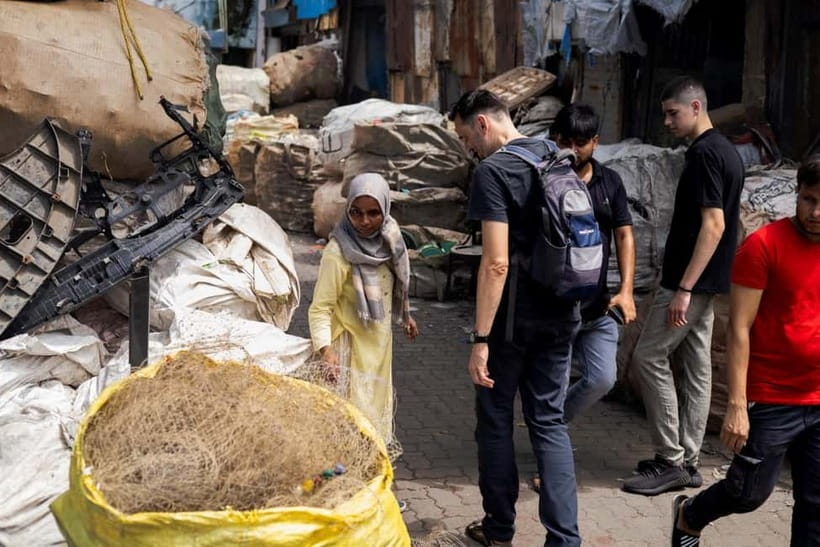
I would recommend it to first-time visitors who want a more grounded view of Mumbai. It suits people interested in local business, crafts, social issues, and the way a large city actually works beyond its grand buildings.
It is also a good match for solo visitors. A guide provides structure and local context, and the walk is easier to manage than trying to find your own way through unfamiliar lanes. Families with older children may find it useful too, provided everyone understands that this is a real residential and work community, not a themed attraction.
Photographers should be careful. The area offers striking scenes, but residents are not props. Ask before photographing people, and follow the guide’s advice about privacy and appropriate places to use a camera.
You may want to skip it if you dislike walking, cannot leave luggage behind, or want a tour centered on architecture and famous landmarks. There is no hotel pickup, and the short duration means you need to arrive ready to walk.
Should you book the Dharavi tour?
Book it if you want to understand Mumbai through its people and working economy, not just its postcard sights. The $7 cost is hard to argue with, and the local guides add the context that makes the route worthwhile.
Choose a private group if you want more time for questions. Confirm the meeting point, wear comfortable clothes, bring only a small bag, and approach the community with patience. If you do that, the tour can give you a thoughtful, human view of Mumbai in just two hours.
FAQ
How long does the Dharavi tour last?
The tour lasts two hours and is conducted on foot.
What language is the tour conducted in?
The live tour guide speaks English.
Where does the tour start?
Starting options include Third Wave Coffee and Ram Mahal. The activity information also refers to a Mahim Station meetup, so confirm the exact meeting point for your booking.
Where does the tour finish?
Drop-off options include Ram Mahal and Third Wave Coffee.
Is hotel pickup included?
No. Hotel pickup and drop-off are not included.
What should I bring?
Wear comfortable clothes and bring only what you need for the walking tour. Luggage and large bags are not allowed.
Recently added around Mumbai
- Private Walking Tour in Dharavi Slums★ 5.0 · 7 reviews
- Mumbai Sightseeing Tour★ 5.0 · 11 reviews
- Private Mumbai 2-Day Tour Package:City + Slum & Elephanta Island.★ 5.0 · 3 reviews
- Vegetarian Indian Cuisine Virtual Cooking Class Experience from Mumbai★ 5.0 · 4 reviews
- Mumbai by Night Guided Tour★ 5.0 · 6 reviews
- Transfer from Mumbai Airport to Hotel★ 4.0 · 7 reviews
- Full-Day Agra Tour with Taj Mahal From Mumbai By Air★ 5.0 · 8 reviews
- Taj Mahal Day Trip Including Same Day Flights from Mumbai★ 5.0 · 3 reviews
Mumbai Dharavi Slum Tours, compared.
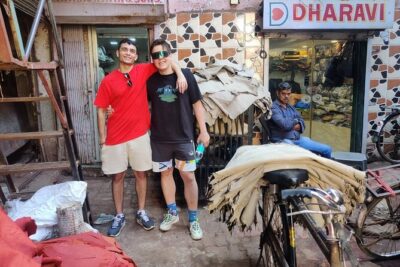
Dharavi slum tour in Mumbai by Female tour guides of the slum
Read our review →
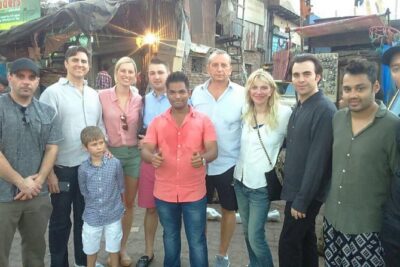
Dharavi Slum Slumdog Millionaire Tour with a Local
Read our review →
Mumbai Slum Tour – Visit Dharavi Slum with Local Guide
Read our review →
Dhobi Ghat Laundry and Dharavi Slum Tour with Local
Read our review →
Browse the lists this tour appears in