
Reviewed · MUMBAI
Traditional Indian Immersive Cultural Experience
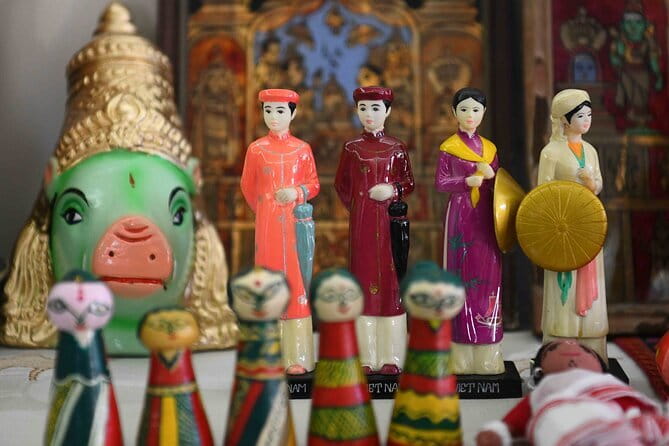
The most unusual thing about this Mumbai experience is its setting: a private apartment studio rather than a large public museum. Inside glass cabinets, you’ll see about 300 dolls, masks, and figurines from across India, including craft forms that are close to disappearing. The collection also reaches beyond India, with pieces from Japan, Iran, Nepal, Bhutan, Indonesia, and Ukraine.
I like the way the tour connects small objects to larger ideas. You learn how a figure relates to a region, belief, tribe, textile tradition, or local custom. I also like the second half, which shifts from folk craft to personal drawings about motherhood, isolation during the pandemic, the mind, and rural journeys. The main consideration is the age rule: because the displays are fragile, children under 10 cannot take part.
Key points to know before you book
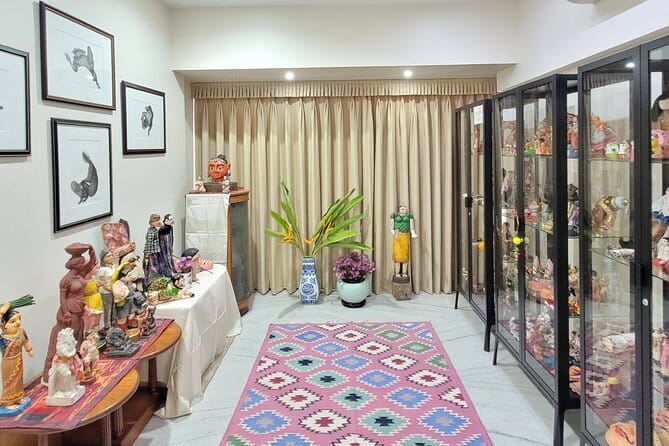
- About 300 objects in a private apartment studio: Expect dolls, masks, figurines, and craft forms displayed in glass cabinets.
- Stories matter as much as the objects: The guide discusses legends, customs, indigenous communities, textiles, and regional traditions.
- A two-part experience: The craft collection is followed by a walkthrough of drawings on personal and social themes.
- International pieces add comparison: Objects from Japan, Iran, Nepal, Bhutan, Indonesia, and Ukraine sit alongside the Indian collection.
- A private activity for your group: You do not join a large shared tour, and the experience ends where it begins.
- Plan for three hours and an adult audience: Entry is restricted below age 10 because of the fragile exhibits.
Why this small Mumbai studio feels different
Mumbai has major museums and famous historic buildings, but this experience takes a quieter route. You enter a residential apartment where the collection has been assembled and displayed with care. That change of scale matters. Instead of moving past hundreds of objects in a silent hall, you have time to hear the stories connected with them.
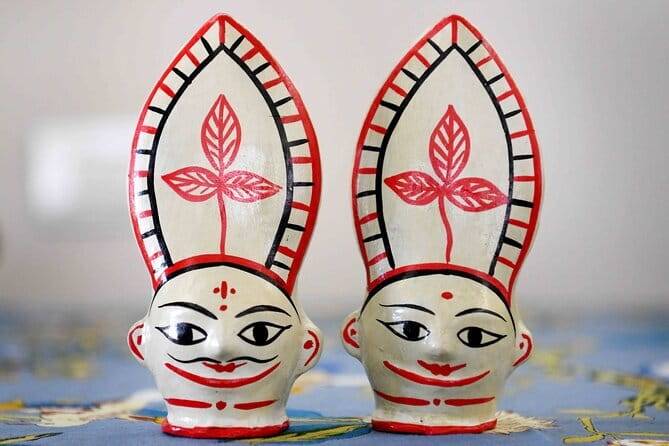
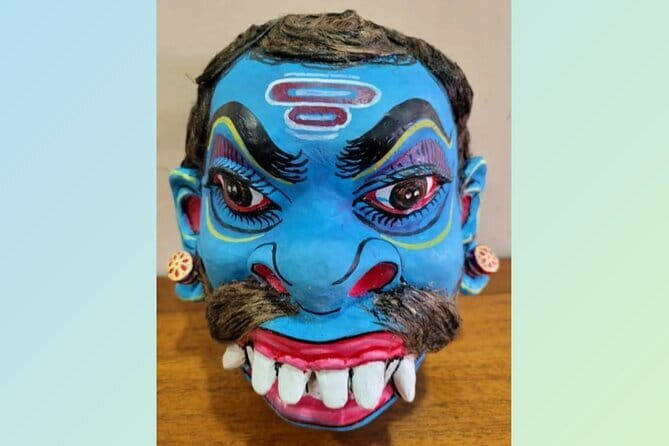
The collection focuses on dolls, masks, and figurines from many parts of India. Some represent local craft traditions, while others connect to religious ideas, village life, indigenous communities, or regional dress and textiles. The objects are small, but the subjects are not. A single figure can open a conversation about geography, social customs, belief, or a craft tradition under pressure.
The display includes around 300 pieces, so you should expect variety rather than one narrow artistic theme. The collection also includes objects from Japan, Iran, Nepal, Bhutan, Indonesia, and Ukraine. These international pieces give you a useful point of comparison. You can consider how different cultures use figures and masks to express identity, stories, ceremony, or everyday life.
The collection has received recognition from the office of Prime Minister Narendra Modi and has been covered by major Indian newspapers. That recognition does not replace your own judgment, but it helps explain why the studio has attracted attention beyond its private setting.
Other Mumbai experiences travellers pair with this one:
- Dharavi slum tour in Mumbai by Female tour guides of the slum
★ 5.0 · 1,976 reviews - Mumbai: Full-Day Sightseeing Tour of Mumbai
★ 4.9 · 1,822 reviews - Private Mumbai Sightseeing Tour (Traveller’s Choice Award Winner)
★ 5.0 · 1,565 reviews
The first hour or two: dolls, masks, and Indian craft traditions
The first part is a guided walk through the craft collection. You are not simply left to inspect the cases on your own. The guide explains where the pieces come from and why they matter, using stories and anecdotes to make the objects easier to understand.
The strongest feature here is context. A mask can be attractive on its own, but the explanation may tell you about its use in a ritual, a local legend, or a particular community. A doll may reveal regional clothing, family traditions, or an old method of making textiles. You gain more from the objects when you know what to look for.
The discussion covers history, geography, social customs, religion, and culture. It also touches on indigenous tribes and craft forms that are at risk of disappearing. That last point gives the collection weight. You are not only looking at decorative objects. You are also seeing traces of skills, materials, and local traditions that may be difficult to preserve.
The folk stories and legends help keep the presentation lively. The guide also brings in anecdotes from journeys through India. One of the most useful things about this format is that it lets you ask questions and follow your own interests. If textiles catch your eye, you can focus on dress and fabric traditions. If masks interest you, you can pay closer attention to their social or religious use.
Do not expect the atmosphere of a formal museum with lengthy written labels and a fixed route. This is a spoken presentation in a small studio. The quality of your experience depends partly on your interest in asking questions and listening closely. If you prefer to explore alone and quickly, three hours may feel long. If you enjoy stories behind objects, the slower pace is the point.
The international collection from Japan to Ukraine
The Indian pieces form the heart of the visit, but the international objects broaden the discussion. Dolls from Japan, Iran, Nepal, Bhutan, Indonesia, and Ukraine are also displayed. The information provided does not specify the number of pieces from each country or give a separate presentation for every national group, so you should view this as an added part of the collection rather than a full world-dolls museum.
Still, the range is useful. It places Indian craft traditions in a wider setting and gives you another way to think about figures, costumes, materials, and storytelling. You may find that the international objects prompt comparisons between how cultures represent people, ceremonies, or local identity.
This part is especially helpful if you are visiting Mumbai with someone who has different interests. One person may be drawn to Indian tribal art, while another may respond more to the Japanese or Ukrainian pieces. Since the activity is private, your group can spend more time on the sections that appeal to you.
The second half: drawings about motherhood, isolation, and travel
After the craft collection, the experience turns to a walkthrough of drawings. This is a marked change in mood and subject. The drawings explore motherhood, the force of the mind, isolation during the recent pandemic, and impressions from journeys through rural parts of India.
I like this shift because it prevents the visit from becoming a single-topic craft lesson. You first look at objects tied to community traditions and inherited stories. Then you move toward personal expression and contemporary concerns. The two sections are different, but both ask how people represent experience through images.
The pandemic drawings may feel particularly direct because they address isolation rather than treating art as something distant or ceremonial. The works inspired by rural journeys add another link to place and observation. Together, the drawings give you a better sense of the people behind the studio and their interest in Indian life beyond the large cities.
The description does not identify the artists by name or state how many drawings are shown. You should therefore think of this portion as a guided viewing rather than a full gallery exhibition with a published catalogue. Its value is in the conversation and the themes, not in the size of the display.
A completely different side of the city:
- Group Guided Walking Tour in Fort and Colaba
★ 5.0 · 1,073 reviews - Mumbai: Elephanta Caves Half-Day Guided Tour with Expert
★ 4.8 · 1,032 reviews - Highlights of Mumbai Sightseeing Tour: TRAVELLERS CHOICE AWARDED
★ 5.0 · 915 reviews - Private Guided Walking Tour in Fort & Colaba
★ 5.0 · 895 reviews
What the three-hour timing means
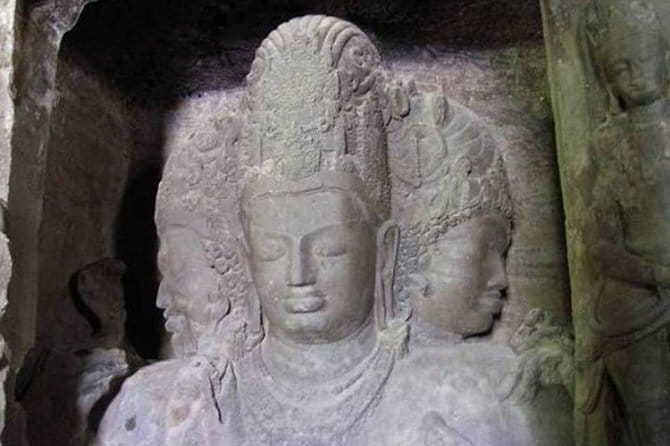
The activity lasts about three hours, which is a substantial block for a private collection. That length allows the guide to explain the objects instead of rushing you through the cases. It also gives the drawings their own place rather than treating them as a quick add-on.
At the same time, three hours can be demanding if your interest in art or cultural history is limited. You will spend the full visit indoors, looking closely and listening. This is not a quick stop to fit between several major Mumbai sights.
I would set aside the entire period and arrive ready for a focused cultural visit. The stated hours are 11:00 a.m. to 5:00 p.m., Monday through Sunday, for the published operating period. Your booking is confirmed within 48 hours, subject to availability, so leave some flexibility in your schedule until the time is confirmed.
Meeting in Worli and returning to the same point

The meeting point is at WeWork on the first floor of 264 to 265 Dr Annie Besant Road, Municipal Colony, Worli Shivaji Nagar, Worli, Mumbai. The listed location is near public transportation, which makes it easier to reach than a distant suburban attraction, though you should allow time to find the correct building and floor.
The studio is within a residential apartment. That is part of the character of the experience, but it also means you should not expect a large street-facing museum entrance. Keep the meeting details available on your phone and confirm the booking before setting out.
The activity ends back at the meeting point. This is convenient because you do not need to arrange a separate return transfer from another part of the city. It also makes the experience easier to combine with other plans in Worli or nearby areas, provided you leave enough time for Mumbai traffic.
Is $54 a fair price?
At $54, this is not priced like a quick museum admission. You are paying for a private, three-hour guided experience, access to a substantial personal collection, and a discussion that brings together art, folklore, customs, textiles, and history.
The value depends on how much you want explanation. If you only want to glance at Indian dolls and masks, a public museum may offer a cheaper visit. But a large museum often gives you less personal attention and less time for questions. Here, the spoken background is a major part of what you are buying.
The private format also matters for couples, families with older children, and small groups of friends. You do not share the activity with a large crowd. That can make it easier to ask about an object, return to a display, or spend longer on a subject that interests you.
The collection’s recognition by the Prime Minister’s Office adds credibility, but I would not use that alone to judge the price. The stronger reason to book is the combination of scale, access, and interpretation in a personal setting.
Who will enjoy this most

I would recommend this experience to you if you like art, folk traditions, dolls, textiles, local stories, or the social meaning of everyday objects. It is also a good choice if you want a quieter Mumbai activity that is not built around landmarks or food.
The two-part structure suits anyone who enjoys both traditional craft and modern personal art. Parents should note that children under 10 are not permitted because the exhibits are fragile. Older children may find the stories and objects engaging, but the three-hour length is best for people who can stay focused during a guided presentation.
This is also a sensible choice for repeat visitors to Mumbai. If you have already seen the city’s main sights, the studio offers a different way to think about India. It links regional traditions and rural communities with the broader cultural life of the country.
You may want to skip it if you want an active outdoor tour, a short introduction to Mumbai, or a visit that you can complete at your own pace. The apartment setting is intimate, and the experience relies on spoken interpretation.
Practical details that affect your decision
The activity is private, so only your group participates. Most people can take part, and the location is near public transportation. The mobile ticket is useful for keeping your confirmation and meeting information available while you move around Mumbai.
The exhibits are fragile, and entry is restricted for children below age 10. That rule is firm enough to shape your planning, so do not book this as a family activity if younger children are in your group.
Free cancellation is available if you cancel at least 24 hours before the start time. Changes or cancellations made less than 24 hours before the start are not accepted for a refund. Cutoff times follow local Mumbai time.
Should you book this Mumbai cultural experience?
Book it if you want a personal, story-led look at Indian craft traditions rather than a fast museum visit. The strongest reasons are the scale of the collection, the chance to learn about endangered craft forms and local customs, and the unusual move from traditional objects to drawings about motherhood, the pandemic, the mind, and rural India.
The best match is an adult or older-child group that can give three hours to careful looking and conversation. At $54, the experience makes the most sense when you value interpretation and private access. If that sounds like your kind of afternoon, this small Worli studio offers a memorable change from Mumbai’s better-known sights.
FAQ
Where does the activity take place?
It takes place at a small studio within a residential apartment in Worli, Mumbai. The meeting point is WeWork, first floor, 264 to 265 Dr Annie Besant Road, Municipal Colony, Worli Shivaji Nagar, Worli.
How long does the experience last?
The activity lasts approximately three hours.
What will I see during the first part?
You will see about 300 dolls, masks, and figurines from across India, displayed in glass cabinets. The collection also includes pieces from Japan, Iran, Nepal, Bhutan, Indonesia, Ukraine, and other places.
What subjects does the guide discuss?
The presentation covers the historical, geographical, social, religious, and cultural meaning of the objects. It also includes folk stories, legends, indigenous tribes, local customs, textiles, and craft forms that are close to extinction.
What happens during the second part?
The second part is a walkthrough of drawings on themes including motherhood, the explosiveness of the mind, isolation during the recent pandemic, and journeys through rural parts of India.
Is this a private activity?
Yes. Only your group participates, and the activity ends back at the meeting point.
Can children under 10 take part?
No. Entry is restricted below the age of 10 because the exhibits are fragile.
What is the cancellation policy?
You can cancel for a full refund up to 24 hours before the experience begins. Cancellations or changes made less than 24 hours before the start time are not accepted for a refund.
Recently added around Mumbai
- Private Walking Tour in Dharavi Slums★ 5.0 · 7 reviews
- Mumbai Sightseeing Tour★ 5.0 · 11 reviews
- Private Mumbai 2-Day Tour Package:City + Slum & Elephanta Island.★ 5.0 · 3 reviews
- Vegetarian Indian Cuisine Virtual Cooking Class Experience from Mumbai★ 5.0 · 4 reviews
- Mumbai by Night Guided Tour★ 5.0 · 6 reviews
- Transfer from Mumbai Airport to Hotel★ 4.0 · 7 reviews
- Full-Day Agra Tour with Taj Mahal From Mumbai By Air★ 5.0 · 8 reviews
- Taj Mahal Day Trip Including Same Day Flights from Mumbai★ 5.0 · 3 reviews