
Reviewed · MUMBAI CITY SIGHTSEEING TOURS
Mumbai Private City Tour – Essentials of Mumbai
Mumbai reveals itself best when grand monuments and ordinary daily life share the same morning. This private tour does both: you’ll see the Gateway of India, Chhatrapati Shivaji Terminus, Mani Bhavan, Dhobi Ghat, and the Arabian Sea, then ride a local train for a quick look at how the city moves.
I like the private air-conditioned vehicle and hotel pickup, which save time in a sprawling city. I also like the guides’ focus on stories and context. Guides named Ali, Oves, Jaya, Lance, Noshir, and Samarth have all been praised for being friendly, clear, and well-informed. The main drawback is pace: four to five hours is enough for an introduction, but several stops are brief and some sights are only viewed while driving.
Key points about Mumbai’s half-day city tour
- A local train ride adds real Mumbai life to a standard sightseeing route.
- Private transport and hotel pickup make the tour easy to fit into a busy visit.
- Gateway of India and Chhatrapati Shivaji Terminus provide two very different views of Mumbai’s grand architecture.
- Mani Bhavan and Dhobi Ghat connect political history with everyday work.
- Guides such as Ali, Oves, Jaya, Lance, Noshir, and Samarth are praised for clear explanations and warm service.
- The four to five hour schedule is efficient, but not designed for a slow, detailed visit at every stop.
A useful first look at Mumbai in four to five hours
Mumbai is too large to understand from a car window alone, but a half-day tour can give you a strong first frame. This route links colonial architecture, religious sites, sea views, Gandhi’s political life, and one of the city’s most famous working communities.
The private format matters. You travel only with your own group, rather than waiting for a large coach or adjusting to strangers’ priorities. Hotel pickup is offered, and departure times are flexible, so you can place the tour in a morning, afternoon, or other available slot that suits your plans.
The air-conditioned vehicle is welcome in Mumbai’s heat and traffic. It also lets you cover widely separated districts without spending your short visit figuring out each connection. You still get a taste of public transport through the local train ride, which keeps the outing from becoming only a drive between monuments.
At $88.54 per person, the value depends on the size of your group. You are paying for a private guide, private vehicle, hotel pickup, and an itinerary that covers a lot of ground. For one or two people, it is not the cheapest way to see Mumbai. For a family or small group, group discounts may make the price more attractive, especially when you factor in the time saved.
More city sightseeing tours in Mumbai
- Mumbai: Full-Day Sightseeing Tour of Mumbai
★ 4.9 · 1,822 reviews - Private Mumbai Sightseeing Tour (Traveller’s Choice Award Winner)
★ 5.0 · 1,565 reviews - Highlights of Mumbai Sightseeing Tour: TRAVELLERS CHOICE AWARDED
★ 5.0 · 915 reviews
Gateway of India sets the tone
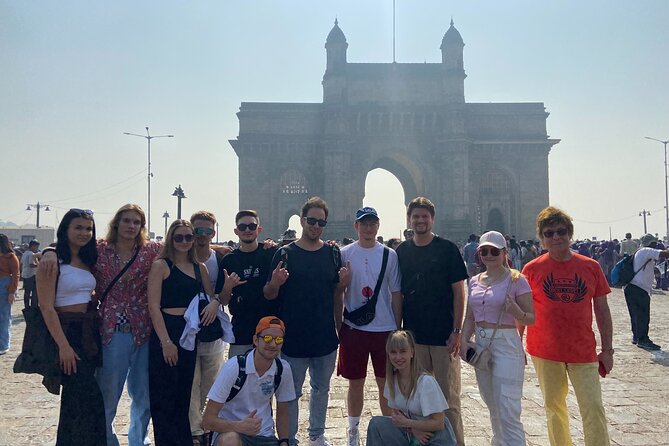
The Gateway of India is the natural opening scene. This early twentieth-century monument faces the water and is Mumbai’s most recognizable heritage site. Allow about 20 minutes here, enough to take in its scale, look across the harbor, and hear why the arch matters to the city.
You should expect a popular public setting rather than a quiet monument visit. The value comes from your guide’s explanation and the chance to place the Gateway within Mumbai’s story, not from spending a long time inside a single building.
This is also a good point to ask your guide how the city’s waterfront, colonial past, and modern traffic fit together. A guide such as Samarth, praised for mixing historical facts with cultural stories and humor, can make a short stop feel more useful.
Chhatrapati Shivaji Terminus shows another Mumbai
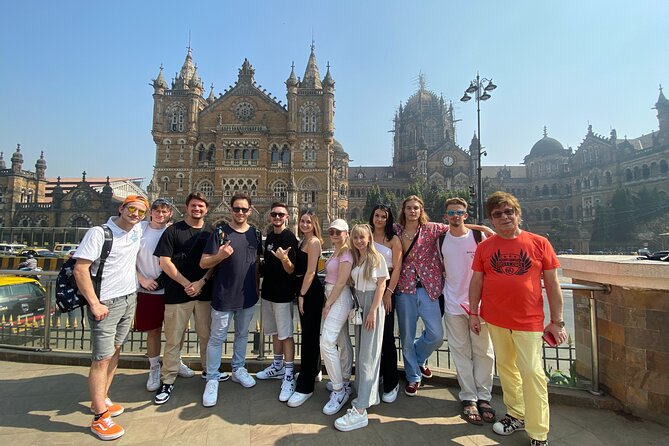
The next architectural contrast is Chhatrapati Shivaji Terminus, usually called CST. The station is known for its Victorian-Gothic design and took ten years to build, beginning in 1878.
The planned stop is about 15 minutes. That is enough to examine the exterior and hear about the building’s design, but not enough for a long architectural study. If you care about details such as stonework, domes, carvings, or the station’s continuing role in city life, use this stop to ask focused questions.
CST is especially valuable beside the Gateway of India. The Gateway is open, ceremonial, and tied to the harbor. CST is dense, ornate, and tied to the movement of people. Together, they show two different sides of Mumbai’s public face.
The local train ride adds an important piece. Mumbai’s railway system is part of daily life for the city, and riding it gives you a direct sense of that movement instead of simply looking at the station from outside. The available details do not specify the exact route, train station, or length of the ride, so ask your operator about the planned timing before you go.
Drive-bys that fill in the city’s story
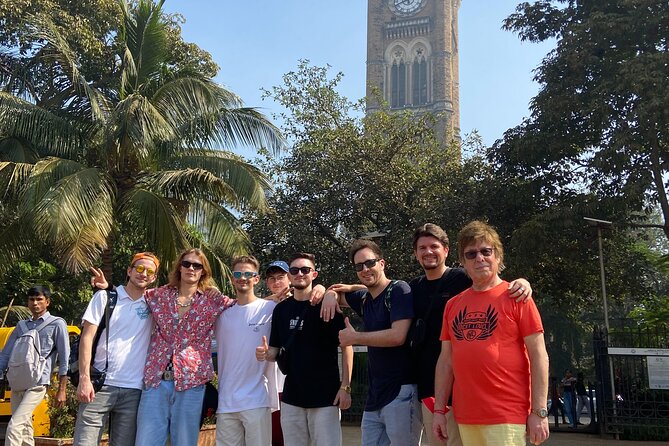
Several places are seen while driving rather than as full walking stops. The route passes the University of Mumbai, one of the earliest state universities in India and the oldest in Maharashtra. You also pass Town Hall, a colonial building that houses the Asiatic Society.
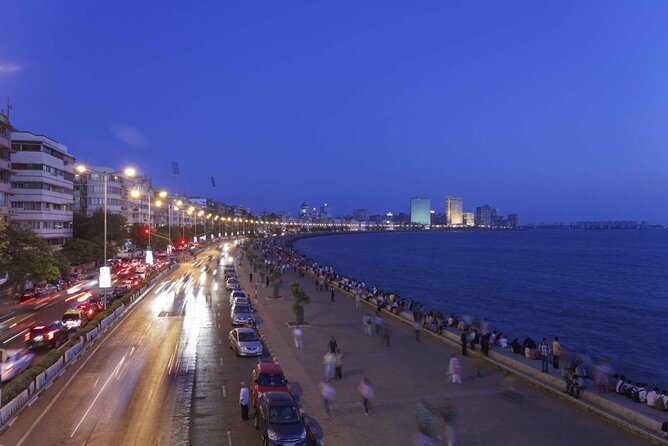
Marine Drive comes next as a broad seaside promenade along the Arabian Sea. Its line of street lights is especially associated with the nickname Queen’s Necklace when viewed after dark. Since the tour lasts only four to five hours, the exact amount of time beside Marine Drive may depend on traffic and the day’s pace.
Hutatma Chowk, in the Fort area, is another passing point. The square includes Flora Fountain, a decorative fountain linked to Roman imagery. These drive-bys are useful for orientation, but you should not expect a full visit to each location.
This is one reason to treat the tour as an introduction rather than a final word on Mumbai. You will see how the districts connect, then can return later to the places that catch your interest.
More city tours in Mumbai
- Mumbai City of Dreams Tour in Private Vehicle
★ 5.0 · 299 reviews - Mumbai: Guided City Sightseeing Tour
★ 4.8 · 278 reviews - Mumbai City Sightseeing Small Group Tour
★ 5.0 · 216 reviews - Private Mumbai City Tour with Transport
★ 5.0 · 214 reviews
Mani Bhavan brings Gandhi’s Mumbai into focus
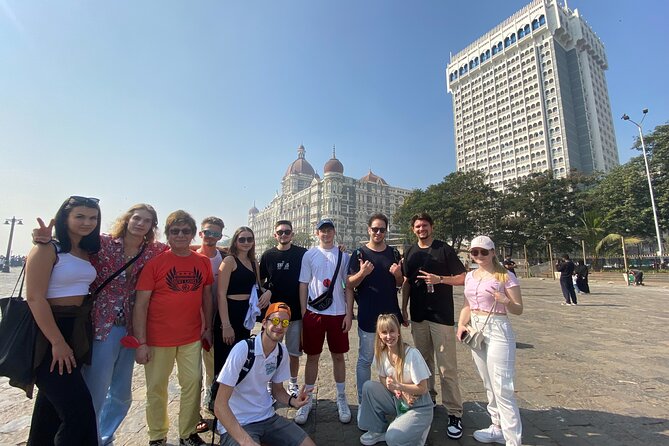
At Mani Bhavan Gandhi Museum, you have about 20 minutes, with admission included. The building is dedicated to Mahatma Gandhi and includes a library and research center focused on his life and political work in India.
This stop gives the tour a quieter, more reflective change of pace. The Gateway and CST show public architecture. Mani Bhavan points you toward political history and the working spaces connected to Gandhi’s activities.
Twenty minutes is short, so do not expect to examine every display. The guide’s explanation matters here. Oves, described as kind, polite, attentive, and strong on historical context, is the sort of guide who can help connect the rooms and exhibits to the larger story.
If Gandhi’s life is a major reason for your visit, you may want more time than this tour provides. For a first introduction, the stop is well chosen because it adds substance to a route otherwise filled with grand views and busy streets.
Hanging Gardens offers a high view
Hanging Gardens sits atop Malabar Hill, with views toward the Arabian Sea. The planned visit is about 20 minutes, making it a welcome chance to pause after the denser city sights.
This is a scenic stop rather than a long garden visit. You might find the best value here in the view and the break from traffic. The timing could work especially well later in the day, although the experience does not promise a sunset departure.
The garden also helps you understand Mumbai’s shape. From above, the city’s crowded districts and waterfront are easier to place. Keep your expectations practical: twenty minutes gives you a glimpse, not a leisurely walk through every section.
Jain Temple and Haji Ali add religious contrast
The Jain Temple is planned as a short, 10-minute stop. It is described as one of Mumbai’s prettiest temples and is dedicated to Adishwara, a central figure in Jain tradition.
Because this is a religious site, your guide can help you understand its importance rather than treating it as just another photo stop. The short timing means you should be prepared for a quick exterior or brief visit, depending on the day’s schedule and access.
Haji Ali Dargah is another important religious place, set in the sea and visited by people of different faiths. The route includes it as a sight along the way, but no dedicated visit length is given. Its setting makes it one of the more memorable views on the drive.
These two places give the tour useful balance. Mumbai is not only colonial buildings and transport. It is also a city where different religious traditions remain part of ordinary urban life.
Dhobi Ghat shows work behind the postcard
Dhobi Ghat is one of the tour’s most distinctive stops. This open-air laundry community has operated for about 140 years and remains associated with hand-washed laundry on a huge scale.
You have roughly 15 minutes here. That is enough to watch the activity from the viewpoint available on the tour and hear how the community functions, but it is not a long visit through the work area. Be respectful: this is a working place, not a staged show.
I like this stop because it shifts the focus from monuments to labor. You see a part of Mumbai that does not fit neatly into a sightseeing brochure, and a good guide can explain why Dhobi Ghat matters to the city.
The guide’s role is especially important here. One guide was praised for combining Dhobi Ghat with Gandhi’s home and local markets in a way that made the city feel more connected. That is the right way to approach this stop: not as an oddity, but as part of Mumbai’s daily system.
The local train is the tour’s most useful twist
Many city tours keep you inside a private car from start to finish. This one adds a local train ride, which changes the feel of the morning or afternoon.
You get a brief encounter with the transport system used by Mumbai residents every day. It also breaks up the sightseeing pattern of getting out, taking photos, and getting back in the vehicle. The train segment can give you a more immediate sense of the city’s pace.
The practical details are limited. The route does not state the exact station, duration, or whether a train ticket is included, so confirm those points when booking. If you are uncomfortable with public transport or prefer a slower private route, this feature may be less appealing. If you want to see more than polished facades, it is likely to be one of the most worthwhile parts.
Guides make the short stops work
The strongest thread running through the experience is the guide service. Ali, Oves, Jaya, Lance, Noshir, and Samarth are among the guides associated with particularly warm descriptions of the tour experience.
The praise centers on practical qualities: clear explanations, local insight, patience, good humor, and friendly attention. Samarth is described as offering history and cultural stories while keeping the mood light. Lance is associated with detailed heritage walks and careful answers. Noshir is praised for strong local insight across both Mumbai sightseeing and Elephanta Caves outings.
You should still remember that guide assignments can vary. The important point is the style of service to expect: the tour works best when you ask questions and let the guide interpret what you are seeing.
The driver matters, too. The experience uses a private vehicle, and the driver and guide work together to cover a large route. Traffic can affect how long you stay at each location, so a calm, flexible attitude will serve you well.
What the schedule does well, and where it falls short
The itinerary is ambitious for four to five hours. You cover South Mumbai architecture, Gandhi’s story, Malabar Hill, religious sites, Dhobi Ghat, the waterfront, and a train ride. That is excellent for orientation.
The tradeoff is time. Gateway of India receives about 20 minutes, CST 15, Mani Bhavan 20, Hanging Gardens 20, Jain Temple 10, and Dhobi Ghat 15. Several other sites are drive-bys, so you should not expect a full interior visit at every landmark.
I would choose this tour early in a Mumbai stay. It gives you a map in your head and helps you decide where to return. A slower heritage walk would be better if your main goal is architecture. A dedicated Gandhi visit would be better if Mani Bhavan is your priority. This tour is for breadth, local transport, and a well-organized first look.
Who should book this Mumbai tour?
You are a good fit if you want to see many major sights in one outing, prefer a private group, and value a local guide who can explain what you are seeing. It also suits families, first-time visitors, and people with limited time in Mumbai.
The tour is less suitable if you dislike a brisk pace or want long, quiet visits at museums and monuments. It may also feel expensive for a solo visitor at $88.54, although the private vehicle, hotel pickup, guide, and group discounts change the calculation for larger parties.
Free cancellation is available if you cancel at least 24 hours before the start time. Changes made inside that window are not accepted, and poor weather can lead to a different date or a full refund. Most people can participate, and the tour is near public transportation.
Should you book it?
Book this tour if you want a practical first day in Mumbai that combines famous landmarks with a local train ride and a working neighborhood such as Dhobi Ghat. The private format, flexible departure, and strong guide service make it a sensible choice when time is short.
Skip it if you want to linger at each site, study architecture in detail, or spend most of your day walking. For everyone else, this is a useful way to get your bearings, learn the city’s broad story, and discover which corners deserve a second visit.
FAQ
How long does the Mumbai private city tour last?
The tour lasts approximately four to five hours.
Is hotel pickup available?
Yes. Pickup from your hotel is offered.
Is this a private tour?
Yes. Only your group participates in the private tour or activity.
Does the tour include a local train ride?
Yes. A local train ride is included as part of the Mumbai sightseeing experience.
Which attractions are included?
The route includes the Gateway of India, Chhatrapati Shivaji Terminus, Mani Bhavan Gandhi Museum, Hanging Gardens, Jain Temple, Dhobi Ghat, and several drive-by sights, including Marine Drive, Haji Ali Dargah, Town Hall, the University of Mumbai, and Hutatma Chowk.
What is the cancellation policy?
You can cancel at least 24 hours before the start time for a full refund. Cancellations or changes made less than 24 hours before the start time are not accepted for a refund. If poor weather causes the tour to be canceled, you will be offered another date or a full refund.
Recently added around Mumbai
- Private Walking Tour in Dharavi Slums★ 5.0 · 7 reviews
- Mumbai Sightseeing Tour★ 5.0 · 11 reviews
- Private Mumbai 2-Day Tour Package:City + Slum & Elephanta Island.★ 5.0 · 3 reviews
- Vegetarian Indian Cuisine Virtual Cooking Class Experience from Mumbai★ 5.0 · 4 reviews
- Mumbai by Night Guided Tour★ 5.0 · 6 reviews
- Transfer from Mumbai Airport to Hotel★ 4.0 · 7 reviews
- Full-Day Agra Tour with Taj Mahal From Mumbai By Air★ 5.0 · 8 reviews
- Taj Mahal Day Trip Including Same Day Flights from Mumbai★ 5.0 · 3 reviews
Mumbai City Sightseeing Tours, compared.

Private Mumbai Sightseeing Tour (Traveller’s Choice Award Winner)
Read our review →
Highlights of Mumbai Sightseeing Tour: TRAVELLERS CHOICE AWARDED
Read our review →
Highlights of South Mumbai Guided Private Tour in AC Vehicle
Read our review →
Private Mumbai Sightseeing Tour(Travellers Choice Award Winner)
Read our review →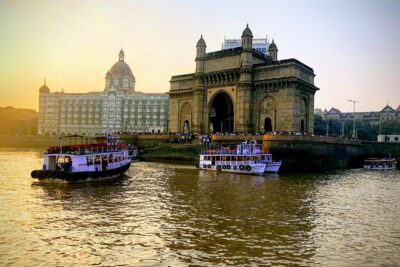
Private Elephanta Caves & Mumbai Sightseeing Tour with AC Car
Read our review →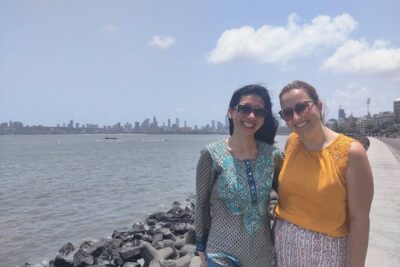
Private Mumbai Sightseeing Tour with Local English Guide
Read our review →Browse the lists this tour appears in