
Reviewed · SOUTH MUMBAI AND COLABA WALKS
Banganga Walkeshwar Walking Tour
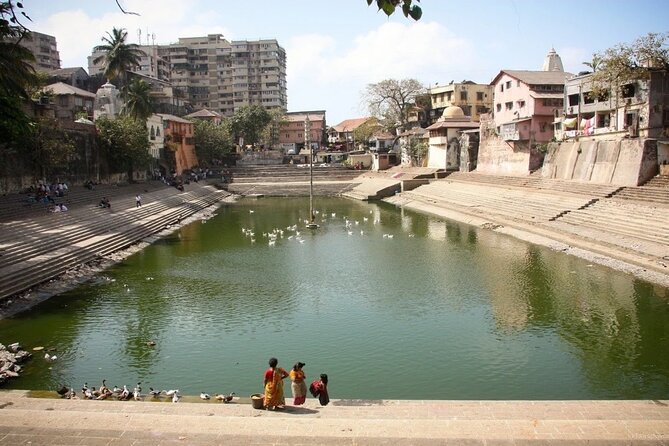
Banganga is one of Mumbai’s most revealing walks. Around the sacred tank, children play, clothes dry on the steps, residents gather, and worship continues beside narrow lanes lined with temples and homes. This is old Mumbai as a living neighborhood, not a quick photo stop. The temple quarter and its 18 shrines are the main draw.
I like the personal scale and the human stories. An English-speaking guide can explain the memorial stones, the deepstambhas, and why the tank serves several everyday purposes. I also like the price: at $18.13 per person, two and a half hours of guiding is a solid deal. The main consideration is that the walk includes crowded, uneven urban surroundings and a sensitive look at migrant communities, so you should come ready to observe respectfully.
Key points to know before you book
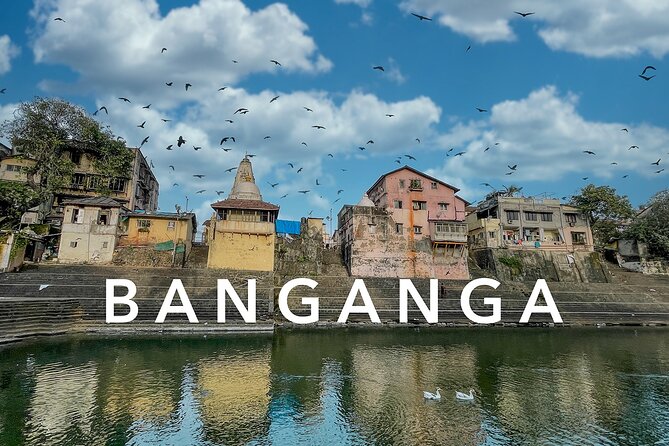
- Banganga Tank is a working neighborhood space: Children play on the steps, clothes dry there, and puja takes place beside daily life.
- Walkeshwar includes 18 temples: The guide takes you through the temple area and explains the stories connected with each one.
- Deepstambhas have a striking local belief: Each pillar of light is said to have a saint buried beneath it.
- Memorial stones honor dead warriors: Gujaratis worship these paliyas, giving the streets a layer of history you could easily miss alone.
- The tour lasts about 2 hours 30 minutes: The detailed route is mainly a walking experience, ending back at the Banganga Arogya Bhavan meeting point.
- The $18.13 price is good for a private-style introduction: Food and drinks are extra, and the group can include up to 15 people.
Why Banganga feels unlike central Mumbai
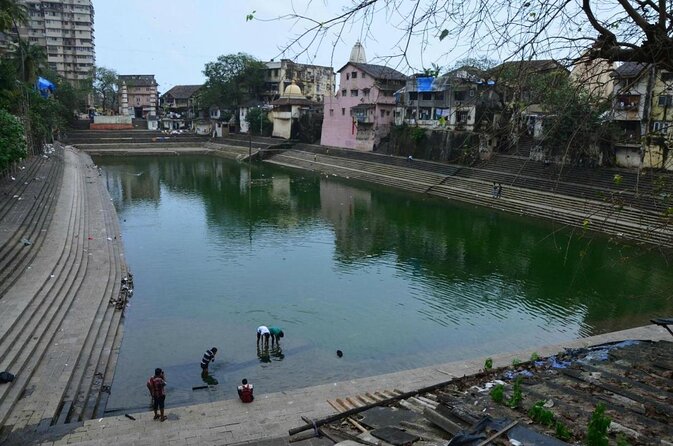
Mumbai sightseeing often centers on grand buildings, colonial facades, and famous waterfront views. Banganga offers something quieter and less polished. The experience takes you into a religious quarter where sacred places, homes, washing areas, children’s play spaces, and informal settlements sit close together.
That mixture is the point. You are not looking at a preserved monument sealed off from city life. You are watching a place continue to serve its community. The tank’s steps may be used for worship in one corner, socializing in another, and practical household work nearby.
I find that useful because it changes how you read Mumbai. A temple is not simply an old structure to photograph. A tank is not simply a historic pool. Both remain part of everyday routines, and a good guide can show you those connections.
The walk is based in Walkeshwar, on Malabar Hill. The meeting point is Hotel Banganga Arogya Bhavan, Shop No. 91, Road, Shubash Chowk, Walkeshwar, Mumbai 400006. The activity ends at the same meeting point, so you do not need to arrange a separate pickup at the finish.
More South Mumbai and Colaba walks
- Group Guided Walking Tour in Fort and Colaba
★ 5.0 · 1,073 reviews - Private Guided Walking Tour in Fort & Colaba
★ 5.0 · 895 reviews - Highlights of South Mumbai Guided Private Tour in AC Vehicle
★ 5.0 · 620 reviews
Walking through Walkeshwar’s 18 temples
The first part focuses on Walkeshwar, described as the oldest continually inhabited place in Mumbai. The route takes you to 18 temples, with the guide explaining the stories tied to them.
That number matters. You are not simply visiting one famous shrine and leaving. You are moving through a whole religious neighborhood, where smaller temples and associated buildings help explain how the area developed. The walk should suit you if you prefer local detail over a checklist of Mumbai landmarks.
The guide is an important part of this section. Without explanation, some shrines may look modest or easy to pass. With context, the memorials, pillars, and temple lanes become connected pieces of a larger place.
Past feedback gives the names Ajay, Dhaval, and Sid as guides associated with highly positive experiences, but no particular guide is guaranteed for your booking. The consistent point is the value of a guide who tells stories clearly and takes time with questions. If a specific guide matters to you, ask the provider before booking.
You should dress and behave with the setting in mind. This is a religious neighborhood, not a staged attraction. The supplied information does not specify a dress code, but modest, respectful clothing is a sensible choice for temple areas.
Reading the memorial stones and deepstambhas
One of the more unusual parts of the walk is the attention given to paliyas, or memorial stones. Gujarati communities worship these stones in memory of dead warriors. They are easy to overlook if you are walking quickly, yet they offer a direct link between local devotion, family memory, and community identity.
The deepstambhas add another layer. These pillars of light mark entrances to Banganga Tank and important temples. Local belief says a saint is buried beneath each one. That detail gives the entrance markers a meaning far beyond decoration.
I like these elements because they reward slowing down. Famous Mumbai sights announce themselves. A memorial stone or entrance pillar does not. You need someone to point it out, explain it, and place it within the local culture.
This is also where the walk feels more valuable than a general city drive. A vehicle can take you past a neighborhood, but it cannot easily show you the small religious markers that give the place its character. The experience depends on walking pace and close attention.
Banganga Tank and the rhythm of daily life
Banganga Tank is the center of the route. Its steps serve several purposes at once: children use them as a play area, residents meet there, washing is spread out to dry, and people perform puja.
That mix can surprise you. Sacred space here is not separated from ordinary life. The same set of steps can support worship and practical work, with residents moving through the scene as part of their normal day.
Your guide can help you watch without treating the neighborhood as a stage. That matters in a place where people live, pray, and work. Keep photography discreet and avoid turning private activity into a souvenir.
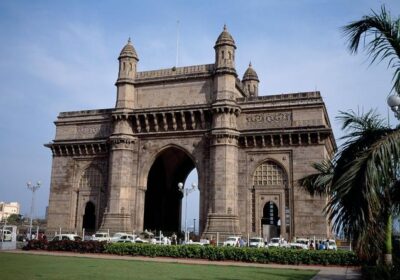
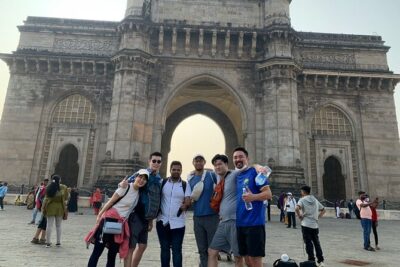
The tank is also the clearest reason to choose this experience over a standard Mumbai highlights tour. The supplied overview mentions major city sights such as the Gateway of India, Bombay High Court, Hanging Gardens, and Victoria Terminus, as well as private transportation. However, the detailed route provided for this experience centers on Walkeshwar and Banganga, with a short visit to Dhobi Ghat.
Because of that mismatch, confirm the exact route when you book. If you want a broad half-day tour by private vehicle, ask specifically if those major landmarks are included. If you want the Banganga neighborhood walk, the detailed itinerary gives you the clearest picture of what to expect.
More walking tours in Mumbai
- Private Guided Walking Tour in Bandra Queen of Suburbs
★ 5.0 · 383 reviews - Private Guided Spiritual Walk in Banganga Hindu Temples
★ 5.0 · 271 reviews - Mumbai: Dharavi Slum Walking Tour by First Female Tour Guide
★ 4.9 · 192 reviews - Private Guided Non-Veg Street Food Walking Tour in Muslim Quarter
★ 5.0 · 140 reviews
The narrow street around the tank

After the tank, the route follows the surrounding street. It is lined with temples, homes, and dharamsalas, or religious rest houses.
This street gives you a better sense of the area than the tank alone. The buildings show how worship, housing, and support for religious visitors occupy the same small patch of city. You are likely to notice how narrow the lanes are and how close daily activities sit to the sacred sites.
The setting may feel rough around the edges. That is not a flaw to hide, but it does affect comfort. The area is a working neighborhood, not a restored heritage precinct. Expect a close urban setting rather than wide paths, polished exhibits, or quiet museum-like spaces.
The route also discusses migrant communities who have occupied parts of the area for several decades. This is a serious subject, and the quality of the explanation matters. A thoughtful guide can give context without reducing people’s homes to a spectacle. You should listen, stay respectful, and remember that this is a residential area.
This portion may be especially useful if you want to understand how Mumbai’s religious districts and housing pressures exist side by side. It offers a more complicated picture than a simple sightseeing stop.
Dhobi Ghat in a 30-minute finish
The final listed stop is Dhobi Ghat, described here as Mumbai’s second-largest laundry and an open-air laundry built by the British. The visit lasts about 30 minutes and adds a different view of work in the city.
After seeing worship and neighborhood life around Banganga, you see organized manual labor on a larger scale. The contrast helps the tour feel broader than a temple visit alone. You move from sacred routines to the visible work of washing and drying clothes.
Do not expect food or drinks to be included. They are specifically excluded, so plan your refreshments separately. The supplied details do not promise a meal stop.
The route description says the activity ends back at the original meeting point. Since the broader overview also refers to private transportation between attractions, clarify how Dhobi Ghat fits into your specific departure and return plan. The walking itinerary itself is clear about the start and end point, but the vehicle reference suggests that some bookings may be packaged differently.
How much value do you get for $18.13?
At $18.13 per person, this is priced as an accessible introduction rather than a full-day luxury tour. You receive an English-speaking guide and roughly two and a half hours of focused sightseeing. Admission to the listed stops is free, which keeps the cost centered on the guide’s time and interpretation.
That is good value if you would otherwise pass through Banganga without understanding what you are seeing. The 18 temples, paliyas, deepstambhas, tank customs, and surrounding homes are the sort of details that are easy to miss alone.
The value is less clear if you are mainly seeking Mumbai’s famous architecture. The detailed route does not give a full account of time at the Gateway of India, Victoria Terminus, Bombay High Court, or Hanging Gardens, even though those attractions appear in the broader description. Ask for clarification before paying if those sights are essential to your plan.
The group can include up to 15 people. That is still small enough for a guide to explain details, though it is not the same as having a guide entirely to yourself. The wording describes a private sightseeing experience, but the stated maximum indicates that you should confirm whether your booking is private or shared.
Practical details that affect the experience
Confirmation is provided when you book, and mobile tickets are supported. The activity starts at Hotel Banganga Arogya Bhavan and returns there at the end.
The duration is approximately two hours and 30 minutes. The detailed schedule gives two hours for Walkeshwar and 30 minutes for the Banganga area and Dhobi Ghat portion, so allow the full block rather than planning a tight connection afterward.
Most people can participate according to the supplied details. Still, you should be comfortable walking through narrow urban streets and around a tank with steps. The information does not provide a specific accessibility assessment, so ask the provider if you need details about mobility, stairs, or surface conditions.
The cancellation policy is simple: cancel at least 24 hours before the local start time for a full refund. Cancellations or changes made within 24 hours are not refunded or accepted.
Who should book this walk?
I would choose this tour if you want a close look at Mumbai’s religious life and neighborhood history. It is a good fit for first-time visitors who want more than the usual landmarks, and for people who enjoy guides who explain small details rather than rushing from stop to stop.
It also suits repeat visitors. One person who had lived in Mumbai for more than 20 years said the area was still unfamiliar to them before taking the walk. That says something useful: Banganga is not only for first-time sightseeing. You can live in or visit Mumbai for years and still miss this corner.
The walk may appeal to anyone interested in old neighborhoods, temple traditions, memorial customs, and the way sacred places function in modern cities. The names connected with past positive experiences include Ajay, Dhaval, and Sid, with Ajay praised for detailed explanations and Dhaval and Sid noted for care, stories, and friendly service.
I would hesitate if you want a polished bus tour, a food-focused outing, or a guaranteed itinerary of every major Mumbai landmark. I would also think twice if you are uncomfortable seeing poverty and informal housing. The route presents real urban conditions, not a cleaned-up version of the city.
Should you book the Banganga Walkeshwar tour?
Book it if your priority is an intimate look at a part of Mumbai that many sightseeing programs skip. The tank, 18 temples, memorial stones, deepstambhas, narrow lanes, and Dhobi Ghat give you a useful two-and-a-half-hour window into the city’s religious and working life.
At $18.13, the price is fair, especially if your guide explains the stories well. Before confirming, ask two questions: Is the booking private or shared, and does it include the larger vehicle-based route with Victoria Terminus, the Gateway of India, Bombay High Court, and Hanging Gardens? If the answer matches your plan, this is a worthwhile addition to a Mumbai visit.
FAQ
How long does the Banganga Walkeshwar Walking Tour last?
The tour lasts approximately 2 hours and 30 minutes.
Where does the tour start?
It starts at Hotel Banganga Arogya Bhavan, Shop No. 91, Road, Shubash Chowk, Walkeshwar, Malabar Hill, Mumbai, Maharashtra 400006, India.
Where does the tour end?
The activity ends back at the meeting point.
What is included in the tour?
An English-speaking guide is included.
Are food and drinks included?
No. Food and drinks are not included.
How many people can join the activity?
The maximum group size is 15 people.
What places are covered in the detailed route?
The route covers Walkeshwar, its 18 temples, memorial stones, Banganga Tank, deepstambhas, the street around the tank, migrant communities in the area, and Dhobi Ghat.
Is the ticket available on a mobile phone?
Yes. The experience supports a mobile ticket.
Can I cancel for a full refund?
Yes. You can receive a full refund if you cancel at least 24 hours before the experience start time. Cancellations or changes made less than 24 hours in advance are not accepted or refunded.
Recently added around Mumbai
- Private Walking Tour in Dharavi Slums★ 5.0 · 7 reviews
- Mumbai Sightseeing Tour★ 5.0 · 11 reviews
- Private Mumbai 2-Day Tour Package:City + Slum & Elephanta Island.★ 5.0 · 3 reviews
- Vegetarian Indian Cuisine Virtual Cooking Class Experience from Mumbai★ 5.0 · 4 reviews
- Mumbai by Night Guided Tour★ 5.0 · 6 reviews
- Transfer from Mumbai Airport to Hotel★ 4.0 · 7 reviews
- Full-Day Agra Tour with Taj Mahal From Mumbai By Air★ 5.0 · 8 reviews
- Taj Mahal Day Trip Including Same Day Flights from Mumbai★ 5.0 · 3 reviews
South Mumbai and Colaba Walks, compared.
Highlights of South Mumbai Guided Private Tour in AC Vehicle
Read our review →
Private Guided Spiritual Walk in Banganga Hindu Temples
Read our review →

Mumbai 800 Year Worli Village: Talking Goddess, Old Fort & more
Read our review →
Browse the lists this tour appears in