
Reviewed · MUMBAI CITY SIGHTSEEING TOURS
Private Half-Day Mumbai Sightseeing Tour by Public Transportation
Mumbai makes the most sense when you move through it as residents do. This private public-transport tour takes you by bus, local train, and black-and-yellow taxi rather than sealing you inside a vehicle, giving you a close look at the city’s daily rhythm.
I like two things right away: all transport fares are covered, and the route brings together major sights with ordinary city life. You see grand Victorian architecture, flower sellers, laundry workers, lunchbox delivery systems, and flea-market stalls in one compact outing. The tradeoff is pace. Four hours is short, and public transit can be crowded, noisy, and less predictable than a private car.
Key points at a glance
- Mumbai by local transport: Ride buses, trains, and taxis with a guide who handles the route.
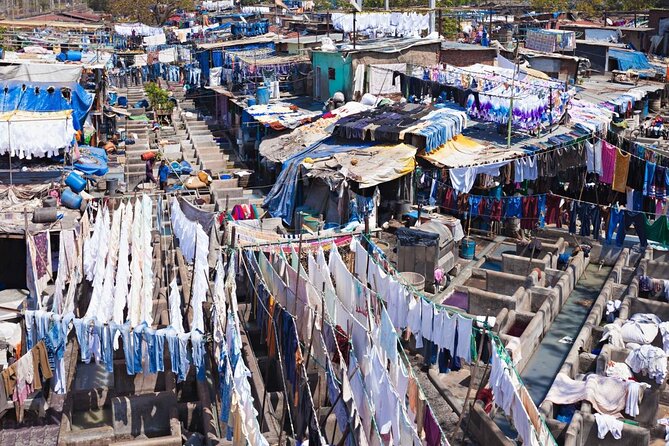
- Dhobi Ghat from close range: See the open-air laundry operation dating to 1890.
- CST and Churchgate: Compare one grand railway station with another while learning how Mumbai moves.
- Dadar’s flower market: Spend 30 minutes among fresh blooms, sellers, and auctions.
- Chor Bazaar: Walk through one of India’s largest flea markets, with time to browse.
- Private and flexible in feel: Only your group joins, with tea, bottled water, and fares included.
Why public transport changes the Mumbai experience
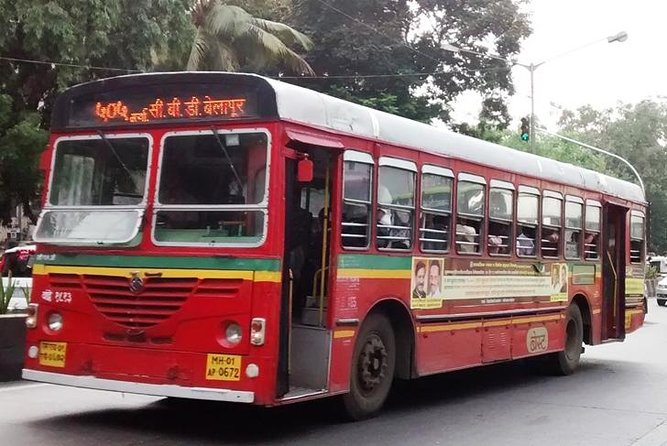
A standard sightseeing drive can show you Mumbai’s landmarks. This tour tries to show you how the city functions. You board local transportation, change modes, and move between neighborhoods with a guide beside you.
That makes the trip more than a checklist of buildings. You get the sound and motion of Mumbai’s streets, the practical challenge of finding the right train or taxi, and a better sense of the city’s scale. The guide is important here. You are not expected to work out every transfer alone.
The experience lasts about four hours and is private, so your group does not have to accommodate strangers. That helps when you need a moment to watch a market sale, ask about local customs, or keep moving because the clock is tight.
The tour begins at Regal Cinema in Colaba and ends near Churchgate Railway Station. It is not a hotel pickup service, so you need to reach the starting point yourself and arrange your own return afterward. The finish is useful if you plan to continue exploring central Mumbai.
More city sightseeing tours in Mumbai
- Mumbai: Full-Day Sightseeing Tour of Mumbai
★ 4.9 · 1,822 reviews - Private Mumbai Sightseeing Tour (Traveller’s Choice Award Winner)
★ 5.0 · 1,565 reviews - Highlights of Mumbai Sightseeing Tour: TRAVELLERS CHOICE AWARDED
★ 5.0 · 915 reviews
Regal Cinema and the first taste of Colaba
The meeting point is the Regal Cinema Building on Chhatrapati Shivaji Maharaj Marg in Apollo Bandar, Colaba. Regal is an Art Deco movie theater that opened in 1933, with The Devil’s Brother by Laurel and Hardy as its first film.
The stop lasts about 10 minutes and admission is free. Do not expect a long theater visit. The value is the setting: you begin among Colaba’s busy streets with a quick look at a building tied to Mumbai’s film culture and twentieth-century city life.
This is also where your guide sets the tone for the outing. Since the tour depends on public transport, the opening minutes matter. You can ask about the planned route, how much walking is involved, and how the group will handle changes along the way.
Chhatrapati Shivaji Terminus in a ten-minute stop
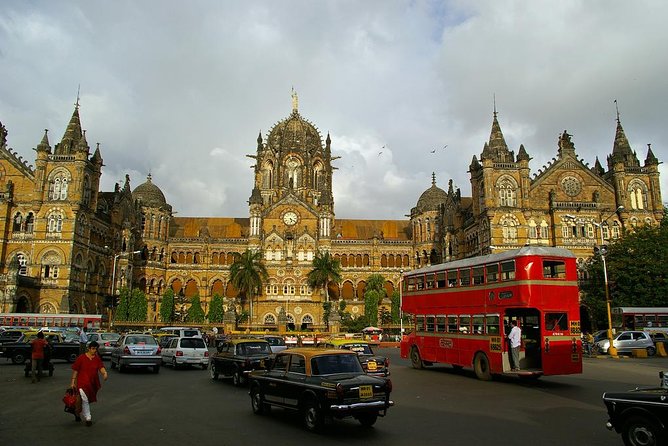
Chhatrapati Shivaji Terminus, often shortened to CST, is one of Mumbai’s busiest railway stations. Its design combines Victorian Italianate Gothic Revival architecture with the practical purpose of moving huge numbers of people through the city.
The station was designed by British architectural engineer Frederick William Stevens, and construction began in 1878. You get about 10 minutes here, with no admission charge.
That short stop is enough to appreciate the exterior and understand why the station matters. It is not enough for an extended architectural visit, so set your expectations accordingly. The point is to see a working transport hub, not a quiet museum interior.
I like the contrast built into the route. CST is monumental and formal, but it is also part of everyday Mumbai. People are heading to work, trains are running, and the building is still doing the job it was created to do.
Dadar Market and Mumbai’s flower trade
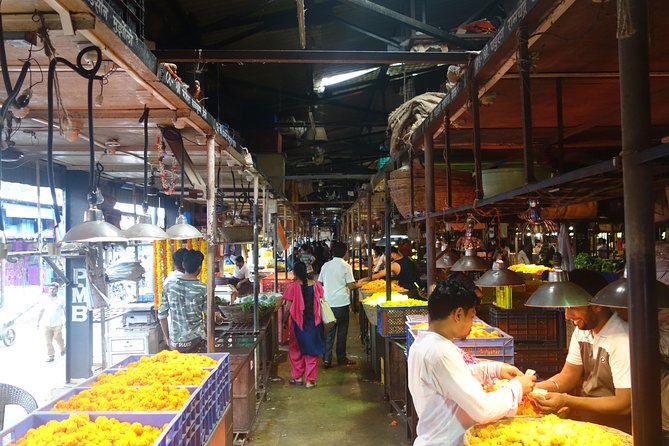
The 30-minute stop at BB Dadar Market gives the tour one of its most colorful sections. This is a fresh flower market with a range of blooms and auctions.
You may see flowers being sorted, sold, and carried through the market. The short visit lets you observe the trade without turning the tour into a shopping expedition. Ask your guide to explain what you are seeing, especially if an auction is taking place during your visit.
Dadar Market is useful because it shows a side of Mumbai that grand buildings cannot. The city is not only offices, railways, and historic façades. It also depends on small, fast-moving markets that supply daily needs.
Wear shoes suitable for walking and keep your belongings secure in crowded public areas. The tour’s information does not specify a dress code or special equipment, but a market visit is easier when you are ready for close quarters and uneven movement.
A few more Mumbai tours and experiences worth comparing
- Mumbai: Elephanta Caves Half-Day Guided Tour with Expert
★ 4.8 · 1,032 reviews - Private Half-Day Sightseeing Tour in Mumbai
★ 5.0 · 430 reviews - From Mumbai: Half-Day Elephanta Caves Tour with Ferry Ride
★ 4.9 · 284 reviews - Essence of Mumbai: Half-Day Private Tour
★ 4.4 · 157 reviews
Dhobi Ghat and the work behind clean clothes
Dhobi Ghat is an open-air laundry operation where dhobis wash clothes and linens from Mumbai’s hotels and hospitals. It was constructed in 1890, and the stop lasts about 25 minutes.
This is one of the most distinctive parts of the route. From the viewing area and surrounding streets, you can see how a large laundry operation works in the open rather than behind the doors of a modern commercial facility. Your guide can add the human and practical context that a quick photograph cannot provide.
The visit also raises a useful point about sightseeing. Dhobi Ghat is a workplace, not a staged attraction. Be respectful with cameras and avoid treating the workers as scenery. The supplied information does not promise a special inside tour, so expect to observe the operation rather than take part in it.
I like this stop because it connects the city’s visible hotels and institutions with the labor that supports them. It also breaks up the architectural sightseeing with something direct and ordinary: the work of washing and handling clothing.
Chor Bazaar, from legend to flea-market browsing
Chor Bazaar is described as one of India’s largest flea markets. The name means thief in Marathi and Hindi, and local legend says that if you lose something in Mumbai, you can buy it back here.
The 30-minute visit gives you time to walk through the market and look at the goods on offer. The tour does not promise particular items, fixed prices, or a shopping allowance, so approach it as a short market walk rather than a guaranteed bargain hunt.
This is a good place to stay alert and curious. Markets change, and the exact mix of objects can vary. Ask before photographing people or merchandise, and keep your personal items close.
Chor Bazaar gives the tour a different energy from CST or Dhobi Ghat. At the station, the architecture is the subject. At the laundry, the work is the subject. Here, it is the act of browsing, negotiating, and noticing what turns up in a dense urban market.
Churchgate and the dabbawalla system
The final stop is Churchgate Railway Station, where you spend about 20 minutes viewing the famous dabbawallas and learning how they organize the delivery of 200,000 lunchboxes each day.
This is a fitting end because the tour finishes at Maharshi Karve Road near Churchgate. You are not simply dropped at an unrelated landmark. The last stop connects Mumbai’s rail system with one of the city’s best-known delivery networks.
The dabbawallas are a practical example of coordination on a huge scale. You can ask your guide to explain how the lunchboxes move through the city and how the railway system supports the process. The tour description does not promise a formal presentation or a chance to follow deliveries, so expect an explanation and viewing stop.
Churchgate also gives you a final chance to watch the city move. After seeing the market, laundry, and historic stations, the dabbawalla system ties those pieces together. Mumbai’s daily life depends on people, trains, timing, and repeated routines.
What the guide adds to the four-hour route
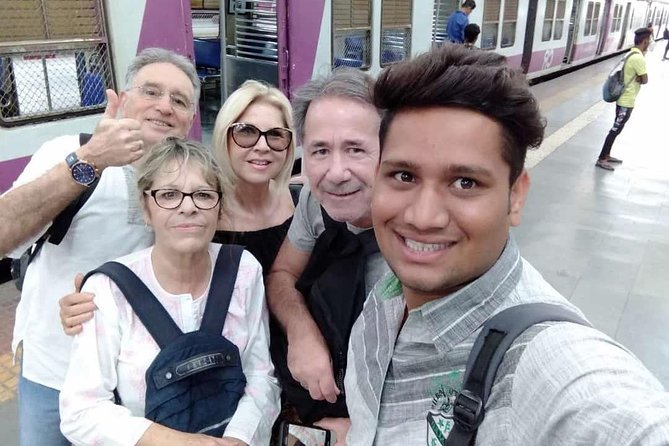
The guide is not an optional extra on this experience. Public transportation can be confusing in any large city, and the tour uses several forms of it in a limited time. A local guide can help you move between stops while explaining what you are seeing.
The strongest personal praise attached to this experience is directed at Dev. One account highlights his warm manner and the way he shared details about himself, while another points to the conversation with him as the most memorable part of the outing. That suggests the best part of the tour may be the exchange with the guide, not simply the number of sights covered.
You should not assume Dev will lead every departure, since the available information names him through individual feedback rather than as a guaranteed guide. If he is assigned to your group, expect a conversational experience with room for questions and personal context.
Because this is private, the guide can focus on your interests. You might ask for more time at the market, additional explanation at Dhobi Ghat, or practical advice about using Mumbai’s transit system. The four-hour limit still applies, so the experience is better for focused questions than for an exhaustive city tour.
Is $80 per person good value?
At $80 per person, this is not the cheapest way to see Mumbai. The price makes more sense when you count what is bundled in: a private guide, all transportation used during the tour, tea, and bottled water.
You are also paying for coordination. The route uses buses, local trains, and taxis, and the guide helps you handle that movement. If you would otherwise spend time figuring out stations, fares, and connections, the convenience has real value.
The tour is strongest for a first look at Mumbai, especially if you want a mix of famous places and daily life. It is less suited to someone who wants long visits inside monuments, a relaxed meal, or extensive shopping time.
Group discounts are available, but the exact reduction is not specified. Since the activity is private, the per-person cost may work better for a small group than for someone traveling alone. Check the price for your party before booking.
Timing, comfort, and practical planning
Start at Regal Cinema in Colaba, not at your hotel. End near Churchgate. You need to plan your arrival at the first meeting point and your next activity after the final stop.
The tour is close to public transportation, and most people can participate according to the supplied details. No special accessibility limitations are stated, but you should expect walking, station movement, market conditions, and rides on public vehicles. If you need specific mobility arrangements, ask before reserving.
Four hours is enough for a sharp introduction, but not enough to linger at every stop. CST and Regal each receive only about 10 minutes. Dadar Market gets 30 minutes, Dhobi Ghat 25, Chor Bazaar 30, and Churchgate 20, with travel time between them.
That schedule is part of the appeal and part of the challenge. You see a lot of Mumbai in a short period, but you need to stay with the guide and keep an eye on the clock. Bring only what you need, keep valuables secure, and carry water even though bottled water is included.
Tea and bottled water are included. Other food and drinks are not, so do not count on a meal during the tour. The duration is short enough that this may not matter, but plan accordingly.
Free cancellation is available if you cancel at least 24 hours before the local start time. Changes or cancellations made less than 24 hours before the start are not refunded.
Who should book this Mumbai tour?
I would choose this tour if you want to see Mumbai through its transportation network and working neighborhoods. It suits curious first-time visitors, people who enjoy markets and street-level observation, and anyone who prefers a private guide to a large coach group.
It is also a good fit if you have only half a day. The route covers Colaba, CST, Dadar, Dhobi Ghat, Chor Bazaar, and Churchgate without asking you to plan each connection yourself.
I would think twice if you dislike crowded public transport, need a slow pace, or want long, detailed visits at each landmark. A private car tour would be easier physically, while a full-day cultural tour would give you more time at individual sites.
Should you book it?
Book this experience if the idea of Mumbai by bus, train, and taxi sounds more interesting than simply watching the city through a car window. The combination of Dhobi Ghat, Dadar Market, Chor Bazaar, CST, and the dabbawalla system gives you a useful cross-section of Mumbai in four hours.
The main reason to book is the guide-led access to ordinary city life, especially if Dev is available for your date. The main reason to skip it is the compressed schedule and the realities of public transit.
For a private introduction with transport fares included, $80 per person can be fair value, particularly for a small group. Go in expecting movement, noise, short stops, and practical insight rather than a leisurely sightseeing circuit.
FAQ
How long does the Mumbai public transportation tour last?
The tour lasts approximately four hours.
Is the tour private?
Yes. Only your group participates in the activity.
Where does the tour begin?
It begins at the Regal Cinema Building on Chhatrapati Shivaji Maharaj Marg in Apollo Bandar, Colaba, Mumbai.
Where does the tour end?
It ends on Maharshi Karve Road near Churchgate in Mumbai.
Are public transportation fares included?
Yes. Fares for all transportation used as part of the tour are included.
Which types of transportation are used?
The tour uses local buses, trains, and Mumbai’s black-and-yellow taxis.
What is included besides transportation?
A local guide, tea, and bottled water are included.
Is hotel pickup and drop-off included?
No. Hotel pickup and drop-off are not included.
What is the cancellation policy?
You can cancel at least 24 hours before the experience start time for a full refund. Cancellations or changes made less than 24 hours before the start time are not refunded or accepted.
Recently added around Mumbai
- Private Walking Tour in Dharavi Slums★ 5.0 · 7 reviews
- Mumbai Sightseeing Tour★ 5.0 · 11 reviews
- Private Mumbai 2-Day Tour Package:City + Slum & Elephanta Island.★ 5.0 · 3 reviews
- Vegetarian Indian Cuisine Virtual Cooking Class Experience from Mumbai★ 5.0 · 4 reviews
- Mumbai by Night Guided Tour★ 5.0 · 6 reviews
- Transfer from Mumbai Airport to Hotel★ 4.0 · 7 reviews
- Full-Day Agra Tour with Taj Mahal From Mumbai By Air★ 5.0 · 8 reviews
- Taj Mahal Day Trip Including Same Day Flights from Mumbai★ 5.0 · 3 reviews
Mumbai City Sightseeing Tours, compared.

Private Mumbai Sightseeing Tour (Traveller’s Choice Award Winner)
Read our review →
Highlights of Mumbai Sightseeing Tour: TRAVELLERS CHOICE AWARDED
Read our review →
Highlights of South Mumbai Guided Private Tour in AC Vehicle
Read our review →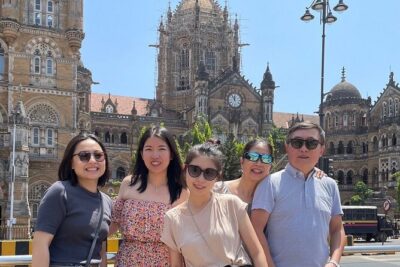
Private Mumbai Sightseeing Tour(Travellers Choice Award Winner)
Read our review →
Private Elephanta Caves & Mumbai Sightseeing Tour with AC Car
Read our review →
Private Mumbai Sightseeing Tour with Local English Guide
Read our review →Browse the lists this tour appears in