
Reviewed · MUMBAI HERITAGE WALKING TOURS
Victorian Gothic Heritage Quarter and Art Deco Walking Tour
Mumbai’s finest architecture is packed into a walkable stretch between Colaba and Churchgate. This tour takes you from the domed General Post Office to the Gothic towers around the Oval Maidan, then onward to Kala Ghoda, the Gateway of India, and the Taj Mahal Palace. You get a quick lesson in how Mumbai grew from a port city into a major colonial-era center.
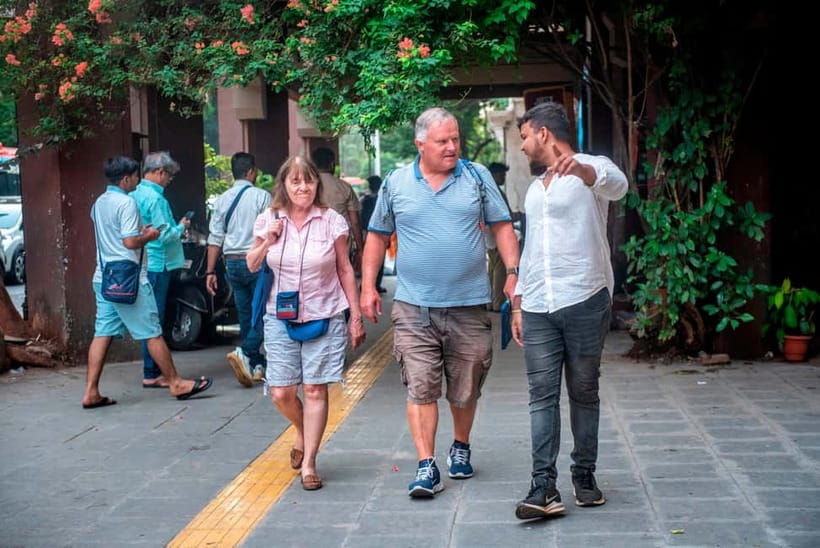
I like the small group limit of 15, which gives you a fair chance to hear the guide and ask questions. I also like the mix of grand landmarks and everyday city life, including cricket on the Oval Maidan, old record stalls, street scenes, and lesser-known stories shared by guides such as Abhi, Abhishek, Ravi, and Yash. The main consideration is pace: ten stops in about two hours means you will see the exteriors of many buildings rather than tour their interiors.
Key points to know before you book
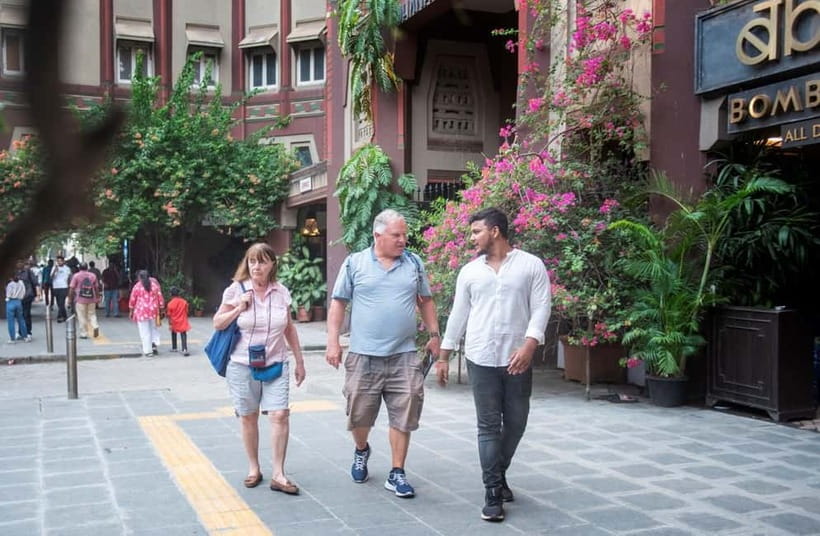
- A compact route through Mumbai’s best-known historic district: The walk connects the GPO, Town Hall, Horniman Circle, St. Thomas Cathedral, the High Court, Rajabai Clock Tower, Kala Ghoda, and the Gateway of India.
- A strong choice for architecture fans: Victorian Gothic buildings receive the most attention, with Art Deco buildings forming part of the wider route around the Oval Maidan and Churchgate.
- Local guides shape the experience: Abhi, Abhishek, Ravi, and Yash have all led walks, with strengths in architecture, city history, lesser-known facts, and photographs.
- Good value at $18.88: Landmark admission is free, bottled water is included, and you pay mainly for context, navigation, and local storytelling.
- A true walking tour: Private transport is not included, and the tour starts at Regal Cinema and ends near Churchgate Station.
- Allow for a brisk schedule: Most stops last 15 minutes or less, so this works best as an introduction rather than a slow architectural study.
Why this route works so well in Mumbai
Mumbai can feel like several cities stacked on top of one another. Colonial offices sit beside modern businesses. A grand church opens onto busy streets. Cricket matches unfold beneath some of the city’s most formal buildings.
This walk gives you a useful framework for making sense of that mix. The route begins in the older commercial center, passes through government and civic landmarks, crosses the open Oval Maidan, and finishes in the Colaba area that many people associate with postcard Mumbai.
You are not paying for entry to a museum or a private vehicle. You are paying for a guide to point out details you could easily miss, explain who commissioned the buildings, and connect architecture with Mumbai’s development. At $18.88, that is a reasonable trade for a first look at the city center.
The experience is also easy to fit into a first day. It lasts about two hours, and the ending near Churchgate gives you a practical place to continue exploring. The tour is often booked around 13 days ahead, so booking early is sensible if your Mumbai dates are fixed.
More heritage walking tours in Mumbai
- Heritage Walk: Recommended by Gigi Hadid as a must-do in Mumbai
★ 5.0 · 122 reviews - Best South Mumbai Heritage Walk
★ 5.0 · 122 reviews - Mumbai: South Mumbai Heritage Walking Guided Tour
★ 4.5 · 69 reviews
Starting at the General Post Office
The meeting point is Regal Cinema in Apollo Bandar, Colaba. From there, the route reaches the General Post Office, or GPO, a major early stop in the city’s architectural story.
Completed in 1913, the GPO was designed by John Begg and built in the Indo-Saracenic style. That means you can expect a blend of Indian design references and European planning, expressed through a large civic building meant to project importance.
You have about 15 minutes here. That is enough time for an exterior explanation and photographs, but not for a detailed interior visit. Admission is listed as free, and the tour does not promise entry into every building, so think of this as an architectural orientation.
I find this a useful opening because a post office is more than a pretty building. It points to the role of mail, trade, administration, and communication in a growing port city. A good guide can turn the dome and decorative details into part of a larger story about how Mumbai functioned.
Town Hall and the Asiatic Society

The next stop is Town Hall, home to the Asiatic Society Library, founded in 1804. Its neoclassical design gives you a contrast with the GPO’s Indo-Saracenic style.
The building is associated with rare manuscripts, old texts, and historic objects. The tour allows roughly 15 minutes, so you will likely focus on the architecture and the institution’s importance rather than browse its collections at length.
This is one of the places where the guide’s skill matters most. A bare description of columns and steps would feel thin. A stronger explanation connects the library to scholarship, colonial administration, and the way institutions helped record and organize knowledge about the region.
You might want to take a moment to look beyond the building itself. The surrounding streets show how old civic architecture remains part of working Mumbai, rather than being isolated behind a museum gate.
Horniman Circle’s gardens and grand facades
Horniman Circle Garden offers a short break from the hard stone of the city center. The garden was created in 1860 and is surrounded by large colonial-era buildings.
Its name comes from Benjamin Horniman, a British newspaper editor. You get about 15 minutes here, enough to see the circular layout, take in the surrounding facades, and hear why this open space mattered in the city’s planning.
This stop also gives you a chance to notice Mumbai at street level. The garden is not simply a formal monument. It is a small pause in a dense commercial district, with people moving through and around it.
The walk’s advertised promise of local flavor is most convincing in moments like this. You are looking at a historic public space while the city carries on around you. Do not expect a long rest, though. The route keeps moving.
More history and heritage tours in Mumbai
- Hill-station & Heritage: Lonavala & Karla Caves Tour from Mumbai
★ 5.0 · 60 reviews - Mumbai Heritage Walk and Elephanta Caves Experience
★ 5.0 · 53 reviews - South Mumbai: Cultural Heritage Walking Tour
★ 4.8 · 45 reviews - Kanheri Caves Heritage Tour
★ 5.0 · 45 reviews
St. Thomas Cathedral and Mumbai’s early colonial era
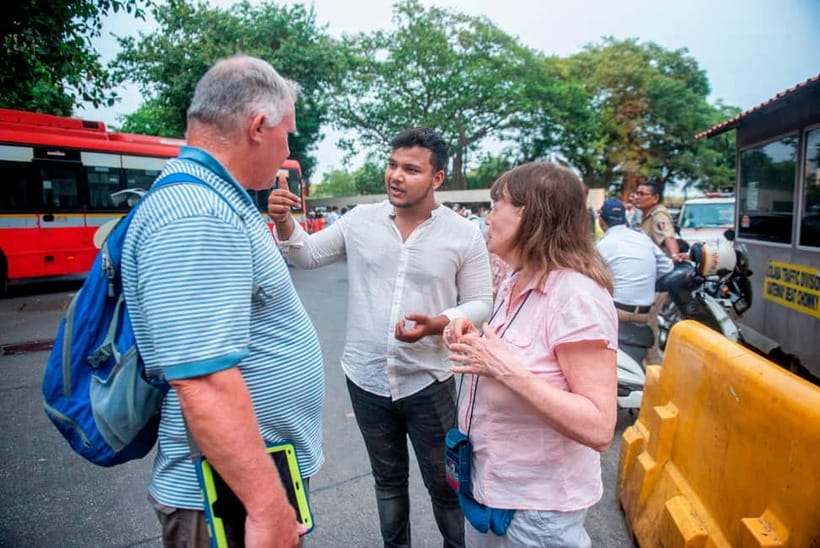
St. Thomas Cathedral is the oldest Anglican church in Mumbai, consecrated in 1718. Its age gives the route a different feel from the later Victorian buildings.
The stop lasts about 15 minutes. You can expect attention to the church’s exterior and its place in British colonial Mumbai. The architecture is more restrained than the ornate Gothic landmarks later in the walk, which makes the change in style easy to notice.
A church stop can sometimes feel rushed on a city walk, but this one helps establish a timeline. Mumbai’s monumental architecture did not appear all at once. St. Thomas Cathedral belongs to an earlier stage of the city’s colonial development, before the grand Victorian buildings around the university and courts.
If you want a careful look at memorials, interior details, or religious history, you would need more time than this tour provides. Here, the value is in seeing the cathedral as one link in a larger sequence.
The Bombay High Court and Rajabai Clock Tower
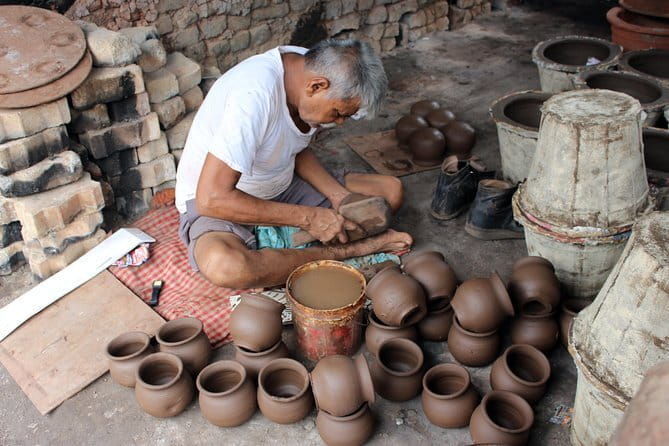
The Bombay High Court is one of the route’s strongest architectural stops. Inaugurated in 1879, it is a Gothic Revival building with the pointed forms, vertical emphasis, and decorative details associated with Victorian public architecture.
You get about 15 minutes. That is enough to appreciate the exterior and hear about the court’s role in Mumbai’s legal system. It is not a courtroom visit, and the tour does not include private transportation or a formal interior tour.
From there, the walk reaches Rajabai Clock Tower at the University of Mumbai. Completed in 1878, the tower was designed by Sir George Gilbert Scott and funded by Premchand Roychand. Its height and detail make it one of the route’s most memorable sights.
This is the stretch where an architecture-focused guide can really earn the fee. You can compare the High Court and clock tower, notice repeated Gothic features, and understand how public buildings were designed to signal authority and learning.
Abhi and Ravi have been particularly useful names to look for if you want a guide who focuses on architectural detail and city history. Abhishek has also led longer versions of the walk, sometimes adding unscheduled stops. Since the route is guided rather than self-paced, the exact feel can depend on who leads your group.
Oval Maidan: Gothic buildings on one side, Art Deco on the other
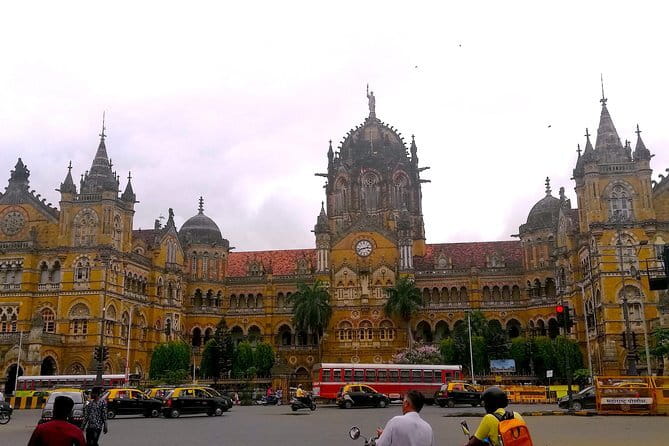
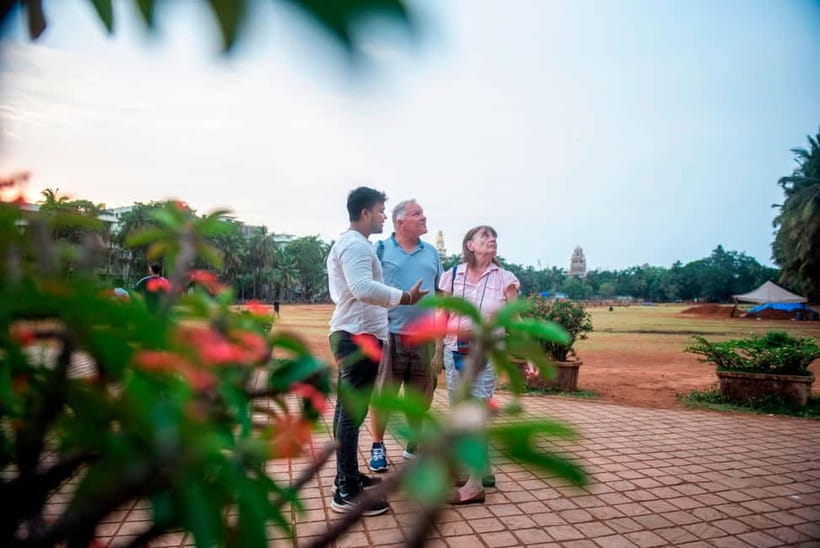
Oval Maidan is the visual hinge of the tour. This large recreational ground was established in the 19th century and is framed by Victorian Gothic buildings on one side and Art Deco architecture on the other.
The stop is shorter, about 10 minutes, but the setting makes it important. Stand here and you can compare two very different architectural moods in one view. The Gothic buildings look formal and vertical. The Art Deco buildings use cleaner lines and a more modern style.
The maidan also offers a glimpse of ordinary Mumbai life. On Sundays, cricket matches may be underway, giving the stop a local rhythm that no history lecture can supply. You are not just looking at facades. You are seeing how the open space is used.
This is also where expectations need some care. The tour is called a Victorian Gothic and Art Deco walk, but the detailed route gives more time to Gothic and colonial landmarks than to a long list of named Art Deco buildings. If Art Deco is your main interest, treat this tour as an introduction and plan extra independent time around Churchgate and the Oval area.
Kala Ghoda, street culture, and the route’s livelier side
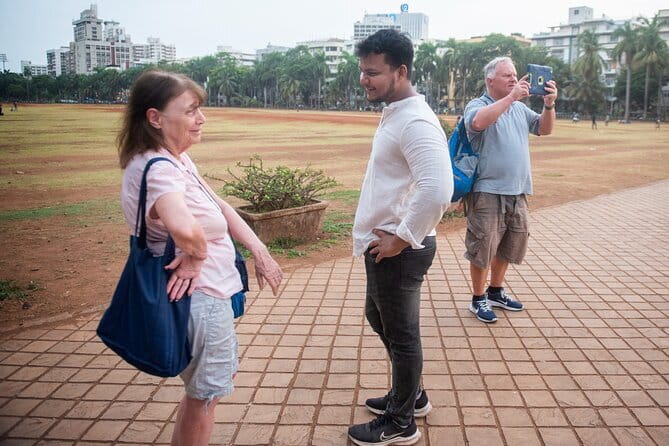
Kala Ghoda is a cultural quarter known for galleries, museums, street art, and public events. The name means Black Horse and refers to the former statue of King Edward VII.
The scheduled stop is only about five minutes, so you will not have time to explore the whole district. Still, it changes the tone of the walk. After churches, courts, libraries, and clock towers, Kala Ghoda brings you closer to Mumbai’s art scene and street culture.
The guides sometimes add details beyond the formal landmarks. Stories about old Bollywood record stalls, Cat Chowk, and a house connected with local tales have helped make this section more personal and less like a list of buildings. These additions are not guaranteed, but they show why a local guide can offer more than a map.
Yash has been praised for sharing lesser-known facts and taking photographs for the group. That can be useful if you are traveling alone or want a few informal pictures without handing your phone to a stranger.
The Gateway of India and the Taj Mahal Palace
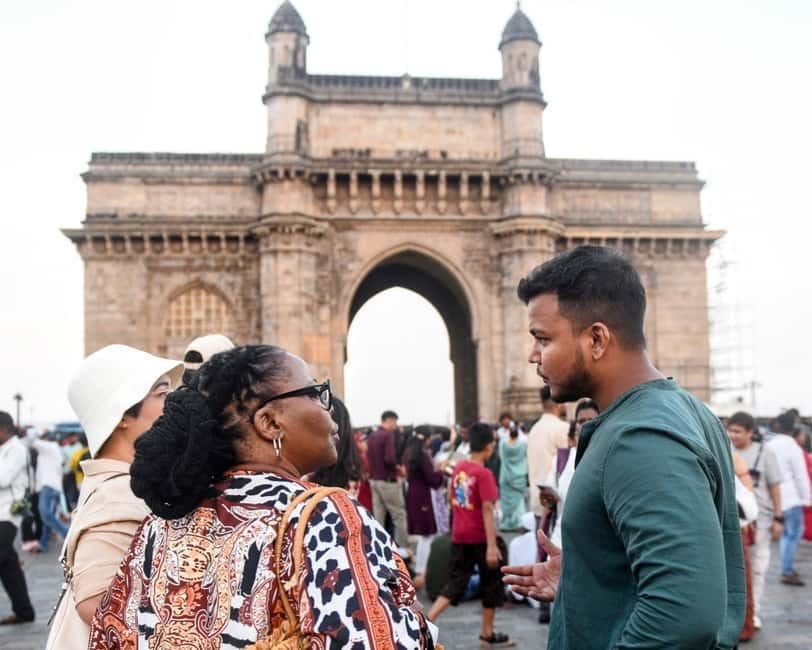
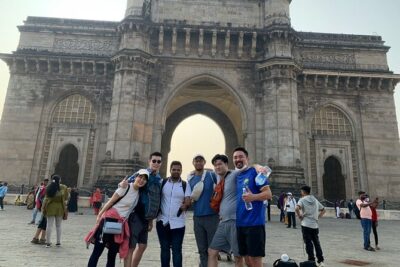
The Gateway of India is the grand finale, with about 10 minutes at the monument. Built in 1924, it commemorates the visit of King George V and Queen Mary to India.
The arch is one of Mumbai’s most recognizable sights, and its setting by the water makes it an easy place for photographs. The guide can also place the monument in the context of imperial ceremony and the city’s connection to the sea.
The final stop is the Taj Mahal Palace, built in 1903. The luxury hotel overlooks the Arabian Sea and is one of Mumbai’s most famous historic buildings.
Only about five minutes are scheduled here. You should expect an exterior look rather than a hotel tour. That brevity is understandable, since the building is still a working luxury hotel, but anyone hoping for a long look inside should adjust expectations.
Ending in this area works well. The Gateway and Taj put a recognizable face on the route, while the walk has already shown you less familiar civic buildings that are just as important to Mumbai’s story.
Price, group size, and practical value
At $18.88 per person, this is priced as an affordable introduction rather than a specialist architectural seminar. All listed landmark stops have free admission, and bottled water is included. The main cost covers the guide’s time, route planning, explanations, and help making sense of a large city.
The maximum group size is 15. That is small enough for a personal exchange, though you should still expect a group walk rather than a private tour. Abhi, Abhishek, Ravi, and Yash have all been associated with the experience, and the strongest feedback centers on friendly delivery, clear English, flexibility, photographs, and useful facts.
There is one important variable: guide quality can differ. Most of the available feedback is strongly positive, but one account found the explanation of architecture and history weak. That is a fair warning. The tour works best when your guide is prepared to explain buildings rather than simply point at them.
Wear comfortable shoes and keep your schedule flexible around the two-hour estimate. One version of the walk lasted three hours because of extra stops and finished at Mumbai Railway Terminus instead of Churchgate. Do not assume that extension will happen, but know that the pace can change if the guide adds context.
The meeting point is Regal Cinema in Apollo Bandar, and the published endpoint is Churchgate Station. Public transport is nearby. Private transportation is not included, so you need to reach the start independently and continue from the endpoint on your own.
Free cancellation is available if you cancel at least 24 hours before the start time. Last-minute changes or cancellations do not qualify for a refund.
Who should book this Mumbai walk?
I would choose this tour for a first morning in Mumbai, especially if you want an architectural overview before exploring alone. It also suits repeat visitors who have seen the Gateway but want to understand the buildings around Fort, the Oval Maidan, and Churchgate.
It is a good fit if you enjoy short stops, city photographs, public spaces, and stories about how buildings connect to Mumbai’s civic life. It can also work for a local who wants to show a visiting manager or friend the city in a structured way.
I would hesitate if you want extended interior visits, a slow photography walk, or a specialist Art Deco tour. The route covers a lot in two hours, and most stops are brief. You will leave with a useful map in your head, not a full architectural study.
Should you book it?
Book it if you want an affordable, compact introduction to central Mumbai with a real guide and a manageable group size. The mix of Gothic buildings, Art Deco views, cricket, Kala Ghoda, the Gateway, and the Taj gives you more range than a simple monument walk.
Choose your timing carefully and expect the guide to shape the experience. If you get Abhi, Abhishek, Ravi, or Yash, you may find the walk especially strong on local facts, architecture, and photographs. Just keep your expectations realistic: this is a brisk exterior-focused tour, and its value comes from explanation and local context rather than paid entry or luxury transport.
FAQ
How long is the Victorian Gothic Heritage Quarter and Art Deco Walking Tour?
The scheduled duration is approximately two hours.
How much does the tour cost?
The listed price is $18.88 per person.
Where does the tour start?
The tour starts at Regal Cinema, Apollo Bandar, Colaba, Mumbai, Maharashtra 400001, India.
Where does the tour end?
The published endpoint is Churchgate Station on Maharshi Karve Road, Mumbai.
Is transportation included?
No. Private transportation is not included. The tour is a walking experience, and public transportation is available near the route.
What is the maximum group size?
The tour accepts a maximum of 15 travelers.
Are admission tickets included?
The listed stops have free admission. Bottled water is included.
Can I cancel for a full refund?
Yes. You can receive a full refund if you cancel at least 24 hours before the experience start time. Cancellations or changes made less than 24 hours before the start are not accepted for a refund.
More walking tours in Mumbai
- Group Guided Walking Tour in Fort and Colaba
★ 5.0 · 1,073 reviews - Private Guided Walking Tour in Fort & Colaba
★ 5.0 · 895 reviews - Private Guided Walking Tour in Bandra Queen of Suburbs
★ 5.0 · 383 reviews - Private Guided Spiritual Walk in Banganga Hindu Temples
★ 5.0 · 271 reviews
Recently added around Mumbai
- Mumbai Sightseeing Tour★ 5.0 · 11 reviews
- Private Walking Tour in Dharavi Slums★ 5.0 · 7 reviews
- Private Mumbai 2-Day Tour Package:City + Slum & Elephanta Island.★ 5.0 · 3 reviews
- Vegetarian Indian Cuisine Virtual Cooking Class Experience from Mumbai★ 5.0 · 4 reviews
- Mumbai by Night Guided Tour★ 5.0 · 6 reviews
- Transfer from Mumbai Airport to Hotel★ 4.0 · 7 reviews
- Full-Day Agra Tour with Taj Mahal From Mumbai By Air★ 5.0 · 8 reviews
- Taj Mahal Day Trip Including Same Day Flights from Mumbai★ 5.0 · 3 reviews
Mumbai Heritage Walking Tours, compared.

Heritage Walk: Recommended by Gigi Hadid as a must-do in Mumbai
Read our review →

Hill-station & Heritage: Lonavala & Karla Caves Tour from Mumbai
Read our review →
Mumbai Heritage Walk and Elephanta Caves Experience
Read our review →
Private Mumbai Jewish Heritage Tour: Baghdadi & Bene Israel
Read our review →Browse the lists this tour appears in