
Reviewed · MUMBAI HERITAGE WALKING TOURS
Mumbai: South Mumbai Heritage Walking Guided Tour
South Mumbai’s best stories are written into its buildings. This three-hour heritage walk links grand railway architecture, colonial civic buildings, old churches, art spaces, and waterfront monuments, giving you a useful first look at Mumbai beyond its traffic and famous skyline.
I like the route for two clear reasons: you see major sights such as Chhatrapati Shivaji Terminus and Gateway of India in one outing, and the guide explains the social and architectural clues that are easy to miss when you walk alone. Guides including Sanika, Krishna, Ketan, Abhi, and Ketan have been praised for warm conversation and detailed answers. The main consideration is simple: this is a walking tour in a large city, so heat, traffic, and the pace of the group can affect your comfort.
Key points to know before you book
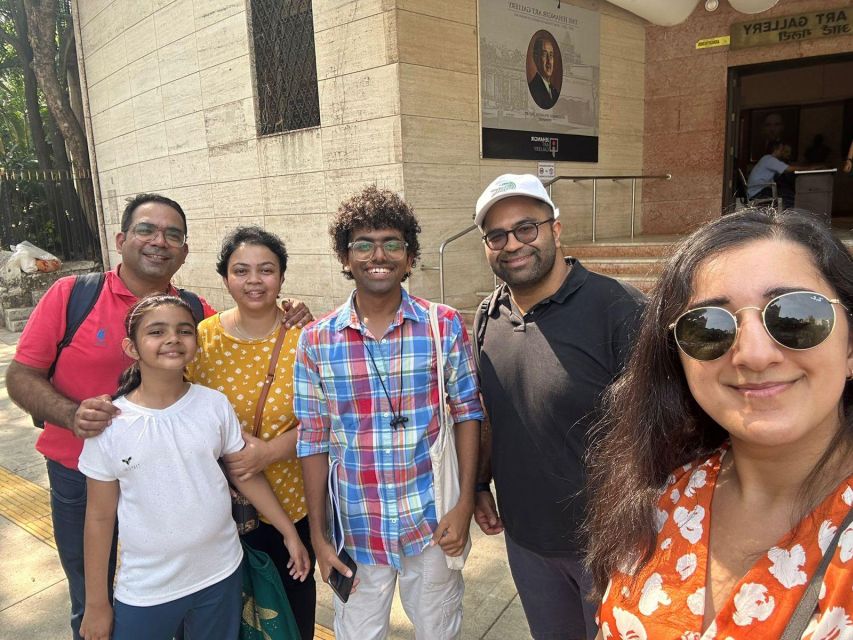
- Three hours on foot: The tour gives you a focused introduction to South Mumbai rather than a quick drive-by sightseeing loop.
- A strong architectural route: See CST, Town Hall, Flora Fountain, the University, the High Court, Kala Ghoda, and more.
- History comes through personal explanation: Guides such as Sanika and Ketan are praised for making dates, buildings, and cultural changes easier to understand.
- Useful for a first day: The route covers many major sights and can help you get your bearings in Old Mumbai.
- English-language guiding: The experience is offered in English, with guides answering questions throughout the walk.
- Good booking flexibility: The cost is $28 per person, with pay-later booking and a full refund available when you cancel at least 24 hours ahead.
Why walking reveals more of Old Mumbai
South Mumbai is compact enough to explore on foot, yet its story changes every few minutes. A railway station gives way to a library, a cathedral, a public fountain, a university, a court, an art district, and a waterfront monument. That variety is the main reason to choose a walk instead of simply photographing the landmarks from a vehicle.
The Mumbai Heritage Walks group was founded in 1999 by city architects Abha Bahl and Brinda Gaitonde. Its purpose is to help residents and visitors notice the city’s architecture and heritage monuments, including planning details, decorative features, and the way buildings reflect social and cultural change.
That approach matters. A building can look impressive without making much sense to you. A guide can point out why its design matters, how it fitted into colonial Mumbai, and how the city around it developed. You still see the sights, but you leave with a clearer idea of how Old Mumbai was put together.
This is not a food tour, shopping excursion, or general city tour with a bus between stops. It is a close look at South Mumbai’s public buildings and monuments. If you enjoy urban history, architecture, photography, or learning how a city works, the format should suit you well.
More South Mumbai and Colaba walks
- Group Guided Walking Tour in Fort and Colaba
★ 5.0 · 1,073 reviews - Private Guided Walking Tour in Fort & Colaba
★ 5.0 · 895 reviews - Highlights of South Mumbai Guided Private Tour in AC Vehicle
★ 5.0 · 620 reviews
Chhatrapati Shivaji Terminus begins the architectural story
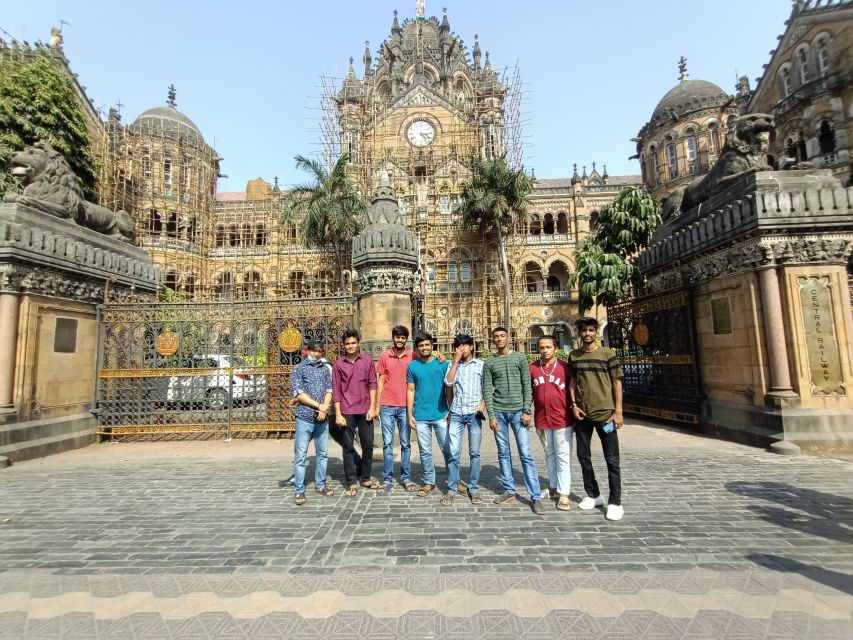
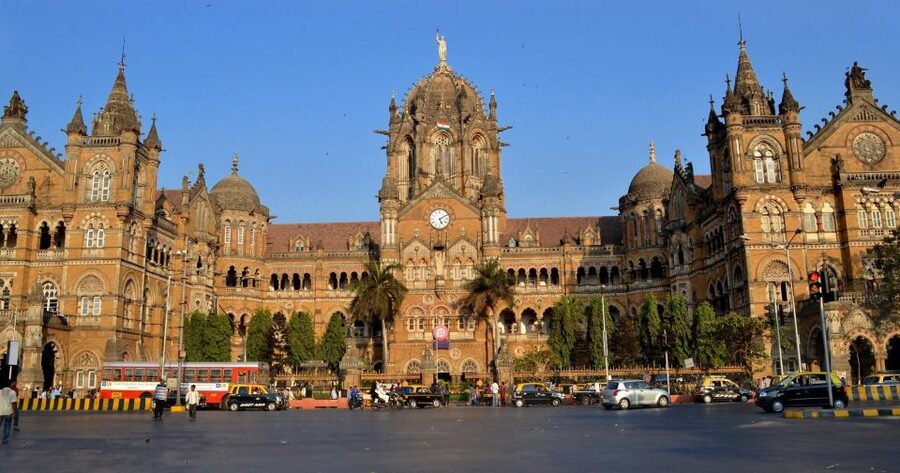
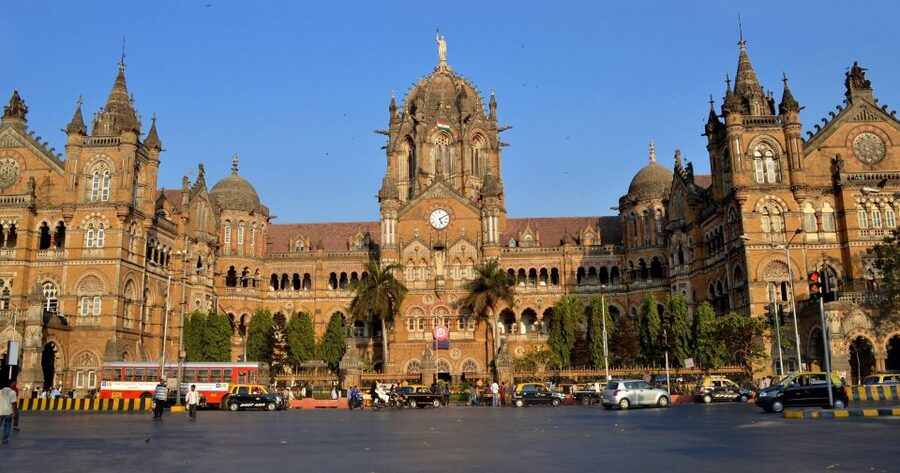
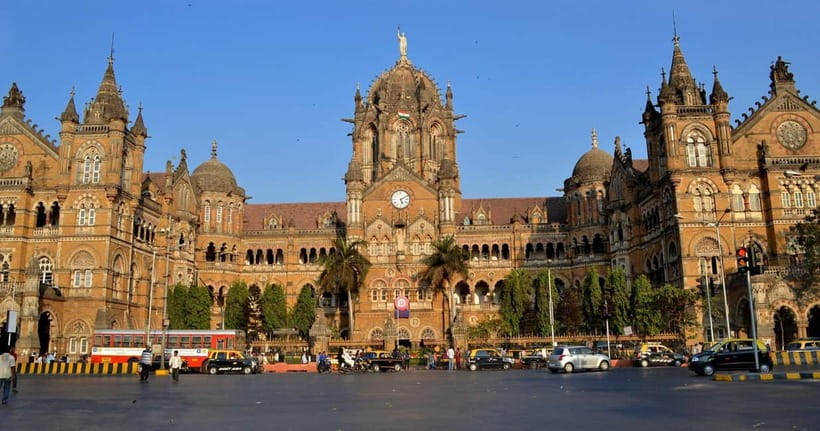
Chhatrapati Shivaji Terminus, often shortened to CST, is one of the most memorable buildings on the route. It is a working railway station as well as a UNESCO World Heritage Site, so its importance is both historic and practical.
You can expect the guide to use the station as a way into Mumbai’s colonial-era story. The building’s scale and decoration make it a natural starting point for discussing transport, trade, administration, and the growth of the city.
The appeal here is not only the façade. CST is part of daily Mumbai, with trains still moving people through the building. That gives the stop more life than a silent monument. You are looking at an important historic structure while standing in a place that remains central to the city.
The drawback is that a railway station can be noisy and crowded. You should expect an active public setting rather than a quiet museum visit. The reward is a stronger sense of how the city’s past remains tied to its present.
Town Hall and the Asiatic Society Library
Town Hall, home to the Asiatic Society Library, introduces a different side of old Mumbai. It is a colonial structure and one of the city’s older libraries, making it a useful stop for understanding the role of books, learning, and public institutions during the colonial period.
The building’s value is easy to miss if you only pause for a photograph. Your guide can place it within the broader civic design of South Mumbai and explain why institutions such as libraries mattered to the city’s growth.
This is one of the stops where a walking guide adds real value. You can see the exterior on your own, but the historical connection between the building, the city, and its institutions is harder to pick up from a casual visit.
St. Thomas’ Cathedral and the city’s early public life
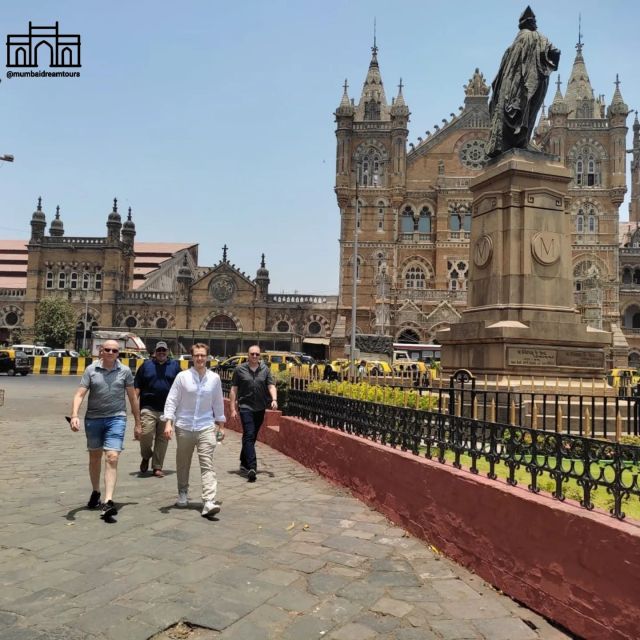
St. Thomas’ Cathedral is described as a 300-year-old church belonging to the Diocese of Mumbai of the Church of North India. Its age gives the walk a useful change of pace after the grand civic architecture.
The cathedral helps show that Old Mumbai was shaped not only by government offices and commerce, but also by religious communities and long-running institutions. The stop adds a human scale to the route, with a building connected to worship and community life rather than administration alone.
You may particularly appreciate this part if you like older churches and the way religious buildings anchor a city’s history. The tour is designed around explanation, so the guide can answer questions and draw links between the cathedral and the surrounding streets.
More heritage walking tours in Mumbai
- Best South Mumbai Heritage Walk
★ 5.0 · 122 reviews - Heritage Walk: Recommended by Gigi Hadid as a must-do in Mumbai
★ 5.0 · 122 reviews - Hill-station & Heritage: Lonavala & Karla Caves Tour from Mumbai
★ 5.0 · 60 reviews - Mumbai Heritage Walk and Elephanta Caves Experience
★ 5.0 · 53 reviews
Flora Fountain and the details above street level
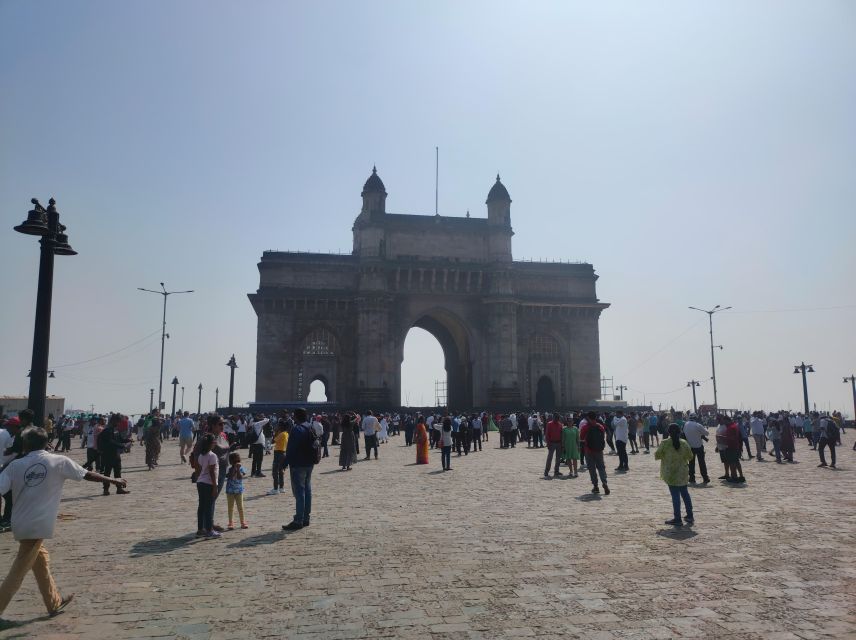
Flora Fountain was built in 1864 and depicts Flora, the Roman goddess of flowers. It is a small but visually distinctive landmark, and its decorative character gives the walk a break from the larger buildings.
This is also a good example of why you should avoid rushing between sights. South Mumbai’s streets contain details that are easy to overlook, especially when traffic and pedestrians compete for your attention. A guide helps you stop, look, and understand what you are seeing.
The fountain also shows how public decoration was used to shape the city’s civic image. You do not need to be an architecture specialist to enjoy the stop. A few clear explanations can turn an ornate object into a clue about the era in which it was built.
The University of Mumbai and Bombay High Court
The University of Mumbai is one of India’s oldest and premier universities. Its place on the walk widens the story beyond colonial administration and commercial power, bringing education into the picture.
The university buildings are part of the architectural character of South Mumbai. Your guide may help you notice how educational institutions were planned and how they fit into the wider civic center.
The Bombay High Court adds another important public institution. It is one of India’s oldest high courts and is primarily based in Mumbai. Together, the university and court show how the city’s historic center was built around education, law, government, and public services.
These stops are especially useful if you want context rather than a checklist. You see more than attractive façades. You see the physical framework of a city where major institutions were placed close together and where many of those buildings still matter today.
Kala Ghoda brings art into the route
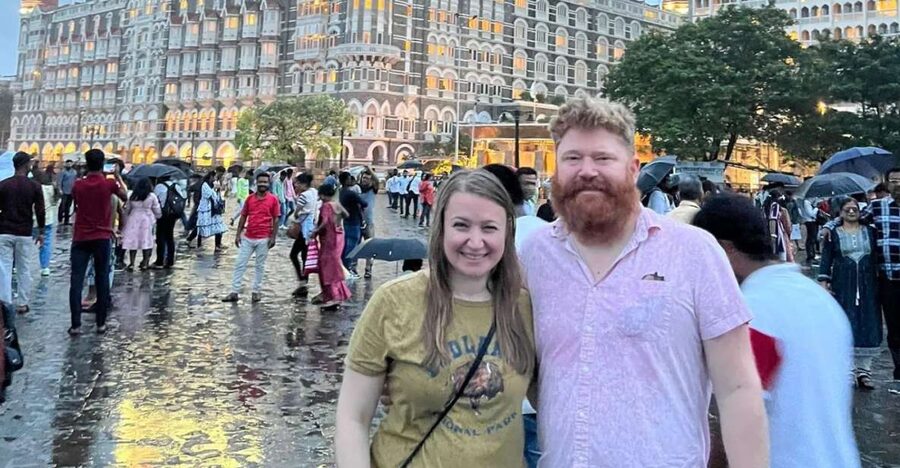
Kala Ghoda is a crescent-shaped art district with several heritage buildings. It gives the walk a different mood from the formal civic quarter and connects old architecture with Mumbai’s cultural life.
The district is a good reminder that heritage is not limited to grand monuments. A neighborhood can gain its identity from a group of buildings, galleries, public spaces, and streets that people continue to use.
You should pay attention to how the character changes here. The buildings are part of the attraction, but the district’s importance also comes from its role as an art center. This makes Kala Ghoda a useful stop for visitors who want to connect Mumbai’s older architecture with its present-day creative culture.
Watson’s Hotel and the story of iron construction
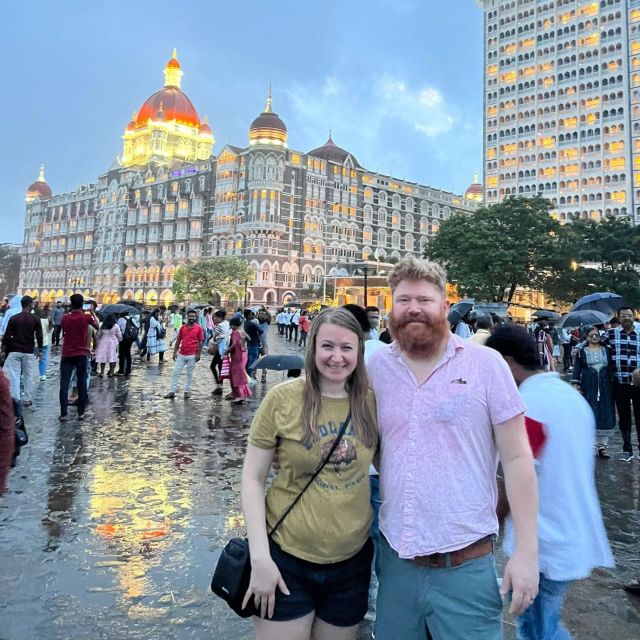
Watson’s Hotel is described as the earliest surviving example of cast-iron architecture in India. Even if you know little about building methods, this is an unusual detail and one of the more distinctive stops on the route.
The hotel offers a chance to look beyond stone façades and decorative ornament. Cast iron tells a different story about construction, technology, and the materials used in a growing colonial city.
This is the kind of place that rewards a guide’s explanation. Without context, you might simply see an old and unusual structure. With the background, you can understand why its construction matters and why it deserves attention among South Mumbai’s better-known monuments.
Marine Drive, Taj Mahal Palace, and Gateway of India
Marine Drive gives the tour its broadest public view. The waterfront is one of Mumbai’s best-known sights, and it provides a change from the enclosed streets and institutional buildings of the historic center.
The experience here is about seeing the city in a wider frame. After examining façades and civic monuments, you get a sense of Mumbai’s relationship with the water and its famous coastal edge. Since the tour is on foot, your view develops at street level rather than from a distant lookout.
The Taj Mahal Palace in Colaba adds a major hotel to the route. It is a heritage five-star hotel and one of the city’s best-known buildings. The stop helps show how hospitality, luxury, and international travel became part of Mumbai’s public image.
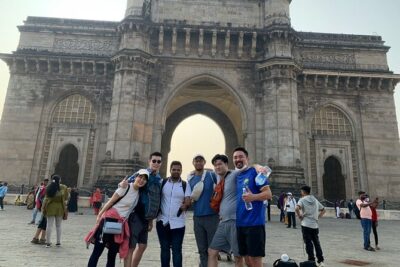
The Gateway of India is the route’s grand closing landmark. Built in the early twentieth century, the arch is one of Mumbai’s defining monuments. It is also a place where the city’s many historical threads come together: colonial power, sea travel, public ceremony, and modern sightseeing.
Expect this section to be popular and active. The Gateway is not an isolated ruin waiting for quiet contemplation. It is a major city sight, and the surrounding area can feel busy. That is part of its character, but it also means you should stay attentive to the guide and keep your expectations realistic.
The guides are the heart of the experience
The strongest part of this tour is the human explanation. The information supplied for the experience identifies English as the tour language, and the guide names that appear in the feedback include Sanika, Krishna, Ketan, Abhi, Alan, and Alkama.
Specific strengths come through clearly. Sanika is described as warm, relaxed, and able to explain Mumbai’s past in a way that helps you settle into the city. Ketan is studying Indian literature and archaeology, according to the information provided, and brings particular enthusiasm to historical questions.
Abhi is praised for giving a first-time visitor the context needed to avoid simply walking past the sights. Krishna is described as personable and willing to tailor the walk when one person was the only participant. Alan is noted for his conversation skills as well as his command of Mumbai’s past.
That variety matters because a heritage walk depends heavily on the person leading it. You are not just following a route. You are asking questions, comparing buildings, and trying to connect separate periods of history. The guides named above have been singled out for answering questions sincerely and making the walk feel personal.
Group size is not specified, so you should not book on the assumption that you will receive a private tour. Still, the experience can apparently become more personal when numbers are small. If the group is larger, listen closely at crowded stops and stay near the guide.
Is $28 a fair price?
At $28 per person, this is not the cheapest way to wander through South Mumbai, but it offers solid value if you want interpretation rather than directions. You are paying for about three hours of guided walking, a route through many major landmarks, and the chance to ask questions as you go.
The value is strongest for a first visit. You could pass CST, Flora Fountain, the High Court, Kala Ghoda, and the Gateway of India on your own, but you might not understand how they fit into the city’s story. A good guide saves you from treating the area as a string of unrelated photo stops.
The price is less compelling if you prefer to move quickly, dislike scheduled walks, or already have a strong grasp of Mumbai’s architecture and colonial history. You may also prefer independent sightseeing if you want long visits inside individual buildings. This experience is about the route and the explanation, not extended time at one attraction.
The booking terms make the decision easier. You can reserve and pay later, and cancellation up to 24 hours in advance gives you a full refund. That flexibility is useful when your Mumbai plans are still shifting.
Who should book this South Mumbai walk?
I would recommend it most strongly to first-time visitors, architecture fans, history students, and anyone who wants a clear introduction before exploring Mumbai alone. It also suits solo visitors because the guide provides conversation and structure, and one guide was able to personalize the experience for a solo participant.
The tour can work well for people who enjoy asking questions. The guides are repeatedly praised for their answers and conversation, so you should make use of that strength rather than quietly following the group.
You should think twice if long walks in city heat are difficult for you, or if you want a relaxed food-and-shopping experience. This route is focused on buildings, public spaces, and historical explanation. It is rewarding, but it asks you to pay attention and keep moving.
My take: a strong first look at Old Mumbai
Book this tour if you want South Mumbai to make sense, not merely look impressive. The combination of CST, Town Hall, St. Thomas’ Cathedral, Flora Fountain, the University, High Court, Kala Ghoda, Watson’s Hotel, Marine Drive, the Taj Mahal Palace, and Gateway of India gives you a broad introduction in roughly three hours.
The best reason to choose it is the guiding. Names such as Sanika, Ketan, Krishna, Abhi, Alan, and Alkama are connected with warmth, detailed answers, and real enthusiasm for Mumbai. The main tradeoff is the walking itself, along with the noise and activity of a busy city.
At $28, I consider it a sensible opening move for a first South Mumbai visit. You will still want time afterward to revisit the places that catch your interest, but you will have a far better sense of what you are looking at.
FAQ
How long does the Mumbai South Mumbai Heritage Walking Tour last?
The tour lasts about three hours, based on the experience details and participant descriptions.
What language is the tour offered in?
The tour is offered in English.
Which landmarks are included?
The route includes Chhatrapati Shivaji Terminus, Town Hall and the Asiatic Society Library, St. Thomas’ Cathedral, Flora Fountain, the University of Mumbai, Bombay High Court, Kala Ghoda, Watson’s Hotel, the Taj Mahal Palace, and Gateway of India. Marine Drive is also part of the South Mumbai sightseeing experience.
How much does the tour cost?
The listed price is $28 per person.
Can I reserve now and pay later?
Yes. You can reserve your place and pay nothing at the time of booking.
What is the cancellation policy?
You can cancel up to 24 hours in advance for a full refund.
More walking tours in Mumbai
- Private Guided Walking Tour in Bandra Queen of Suburbs
★ 5.0 · 383 reviews - Private Guided Spiritual Walk in Banganga Hindu Temples
★ 5.0 · 271 reviews - Mumbai: Dharavi Slum Walking Tour by First Female Tour Guide
★ 4.9 · 192 reviews - Private Guided Non-Veg Street Food Walking Tour in Muslim Quarter
★ 5.0 · 140 reviews
More history and heritage tours in Mumbai
- Kanheri Caves Heritage Tour
★ 5.0 · 45 reviews - South Mumbai: Cultural Heritage Walking Tour
★ 4.8 · 45 reviews - Mumbai Private Cultural Tour with Lunch and Transport
★ 5.0 · 44 reviews - Private Mumbai Jewish Heritage Tour: Baghdadi & Bene Israel
★ 5.0 · 36 reviews
Recently added around Mumbai
- Private Walking Tour in Dharavi Slums★ 5.0 · 7 reviews
- Mumbai Sightseeing Tour★ 5.0 · 11 reviews
- Private Mumbai 2-Day Tour Package:City + Slum & Elephanta Island.★ 5.0 · 3 reviews
- Vegetarian Indian Cuisine Virtual Cooking Class Experience from Mumbai★ 5.0 · 4 reviews
- Mumbai by Night Guided Tour★ 5.0 · 6 reviews
- Transfer from Mumbai Airport to Hotel★ 4.0 · 7 reviews
- Full-Day Agra Tour with Taj Mahal From Mumbai By Air★ 5.0 · 8 reviews
- Taj Mahal Day Trip Including Same Day Flights from Mumbai★ 5.0 · 3 reviews
Mumbai Heritage Walking Tours, compared.

Heritage Walk: Recommended by Gigi Hadid as a must-do in Mumbai
Read our review →
Hill-station & Heritage: Lonavala & Karla Caves Tour from Mumbai
Read our review →
Mumbai Heritage Walk and Elephanta Caves Experience
Read our review →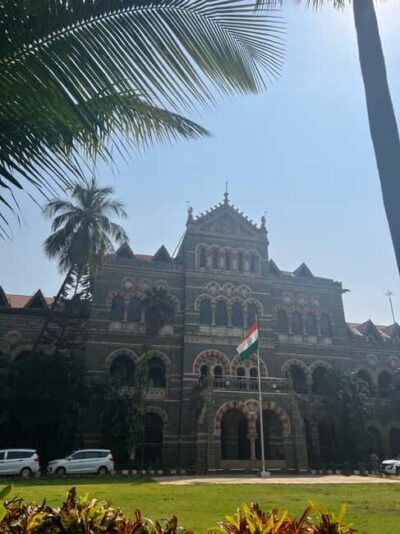
Private Mumbai Jewish Heritage Tour: Baghdadi & Bene Israel
Read our review →
Private Elephanta Caves UNESCO World Heritage Site Tour
Read our review →Browse the lists this tour appears in