
Reviewed · WALKING TOURS
South Bombay Live Walking Tour
South Mumbai reveals itself best at street level. This walk moves from grand colonial buildings and famous landmarks to markets, bakeries, temples, and everyday city life, with guides such as Ali and Nisar adding local stories along the way. It is a useful choice if you have only a short time in Mumbai but want more than the standard postcard stops.
I like the stop for fresh bread at a small bakery, a detail that brings the city down to human scale. I also like the flexible pace, which can give you time to linger over architecture, markets, or a proper cup of masala chai with mineral water. The main consideration is that this is a walking experience in a busy city, so it may feel tiring or crowded if you prefer a quiet, tightly timed sightseeing tour.
Key points at a glance
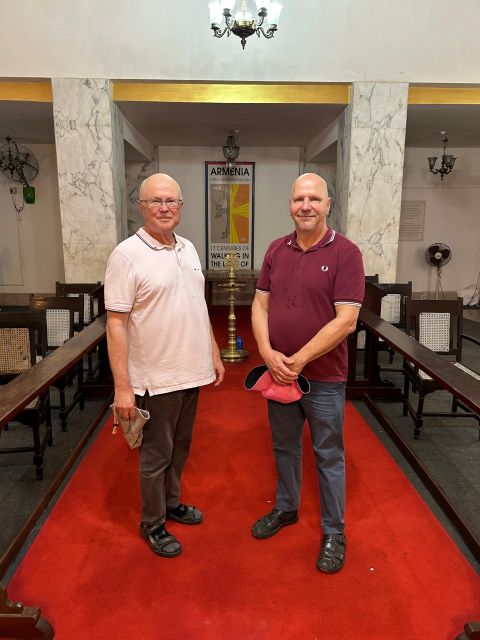
- Starts with a masala walk: Expect local flavor from the opening part of the experience, including quality masala chai.
- Mixes famous sights with ordinary streets: The route can include the Gateway of India, Chhatrapati Shivaji Maharaj Terminus, Fort, markets, bakeries, and lesser-known corners.
- Local guides shape the experience: Ali and Nisar are named guides associated with the walk, each bringing stories and practical Mumbai advice.
- Good for a short stay: Walking lets you take in several South Mumbai sights without spending the whole day moving between them.
- English-language tour: The experience is offered in English.
- Low financial risk: The price is $16 per person, payment can be made later, and cancellation is allowed up to 24 hours before the tour for a full refund.
Why South Mumbai works so well on foot
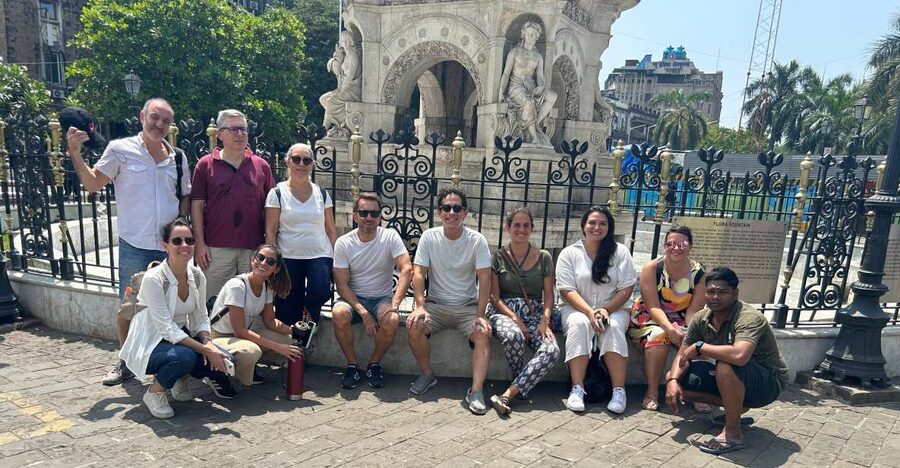
South Mumbai packs several versions of the city into a compact area. One street may offer grand colonial-era architecture, while the next brings you into a market lane, a working bakery, or a small place of worship. A walking tour lets you notice those changes instead of watching them pass through a vehicle window.
The tour is designed around that contrast. You get the major architectural story of the area, but the more memorable moments may come from smaller encounters: a vendor at a market, bread bought from a modest bakery, or a tea stop where you can pause and watch the city work.
I would choose this kind of walk early in a Mumbai visit. It helps you understand how the central sights fit together, and the guides can offer ideas for what to do after the tour. If your time is short, that practical orientation has real value.
More walking tours in Mumbai
- Group Guided Walking Tour in Fort and Colaba
★ 5.0 · 1,073 reviews - Private Guided Walking Tour in Fort & Colaba
★ 5.0 · 895 reviews - Private Guided Walking Tour in Bandra Queen of Suburbs
★ 5.0 · 383 reviews
The masala walk sets the tone
The experience begins with a masala walk, which gives the tour a local-food angle rather than launching straight into monuments. The supplied details promise good-quality masala chai and mineral water, so you have at least one planned refreshment during the outing.
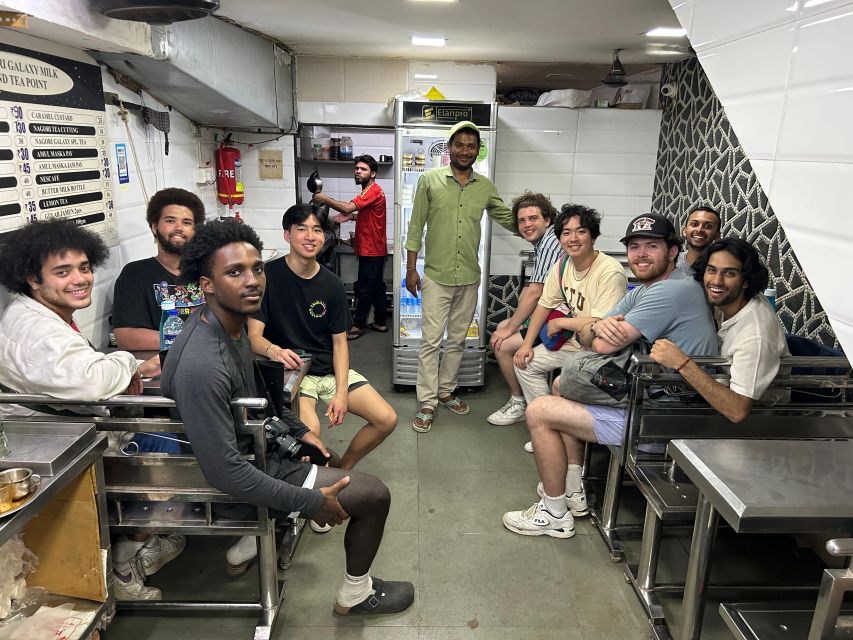
That may sound like a small inclusion, but it suits Mumbai. Tea is not just a drink to be consumed quickly. It gives you a reason to stop, talk, and take in the street around you. One stop is described as a place serving especially fine tea, and the walk may also include a chance to see local food production at close range.
A bakery visit is one of the most appealing details. Picking up fresh bread from a hole-in-the-wall shop gives you a glimpse of daily life that a grand building cannot provide. You may not get a full food tour, so do not book this expecting a long list of tastings. Instead, think of the masala opening as a flavorful way to begin a broader city walk.
From colonial facades to working streets
South Mumbai is famous for its architecture, and the tour puts that built environment at the center of the story. Expect attention to colonial-era buildings and the historic Fort area, where older facades sit beside offices, shops, and the constant movement of the modern city.
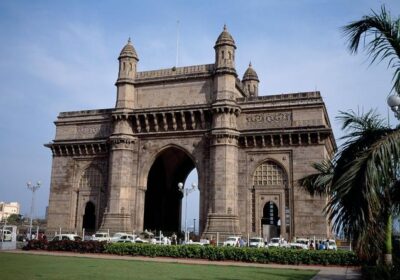
The Gateway of India is one of the major landmarks connected with the route. It is an obvious stop, but a guide can make it more useful by explaining its place in Mumbai’s story rather than treating it as a quick photo point. You will likely get more from the monument if you hear how the city’s imperial past connects with its later political and social changes.
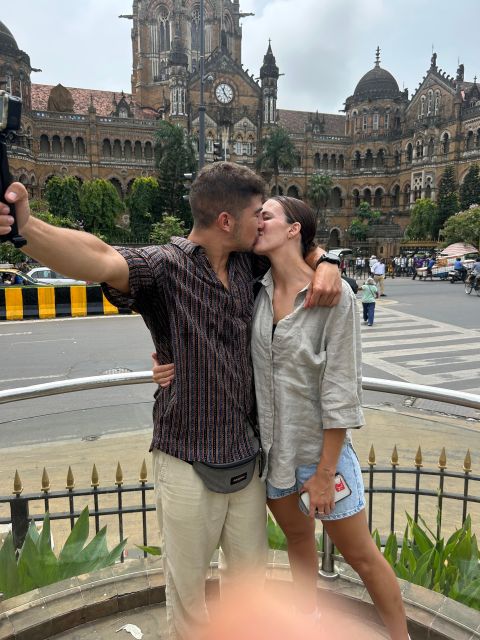
Chhatrapati Shivaji Maharaj Terminus offers a different architectural experience. Its scale and decoration make it one of Mumbai’s most striking buildings, but the surrounding activity is just as important. The station is part of a working city, not simply an old structure preserved for visitors. A guide can help you read both sides of the scene: the design details and the daily flow around them.
The tour description also points to Mumbai’s independence movement and the city’s modern development. That broader context matters. Without it, South Mumbai can look like a collection of handsome buildings. With it, you begin to see how power, trade, transport, politics, and ordinary work shaped the area.
Markets, vendors, and the less polished side of the city
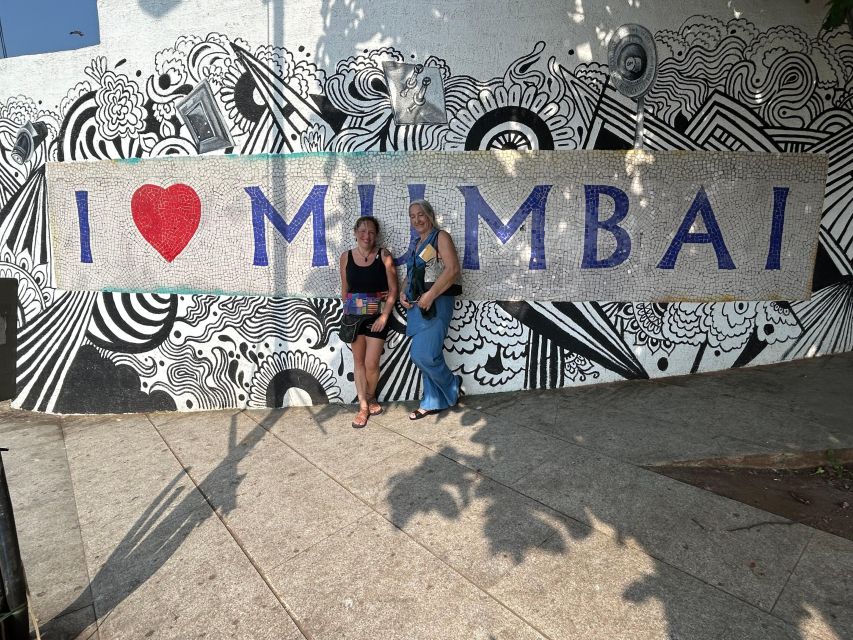
The market sections are likely to be the most useful part for anyone who wants to see Mumbai beyond its famous landmarks. Colaba Causeway is specifically included among the cultural stops. It offers a livelier, more commercial side of South Mumbai, with vendors and local shops creating a much different mood from the formal streets near the major monuments.
The point is not simply to buy something. A good market walk helps you understand how people use public space, how goods move through the city, and how old commercial habits continue beside newer businesses. Your guide can also help you make sense of what you are seeing, especially if this is your first visit to India.
The route may include interactions with vendors and artisans, but the experience should not be treated as a staged performance. The city continues around you. You might hear traffic, encounter crowded lanes, and need to keep a little patience when the pavement or path becomes busy.
That is also the main drawback. Mumbai can be intense at street level. Noise, heat, crowds, and uneven movement are part of the setting, and this is not a peaceful garden stroll. The benefit is a more honest look at the city. The trade-off is comfort.
A completely different side of the city:
- Dharavi slum tour in Mumbai by Female tour guides of the slum
★ 5.0 · 1,976 reviews - Mumbai: Full-Day Sightseeing Tour of Mumbai
★ 4.9 · 1,822 reviews - Private Mumbai Sightseeing Tour (Traveller’s Choice Award Winner)
★ 5.0 · 1,565 reviews - Mumbai: Elephanta Caves Half-Day Guided Tour with Expert
★ 4.8 · 1,032 reviews
Smaller places make the walk feel personal
The tour promises less familiar stops alongside the better-known sights. These can include tucked-away temples, small courtyards, and local lanes that are easy to miss when you explore alone. The exact stops can vary, so I would treat these as possible elements rather than a guaranteed checklist.
This is where a local guide matters most. A guide can point out the difference between a place that looks ordinary and one that carries meaning for the neighborhood. You may also get a better sense of how religious, commercial, and residential spaces fit together in central Mumbai.
Ali is described as offering a wider view of Mumbai society, not just a string of facts about buildings. Nisar is described as cheerful and informative, with strong local awareness. Since the guide assigned to your walk may differ, you should not book solely around one person. Still, the names suggest that the experience is led by people who can talk about the city as a lived place.
I especially like the promise of practical advice at the end. A guide who can suggest what to do next turns the walk into more than a fixed route. You finish with a better sense of where to continue exploring, eat, or simply spend the rest of your day.
A flexible pace, with some uncertainty
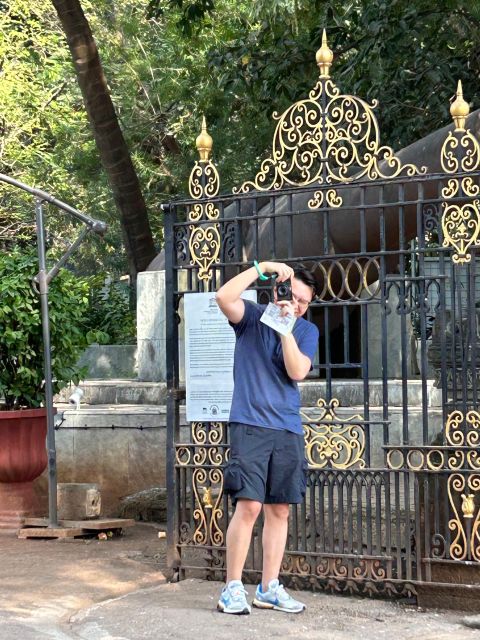
One useful feature is the reported flexibility about how long the group stays in different places. That suits South Mumbai, where a building facade, market exchange, or tea stop may deserve more attention than expected.
Flexibility also means the walk may not feel perfectly uniform. One guide may spend longer on architecture, while another may focus more on food, social life, or personal stories. That variation can be a strength if you enjoy a human guide rather than an audio recording.
The trade-off is predictability. The information does not provide a fixed duration, exact stop-by-stop schedule, or guaranteed group size. If you need to be at a train station or restaurant at a precise time, allow extra margin after the tour. The stated ending point is central, so you should be well placed to continue around South Mumbai, but the precise finishing location is not specified.
What the $16 price delivers
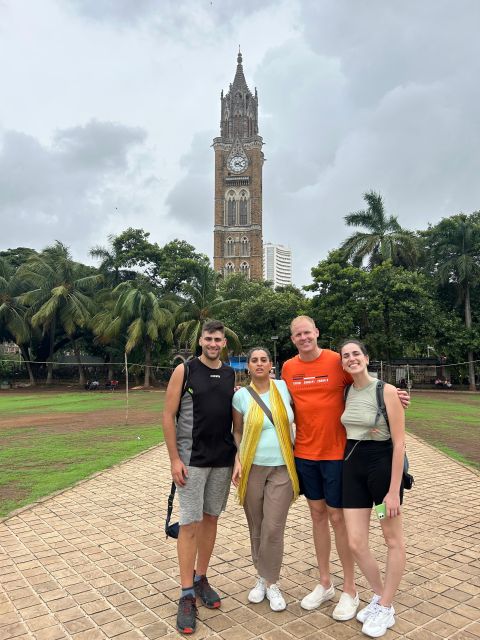
At $16 per person, this is a modestly priced way to get orientation, local context, and a guided look at several parts of South Mumbai. You are paying for the guide’s interpretation as much as for the walk itself. The included masala chai and mineral water add a small but welcome practical benefit.
The value is strongest if you are new to Mumbai, traveling alone, or visiting for a short time. A guide can help you cover architecture, markets, food, and local life without spending hours figuring out how the districts connect. You also gain the chance to ask questions and collect suggestions for the rest of your stay.
The value is weaker if you already know South Mumbai well or want a specialist architecture tour with a published technical itinerary. The experience is broad rather than narrowly focused. It aims to give you a feel for the area, not to provide a formal academic lecture on every building.
You can reserve now and pay later, which is useful when your plans are still shifting. Cancellation is available up to 24 hours in advance for a full refund. Those terms make it easier to fit the walk into a busy Mumbai schedule.
Who will enjoy this walk most
I would recommend the tour to first-time visitors who want a useful introduction without spending a full day in a vehicle. It also suits people who prefer local streets to polished attractions and who like asking questions as they go.
It is a good match for:
- Visitors with limited time in Mumbai
- People interested in colonial architecture and city history
- Anyone who wants markets and local food alongside famous monuments
- Solo visitors who would like a guide’s orientation
- Walkers who enjoy an unhurried, flexible route
- Travelers looking for practical suggestions for the rest of their stay
You may want to think twice if you dislike crowded streets, have difficulty walking for an extended period, or need a tightly fixed schedule. The supplied information does not give a duration or accessibility details, so ask before booking if those points are important to you.
Simple ways to get more from the experience
Wear comfortable footwear and bring water beyond the included mineral water if you expect the city heat to affect you. Keep some space in your schedule afterward so you can follow the guide’s suggestions or continue exploring from the central endpoint.
Come ready to notice small details. The famous buildings are easy to photograph, but the bakery, tea stop, market exchanges, and local lanes may tell you more about how Mumbai functions day to day.
I would also use the guide as a source of practical advice. Ask about places to visit next, food ideas, or areas you might otherwise miss. Ali is specifically noted for offering useful tips after the walk, and that kind of local direction can save time during a short visit.
Should you book the South Bombay Live Walking Tour?
Book it if you want South Mumbai explained through a mix of landmarks and ordinary life. For $16, you get an English-speaking guide, a masala chai stop, local market streets, architectural context, and the chance to see places beyond the headline sights.
Do not book it expecting a silent, perfectly timed stroll or a complete food tour. The city can be noisy and crowded, and the exact route may depend on the guide and the day. But if you want to understand Mumbai through its streets, buildings, tea shops, markets, and stories, this is a strong-value introduction.
FAQ
How much does the South Bombay Live Walking Tour cost?
The tour costs $16 per person.
What language is the tour offered in?
The walking tour is offered in English.
What is included in the price?
The experience includes good-quality masala chai and mineral water.
Which places can I expect to see?
The tour focuses on South Mumbai and can include the Gateway of India, Chhatrapati Shivaji Maharaj Terminus, the historic Fort area, Colaba Causeway, markets, colonial-era buildings, temples, courtyards, and local lanes.
Who are the guides?
Ali and Nisar are named as guides who lead this experience. The specific guide for your booking is not guaranteed in the provided information.
Can I pay later or cancel the booking?
Yes. You can reserve your place and pay later. Cancellation up to 24 hours in advance qualifies for a full refund.
Recently added around Mumbai
- Private Walking Tour in Dharavi Slums★ 5.0 · 7 reviews
- Mumbai Sightseeing Tour★ 5.0 · 11 reviews
- Private Mumbai 2-Day Tour Package:City + Slum & Elephanta Island.★ 5.0 · 3 reviews
- Vegetarian Indian Cuisine Virtual Cooking Class Experience from Mumbai★ 5.0 · 4 reviews
- Mumbai by Night Guided Tour★ 5.0 · 6 reviews
- Transfer from Mumbai Airport to Hotel★ 4.0 · 7 reviews
- Full-Day Agra Tour with Taj Mahal From Mumbai By Air★ 5.0 · 8 reviews
- Taj Mahal Day Trip Including Same Day Flights from Mumbai★ 5.0 · 3 reviews
Walking Tours, compared.
Private Guided Walking Tour in Bandra Queen of Suburbs
Read our review →
Private Guided Spiritual Walk in Banganga Hindu Temples
Read our review →
Dharavi Slum Walking Tour by First Female Tour Guide
Read our review →
Private Guided Non-Veg Street Food Walking Tour in Muslim Quarter
Read our review →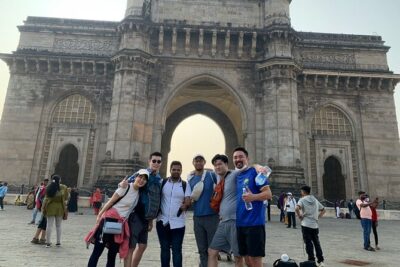

Heritage Walk: Recommended by Gigi Hadid as a must-do in Mumbai
Read our review →Browse the lists this tour appears in